
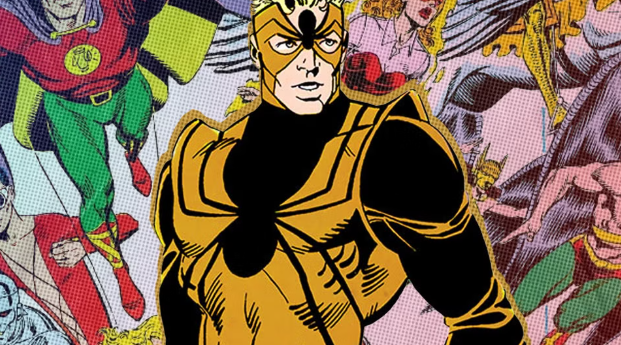
In the sprawling urban jungle of the Marvel Universe, New York City is home to many “arachnid” themed characters. While Spider-Man is the undisputed king of the rafters, several villains have tried to claim the name of the eight-legged predator. Among them, the Tarantula stands out as one of the most consistently dangerous and politically complex. Often dismissed as a mere street-level brawler, the man behind the mask—most notably Anton Rodriguez—represents a dark intersection of international espionage, South American revolution, and biological horror.
The Tarantula is more than just a guy in a red-and-blue suit with pointy shoes. He is a product of political instability and the ruthless pursuit of physical perfection through science. Over the decades, several men have carried the mantle, each bringing a different level of lethality to the Spider-Man rogues gallery. From his origins as a state-sponsored assassin to his terrifying transformations into a literal monster, there is a wealth of history buried beneath those poisoned stingers.
Here are ten deep-dive facts about the Marvel supervillain Tarantula that showcase why he is a far more formidable threat than his B-list reputation suggests.
1. He Was Originally a Government-Sponsored “Hero”
The most famous iteration of the character, Anton Rodriguez, didn’t start his career as a common criminal. He was originally a revolutionary in the fictional South American country of Delvadia. After being expelled from his small rebel group for his extreme cruelty, he defected to the very government he was fighting. The Delvadian government, wanting their own version of Captain America to serve as a national symbol, gave him the costume and codename of the Tarantula.
This makes him a dark mirror to the patriotic hero trope. Unlike Steve Rogers, who was chosen for his character, Rodriguez was chosen for his ruthlessness. He served as a state-sponsored operative, carrying out the dirty work of a corrupt regime. This political background provides an evergreen villain motivation: he isn’t just robbing banks; he is a professional soldier and assassin who views his criminal activities as extensions of his “official” duties.
2. His Most Iconic Weapons are His Poisoned Boot-Spikes
While Spider-Man relies on his webs, the Tarantula relies on his feet. His most distinctive feature is a pair of retractable razor-sharp spikes located at the toes of his boots. These aren’t just for show; they are coated with a variety of lethal toxins, ranging from paralytic agents to fast-acting poisons that can kill an un-powered human in seconds.
The Tarantula’s fighting style is built entirely around these “stingers.” He is a master of a specialized form of kickboxing, allowing him to deliver precise, lethal strikes in mid-air. This makes him a unique physical challenge for Spider-Man; one wrong move or a blocked kick can still result in a scratch that could end the fight instantly. It turns every encounter into a high-stakes dance where the Tarantula’s combat skills are just as dangerous as his chemical arsenal.
3. He Underwent a Terrifying “Man-Spider” Transformation
In a bid to gain the upper hand against Spider-Man, Rodriguez underwent an experimental procedure to grant him actual superpowers. However, the process went horribly wrong (as it often does in the Marvel Universe). Instead of becoming a superhuman, he mutated into a giant, multi-limbed, monstrous spider-creature.
This era of the character moved him into the realm of body horror. No longer a man in a suit, he became a mindless beast with a craving for human flesh. This transformation is a recurring theme for arachnid villains—a cautionary tale about the cost of trying to out-do the “proportional strength of a spider.” While he eventually met a tragic end during this mutation, the image of the “Spider-Tarantula” remains one of the most unsettling visuals in 1980s Marvel Comics history.
4. There Have Been Multiple Men to Hold the Mantle
Like many legacy characters in comics, the Tarantula name has been passed down (or stolen) by several individuals. After Rodriguez, the mantle was taken up by Luis Alvarez, a government agent even more brutal than his predecessor. Later, a third Tarantula named Jacinda Rodriguez (Anton’s daughter) appeared, adding a layer of family legacy to the villainy.
This “legacy of terror” makes the Tarantula a persistent threat. Even if one version is defeated or killed, the Delvadian government or a criminal organization can simply find a new operative to put on the boots. Each version brings a slightly different flavor to the role—Alvarez was a powerhouse with enhanced strength, while Jacinda focused more on stealth and infiltration—ensuring that Spider-Man can never be quite sure which version of the “spider” he is facing.
5. He Is a Frequent Ally of the Brand New Day “Sinister Six”
While he isn’t a founding member of the classic Sinister Six, the Tarantula (specifically the Luis Alvarez version) has been a go-to recruit for various villainous team-ups. He was a key player during the Brand New Day and Big Time eras of Spider-Man, often working alongside villains like Kraven the Hunter or the Chameleon.
Because he is a mercenary for hire, he is the perfect “muscle” for more cerebral villains. He doesn’t care about world domination; he cares about the contract. This makes him a dangerous wild card in the Marvel criminal underworld. His willingness to work for the highest bidder means he has clashed with everyone from Captain America to the Avengers, proving that his lethality isn’t limited to the neighborhood of Queens.
6. He Has a Deep Rivalry with “Spider-Woman” Julia Carpenter
During the Secret Wars and the subsequent years, the Luis Alvarez version of Tarantula developed a particularly nasty grudge against Julia Carpenter, the second Spider-Woman. Their battles were often more personal and violent than his fights with Peter Parker, as Alvarez viewed her as a traitor to the “government-agent” archetype they both shared.
This rivalry highlighted the Tarantula’s role as a “dark agent.” While Julia used her powers for heroism, Alvarez used his for state-sanctioned murder. Their clashes often explored the ethics of superhuman operatives and the thin line between being a hero and being a weapon of the state. It solidified the Tarantula as a villain who works best when the story leans into themes of political intrigue and personal betrayal.
7. His Suit Provides Enhanced Agility and Protection
While he doesn’t have the natural “Spider-Sense,” the Tarantula’s costume is a high-tech marvel in its own right. The suit is typically made of a reinforced, insulated fabric that offers protection against small arms fire and electrical shocks. More importantly, it is designed to maximize his peak human agility.
The suit’s gloves and boots are equipped with micro-suction cups (similar to Spider-Man’s) that allow him to scale vertical surfaces. This tech-based approach to spider-powers makes him a “synthetic” version of the hero. When combined with his olympic-level athletic training, he can mimic almost all of Spider-Man’s movements, making him one of the few villains who can actually keep up with the Wall-Crawler in a chase across the Manhattan skyline.
8. He Once Worked for the “Heroes for Hire”
In a strange twist of fate, a version of the Tarantula was actually recruited into a version of the Heroes for Hire during the Civil War event. Maria Vasquez took up the mantle and used her skills as a deadly martial artist to hunt down unregistered heroes.
This version of the character was far more anti-heroic. Maria was motivated by the death of her sister and sought a form of violent justice. Her inclusion in a “hero” team showed that the Tarantula persona is essentially a tool—it can be used for state oppression, criminal gain, or even (in a very dark way) for law enforcement. This ambiguity makes the character’s history a fascinating study in how a villain’s “brand” can be co-opted for different purposes.
9. He Is a Master of Delvadian Martial Arts
The Tarantula isn’t just a brawler; he is a highly disciplined fighter. He is often depicted as a master of various South American fighting styles, specifically those focused on agile, kick-heavy combat. He utilizes a “capoeira-inspired” style that emphasizes constant movement and unpredictable strikes.
This martial arts expertise is why he is so dangerous. Most villains rely on raw power or lasers; Tarantula relies on finesse and technique. He knows exactly where to strike to bypass armor or exploit a hero’s weakness. In his battles with Spider-Man, he often uses the hero’s own momentum against him, proving that a well-trained human with poisoned boots can be just as deadly as a radioactive monster.
10. His Death Was One of the Grittiest in 80s Comics
The end of Anton Rodriguez’s story is one of the most famous “dark” moments of the Bronze Age of comics. After mutating into the giant spider, he realized he had lost his humanity. During a battle on a rooftop, he actually begged the police to kill him, realizing that he could never return to being a man.
The police opened fire, and he plummeted to his death. This tragic conclusion added a layer of pathos to a character who had previously been a one-dimensional assassin. It served as a reminder that behind the poisoned spikes and mask, there was a man who had been used and discarded by his government. This ending cemented his legacy as a tragic figure in the Marvel lore, a man who sold his soul for power and ended up losing his very form.
Further Reading
- “The Amazing Spider-Man” #134-135 by Gerry Conway – The first appearance and classic introduction of Anton Rodriguez.
- “The Amazing Spider-Man” #233-236 – The “Man-Spider” mutation and the tragic end of the first Tarantula.
- “Web of Spider-Man” #35-36 – Introduces Luis Alvarez as the second, more physically imposing Tarantula.
- “Heroes for Hire” (2006 Series) – Features Maria Vasquez as a different, more complex version of the character.




Leave a Reply