
Time constraints often make it difficult to stay current with every television series. Zentara.blog provides recaps of major plot points, including spoilers, to ensure you remain updated or are prepared for an upcoming season.
The first chapter of the trickster god’s solo journey ended with a literal bang—the shattering of the Sacred Timeline and the birth of an infinite multiverse. If the initial story was about discovering one’s identity, the second act is a high-stakes race against time itself. In this epic conclusion to the temporal saga, the God of Mischief evolves from a self-serving variant into something far more profound: a selfless protector of every soul in existence.
As the Time Variance Authority (TVA) teeters on the brink of total collapse, the stakes shift from personal survival to the preservation of all reality. With the Temporal Loom failing under the weight of infinite branching timelines, the narrative dives deep into the mechanics of existence, the burden of leadership, and the high price of a second chance. For those looking to master the complex lore of this cosmic finale, here are the ten most significant plot points that redefined the universe.
1. The Reality of “Time-Slipping”
The journey begins with a jarring physical ailment: Loki is “time-slipping,” a phenomenon where his body is violently pulled between the past, present, and future of the TVA. This is theoretically impossible, as time does not move within the TVA in a traditional sense. This plot point serves two vital purposes. First, it introduces the eccentric and brilliant Ouroboros (O.B.), the head of Repairs and Advancement, who becomes the technical backbone of the season. Second, it allows Loki to witness a future version of the TVA in total disarray, providing him with the desperate motivation to fix the timeline. The “fix” for this—a temporal aura extractor—requires Loki to essentially prune himself while Mobius ventures into the raw temporal radiation of the Loom. This high-tension sequence establishes that the rules of reality are broken and that the God of Mischief is now the only one capable of navigating the cracks in time.
2. The Hunt for the Rogue General Dox
While Loki and Mobius try to stabilize the TVA, internal politics turn deadly. General Dox, a high-ranking TVA official, refuses to accept the new era of “free will” and leads a splinter faction of Minutemen on a mission to “reset” (essentially commit genocide against) all the newly formed branching timelines. This leads to a frantic chase through various time periods, including a glamorous 1970s London. Although Loki and his team eventually capture Dox, they are too late to stop her from bombing a massive portion of the multiverse. This moment is a staggering tragedy; billions of lives are snuffed out in an instant, proving that even with the “God of Mischief” on their side, the heroes cannot save everyone. It heightens the moral weight of the series, shifting the focus from “saving the system” to “saving the people.”
3. The Resurrection of Miss Minutes and Renslayer
For much of the early story, the TVA’s former leaders are missing in action. The search for Ravonna Renslayer and the sentient AI Miss Minutes leads Loki and Mobius to the 1893 Chicago World’s Fair. Here, we see the terrifying depth of the conspiracy. Miss Minutes, acting on the secret instructions of “He Who Remains,” has been manipulating Renslayer to ensure the “correct” version of history is restored. This plot point explores the toxic relationship between an AI with a crush and a judge seeking power. Their journey to the past isn’t just a pursuit; it’s a look at the origin of the TVA’s hierarchy. It reveals that the “prophet” they were looking for was actually a human variant of Kang, setting up a complex triangle of betrayal that threatens to hand the keys of the universe back to a tyrant.
4. The Introduction of Victor Timely
In 1893, we meet Victor Timely, a stuttering, eccentric inventor who is a variant of the man who created the TVA. Timely is the “wild card” of the season. Because he is a human from the past who was given the TVA handbook, he possesses the intellect to fix the Temporal Loom but lacks the cosmic malice of his future selves. His arrival at the TVA creates a fascinating dynamic: the heroes must protect a version of their greatest enemy to save their friends. Timely represents the theme of nature versus nurture; is a person destined to be a conqueror, or can they be a partner? His presence is the only hope for engineering a solution to the Loom’s failure, making him the most valuable and dangerous person in the Multiverse.
5. The Horror of the “Spaghetti” Effect
As the Temporal Loom nears its breaking point, the stability of the multiverse begins to fail. We witness the “spaghettification” of reality—a horrifying visual where entire worlds and people are unraveled into thin, glowing strands of temporal energy. This isn’t just a special effect; it’s a visceral representation of the death of existence. When the Loom finally explodes, Loki is the only one left standing as his friends and the world around him turn to dust. This moment forces the story into its most experimental phase, as Loki finds himself “slipping” into the lives his friends had on the timeline before they were taken by the TVA. It underscores the fragility of life and the terrifying scale of the disaster they are trying to prevent.
6. The Mastery of Controlling Time
Isolated and desperate, Loki realizes that his “time-slipping” isn’t a glitch—it’s a capability. After reuniting with a version of O.B. on a branched timeline, Loki spends decades (and eventually centuries) learning the science of the Temporal Loom. He realizes that to stop the explosion, he doesn’t just need to be in the right place; he needs to control when he is. This marks a massive power-up for the character. Loki evolves from a magic-user who uses illusions to a master of time who can pause, rewind, and fast-forward his own reality. This mastery is the only way he can repeatedly attempt to fix the Loom, turning the narrative into a “groundhog day” style loop where he refines his plan over and over again, sacrificing his own sanity for the chance at a perfect outcome.
7. The Futility of the Temporal Loom
After centuries of study, Loki and Victor Timely finally manage to launch a device to expand the Loom’s capacity. However, they discover a soul-crushing truth: the Loom is a fail-safe. It was never designed to hold an infinite number of timelines; it was designed to delete all “branches” and preserve only the Sacred Timeline if the system was ever overloaded. He Who Remains designed the system so that “order” would always win over “freedom.” This revelation renders all their hard work moot. It presents Loki with a devastating choice: he can either let the Loom destroy all the branches (killing everyone he loves) or kill Sylvie to prevent the Multiverse from ever opening. It is a brilliant narrative trap that forces the God of Mischief to find a “third option” that the creator of time never anticipated.
8. The Final Conversation with He Who Remains
Using his new time-manipulation powers, Loki returns to the “Citadel at the End of Time” at the exact moment Sylvie is about to kill He Who Remains. He pauses time to have a final, exhaustive debate with the master of the TVA. This conversation is the ideological heart of the series. He Who Remains argues that his way is the only way to prevent a multiversal war, while Loki argues for the right to choose, even if it leads to chaos. This point is crucial because it shows how far Loki has come; he is no longer fighting for a throne, but for the right of every living thing to exist on its own terms. He realizes that the only way to win a rigged game is to change the board entirely.
9. The Ultimate Sacrifice at the Loom
In the climax of the series, Loki realizes the “third option.” He steps out onto the gangway of the Temporal Loom without a protective suit, his body being torn apart by the raw radiation. Instead of trying to fix the machine, he uses his bare hands to destroy the Loom. As the timelines begin to die, Loki uses his magic to catch the dying strands of reality. He pumps his own life force into them, physically weaving the infinite branches together. This is the moment the “God of Mischief” becomes the “God of Stories.” By choosing to spend eternity alone, holding the multiverse together so that his friends can live, he completes the most significant redemption arc in the history of the genre.
10. The Throne at the Center of the World Tree
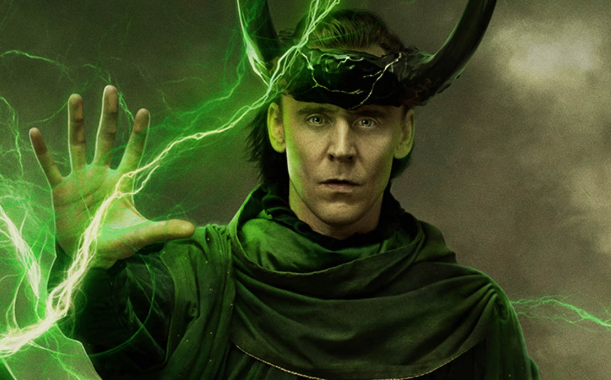
The story concludes with a haunting and beautiful image: Loki, dressed in a new, emerald-tinged robe and a crown of horns, sitting on a throne at the center of a glowing, golden tree of time. This structure is Yggdrasil, the World Tree of Norse mythology, reimagined as a living Multiverse. Loki is no longer a variant or a prisoner; he is the literal heart of existence. He sits in total isolation, watching over his friends through the branches of time. The TVA, now under the leadership of B-15 and Mobius, shifts its mission from “pruning” to “monitoring,” ensuring that the variants of Kang do not rise to power. Loki has finally achieved his “glorious purpose,” but it is a lonely, divine burden that saves every world at the cost of his own life in them.
Further Reading
- Loki: Agent of Asgard by Al Ewing
- The Poetic Edda (Oxford World’s Classics)
- American Gods by Neil Gaiman
- Journey Into Mystery by Kieron Gillen




Leave a Reply