
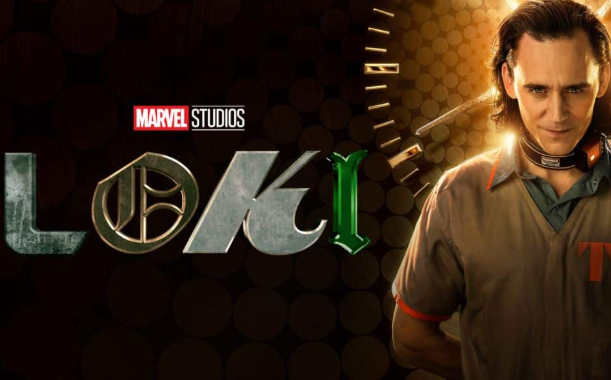
Time constraints often make it difficult to stay current with every television series. Zentara.blog provides recaps of major plot points, including spoilers, to ensure you remain updated or are prepared for an upcoming season.
The God of Mischief has always been a fan favorite, but his solo journey into the heart of the multiverse redefined the very fabric of the Marvel Cinematic Universe. Moving away from the shadows of his brother Thor, this story thrusts a “variant” version of Loki into a high-stakes, sci-fi noir adventure that questions the nature of free will, destiny, and the identity of a villain. What begins as a simple escape from custody evolves into a cosmic detective story that shakes the foundations of reality itself.
When we meet this version of Loki, he is fresh from his defeat in New York, still clutching the Tesseract and harboring dreams of a throne. However, he quickly learns that in the vast expanse of the multiverse, his “glorious purpose” is nothing more than a scripted role in a much larger, more terrifying play. By exploring the corridors of the Time Variance Authority (TVA) and the desolate reaches of the end of time, the narrative provides a masterclass in character development and world-building. Here are the ten most significant plot points that define this mind-bending saga.
1. The Tesseract Theft and the Gobi Desert Arrest
The narrative kicks off during a chaotic moment in history where the Avengers attempt to retrieve the Infinity Stones. In the confusion, the 2012 version of Loki seizes the Tesseract and teleports away, landing in the Gobi Desert. This act of spontaneous opportunism is what the Time Variance Authority calls a “Nexus Event”—a moment where a person deviates from their “Sacred Timeline.” Almost immediately, Loki is intercepted by Minutemen, soldiers of the TVA, who use advanced technology to neutralize his magic and bring him into custody. This moment is crucial because it establishes the existence of a higher power that governs time itself. Loki, who once viewed himself as a god among men, is suddenly reduced to a mere “variant” in a bureaucratic machine. It marks the end of his path as a traditional conqueror and the beginning of his role as a cosmic anomaly, forcing him to adapt to a world where his royal status holds no currency and his magic is silenced by the hum of office machinery.
2. The Deconstruction of a God’s “Greatest Hits”
One of the most profound psychological moments occurs when Agent Mobius M. Mobius brings Loki into a “Time Theater” for interrogation. Rather than using physical torture, Mobius uses a projector to show Loki the life he was supposed to live—the life of the “Prime” Loki. He witnesses his role in his mother Frigga’s death, the loss of his father Odin, and his eventual redemption alongside Thor, culminating in his brutal death at the hands of Thanos. This “greatest hits” reel strips away Loki’s bravado, forcing him to confront the cyclical nature of his failures. He realizes that in the eyes of the universe, his purpose was never to rule, but to cause pain and chaos so that others could become the best versions of themselves. This realization is a shattering blow to his ego, serving as the catalyst for his transformation. It is the moment Loki stops being a caricature of villainy and begins the difficult work of self-reflection, wondering if he can ever truly change his stripes.
3. The Infinity Stones as Mere Paperweights
In a scene that redefined the power scaling of the entire universe, Loki attempts to escape the TVA and stumbles upon a drawer full of Infinity Stones. These artifacts, which were once the most coveted and dangerous objects in existence, are being used by TVA employees as simple paperweights. This revelation is a masterstroke of storytelling that underscores the absolute authority of the TVA. It visually demonstrates that the stakes of the previous cosmic conflicts were localized and insignificant compared to the management of the timeline. For Loki, seeing the Soul Stone and Time Stone discarded like office supplies is the ultimate reality check. It proves that the “God” he thought he was is nothing in the face of the organization that oversees the multiverse. This point serves to ground the audience in the new rules of the series: power is relative, and the true master of reality isn’t someone who can punch hard or cast spells, but the one who holds the pen that writes the script of time.
4. The Hunt for the “Superior” Loki Variant
The core mystery of the early story revolves around a dangerous fugitive who is systematically murdering TVA agents and stealing their “Reset Charges.” Mobius recruits our Loki to help track this individual, theorizing that “only a Loki can catch a Loki.” This leads to a series of investigations across time, from a Renaissance-era cathedral to a futuristic superstore during a hurricane. The revelation that the “Variant” is a female version of himself, who later adopts the name Sylvie, flips the script on the protagonist’s expectations. Sylvie is not interested in ruling the TVA; she wants to burn it down. Her presence introduces the concept of “Enchantment,” a form of magic that allows her to inhabit the minds of others, which contrasts with Loki’s visual illusions. This partnership—and the rivalry that precedes it—forces Loki to see his own traits reflected in someone else, sparking a complex dynamic that shifts from mutual distrust to a deep, cosmic connection that threatens the stability of the timeline.
5. The Apocalypse Hideout Theory
Loki proves his worth to the TVA by deducing how the Variant has managed to stay hidden for so long. He realizes that if a person stands in the middle of a total apocalypse—a moment where everyone and everything is about to be destroyed—nothing they do can create a “branch” in the timeline because those consequences are immediately erased by the disaster. To test this, Loki and Mobius travel to the eruption of Mount Vesuvius in Pompeii. This scene is both comedic and tragic, as Loki gleefully informs the doomed citizens of their fate while proving that his presence doesn’t alert the TVA’s sensors. This “Apocalypse Theory” is a vital plot point because it provides the tactical framework for the rest of the journey. It also highlights the cold logic of the Sacred Timeline: the TVA is perfectly willing to let thousands die in natural disasters as long as the “script” remains intact. It further alienates Loki from the organization’s mission, making him realize the inherent cruelty of a “perfect” timeline.
6. The Bond of Lamentis-1
Stranded on a doomed moon in the year 2077, Loki and Sylvie are forced to work together to escape before the planet above crashes into them. This sequence, known for its vivid purple hues and high-stakes tension, is where the two Lokis truly begin to bond. They discuss their pasts, their philosophies on love, and the “Nexus Events” that led to their arrests. Their connection becomes so strong that it creates a “Nexus Event” unlike any the TVA has ever seen—two variants of the same person falling in for each other, which generates enough energy to be detected even in the heart of an apocalypse. This point is essential because it introduces a radical new idea: that “Loki” is not a fixed identity of betrayal and loneliness, but one capable of genuine affection and partnership. It humanizes both characters and provides the emotional stakes for the finale, as their relationship becomes a direct threat to the order of the universe.
7. The Truth About the TVA’s Workers
One of the most shocking twists occurs when Sylvie reveals the true nature of the TVA’s staff. Contrary to the propaganda spread by the organization, the workers—from the high-ranking Judge Renslayer to the boots-on-the-ground Hunter B-15—are not “created” by the Time-Keepers. They are all variants themselves, plucked from their original timelines and had their memories wiped to serve as eternal bureaucrats. This revelation shatters the moral authority of the TVA. It transforms the organization from a “necessary evil” into a mass-kidnapping operation that robs individuals of their lives and free will. This knowledge begins to spread through the ranks, starting with B-15 and Mobius, leading to an internal revolution. It shifts the conflict from “Loki vs. the Law” to “Individuals vs. a Totalitarian System,” making the destruction of the TVA not just a chaotic goal for Sylvie, but a moral imperative for everyone involved.
8. Beheading the Animatronic Gods
After being captured and brought before the legendary “Time-Keepers”—the supposed architects of the Sacred Timeline—Loki and Sylvie engage in a desperate battle in the heart of the TVA. With the help of a rebellious B-15, they manage to reach the dais of the gods. In a moment of triumph, Sylvie decapitates one of the Time-Keepers, only to discover a horrific truth: the gods are nothing but mindless androids. They are hollow puppets controlled by someone else from behind the scenes. This plot point is the ultimate “curtain pull” moment, turning a cosmic religion into a cheap theatrical trick. It leaves the characters, and the audience, with the terrifying question of who is actually in charge. The vacuum of power created by this discovery leads to a frantic race to find the “Man Behind the Curtain,” as the facade of the TVA completely collapses, leaving the timeline vulnerable to total chaos.
9. Survival in the Void at the End of Time
When Loki is “pruned” (a process originally thought to be execution), he discovers that he hasn’t been killed, but sent to a “Void” at the very end of time. This desolate wasteland is where the TVA dumps everything they want to forget. Here, Loki encounters a “Council of Lokis,” including a Kid Loki, an Alligator Loki, and a “Classic Loki” who lived his life in hiding. This setting serves as a graveyard of possibilities, where the characters must survive the “Alioth”—a massive, cloud-like entity that consumes all matter and energy. The standout moment here is the sacrifice of Classic Loki, who uses his immense magical power to create a massive illusion of Asgard to distract Alioth. This allows our Loki and Sylvie to “enchant” the beast and reach the final destination. This point emphasizes the theme of redemption; even the most cynical Loki can find a “glorious purpose” in self-sacrifice, proving that the cycle of villainy can be broken through a heroic act.
10. The Citadel and He Who Remains
In the final chapter, Loki and Sylvie reach the “Citadel at the End of Time,” where they meet the true creator of the TVA: a man known as He Who Remains. He explains that he is a survivor of a multiversal war caused by his own “variants”—dangerous versions of himself who sought to conquer all of existence. To prevent total destruction, he isolated the Sacred Timeline and created the TVA to maintain order. He offers Loki and Sylvie a choice: kill him and unleash an infinite number of his variants upon the multiverse, or replace him and continue the work of the TVA. The disagreement between Loki, who fears the chaos of war, and Sylvie, who demands her revenge and free will, leads to a heartbreaking betrayal. Sylvie sends Loki back to the TVA and kills He Who Remains, effectively shattering the timeline and birthing a multiverse of infinite possibilities. This ending changes the landscape of the entire universe forever, setting the stage for a new era where every choice creates a new reality.
Further Reading
- Norse Mythology by Neil Gaiman
- Loki: Where Mischief Lies by Mackenzi Lee
- The Gospel of Loki by Joanne M. Harris
- The Rise and Fall of D.O.D.O. by Neal Stephenson and Nicole Galland




Leave a Reply