
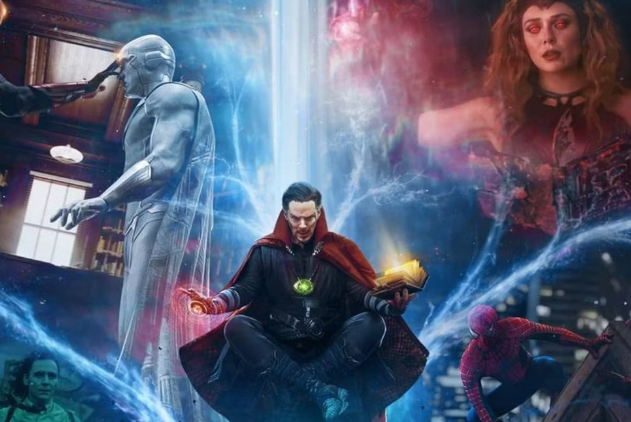
The transition from a single, cohesive timeline to a sprawling web of infinite realities represents the most ambitious leap in the history of cinematic storytelling. Following the conclusion of the initial era of Earth’s Mightiest Heroes, the narrative landscape shifted from the physical struggle for the Infinity Stones to a metaphysical battle for the very fabric of existence. This period, known as the Multiverse Saga, expands the boundaries of the known universe, introducing the concept that every choice made creates a new branch, every “what if” is a reality, and every hero is but one version of an infinite self. This guide serves as an essential resource for understanding the mechanics, the players, and the stakes of a saga that has redefined the meaning of “universe.”
1. The Multiverse Defined: A Kaleidoscope of Infinite Realities
At its most fundamental level, the Multiverse is the collection of every possible universe, dimension, and timeline that exists simultaneously. While earlier stories focused on a single “Sacred Timeline,” the Multiverse Saga reveals that this was merely an artificial constraint. Once the barriers were removed, the floodgates opened to a reality where different versions of history play out in parallel. In some worlds, heroes might have made different choices; in others, the laws of physics themselves might be fundamentally altered. This concept transforms the narrative from a linear progression into a 3D grid where characters can, under specific circumstances, cross over into alternate lives.
The beauty of the Multiverse lies in its infinite potential for storytelling. It allows for the exploration of “Variants”—alternate versions of familiar faces who may have taken darker paths or achieved even greater heights. This isn’t just a gimmick for cameos; it is a thematic tool that examines the nature of identity. If there are a million versions of a hero, what is the core essence that makes them who they are? By placing characters in front of a mirror of their own alternate lives, the saga delves deep into the soul of heroism, asking whether destiny is a fixed path or a series of choices that can always be rewritten.
2. The Sacred Timeline: Order, Chaos, and the TVA
For eons, the chaos of the Multiverse was held at bay by an organization known as the Time Variance Authority (TVA). This bureaucratic entity, existing outside of space and time, was tasked with “pruning” any timeline that deviated from the approved path, known as the Sacred Timeline. The goal was to prevent the emergence of variants that could lead to a multiversal war. This era was defined by a cold, clinical order where free will was largely an illusion. If a person stepped off their pre-written path, the TVA would arrive to reset the timeline, effectively erasing that reality and everyone in it.
The shattering of this status quo is the spark that ignites the entire saga. When the figurehead behind the TVA was removed, the Sacred Timeline began to branch uncontrollably. This transformation from a single line into a sprawling tree of realities represents the birth of true freedom—and true danger. The TVA eventually evolved from a force of suppression into a monitoring body, observing the new branches and attempting to manage the fallout of a multiverse that is now “growing” in every direction. This shift highlights a major theme of the saga: the tension between the safety of a controlled, predictable existence and the dangerous, beautiful unpredictability of a world where anything is possible.
3. The Council of Kangs: A Multiversal Dynasty
The primary existential threat of this era is not a single being, but a collective of variants known as the Council of Kangs. Originating from the 31st century, these versions of a brilliant scientist discovered the existence of the Multiverse and, in many cases, sought to conquer it. Unlike previous villains who focused on a single planet or galaxy, the Kangs operate on a temporal and multiversal scale. They are masters of time travel and dimensional hopping, making them an adversary that is effectively everywhere and nowhere at once.
The danger of the Council lies in their diversity. Some variants are warriors, some are scholars, and others are manipulators who operate from the shadows. Because they share the same brilliant mind but possess different temperaments, they are often as much a threat to each other as they are to the heroes. Their internal power struggles and “Multiversal Wars” are what originally necessitated the creation of the Sacred Timeline. Their re-emergence signifies a return to a state of total instability, where the very concept of “time” becomes a weapon. Defeating a Kang is difficult, but defeating an infinite number of them—all collaborating or competing across history—is a task that requires a level of coordination never before seen among the heroes of the multiverse.
4. Incursions: When Worlds Collide
As the barriers between universes thin, the greatest threat to existence is the phenomenon known as an “Incursion.” An incursion occurs when two universes are drawn together, eventually colliding with one another. When this happens, both universes are destroyed unless one is eradicated to save the other. This creates a horrific moral dilemma: how many lives are you willing to take to ensure your own reality survives? Incursions are often caused by “multiversal travel” or the prolonged presence of a being from one universe in another, effectively acting as a form of cosmic rejection.
This mechanic introduces a sense of mounting dread to the saga. It means that the mere act of exploring the multiverse can be a death sentence for entire realities. As heroes jump between dimensions to solve problems, they inadvertently leave behind “footprints” that can lead to the collapse of those worlds. This turns the multiverse from a playground into a minefield. It forces characters to weigh their desire for exploration and connection against the potential for total annihilation. The looming threat of a final, massive incursion is the ticking clock of the saga, driving the narrative toward a point where the survivors must decide what, if anything, can be saved when everything starts to crumble.
5. Variants and the Mirror of Self
The introduction of “Variants” is perhaps the most personal element of the Multiverse Saga. A variant is an alternate version of a character who exists in a different timeline. They might look identical, or they might be completely different in appearance, gender, or even species. This concept allows for a deep dive into the “Nature vs. Nurture” debate. By seeing a hero who was raised in a different environment or who made one different choice at a critical moment, we gain a better understanding of what makes them who they are.
These encounters are rarely simple. Meeting a variant of oneself can be a source of profound comfort or intense horror. Some characters find themselves competing with their alternate selves for resources or recognition, while others find the companionship they’ve always lacked. This dynamic is particularly powerful when a hero meets a version of themselves that has already “failed” or turned to evil. It serves as a cautionary tale and a reminder that heroism is a choice made every day, not a fixed state of being. The presence of variants ensures that the stakes are always personal, as the heroes are literally fighting for their own identity across the stars.
6. The Scarlet Witch and the Darkhold: A Study in Corruption
A central figure in the early stages of the multiversal collapse is the Scarlet Witch, whose immense power is tied to the “Chaos Magic” that can reshape reality. Her journey is a tragic exploration of how grief, when combined with absolute power, can lead to catastrophe. Driven by the loss of her family, she turned to the Darkhold—a book of dark magic from a “Hell Dimension”—to find a way into a reality where her loved ones still existed. This pursuit turned her from a defender into a multiversal predator, willing to tear through other worlds to find her peace.
The Darkhold serves as a symbol of the corruptive nature of the multiverse. It promises everything but demands a price that is often the user’s soul or sanity. Wanda’s arc demonstrates the danger of “dreamwalking,” a practice where one possesses the body of their variant in another universe. This act is a violation of the natural order and a primary cause of incursions. Her story is a warning that the multiverse should not be used to escape pain; doing so only spreads that pain across infinite realities. The legacy of the Scarlet Witch remains a shadow over the saga, reminding all heroes that the line between love and destruction is paper-thin when you can rewrite the world.
7. The Fantastic Four and the X-Men: New Pillars of the Saga
As the saga expands, it brings into focus legendary groups that were previously absent or hidden: the Fantastic Four and the X-Men. The Fantastic Four, often described as the “First Family” of heroes, bring a focus on exploration, family bonds, and high-concept science that perfectly suits a multiversal setting. Their arrival signals a shift toward a more optimistic, discovery-driven form of heroism. Conversely, the X-Men—beings born with the “X-Gene”—introduce themes of prejudice, evolution, and the struggle for acceptance that resonate deeply in a world increasingly filled with “others” from different timelines.
The integration of these characters is often tied to the multiverse itself. In some cases, they are revealed to have existed in parallel realities all along, only coming into contact with the “main” universe as the walls come down. This allows for a fresh start for these icons while acknowledging their long histories. Their presence adds new layers of complexity to the team dynamics; the scientific brilliance of Reed Richards and the tactical leadership of figures like Professor X or Cyclops provide a much-needed balance to the existing heroes. Together, they represent the new pillars upon which the future of the multiverse will be built, bringing new powers and new philosophies to the fight for survival.
8. The Role of Doctor Strange: The Guardian of the Multiverse
If any single character acts as the navigator of this era, it is Doctor Strange. As a Master of the Mystic Arts, he is one of the few beings with the knowledge and the power to perceive the threads of the multiverse. His journey is one of increasing responsibility and the heavy burden of “knowing too much.” Strange often finds himself in the impossible position of having to make cold, calculated decisions for the greater good, often at the cost of his own happiness or public reputation.
Strange’s role is defined by the concept of “The Grand Design.” He is constantly searching for the one path among millions that leads to a positive outcome. However, the Multiverse Saga challenges his arrogance, showing him that he cannot control every variable. His encounters with alternate versions of himself—some of whom have caused the end of their own worlds—act as a mirror for his own potential for destruction. Strange is the bridge between the grounded world and the cosmic unknown, and his ability to hold the line against multiversal chaos is often the only thing preventing total collapse. He is the guardian who must stand at the edge of the void and decide who is worth saving.
9. God of Stories: The Evolution of Loki
Perhaps the most significant transformation in the saga belongs to Loki. Once a “God of Mischief” defined by his desire for a throne, he evolved into the literal anchor of the multiverse. His journey through the TVA led him to understand that his “glorious purpose” was not to rule, but to serve as the protector of all timelines. In a final act of ultimate sacrifice, he took his place at the center of the branching realities, holding them together with his own magic to prevent them from dying.
In this new role as the “God of Stories,” Loki represents the ultimate redemption. He is no longer the villain or even the anti-hero, but the silent sustainer of existence. By choosing to hold the “tree” of the multiverse together, he ensures that every variant has the chance to live their own story. This transformation reframes the entire saga; it is no longer just about survival, but about the right of every reality to exist. Loki’s presence is a constant, invisible force that allows the heroes to keep fighting, proving that even the most selfish heart can become the most selfless guardian when the fate of everything is on the line.
10. Battleworld and Beyond: The Road to Secret Wars
The ultimate destination of the Multiverse Saga is the event known as “Secret Wars.” This is the point where the incursions become unavoidable and the multiverse finally collapses. Out of the ashes of these destroyed worlds, a new, singular patchwork planet often emerges: Battleworld. On this world, fragments of different realities are stitched together, forced to coexist in a brutal struggle for dominance. It is the ultimate survival-of-the-fittest scenario, where heroes and villains from across the multiverse must decide what kind of world they want to build from the ruins.
Secret Wars represents the “reset button” for the saga. It is a moment of total convergence where every plot thread, every variant, and every conflict comes to a head. The resolution of this event will likely determine the shape of the universe for generations to come. It is a story about legacy, sacrifice, and the hope that something better can be built from the pieces of the past. As the saga moves toward this climax, the stakes have never been higher, and the question remains: when the multiverse finally ends, what will be left to remember of the heroes who tried to save it?
Further Reading
- Marvel Studios: The Multiverse Saga – Official Guide by Marvel Entertainment
- Secret Wars (2015) by Jonathan Hickman and Esad Ribić
- The Art of the Multiverse by Various Authors
- Loki: The Guide to the God of Stories by DK Publishing
- Doctor Strange: Multiverse of Madness Companion by Titan Books
- Marvel Cinematic Universe – 10 Things You Need To Know About The MCU’s Spider-Man (MCU) Explained
- The Marvel Blueprint: 10 Genius Ways the MCU Mastered the Art of the Interconnected Universe
- Infinite Realities: The Ultimate Guide to the MCU’s Multiverse Saga and What Lies Beyond the Sacred Timeline
- From Stones to Stars: The Ultimate Guide to the Infinity Saga and How It Changed Cinema Forever
- Earth’s Mightiest Heroes: The Ultimate Guide to the Avengers and Why They Rule the MCU
- The Genius Behind the Armor: 10 Defining Secrets of the MCU’s Iron Man Explained
- 10 Things You Need To Know About The Movie Iron Man 3 (2013)
- 10 Things You Need To Know About The Movie The Avengers (2012)
- 10 Things You Need To Know About Captain America: The First Avenger (2011)
- 10 Things You Need To Know About Thor (2011)



