
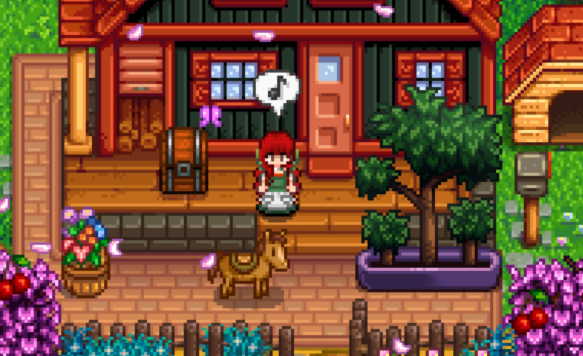
At first glance, Stardew Valley appears to be a charming, pixelated escape—a simple tale of a disillusioned office worker inheriting a grandfather’s dilapidated farm. However, beneath its tranquil surface lies one of the most remarkable success stories in the history of interactive entertainment. Developed almost entirely by a single individual over the course of half a decade, the game has grown from a humble tribute to classic farming simulators into a global phenomenon that redefined the “cozy game” genre. Its world is teeming with secrets, from rare environmental events to complex character arcs that tackle surprisingly mature themes. Whether you are a master of ancient fruit wine or a newcomer just clearing your first patch of weeds, these ten revelations uncover the meticulous craft and hidden depths behind the valley.
1. The One-Man “ConcernedApe” Miracle
The most staggering fact about the game’s development is that it was created entirely by Eric Barone, known by his alias “ConcernedApe.” For four and a half years, Barone worked 12-hour days, seven days a week, to build the game from scratch. Unlike most modern titles that employ hundreds of specialists, Barone acted as the sole programmer, artist, composer, writer, and sound designer. He even taught himself how to code and create pixel art specifically for this project. This singular vision ensured that every blade of grass and every line of dialogue felt cohesive. It remains the gold standard for independent development, proving that a lone creator with enough dedication can compete with—and often outshine—multi-billion-dollar corporations.
2. It Was Originally a Tool to Learn Programming
Most people assume the game was born from a grand business plan, but its origins were much more modest. After graduating with a degree in Computer Science, Barone found it difficult to break into the tech industry. He decided to create a small “clone” of his favorite classic farming games as a way to bolster his C# programming skills and improve his portfolio for job applications. What started as a coding exercise quickly spiraled into an obsession as he realized he could improve upon the mechanics of the games he grew up with. The project eventually became so ambitious that the idea of using it for a job application was abandoned in favor of a full commercial release.
3. The Hidden “Secret Woods” and Rare Events
The valley is far more dynamic than it initially seems, featuring a “luck” system that influences nearly every aspect of gameplay. Beyond the standard farming loop, the game contains incredibly rare occurrences that many players never see. For instance, there is a tiny chance that a “Meteorite” will crash onto your farm overnight, or that a mysterious “Strange Capsule” will appear, suggesting an extraterrestrial presence. There is even a 1-in-1,000 chance of seeing a sea monster in the ocean or a green creature appearing in the water near the docks. These rare “Easter eggs” keep the community engaged, as players continue to discover subtle environmental changes even hundreds of hours into their save files.
4. A Soundtrack Composed with Zero Formal Training
The musical score of the game is widely praised for its ability to evoke the changing seasons, from the upbeat whistles of Spring to the melancholic synths of Winter. Remarkably, Eric Barone had no formal training in music theory or composition when he started. He composed all 70+ tracks using basic software, relying entirely on his ear and his experience playing in various bands. He wanted the music to feel “organic” to the world, often matching the tempo of the songs to the walking speed of the player character. The result is a soundtrack that feels deeply personal and has since been performed by live orchestras around the world.
5. The Darker Themes Hidden in Pelican Town
Despite its colorful aesthetic, the game does not shy away from heavy, real-world issues. Pelican Town is home to characters struggling with alcoholism, post-traumatic stress disorder, depression, and the crushing weight of corporate expansion. For example, the character Kent returns to the village mid-game, exhibiting clear signs of trauma from his time at war, while Pam and Shane’s storylines deal directly with the spiral of addiction. By including these “grounded” struggles, the game elevates itself from a simple fantasy into a poignant commentary on the human condition, making the relationships you build feel earned rather than superficial.
6. The JojaMart vs. Community Center Moral Choice
The central conflict of the game—restoring the dilapidated Community Center or buying a membership to the mega-corporation JojaMart—is a sophisticated social commentary. Choosing the Community Center path requires the player to engage with the land, gathering seasonal produce and foraging items to satisfy the magical Junimos. Conversely, the JojaMart path turns the game into a pure capitalistic simulator, where any problem can be solved simply by throwing enough gold at it. This choice fundamentally changes the player’s relationship with the town, forcing them to decide whether they value traditional community ties or the cold efficiency of corporate convenience.
7. Characters Were Redrawn Multiple Times
The iconic portraits of the bachelors and bachelorettes we know today went through dozens of iterations. In the early stages of development, the art style was much rougher and more experimental. Barone spent years refining the “look” of the villagers, often redrawing them from scratch as his own artistic skills improved. Some characters, like Haley or Sebastian, looked significantly different in the alpha versions of the game. This commitment to “getting it right” is why the final character designs feel so iconic; they were the result of a creator who refused to settle for anything less than perfection, even if it meant deleting months of work.
8. The Legend of the “Lonely Stone”
In the world map of the game, there is a large rock in the water known as the “Lonely Stone.” Despite it appearing prominently on the UI map, it is one of the only locations in the game that the player cannot actually visit or interact with. For years, this led to massive community speculation and “conspiracy theories” about secret boss fights or hidden mermaid treasures. Barone eventually confirmed that it was mostly a decorative element, but the mystery surrounding it became a legendary part of the game’s lore. It serves as a reminder of the power of environmental storytelling and how a single “unreachable” pixel can spark the imagination of millions.
9. The Game’s Unique Relationship with Time
Unlike many modern games that use “real-time” clocks or aggressive timers, the time in the valley is carefully tuned to create a “pressure-cooker” effect of productivity. Each day lasts approximately 14 minutes of real-world time, and a full season is exactly 28 days. This specific math ensures that the player always feels they have “just enough” time to finish their chores but never enough to do everything they want. This creates a compelling “just one more day” gameplay loop that has made the game famously addictive. The rigid 28-day structure also ensures that seasons always start on a Monday, providing a sense of rhythmic, predictable order to the farm life.
10. An Endless Life After Release
While most games are “finished” once they hit store shelves, this title has continued to evolve through massive, free content updates. Long after its initial debut, the game received entirely new regions (like Ginger Island), complex endgame quests, and a fully functional multiplayer mode. These updates weren’t paid DLC; they were “gifts” to the community from a developer who felt the game could always be better. This philosophy of post-launch support has turned a 40-hour farming game into a 500-hour epic, ensuring that the valley remains a relevant and vibrant place for players to return to year after year.
Further Reading
- Blood, Sweat, and Pixels: The Triumphant, Turbulent Stories Behind How Video Games Are Made by Jason Schreier
- The Stardew Valley Guidebook by Kari Fry
- Stay Awhile and Listen by David L. Craddock
- Handmade Pixels: Independent Video Games and the Quest for Authenticity by Jesper Juul




Leave a Reply