
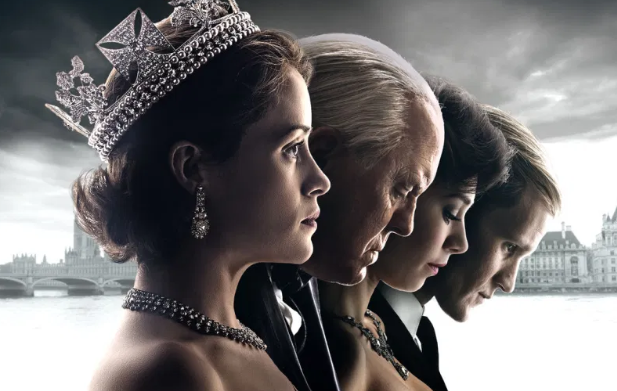
10 Hidden Secrets of The Crown: The Behind-the-Scenes Facts That Keep Audiences Enthralled
The British Monarchy has always been a source of global fascination, but few pieces of media have pulled back the velvet curtain as effectively as the acclaimed series The Crown. This sweeping historical drama does more than just chronicle the reign of Queen Elizabeth II; it serves as a masterclass in production, a psychological deep dive into the burden of duty, and a bridge between the dusty pages of history and the vibrant world of modern streaming.
What is it about this specific show that keeps viewers coming back, even as the cast changes and the decades roll forward? It isn’t just the jewelry or the palaces—though those are certainly part of the appeal. It is the meticulous attention to detail, the fearless narrative choices, and the constant tension between the “human” and the “crown.” Below, we explore ten fascinating facts about the series that explain its enduring legacy and why it remains a “go-to” resource for anyone interested in the intersection of power and personality.
1. The Astronomical Cost of Royal Perfection
When the series first premiered, it set a new benchmark for television budgets. Often cited as one of the most expensive television productions in history, the cost per episode frequently hovered around the ten-million-pound mark. This staggering investment wasn’t just for show; it was a deliberate choice to ensure that every frame carried the weight and opulence of the real-life monarchy.
The budget allowed the production team to avoid the “cheap” look often associated with historical reenactments. Instead of relying heavily on green screens and digital shortcuts, the creators invested in physical assets. This included renting some of the most prestigious stately homes in the United Kingdom and building massive, life-sized replicas of Buckingham Palace’s interiors. This level of financial commitment communicates a sense of gravity to the viewer; you aren’t just watching a play, you are stepping into a world that feels as solid and immutable as the institution it depicts.
2. The Radical “Two-Year” Casting Gamble
One of the most discussed and controversial decisions in the show’s history was the choice to replace the entire main cast every two seasons. In traditional television, producers fight to keep their stars as long as possible, but the creators of The Crown argued that “aging up” actors with makeup and prosthetics would eventually break the audience’s immersion.
By rotating the cast—bringing in new heavyweights for the early, middle, and late years of the Queen’s reign—the show effectively reinvented itself every couple of years. This kept the narrative fresh and allowed the show to explore the different “energies” of the royals at various stages of their lives. It turned the series into a prestigious relay race, where legendary actors passed the baton to one another, ensuring that the characters remained vibrant and believable rather than becoming caricatures of their younger selves.
3. The Incredible Precision of the Research Department
Behind the brilliant scripts lies a powerhouse research team. Consisting of eight to ten dedicated historians and researchers, this department produces hundreds of documents for every single season. Their goal isn’t just to get the dates of battles or the names of Prime Ministers right; they are looking for the “scent” of the era. They comb through diaries, press clippings, and video archives to find the exact phrasing of a private conversation or the specific brand of tea preferred in a particular year.
This rigor creates a fascinating blend of “historical accuracy” and “imaginative accuracy.” While the writers obviously have to invent dialogue for private bedroom scenes, those conversations are built on a foundation of documented character traits and known historical stances. This research-heavy approach gives the show a sense of authority, making even its most speculative moments feel plausible to the audience. It is this “joined-up” thinking that transforms a simple drama into a definitive cultural record.
4. The $37,000 Replica of the Royal Wedding Dress
Costume design in The Crown is not merely about fashion; it is about storytelling. Nowhere is this more evident than in the recreation of the Queen’s wedding dress. For the pilot episode, the costume department spent approximately $37,000 and seven weeks of labor to create a nearly identical replica of the original 1947 gown. The dress was so accurate and so heavy that the actress required assistance just to walk across the set.
This level of detail extends to every piece of clothing seen on screen. The show’s in-house dressmaking team has created hundreds of original outfits, many of which are exact matches for clothes the royal family was photographed in during the 20th century. By mirroring the real-world wardrobe so closely, the show taps into the audience’s collective memory. When viewers see a “re-creation” of a famous outfit—like the iconic “Revenge Dress”—it triggers an immediate emotional connection, blurring the lines between the fictional drama and the reality of the historical figures.
5. The “No More Than One-Third” Digital Rule
In an era where many shows are built entirely within a computer, The Crown adheres to a strict production philosophy: no more than one-third of any given shot can be created digitally. This “no-VFX” (or low-VFX) rule forces the production team to find real-world solutions for their grandest scenes. If a scene requires a massive hallway, they don’t just “paint” one in post-production; they find a location with a massive hallway.
This commitment to practical filmmaking gives the show a tactile, “lived-in” quality. You can see the dust motes in the sunlight and the genuine texture of the heavy velvet curtains. This aesthetic choice mirrors the Monarchy itself—an institution that prides itself on being tangible and enduring in an increasingly digital and ephemeral world. By grounding the show in physical reality, the creators ensure that the stakes always feel real to the audience.
6. The “Wikipedia Effect” on Global History
The Crown has a unique power to influence the modern world: the “Wikipedia Effect.” Every time a new season drops, global search traffic for obscure historical figures mentioned in the show skyrockets. Figures who were nearly forgotten by the public—such as Lord Mountbatten or the Soviet spy Anthony Blunt—suddenly become the most searched people on the planet.
This shows that the series is doing more than just entertaining; it is actively educating (and occasionally re-educating) a global audience. It acts as a catalyst for curiosity, prompting viewers to pause the episode and look up the “real story.” This engagement is one of the primary reasons the show maintains its “evergreen” status. It isn’t just a story you watch once; it is a jumping-off point for a deeper exploration of 20th-century history, politics, and social change.
7. The Subtle Art of the Royal Location Stand-In
While the show depicts life inside Buckingham Palace, Windsor Castle, and Balmoral, the production team is famously barred from filming inside the actual royal residences. This led to a massive logistical challenge: how to find locations that look “more royal than the royals.” The team eventually settled on several “stand-ins” that have now become iconic to fans of the show.
Lancaster House in London is frequently used for the formal interiors of Buckingham Palace, while Wilton House provides the backdrop for the more intimate family scenes. These locations are often even more opulent than the real thing, creating a “hyper-royal” aesthetic that matches the audience’s expectations of how a monarch should live. The hunt for these locations is a monumental task, with each season utilizing over 100 different sites across multiple countries to bring the world of the Queen to life.
8. A Soundtrack Designed for Tectonic Shifts
The music of The Crown is essential to its atmospheric power. The main theme was composed by the legendary Hans Zimmer, a man known for his ability to create “epic” soundscapes. Zimmer and his collaborators wanted the music to feel “regal without being pompous.” They aimed to capture the sound of “tectonic plates shifting”—the slow, heavy movement of an ancient institution trying to stay upright in a changing world.
The score often utilizes deep strings and ticking-clock motifs, emphasizing the relentless passage of time and the weight of history. This auditory landscape helps to elevate the show above a standard period drama. It gives the series a sense of “cosmic” importance, suggesting that the decisions made by these characters aren’t just personal—they are part of a grand, historical machinery that has been turning for a thousand years.
9. The Corgi Comeback and the Power of Pop Culture
One of the most delightful and tangible impacts of the show has been the resurgence of the Pembroke Welsh Corgi. For several years before the show’s debut, the breed was actually on the “at-risk” list for the Kennel Club, meaning its popularity was in a steep decline. However, after the show highlighted the Queen’s lifelong love for her dogs, interest in the breed surged by over 20%.
This “Corgi Resurgence” is a perfect example of how the show humanizes the Monarchy. By focusing on the small, relatable details—like the Queen’s devotion to her pets—the series makes an otherwise distant and unapproachable figure feel like someone the audience knows. It reminds viewers that beneath the titles and the tiaras, there are human impulses and simple comforts, a realization that is key to the show’s emotional resonance.
10. The Existential Struggle of “The Crown” vs. “The Individual”
At its core, the show is a tragedy about the erasure of the self. This is the central fact that keeps fans watching: the recurring theme that to “be” the Crown, one must stop being a person. This conflict is introduced in the first season and remains the driving force until the very end. Whether it is Princess Margaret’s heartbreak, Prince Charles’s frustration, or Elizabeth’s own stoicism, the show constantly asks what it costs a human being to serve as a symbol.
This existential inquiry is what makes the show evergreen. While the political crises and scandals are interesting, the struggle to balance duty with personal happiness is a universal human experience. By framing the Monarchy as a “golden cage,” the creators have made a show that is deeply empathetic. It doesn’t just ask us to look at the royals; it asks us to feel for them, creating a bond between the audience and the characters that transcends the specific details of British history.
Further Reading
- The Crown: The Official Companion (Volumes 1 & 2) by Robert Lacey
- Elizabeth the Queen: The Life of a Modern Monarch by Sally Bedell Smith
- The Palace Papers: Inside the House of Windsor–the Truth and the Turmoil by Tina Brown
- Ninety-Nine Glimpses of Princess Margaret by Craig Brown
- The Diamond Queen: Elizabeth II and Her People by Andrew Marr
- 10 The Crown TV SHOW Facts That Keep People Watching
- 10 Futurama TV SHOW Facts That Still Hold Up
- 10 Things You Should Know About Speedy Gonzales – Looney Tunes
- 10 Things You Should Know About Yosemite Sam – Looney Tunes
- 10 Things You Should Know About Starlight From The Boys TV Show
- 10 Things You Should Know About Road Runner – Looney Tunes
- 10 Things You Should Know About Wile E. Coyote – Looney Tunes
- 10 Things You Should Know About Tweety Pie – Looney Tunes
- 10 Things You Should Know About Sylvester The Cat – Looney Tunes
- 10 Things You Should Know About Porky Pig – Looney Tunes



