
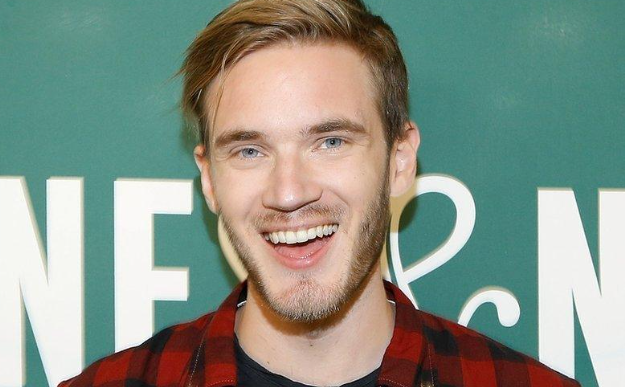
In the digital age, few names resonate as powerfully as PewDiePie. For over a decade, Felix Kjellberg has been the face of a platform that changed the way the world consumes entertainment. What began as a young man playing horror games in a small apartment in Sweden transformed into a global phenomenon that challenged the very foundations of traditional media. PewDiePie’s journey is not just a story of high subscriber counts; it is a narrative of adaptability, resilience, and the complicated relationship between a creator and their audience.
To understand the modern internet, one must understand PewDiePie. He is the pioneer who proved that an individual with a webcam and a distinct personality could command more attention than multi-billion-dollar television networks. From the “Bro Army” to the “Great Subscriber War,” his career has been a rollercoaster of viral triumphs and intense public scrutiny. This article serves as the definitive guide to the man behind the screen, exploring his origins, his evolution, and why he remains the most significant figure in the history of online video.
1. Felix Kjellberg: The Man Behind the Moniker
Before he was a digital icon, he was simply Felix Arvid Ulf Kjellberg, born and raised in Gothenburg, Sweden. Growing up in a family of corporate executives, Felix’s path seemed destined for a traditional professional career. He initially enrolled at the Chalmers University of Technology to study industrial economics and technology management. However, the pull of creativity was stronger than the appeal of a desk job. Feeling uninspired by his studies, he made the bold—and at the time, controversial—decision to drop out of university to pursue his passion for art and video games.
To support himself during those early days, Felix worked at a hot dog stand and sold prints of his Photoshop art. It was during this period of “struggling artist” reality that the PewDiePie brand was born. The name itself is a quirky combination of “pew” (the sound of a laser), “die” (what happens when the laser hits), and “pie” (a suffix added after he lost access to his original “Pewdie” account). This humble beginning is a core part of his legend; he wasn’t a polished celebrity created by an agency. He was a regular guy who chose a risky path because it made him happy.
2. Pioneering the “Let’s Play” Revolution
The foundation of the PewDiePie empire was built on a genre known as “Let’s Play.” While the concept of watching someone else play a video game is now a multi-billion-dollar industry, it was a niche hobby when Felix started. His early content focused heavily on horror games and action titles, with Amnesia: The Dark Descent serving as his breakout series. His style was characterized by high-energy reactions, eccentric humor, and a deep, personal connection with his viewers. He didn’t just play the game; he experienced it alongside his audience.
This authenticity was the “secret sauce” of his success. At a time when television was highly scripted and distant, Felix was raw and relatable. He coined the term “Bro Army” for his fanbase, ending every video with a “brofist” to the camera. This created a sense of belonging among millions of teenagers and young adults worldwide. He turned gaming from a solitary activity into a communal experience, effectively inventing the blueprint for the modern gaming influencer. His influence was so great that games he played often saw massive spikes in sales, a phenomenon that the industry eventually labeled “The PewDiePie Effect.”
3. The Unprecedented Rise to Global Dominance
PewDiePie’s ascent to the top of the YouTube rankings was nothing short of meteoric. By the mid-2010s, he had surpassed every major creator on the platform to become the most-subscribed individual in the world. This milestone was more than just a personal achievement; it signaled a paradigm shift in the entertainment industry. For the first time, a person filming in their bedroom was outperforming the most established names in Hollywood and mainstream media. He became the face of the “New Media” era, proving that personal branding and community engagement were more valuable than production budgets.
Being the most-subscribed YouTuber brought immense pressure and fame. Felix found himself on talk shows, in magazines, and at the center of a global conversation about the future of work and celebrity. Despite the massive scale of his reach, he maintained a “do-it-yourself” approach for a remarkably long time, handling his own editing and content strategy. This dedication to independence allowed him to stay agile in a rapidly changing digital landscape. His rise wasn’t just about luck; it was about being the right person at the right time with the right level of obsession for the craft.
4. Content Evolution and the “Post-Gaming” Era
No creator can stay at the top for over a decade without evolving, and Felix is a master of the pivot. As the “Let’s Play” genre became saturated, he began to branch out into commentary, vlogging, and satirical shows. He launched highly successful formats like LWIAY (Last Week I Asked You), Meme Review, and Pew News. These shows allowed him to transition from “the guy who plays games” to a cultural commentator who shaped the discourse of the internet. He became a curator of internet culture, deciding which memes lived and which “died.”
This shift was vital for his longevity. As his original audience grew up, his content matured with them. He began to incorporate more philosophical discussions, book reviews, and personal reflections into his videos. This evolution showcased a more thoughtful, introspective side of Felix that contrasted with his earlier, more chaotic persona. By diversifying his content, he ensured that he remained relevant even as the platform’s trends shifted toward short-form video and high-production stunts. He proved that a creator’s personality is the ultimate “evergreen” asset, capable of sustaining interest through multiple eras of the internet.
5. The Great Subscriber War: PewDiePie vs. T-Series
One of the most historic moments in digital history was the rivalry between PewDiePie and the Indian record label T-Series. What started as a data-driven observation about subscriber counts quickly turned into a global movement. Fans across the world rallied under the slogan “Subscribe to PewDiePie,” viewing the competition as a battle between an individual creator and a massive corporation. This rivalry transcended the internet, leading to billboards in Times Square, radio advertisements, and even fans buying a Super Bowl ad to promote his channel.
The “Subscriber War” was a double-edged sword. On one hand, it brought unprecedented attention to YouTube and demonstrated the incredible loyalty of Felix’s fanbase. On the other hand, it highlighted the shift toward corporate dominance on a platform that was originally built for individuals. While T-Series eventually took the top spot, the event solidified PewDiePie’s status as a legend. He handled the conclusion of the “war” with a mix of satire and grace, releasing a high-profile music video that acted as both a celebration of his journey and a commentary on the changing nature of the platform he helped build.
6. Navigating the Storms of Public Controversy
With extreme fame comes extreme scrutiny, and Felix’s career has not been without significant controversy. Throughout the late 2010s, several of his videos and comments were criticized for being insensitive or offensive. These incidents led to major media outlets writing critical reports, resulting in the cancellation of high-profile business deals and a temporary rift between Felix and the platform’s corporate management. He found himself at the center of a debate regarding the boundaries of edgy humor and the responsibility of influential creators.
Felix’s response to these controversies has been a key part of his story. Unlike many celebrities who rely on PR teams to craft apologies, he often addressed his mistakes directly to his audience in long-form, unscripted videos. He acknowledged where he went wrong, defended his intent when he felt it was misunderstood, and used these moments as opportunities for personal growth. This era of his career was a trial by fire that forced him to re-evaluate his influence and the impact of his words. It remains a complex chapter that illustrates the challenges of growing up in the public eye on an unfiltered medium.
7. The Philosophy of the “Bro” Personality
At his core, the appeal of PewDiePie has always been his personality. He is a self-described introvert who finds comfort in the one-on-one connection with a camera lens. His humor is often self-deprecating, absurd, and deeply rooted in “insider” internet culture. He created a language of his own—from “floor gang” to “big brain”—that allowed his fans to feel like they were part of an exclusive club. This sense of community is why his fans stayed with him even through his most difficult periods.
Unlike many modern influencers who project a lifestyle of luxury and perfection, Felix has often gone in the opposite direction. He frequently films in simple rooms, wears casual clothes, and pokes fun at the vanity of social media culture. This “anti-celebrity” stance is a major reason for his enduring popularity. He feels like a friend or an older brother rather than an untouchable icon. His willingness to be vulnerable, show his flaws, and share his genuine interests—such as his love for philosophy or Japanese culture—has created a level of trust with his audience that is virtually impossible to manufacture.
8. Transitioning to a Peaceful Life in Japan
In a move that many fans viewed as the “happy ending” to his high-stress years at the top, Felix eventually fulfilled a long-held dream of moving to Japan. Along with his wife, Marzia, he documented the complex and often humorous process of relocating to a new country. This transition marked a significant shift in his content style. His videos became more focused on lifestyle, travel, and the joys of everyday life. The move to Japan represented more than just a change of scenery; it was a symbolic “retirement” from the relentless race for views and subscribers.
Today, Felix’s content is noticeably more relaxed. He has embraced a “quality over quantity” approach, often taking breaks to enjoy his surroundings or spend time with his family. As he entered the chapter of fatherhood, his perspective on life and legacy continued to evolve. He openly discusses the importance of finding balance and not being consumed by the “YouTube grind.” This shift has been praised by fans and fellow creators alike, as it offers a healthy model for how a long-term creator can transition into a sustainable, fulfilling “post-fame” existence while still maintaining a connection with their community.
9. A Lasting Impact on YouTube Culture
PewDiePie’s impact on the digital landscape is immeasurable. He didn’t just participate in YouTube culture; he helped define it. His editing style—fast cuts, zoom-ins, and the use of “deadpan” silence—has been imitated by thousands of creators. He proved that “vulnerability” and “authenticity” were the most powerful tools in a creator’s arsenal. Furthermore, his career served as a case study for the entire industry on how to handle fame, navigate controversies, and successfully manage a personal brand over a decade of constant change.
He also paved the way for international creators. By proving that a Swedish-speaking individual could dominate the English-speaking market, he opened the doors for a globalized version of the platform. His collaborative spirit helped elevate many other creators, and his charitable efforts—raising millions for causes like clean water and mental health—showed that the power of a “Bro Army” could be harnessed for significant real-world good. Even as new stars rise and the algorithm changes, the “DNA” of PewDiePie’s influence can be found in almost every corner of the platform.
10. Why He Remains Forever Relevant
In an industry where trends die in a week, PewDiePie has remained a household name for over fourteen years. The reason for this longevity is simple: he became a person people care about, not just a channel people watch. He is the ultimate example of the “parasocial relationship” done right. His audience has watched him go from a shy gamer to a global superstar, from a controversial figure to a mature family man. Because they have “grown up” with him, their loyalty is rooted in history, not just current trends.
Furthermore, he represents the “Old YouTube” spirit—the idea that the platform is a place for individuals to express themselves without the need for corporate approval. In an era increasingly dominated by highly polished, professional productions, Felix’s more casual and personal videos offer a refreshing alternative. He remains relevant because he is a symbol of the platform’s potential. As long as there are people who value authenticity and human connection over corporate sheen, there will be a place for PewDiePie in the pantheon of digital legends.
Further Reading
- The YouTube Formula: How Anyone Can Unlock the Algorithm to Drive Views, Build an Audience, and Grow Their Revenue by Derral Eves
- Sapiens: A Brief History of Humankind by Yuval Noah Harari
- Man’s Search for Meaning by Viktor E. Frankl
Digital Minimalism: Choosing a Focused Life in a Noisy World by Cal Newport
- 10 Things You Should Know About HasanAbi – Digital Creator

- 10 Things You Should Know About Dream – YouTuber

- 10 Things You Should Know About Pokimanes – Digital Creator

- 10 Things You Should Know About Ninja – Digital Creator

- 10 Things You Should Know About Kai Cenats – Digital Creator




