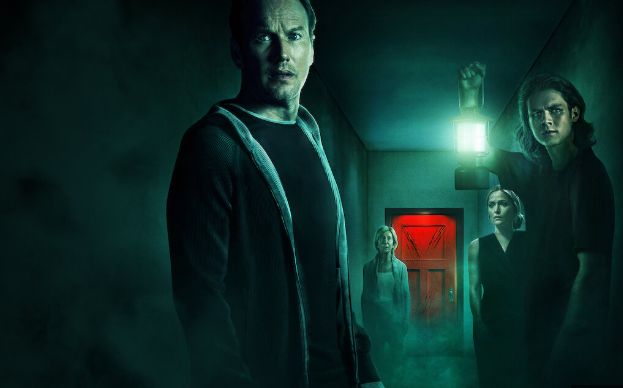
In the landscape of modern horror, few films have managed to leave a thumbprint as distinct and terrifying as Insidious. Directed by James Wan and written by Leigh Whannell—the duo famously responsible for the birth of the Saw franchise—this film represented a pivot away from the “visceral gore” movement and back toward the atmospheric, psychological dread of the classic haunted house genre. However, Insidious did something more radical than just retread old ground; it introduced the world to the concept of “The Further,” a shadowy purgatory that transformed a simple ghost story into a sprawling cosmic nightmare.
The effectiveness of the film lies in its ability to take the familiar comforts of a suburban home and slowly poison them with the uncanny. It stripped away the safety of the daylight and suggested that the monsters weren’t just in the basement or the attic—they were tethered to our very souls. Through a combination of ingenious low-budget filmmaking, a jarring auditory landscape, and a deep respect for the “theater of the mind,” the production team crafted a cinematic experience that continues to haunt audiences long after the credits roll. Whether you are a dedicated horror aficionado or a curious viewer looking to understand the mechanics of fear, these ten facts reveal the calculated genius behind one of the most effective horror films ever made.
1. The Low-Budget Masterclass: Creativity Through Constraint
One of the most impressive aspects of the film’s production is that it was made on a remarkably lean budget. In an era where blockbusters often rely on massive capital to create scares, the creators of Insidious had to rely on sheer ingenuity. This financial constraint was actually a deliberate choice by Wan and Whannell, who wanted full creative control after their experiences with larger studio projects. By keeping the budget low, they were able to take risks that a major studio might have deemed too “weird,” such as the surrealist imagery found in the film’s final act.
This “guerrilla” style of filmmaking forced the team to use practical solutions for complex problems. Many of the ghosts seen throughout the movie were simply actors in heavy makeup, standing perfectly still in the background of shots. This created a sense of “unfolding” horror where the audience would often spot a threat before the characters did. The lack of expensive CGI meant that every scare had to be earned through lighting, pacing, and performance. This approach grounded the film in a tactile reality, making the supernatural intrusions feel much more invasive and personal than a digital monster ever could.
2. Redefining the Haunted House: It’s Not the House, It’s the Person
For decades, the standard trope of the genre was the “haunted location.” Families would move into a Victorian mansion with a dark past, and the solution was simply to leave. Insidious flipped this script entirely with its famous mid-movie twist: the haunting isn’t tied to the property; it’s tied to the child. When the Lambert family moves to a new house halfway through the film to escape the spirits, they quickly realize that the entities have followed them. This revelation effectively removed the “safety net” for the audience, creating a profound sense of hopelessness.
The concept of “The Further” introduced the idea that a human soul, particularly one capable of astral projection, acts as a beacon for the inhabitants of a dark dimension. This shifted the stakes from a localized problem to a biological and spiritual one. By making the protagonist’s own body the “vessel” for the haunting, the film tapped into a primal fear of bodily autonomy loss. It suggested that no matter where you run, the darkness is already inside you. This thematic shift is a primary reason the film feels so much more claustrophobic than its peers; there is no “out” when the haunted house is your own skin.
3. The Sound of Dread: Joseph Bishara’s Atonal Score
Sound is often fifty percent of a horror film’s impact, but in Insidious, it might be eighty percent. The score, composed by Joseph Bishara, is a jarring, screeching departure from traditional melodic soundtracks. Utilizing sharp, staccato strings and discordant piano crashes, the music is designed to be physically uncomfortable. Bishara avoided the “safe” orchestral swells common in Hollywood horror, opting instead for an avant-garde approach that mimics the feeling of a panic attack.
The music doesn’t just underscore the action; it attacks the viewer. The opening title card, accompanied by a deafening, high-pitched violin screech, sets the tone immediately: this is not a movie that wants you to be comfortable. Interestingly, Bishara didn’t just write the music; he also physically inhabited the film’s primary antagonist (the Lipstick-Face Demon). This dual role allowed the composer to perfectly sync the visual presence of the monster with the auditory “presence” of the score. The result is a seamless experience of terror where the sight and sound of the demon are inextricably linked in the viewer’s psyche.
4. The Lipstick-Face Demon: A Study in Theatricality
The design of the “Lipstick-Face Demon” has become one of the most iconic images in modern horror, yet its origins are surprisingly simple. The creature’s look was inspired by a dream Leigh Whannell had about a man with a red face standing in the corner of his room. The decision to use bright red and black face paint—reminiscent of theatrical makeup or tribal war paint—was intended to make the demon stand out against the muted, shadowy tones of the rest of the film. It was a bold choice that risked looking “campy” but succeeded because of how sparingly the creature was shown.
The demon’s behavior is also uniquely effective. Rather than just being a mindless beast, it is depicted with strange, almost domestic hobbies, such as sharpening its “claws” at a grinding wheel or standing behind a sewing machine. These bizarre, human-like actions make the entity far more unsettling because they suggest a twisted parody of human life. The demon isn’t just a predator; it’s a resident of a dark world who is “nesting” in our reality. This theatricality, combined with the sudden, high-contrast visual of its red face appearing behind Patrick Wilson, created what is widely considered one of the greatest jump scares in cinema history.
5. “Tiptoe Through the Tulips”: The Power of Contrast
One of the most unsettling scenes in the film involves a young boy ghost dancing to the song “Tiptoe Through the Tulips” by Tiny Tim. Using this specific track was a stroke of genius in the use of “anemic” or “ironic” music. The song is inherently whimsical, high-pitched, and slightly eccentric, but when played over a grainily lit scene of a supernatural entity invading a home, it becomes absolutely grotesque. The contrast between the innocent, upbeat nature of the music and the predatory nature of the spirit creates a “cognitive dissonance” in the viewer.
This technique is a staple of effective horror because it subverts the audience’s emotional expectations. We are conditioned to associate certain sounds with safety and others with danger; by playing a “happy” song during a moment of extreme tension, the filmmakers strip away the viewer’s ability to predict what will happen next. It suggests that the spirits in The Further don’t understand human emotions or “good” and “evil”—they simply play with our world like a broken toy. The song has since become inseparable from the franchise, proving that a well-placed nursery rhyme can be scarier than a thousand screams.
6. Practical Shadows and the “Hand-Painted” Aesthetic
To achieve the look of The Further, James Wan looked to the past, specifically the era of black-and-white silent films and expressionist theater. Rather than using digital fog or CGI landscapes, the production used thick theatrical fog, high-contrast lighting, and hand-painted sets. This gives the spirit world a “dreamlike” and “artificial” quality that feels far more unnerving than a realistic depiction might. It feels like a world built out of memory and decay, where the laws of physics are slightly askew.
The ghosts themselves were often achieved through simple “in-camera” tricks. For example, the “Long-Haired Fiend” or the “Doll Girls” were actors who were directed to move in a stilted, unnatural fashion. By filming them at different frame rates or having them move backward and then reversing the footage, the filmmakers created a sense of “uncanny” movement that triggers an instinctual “danger” response in the human brain. These practical effects ensure that the film ages better than many of its CGI-heavy contemporaries, as the “realness” of the physical actors remains consistently frightening.
7. The Psychology of the “Hidden” Jump Scare
Insidious is often credited (or blamed) for popularizing the modern jump scare, but the film’s use of the technique is far more sophisticated than just “loud noises.” James Wan employs a tactic known as the “false reset.” This involves a tense scene where a scare is expected, followed by a moment of silence or a “safe” resolution where the character relaxes. Only after the audience has also “reset” their expectations does the actual scare occur. This targets the viewer when their guard is at its absolute lowest.
Furthermore, the film utilizes “background scares”—instances where a ghost is visible in the frame but is not acknowledged by the camera or the characters. For example, in one scene, a ghost child is clearly standing in the corner of a room, but the camera simply pans past him as if he were furniture. This forces the audience to actively scan the screen, turning the viewing experience into a terrifying game of “Where’s Waldo?” This constant state of hyper-vigilance is what makes the movie so exhausting (in a good way); it trains the viewer to be afraid of the empty spaces in the frame, not just the monsters.
8. Character-Driven Stakes: The Relatability of the Lamberts
A horror movie is only as good as the audience’s investment in the victims, and Insidious benefited immensely from the casting of Patrick Wilson and Rose Byrne. Unlike many horror protagonists who feel like “cardboard cutouts” waiting to be slaughtered, the Lamberts feel like a genuine, modern family dealing with overwhelming stress. Their reactions to the haunting—skepticism, followed by terror, followed by a desperate attempt to protect their children—ground the supernatural elements in emotional reality.
Patrick Wilson, in particular, brings a “grounded” energy to the film that makes his eventual descent into The Further feel more impactful. Because he plays a father who is trying to remain logical and strong, his eventual breakdown and transformation at the end of the film carry a tragic weight. The movie takes the time to show the strain the haunting puts on their marriage and their other children, making the stakes feel personal. We aren’t just rooting for them to survive a monster; we are rooting for them to save their family unit from being torn apart.
9. The Reinvention of the Medium: Elise Rainier
The introduction of Elise Rainier, played by Lin Shaye, was a pivotal moment for the film and the genre at large. Typically, the “expert” who arrives to help the haunted family is a stiff, academic figure or a traditional priest. Elise, however, is portrayed with a mixture of grandmotherly warmth and steel-veined bravery. She treats the supernatural not as a myth, but as a dangerous, everyday reality. Her use of a gas mask attached to a long tube for a séance is one of the film’s most striking and unique visual elements.
By making an older woman the “hero” of the story, Insidious broke away from the youth-centric tropes of the time. Elise became the heart of the franchise because she represented a bridge between the living and the dead. Her presence allowed the film to explain its complex lore—like astral projection and the history of the “Black Bride”—without it feeling like a dry exposition dump. She brought a sense of “spiritual authority” to the screen, and her willingness to enter the darkness herself made her one of the most beloved figures in modern horror.
10. The Legacy of the “Cliffhanger” Ending
The ending of Insidious is widely regarded as one of the most effective “gut-punches” in horror history. After a grueling journey into The Further to rescue his son, Josh Lambert (Patrick Wilson) appears to return safely. However, the final moments reveal that he has been possessed by the “Old Woman” spirit that has haunted him since childhood. The film ends on a freeze-frame of a terrified Renai (Rose Byrne) as she realizes the man standing in front of her is no longer her husband.
This ending worked so well because it subverted the “happy ending” that the film had seemingly earned. It played into the theme that the past can never be truly escaped. By ending on a cliffhanger that offered no immediate resolution, the film stayed in the minds of the audience long after they left the theater. It transformed the story from a “win” for the family into a “win” for the darkness, ensuring that the dread of the film wasn’t contained to the runtime but followed the viewer home, making them question whether the people they love are truly who they say they are.
Further Reading
- The Art of Horror Movies: An Illustrated History – Edited by Stephen Jones. A deep dive into the visual evolution of horror, including the practical effects used in modern classics.
- Men, Women, and Chain Saws: Gender in the Modern Horror Film – Carol J. Clover. This academic look at horror provides context for the “Final Girl” trope and how films like Insidious subvert character expectations.
- Shock Value: How a Few Eccentric Outsiders Gave Us Nightmares, Processed Our Darkest Fears, and Redesigned the Modern World – Jason Zinoman. An exploration of the creators who redefined horror for the 21st century.
- The Philosophy of Horror – Noel Carroll. A foundational text for anyone interested in the psychological “why” behind the jump scares and the paradox of why we enjoy being afraid.
- Beyond the Jump Scares: 10 Chilling Facts Behind the Making of Insidious

- Beyond the Plastic: 10 Chilling Child’s Play Facts That Turned Chucky into a Horror Legend

- The Bughuul’s Shadow: 10 Chilling Facts That Make “Sinister” the Most Terrifying Movie Ever Made

- No Slasher, Just Fate: 10 Chilling Reasons Final Destination Redefined Supernatural Horror

- 10 Things You Should Know About Jigsaw – Saw