
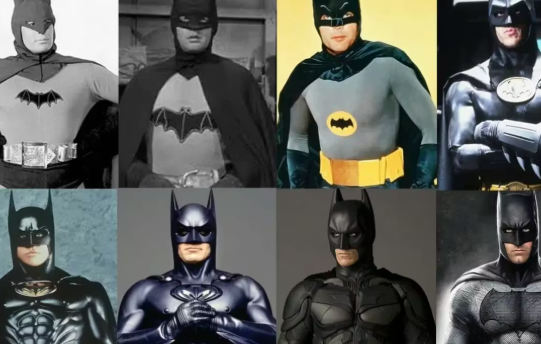
Cinema has long been obsessed with the silhouette of a man standing atop a gargoyle, his cape billowing in the wind. Since his first leap from the pages of detective comics, Batman has become the most adapted and reinterpreted superhero in film history. Every generation gets the Batman it needs—whether he is a gothic avenger, a realistic crime fighter, or a brooding noir detective. This cinematic journey is more than just a series of action movies; it is a sprawling exploration of justice, trauma, and the limits of the human spirit.
For many, the “definitive” Batman is the one they grew up with. For some, it’s the campy charm of the mid-century; for others, it’s the visceral realism of modern blockbusters. However, when we look at the entire body of work, certain films rise above the rest, capturing the essence of the Caped Crusader in ways that define the genre. This guide serves as a comprehensive ranking of the most essential Batman movies, providing deep analysis into what makes each version of Gotham City unique and why these films continue to dominate the cultural conversation.
1. The Anatomy of a Legend: Criteria for Ranking Batman Movies
Ranking Batman movies is a complex task because the character is so versatile. To evaluate these films fairly, one must look past the flashy gadgets and examine the core pillars of the mythos. The first criterion is the portrayal of the “Dual Identity.” A great film must balance the internal struggle of Bruce Wayne with the external mission of Batman. If the man behind the mask is boring, the hero lacks stakes. Conversely, if the Batman doesn’t feel like a formidable physical and intellectual threat, the movie loses its tension.
The second criterion is the “Atmosphere of Gotham.” Gotham is not just a city; it is a character. Whether it is a gothic nightmare of twisted steel or a cold, modern metropolis, the setting must feel like a place that needs a Batman. Finally, the “Gallery of Rogues” plays a massive role. Batman is often defined by his enemies; a film’s quality is frequently tied to how it reimagines classic villains like the Joker, Penguin, or Catwoman. We also consider the “Cinematic Vision”—does the director bring something new to the table, or are they simply repeating what came before? These elements combine to create a cinematic experience that transcends the superhero genre.
2. The Gold Standard of Cinema: The Dark Knight (2008)
Widely considered one of the greatest films ever made, regardless of genre, The Dark Knight is the apex of Batman’s cinematic history. Directed by Christopher Nolan, the film moved away from the traditional “comic book” feel and embraced the tone of a sprawling urban crime epic. It isn’t just a movie about a man in a bat suit; it is a philosophical war between the concepts of order and chaos. The film’s grounded realism made Gotham feel like a real American city, making the stakes feel terrifyingly high.
The heart of the film lies in the legendary performance of Heath Ledger as the Joker. This iteration of the character is a “force of nature,” a nihilist who doesn’t want money or power, but simply wants to watch the world burn. His presence forces Christian Bale’s Batman to confront his own limitations and his one moral rule. The film’s brilliance is found in its moral ambiguity; it asks the audience if a hero can stay “pure” in a world that is fundamentally broken. With its sharp script, practical stunts, and haunting score, it set a benchmark for superhero storytelling that has yet to be surpassed.
3. The Foundation of Realism: Batman Begins (2005)
Before Batman could save the city, he had to find himself. Batman Begins is arguably the most important origin story in modern cinema. After years of the franchise leaning into camp and neon aesthetics, this film stripped the character back to his roots. It focuses heavily on the “Lost Years” of Bruce Wayne, showing his grueling training in the Himalayas and his philosophical education under the League of Shadows. It treats the idea of a man dressing as a bat with complete sincerity, explaining the “why” behind the theatricality.
By grounding the technology—turning the Batmobile into a prototype military vehicle and explaining the development of the cowl—the film made Batman feel plausible. It also introduced a version of Gotham that felt like a decaying industrial hub, plagued by poverty and systemic corruption. The theme of “fear” runs throughout the narrative, as Bruce learns to turn his own phobia into a weapon against the criminal underworld. Batman Begins proved that superhero movies could be intellectually stimulating and emotionally resonant, laying the groundwork for the prestigious era of comic book films that followed.
4. The World’s Greatest Detective: The Batman (2022)
For decades, films focused on Batman the brawler or Batman the gadgeteer, often ignoring his status as a master detective. The Batman, directed by Matt Reeves and starring Robert Pattinson, corrected this by leaning into the “Noir” roots of the character. Set during Batman’s second year of crime-fighting, the film presents a version of Bruce Wayne who is still figuring things out—he is messy, obsessive, and almost entirely consumed by his alter ego. The story plays out like a procedural thriller in the vein of Se7en or Zodiac.
The Gotham presented here is a wet, claustrophobic nightmare, perpetually shrouded in rain and shadow. The film excels at showing Batman “working a case,” following clues left by a terrifying, radicalized version of the Riddler. It also reinterprets Catwoman and Penguin as grounded figures within a corrupt political landscape. What makes this film stand out is its focus on Batman’s arc from a creature of vengeance to a symbol of hope. It is a slow-burn, atmospheric masterpiece that prioritizes mood and character psychology over traditional explosive action, offering a fresh, haunting perspective on a well-worn legend.
5. The Gothic Revolution: Batman (1989)
It is impossible to overstate the cultural impact of Tim Burton’s Batman. Before its release, the general public associated the character with the bright, campy television shows of the 1960s. Burton’s vision swung the pendulum in the opposite direction, introducing a dark, expressionistic world of towering statues and gothic spires. Michael Keaton, an unlikely choice at the time, brought a quiet, eccentric intensity to Bruce Wayne that defined the character for a generation.
Jack Nicholson’s Joker was the perfect foil, blending homicidal mania with the flair of a classic gangster. The film was a visual feast, featuring an iconic Art Deco Batmobile and a sweeping, operatic score by Danny Elfman. It wasn’t just a movie; it was a global phenomenon known as “Batmania.” While it lacks the realism of later iterations, it remains the definitive “comic book” movie, capturing the heightened reality and theatricality of the source material. It transformed the superhero into a serious cinematic protagonist and paved the way for everything that would come later in the genre.
6. The Epic Conclusion: The Dark Knight Rises (2012)
Closing a trilogy is a daunting task, but The Dark Knight Rises aimed for a scale and scope rarely seen in superhero films. Taking place years after the previous installment, the story finds an older, physically broken Bruce Wayne forced out of retirement to face a new threat: Bane. Unlike the Joker’s chaos, Bane represents a calculated, revolutionary force that aims to tear Gotham apart from the bottom up. The film is a story of “rising”—literally and metaphorically—from the depths of despair.
The film is notable for its sheer ambition, featuring massive set pieces, a city-wide siege, and the introduction of Selina Kyle (Catwoman) as a morally complex anti-hero. While it carries the weight of high expectations, it succeeds in providing a definitive end to the journey of Christian Bale’s Batman. It explores the idea of Batman as a legacy—a symbol that can be passed on once the man himself can no longer carry the burden. It is a grand, operatic finale that emphasizes the endurance of the human spirit and the power of a legend to inspire a city to save itself.
7. The Freaks of Gotham: Batman Returns (1992)
If the 1989 film was a gothic adventure, Batman Returns is a gothic fairy tale. Tim Burton was given full creative control for the sequel, resulting in one of the most unique and visually stunning films in the franchise. Set during a snowy Christmas in Gotham, the movie focuses on the “monsters” of society. Danny DeVito’s Penguin is a tragic, grotesque figure abandoned at birth, while Michelle Pfeiffer’s Catwoman is a brilliant exploration of feminine rage and fractured identity.
The film is less concerned with traditional heroics and more interested in the psychology of the “outcast.” Batman himself is portrayed as someone who relates more to his villains than to the “normal” people he protects. The production design is legendary, creating a winter wonderland that feels both beautiful and deadly. While some at the time found it too dark or “weird,” it has grown in stature as a cult classic. It remains the most auteur-driven Batman film, a dreamlike exploration of loneliness and the masks we wear to survive the world.
8. The Mythological Titan: Zack Snyder’s Batman (DCEU)
In a departure from the “Year One” or “Year Two” stories, the version of Batman introduced in the DC Extended Universe (portrayed by Ben Affleck) is a battle-hardened veteran who has been fighting crime for twenty years. This Batman is cynical, weary, and physically imposing. Influenced heavily by The Dark Knight Returns graphic novel, he is a “tank” of a man who has lost his faith in humanity after years of tragedy and the loss of his allies.
Zack Snyder’s vision of Batman emphasizes the “Gods among us” aspect of the character. The action sequences, particularly the famous “warehouse fight,” are widely considered the best live-action representations of Batman’s combat prowess. This version explores the danger of a hero who has lost his way, showing his journey back to heroism through his interactions with other powerful beings. While controversial for his more brutal methods, this Batman captures the sheer power and tactical brilliance of the character in a way that feels mythological and larger-than-life.
9. The Animated Excellence: Mask of the Phantasm and Beyond
Some of the best Batman stories aren’t found in live-action, but in the realm of animation. Batman: Mask of the Phantasm, which received a theatrical release, is often cited by fans as the truest adaptation of the character. It perfectly blends a tragic romance from Bruce Wayne’s past with a mystery involving a new, murderous vigilante. It captures the “Animated Series” aesthetic—a timeless mix of 1940s style and modern technology—that many consider the definitive version of Gotham.
Other animated entries, like Under the Red Hood or The Dark Knight Returns parts 1 and 2, allow for a level of comic book accuracy that live-action often avoids. These films can explore complex storylines involving the wider “Bat-Family” and the more fantastical elements of the lore. They feature legendary voice acting, most notably the late Kevin Conroy as Batman and Mark Hamill as the Joker, whose performances defined the voices of these characters for millions. For anyone wanting to see the full depth of Batman’s history, the animated films are essential viewing.
10. The Eternal Hero: What Makes a Great Batman Movie?
In the end, what makes a Batman movie truly “great” is its ability to resonate with the human experience. Batman is the hero of the “un-powered”; he is a man who took the worst thing that ever happened to him and used it to become the best thing his city ever had. A great film understands that the gadgets, the car, and the costume are just tools. The real story is the man’s heart and his refusal to give in to the darkness.
Whether the film is a gritty detective story or a grand superhero epic, it must maintain the integrity of Batman’s mission. It must show that justice is a choice made every single night. The best Batman movies are those that leave the audience feeling inspired—not because they can fly or move mountains, but because they can stand up, dust themselves off, and continue to fight for what is right. As long as directors continue to find new ways to explore this fundamental truth, the Dark Knight will continue to be the king of the silver screen.
Further Reading
- The Making of the Dark Knight Trilogy by Jody Duncan Jesser and Janine Pourroy
- Batman: The Definitive History of the Dark Knight in Comics, Film, and Beyond by Andrew Farago
- The Art and Making of The Batman by James Field
- Burton on Burton by Tim Burton and Mark Salisbury
- DC Comics: 10 Essential Things to Know About Shazam

- DC Comics: 10 Essential Things to Know About Sinestro

- DC Comics: 10 Essential Things to Know About The Reverse Flash

- DC Comics: 10 Essential Things to Know About Hal Jordan

- DC Comics: 10 Essential Things to Know About The Green Lanterns





One response to “The Definitive Batman Movie Ranking: From Gothic Classics to Gritty Masterpieces”
[…] The Definitive Batman Movie Ranking: From Gothic Classics to Gritty Masterpieces […]