Time in Gotham City doesn’t move like it does in our world. It stretches, resets, and folds back on itself, yet the core of the legend remains unshakable. Batman is more than a man; he is a living mythology that has evolved through distinct eras, each reflecting the anxieties and aspirations of the culture that created him. From the rain-slicked streets of a 1930s pulp detective story to the gritty, high-tech realism of modern cinema, the timeline of the Caped Crusader is a fascinating study in character endurance.
To follow the path of Bruce Wayne is to witness a transformation from a traumatized child into a global icon of justice. Whether you are a newcomer trying to piece together how a circus orphan became a superhero or a long-time fan looking to trace the tonal shifts of the Dark Knight’s history, this comprehensive guide provides the definitive roadmap. This is the story of Batman—from his tragic beginnings to his status as a timeless symbol of human willpower.
1. The Genesis of a Hero: Batman’s Origin and Early Life
The foundation of the entire Batman mythos is built upon a single, shattering moment of violence. Before he was the Dark Knight, Bruce Wayne was the beloved son of Thomas and Martha Wayne, the “royalty” of Gotham City. His early life was one of immense privilege and warmth, shielded from the city’s growing rot by the walls of Wayne Manor. This idyllic childhood served as the high point from which he would eventually fall, making his subsequent mission all the more poignant.
The timeline truly begins in a dark passage behind a movie theater, forever immortalized as Crime Alley. A lone gunman, a moment of panic, and two gunshots later, Bruce Wayne was left alone in the world. This event is the “Fixed Point” in every Batman timeline. It defines his psychology, instilling a deep-seated hatred for the chaos of crime and a lifelong commitment to ensuring that no other child suffers the same fate. This early period is characterized by a silent, brooding grief that eventually hardens into a singular, obsessive purpose.
2. The Lost Years: His Training and Preparation
Following the death of his parents, Bruce Wayne did not immediately put on a mask. Instead, the timeline enters a period of global wandering often referred to as his “journey of self-discovery.” Realizing that raw anger was not enough to fight crime, Bruce left Gotham for over a decade. He traveled to the far corners of the earth, seeking out the masters of every discipline necessary to become the ultimate human weapon.
During these years, Bruce studied martial arts under the most lethal senseis in the East, learned the art of manhunting from world-class trackers, and mastered the science of forensics and chemistry in Europe’s prestigious universities. He pushed his body to the absolute limit, becoming a polymath of physical and mental prowess. This era is crucial because it establishes that Batman’s “powers” are earned, not given. He is a self-made hero who transformed his trauma into expertise. By the time he returned to Gotham, he was no longer a grieving heir; he was a master strategist ready to wage a one-man war.
3. Year One: His First Forays as Batman
The timeline of “The Batman” begins in earnest with his return to Gotham City. This period, often called “Year One,” is characterized by trial and error. Initially, Bruce attempted to fight crime as a nameless vigilante in civilian clothes, but he quickly realized that to make a real impact, he needed to be more than just a man. He needed to be a symbol—a creature of the night that could strike fear into the hearts of the “superstitious and cowardly” criminal element.
The early years are gritty and grounded. Batman’s primary targets were the organized crime families—the Falcones and the Maronis—who had corrupted the city’s legal system. During this time, he formed his first uneasy alliance with Lieutenant James Gordon, the only honest cop in a crooked department. These stories often focus on the mystery and the atmosphere of a city on the brink. Batman was a rumor, a ghost in the shadows, and his equipment was relatively low-tech compared to the specialized gadgets he would later develop. It was a time of establishing the rules of his crusade.
4. The Rise of the Freaks: Transitioning to Early Villains
As Batman’s influence grew, the criminal landscape of Gotham began to shift. The “traditional” mobsters who sought money and power were gradually replaced by a new breed of criminal—the “costumed freak.” This era marks the introduction of Batman’s most iconic adversaries, starting with the Joker. This transition is often referred to as “Escalation.” Because Batman raised the stakes by wearing a costume and using theatricality, his enemies responded in kind.
The timeline during this phase becomes more colorful and dangerous. Villains like the Riddler, Scarecrow, and Two-Face emerged, each representing a psychological challenge that the police were unequipped to handle. These early encounters defined Batman’s role not just as a vigilante, but as a detective and a protector of the city’s soul. The stories moved away from simple mob hits toward complex, thematic battles of will. This period solidified the idea that Batman was the only person capable of standing against the growing tide of madness in Gotham.
5. The Dynamic Duo: The Introduction of Robin
One of the most significant shifts in the Batman timeline occurred when Bruce Wayne realized that his mission was too large for one person. The introduction of Dick Grayson, the first Robin, changed the tone of the stories from a lonely, dark crusade to a partnership. Like Bruce, Dick was an orphan of a violent crime, having seen his circus-performer parents murdered. Bruce took him in, not just as a ward, but as a protégé.
Robin served as the “Light to the Dark Knight’s Shadow.” His presence allowed Batman to become a mentor and a father figure, softening his hard edges and giving him a renewed sense of purpose. This era is often associated with a more adventurous, heroic tone. Robin provided a youthful perspective and a sense of optimism that balanced Batman’s brooding nature. This partnership proved that Batman’s mission was not just about punishment, but about restoration and family. It set the stage for the massive expansion of allies that would follow.
6. The Found Family: Expansion of the Bat-Family
As the years progressed, the “Bat-Family” grew into a formidable network of heroes. The timeline saw Dick Grayson graduate to his own identity as Nightwing, making room for new Robins like Jason Todd and Tim Drake. Meanwhile, Barbara Gordon joined the crusade as Batgirl, providing a brilliant tactical and technological edge to the team. Over time, other figures like Cassandra Cain, Stephanie Brown, and eventually Bruce’s own son, Damian Wayne, joined the ranks.
This expansion is a core theme of modern Batman history. It reflects the idea that Bruce Wayne, despite his solitary nature, has built a legacy of heroes. Each member of the Bat-Family brings a unique skill set and a different perspective on justice. This period of the timeline is defined by complex interpersonal dynamics, as these characters struggle with Bruce’s high standards and their own desires for independence. The Bat-Family turned Batman’s one-man war into a movement, ensuring that Gotham would always have a protector, even if Batman himself were to fall.
7. The Gauntlet: Major Comic Storylines and Milestones
The Batman timeline is punctuated by massive, world-shaking events that redefined the character. One such milestone was the “Knightfall” saga, where the villain Bane physically and mentally exhausted Batman before breaking his back, forcing Bruce to find a successor while he recovered. Another was “A Death in the Family,” the tragic story where the Joker murdered Jason Todd (the second Robin), a failure that haunted Batman for years and made his mission significantly darker.
Other pivotal stories like “Hush” and “The Long Halloween” explored the depths of Gotham’s conspiracies and Batman’s personal history. These events serve as the “anchors” of the timeline, providing high-stakes drama that tested Batman’s limits. They often resulted in status quo shifts—new costumes, new bases of operation, or significant changes in his relationships with his allies. These storylines are the “must-read” chapters for anyone wanting to understand the narrative weight that the character carries in the modern era.
8. The Dark Knight Era: The 80s Tone Shift
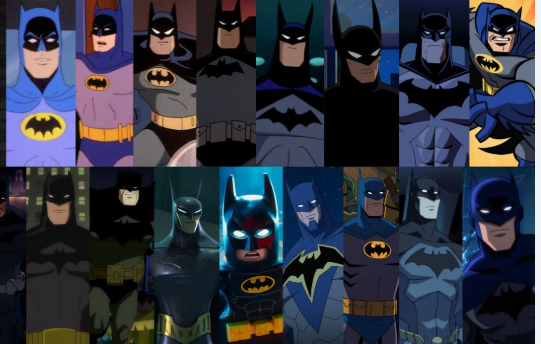
In the mid-1980s, the Batman timeline underwent a radical transformation in tone. Prior to this, Batman had spent decades in a more “campy” or lighthearted phase, influenced by the colorful aesthetics of mid-century media. However, creators like Frank Miller and Alan Moore moved the character back to his dark, pulp roots. This era introduced a more cynical, aging, and uncompromising Batman who was forced to deal with a world that had become increasingly complex and violent.
This “Dark Knight” era redefined Batman for the modern audience. It emphasized the psychological toll of his mission and the thin line between a hero and a vigilante. Stories became more political, more violent, and more focused on the corruption of the soul. This shift wasn’t just a phase; it became the new standard for how the character was perceived across all media. It proved that Batman could be a serious, high-stakes protagonist capable of carrying mature, philosophical themes, solidifying his place as a premier figure in contemporary literature.
9. Beyond the Page: Modern Film Adaptations and Reboots
For many, the Batman timeline is defined by his appearances on the silver screen. Each cinematic era provides a unique interpretation of the character’s history. The late 20th-century films emphasized a Gothic, stylized aesthetic, while the early 21st-century “Dark Knight Trilogy” reimagined the timeline through a lens of extreme realism and post-9/11 anxieties. These films often condensed decades of comic book history into a single, cohesive narrative arc.
The modern era has seen a trend toward “reboots”—starting the timeline over to explore different facets of the character. Some versions focus on an older, battle-hardened Batman, while others return to his early days as a detective. These adaptations are crucial because they introduce the Batman timeline to millions of non-comic readers. Each film cycle creates its own “mini-timeline,” allowing directors to experiment with the character’s origins, his technology, and his relationship with Gotham, ensuring that the legend remains fresh and adaptable for every new generation of viewers.
10. The Multiverse Concept: Why Batman Has Multiple Timelines
One of the most confusing aspects for beginners is that there isn’t just one Batman timeline. Through the concept of the “Multiverse,” DC Comics has explored dozens of “What If” scenarios. There are timelines where Batman exists in the Victorian era, timelines where he is a vampire, and timelines where Thomas Wayne became Batman instead of Bruce. This flexibility is the secret to the character’s longevity.
The existence of multiple timelines allows writers to explore the core of the character without being bound by decades of continuity. It proves that the “Idea of Batman” is more important than the specific details of his history. Whether he is a futuristic “Batman Beyond” in a high-tech Neo-Gotham or a gritty detective in a 1940s noir film, the essential elements—the tragedy, the mask, the mission—remain the same. This multi-timeline approach ensures that Batman can be anything the world needs him to be, making him a truly immortal figure in global pop culture.
Further Reading
- Batman: Year One by Frank Miller and David Mazzucchelli
- Batman: The Long Halloween by Jeph Loeb and Tim Sale
- Batman: Knightfall (Vol. 1) by Various Authors
- Batman: The Dark Knight Returns by Frank Miller
- Batman: Hush by Jeph Loeb and Jim Lee