
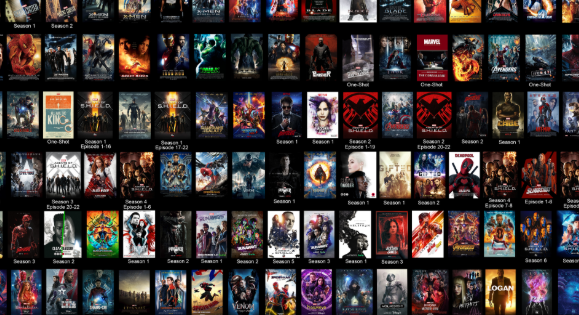
Understanding the Marvel Cinematic Universe (MCU) is like attempting to piece together a massive, four-dimensional jigsaw puzzle while the pieces are still being minted. While the release dates of the films offer one way to watch, the chronological order—the sequence in which events actually happen within the story—provides a far more immersive experience. It transforms a collection of movies into a singular, cohesive history of a universe.
In this guide, we strip away the production years and look at the “history book” of the MCU. We move from the literal creation of existence to the fracturing of reality itself. By looking at the timeline chronologically, you see how a single discovery in the 1940s ripples through the centuries, and how a cosmic threat born at the dawn of time eventually finds its way to a living room in suburban America. This is the definitive roadmap for anyone looking to master the lore of the world’s most complex narrative tapestry.
1. The Dawn of Existence: The Birth of the Infinity Stones
Before there was light, there was darkness—and then, the “Big Bang” sent the universe screaming into existence. In the MCU, this wasn’t just a physical event; it was a metaphysical one. Six singularities were forged into concentrated ingots known as the Infinity Stones. These stones—Space, Mind, Reality, Power, Time, and Soul—became the fundamental building blocks of reality. During this primordial era, ancient beings known as Celestials used these powers to create suns, planets, and life itself, acting as the architects of the cosmos.
Understanding this era is vital because it sets the “rules” of the universe. It establishes that the MCU is not just a place of technology, but one of deep, ancient cosmic power. Long before humans discovered fire, empires were rising and falling among the stars. The Celestials planted seeds of life on various planets, including Earth, while the Infinity Stones were scattered across the galaxy, hidden in relics like the Tesseract or the Aether. This era is the “Prologue” to every story ever told in the MCU, providing the source of power for both the greatest heroes and the most terrifying villains.
2. The Age of Ancient Myths: Gods, Monsters, and Meteors
Thousands of years ago, the Earth was a playground for extraterrestrial and supernatural forces. This era is defined by the interaction between “gods”—who were actually advanced aliens from the realm of Asgard—and early human civilizations. King Bor of Asgard fought the Dark Elves to prevent the universe from being plunged back into eternal darkness, while his grandson, Odin, eventually established a tenuous peace across the Nine Realms. On Earth, these beings were worshipped as deities, forming the basis of Norse mythology.
Simultaneously, other ancient events were shaping the future of the planet. A massive meteor made of Vibranium crashed into the African continent, leading to the rise of the hidden, technologically advanced nation of Wakanda. In the Mediterranean, the Eternals—god-like protectors sent by the Celestials—were quietly defending humanity from monstrous creatures known as Deviants. This era teaches us that Earth has always been a focal point for cosmic interest. The “myths” we read about today were, in the context of the MCU, eyewitness accounts of alien interventions that left behind the technology and bloodlines that would one day produce modern superheroes.
3. The Super Soldier Era: World War II and the First Avenger
The modern age of heroes truly begins in the 1940s, during the height of World War II. As the world was gripped by conflict, a secret scientific race began to create the “perfect man.” This led to the creation of the Super Soldier Serum, which transformed a frail but courageous young man into the pinnacle of human potential. This was the first time human science successfully replicated the “god-like” power seen in ancient myths. It also introduced the world to HYDRA, a deep-science division of the opposition that sought to use the Tesseract (the Space Stone) to achieve world domination.
This period is the “Moral North Star” of the MCU timeline. It established the archetype of the selfless hero who “doesn’t like bullies,” a theme that resonates through every subsequent era. The conflict concluded with the hero’s apparent sacrifice, frozen in ice for decades, while his legacy lived on through the founding of S.H.I.E.L.D.—the Strategic Homeland Intervention, Enforcement, and Logistics Division. This era proved that while technology can be a weapon, it is the character of the individual wielding it that determines whether it serves as a tool for liberation or oppression.
4. The Shadows of the Cold War: Espionage and Hidden Threats
Following the war, the world entered a period of “hidden history.” From the 1950s through the late 1990s, the MCU timeline was dominated by spies, secret experiments, and the quiet infiltration of global institutions. This era saw the rise of Howard Stark and Peggy Carter as they built S.H.I.E.L.D. into a global peacekeeping force. However, unbeknownst to them, the remnants of HYDRA were growing like a parasite within their own organization, waiting for the right moment to reclaim power.
During these decades, small-scale heroic activities occurred away from the public eye. Hank Pym discovered the Pym Particle, allowing for shrinking technology that defied the laws of physics. In the 1990s, a galactic conflict between two alien races—the Kree and the Skrulls—briefly touched down on Earth, resulting in the awakening of one of the universe’s most powerful cosmic defenders. Because these events were largely classified or kept secret, the general public remained unaware that they lived in a world of wonders. This era acts as a bridge, showing how the “Super Soldier” idea evolved into high-tech espionage and alien encounters before the world was ready to see them.
5. The Great Reveal: The Emergence of the Modern Hero
The status quo changed forever when a billionaire industrialist was captured in a desert and built a suit of armor to escape. This event, occurring in the early 21st century, marked the “The Great Reveal.” For the first time, a superhero was not a government secret or an ancient myth; he was a public figure who announced his identity to the world. This sparked a “heroic arms race,” as other individuals—some through accidents involving gamma radiation, others through high-tech mastery—stepped into the spotlight.
This era is characterized by rapid technological advancement and a shift in global consciousness. People began to realize that the world was far more dangerous and strange than they had ever imagined. It was a time of “solo stories,” where heroes were learning to manage their powers in isolation. The billionaire in the suit, the monster in the shadows, and the god returning from the stars were all separate threads, unaware that a visionary director of S.H.I.E.L.D. was quietly preparing a plan to weave them all together. It was the calm before the storm—a period of individual growth before the necessity of collective action.
6. The First Assembly: The Battle of New York
The timeline reached a fever pitch when the god of mischief led an alien army through a portal in the sky over New York City. This was the first “Extinction Level Event” the modern world had faced. It forced the separate heroes—the soldier, the billionaire, the god, the spy, and the scientist—to put aside their differences and “assemble.” The Battle of New York is arguably the most important chronological milestone after the 1940s, as it permanently alerted the entire planet to the existence of extraterrestrial life and the need for a planetary defense force.
The fallout of this battle lasted for years. It created a “post-invasion” world where ordinary citizens lived in the shadow of giants. In the timeline, this event caused a massive spike in “enhanced” activity as people sought ways to protect themselves or exploit the alien technology left behind in the rubble. It also signaled to the rest of the galaxy that Earth was now a player on the cosmic stage. While the heroes won the day, they also unknowingly painted a target on the planet for a much larger, purple-skinned threat that had been watching from the darkness of space.
7. The Age of Conflict: Ultron and the Civil War
Success often brings scrutiny, and in the years following the first assembly, the heroes faced a crisis of conscience. Attempting to “put a suit of armor around the world,” the heroes accidentally created an artificial intelligence, Ultron, that decided humanity was the problem. The resulting destruction of a city led to the Sokovia Accords, a set of international laws designed to regulate and control super-powered individuals. This created a massive rift in the timeline, splitting the heroic community into two warring factions.
Chronologically, this was a dark period of “Internal Conflict.” The heroes were so busy fighting each other over ideologies—security versus liberty—that they became blind to the gathering shadows. Friends became enemies, and the world’s greatest defense team was effectively disbanded. This era serves as a cautionary tale within the timeline: it demonstrates that the most dangerous weapon in the universe is not an Infinity Stone or a high-tech suit, but the fracture of trust. The division left the planet entirely vulnerable at the exact moment it needed to be most united.
8. The Great Decimation: The Infinity War
The separate threads of the timeline—the cosmic guardians, the hidden African kingdom, and the divided Avengers—finally collided when Thanos arrived on Earth. His goal was the collection of all six Infinity Stones to perform “The Snap,” an act that would instantaneously erase half of all life in the universe. Despite a desperate, multi-front war spanning from the streets of New York to the plains of Wakanda and the ruins of distant planets, the heroes failed.
The “Decimation” is the most traumatic event in the history of the MCU. In a single moment, the timeline was halved. This wasn’t just a military defeat; it was a universal catastrophe. The loss of billions of lives transformed the social, political, and emotional landscape of every planet in existence. Chronologically, this event marks the end of the “Infinity Saga” in spirit, as it proved that even with all the power in the world, the heroes were not invincible. The universe was left in a state of mourning, and the timeline entered a period of unprecedented stagnation and grief.
9. The Five-Year Interval: Life During the “Blip”
Following the Decimation, the MCU timeline entered a five-year period often referred to as The Blip. During this time, the world was a ghost of its former self. Governments collapsed, cities became overgrown, and the remaining heroes tried to maintain some semblance of order in a broken world. Some heroes fell into deep depression, others became vigilantes, and some tried to build families in the ruins. This “time jump” is a unique chronological element that adds immense weight to the narrative.
Life during the Blip was a struggle for meaning. The timeline during these years shows a world that had “given up.” It wasn’t until a chance discovery involving the Quantum Realm (a subatomic dimension where time flows differently) that a “Time Heist” became possible. The heroes realized they could travel back through the timeline to borrow the Infinity Stones from the past to undo the damage of the present. This era culminated in a massive “Un-Snap,” bringing back everyone who had been lost, but at a tremendous personal cost to the founding members of the heroic community.
10. The Multiversal Fracture: Infinite Realities
The most current era of the MCU timeline is one of “Infinite Realities.” After the stones were returned and the dust settled, the very fabric of time began to unravel. Whether through the death of a time-god who guarded the “Sacred Timeline” or through misplaced spells that tore holes in reality, the Multiverse became a physical reality. This means that the “main” timeline we have followed is now just one of an infinite number of branching paths.
This era has introduced “variants”—different versions of the same people—and shown that entire universes can collide and destroy one another. Chronologically, we are now in a period of chaos where the “rules” of the past no longer apply. The timeline is no longer a straight line; it is a sprawling, tangled web. This shift has opened the door to supernatural threats, alternate-history heroes, and a sense that “everything you know is wrong.” As the universe navigates this new reality, the focus has shifted from protecting a single planet to preventing the total collapse of all existence across every conceivable dimension.
Further Reading
- Marvel Studios: The Marvel Cinematic Universe An Official Timeline by Anthony Breznican, Amy Ratcliffe, and Rebecca Theodore-Vachon
- The Art of Marvel Studios (Various Volumes) by Marvel Comics
- Marvel Encyclopedia (New Edition) by Stephen Wiacek and Adam Bray
- The Wakanda Files: A Cosmic, Technological and Historical Study of the Avengers and Beyond by Troy Benjamin




One response to “Marvel Cinematic Universe Timeline Explained: Chronological Order of Events”
[…] Marvel Cinematic Universe Timeline Explained: Chronological Order of Events […]