
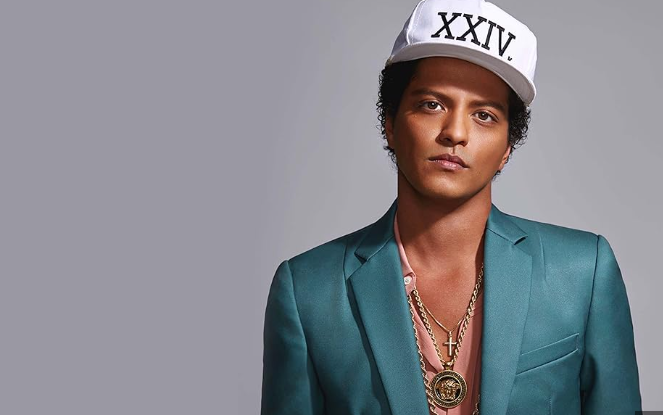
In an era of digital correction and fleeting viral fame, Bruno Mars stands as a rare throwback to the age of the “total entertainer.” He is a multi-instrumentalist, a masterful songwriter, a choreographer, and a vocalist with a range that defies gravity. Often described as a human lightning bolt, Mars has successfully bridged the gap between the golden era of soul and the high-definition requirements of modern pop. He doesn’t just perform songs; he crafts entire atmospheres that feel simultaneously like a 1970s block party and a futuristic neon celebration.
Understanding the “Bruno Mars phenomenon” requires looking past the fedoras and the silk shirts. His journey is one of relentless labor, tactical songwriting, and a deep-seated respect for the musical giants who came before him. From his early days as a child impersonator in Hawaii to his status as a perennial Grammy favorite, Mars has navigated the music industry with a precision that makes his effortless “cool” look like magic. This guide explores the ten pillars of his career, illustrating why he is widely considered the most versatile showman of his generation.
1. The Smallest Elvis: A Childhood Under the Spotlight
Long before he was selling out arenas, the world knew him as Peter Gene Hernandez, a young boy in Honolulu with a pompadour that was nearly as big as he was. At just four years old, he became a local sensation as one of the world’s youngest Elvis Presley impersonators. This wasn’t just a hobby; it was a rigorous introduction to the “show business” mentality. Performing with his family’s band, The Love Notes, he learned how to read a crowd, hold a microphone, and command attention before he had even mastered basic arithmetic.
This early exposure to the King of Rock and Roll—and later, Michael Jackson—instilled in him a sense of theatricality that is missing from many modern artists. He didn’t just sing the songs; he inhabited the persona. This childhood “apprenticeship” allowed him to develop a professional stamina that would later define his marathon-length concert tours. By the time he moved to Los Angeles as a teenager, he already had more stage hours under his belt than many veteran performers, giving him a competitive edge that would prove vital in the shark-infested waters of the California music scene.
2. The Smeezingtons: Writing the Hits for Everyone Else
One of the most surprising facts about the “Bruno Mars” brand is that it almost didn’t happen as a solo act. After an initial record deal fell through, Mars turned to the “engine room” of the industry: songwriting and production. Alongside his partners Philip Lawrence and Ari Levine, he formed the production trio known as The Smeezingtons. They became the hidden architects behind some of the most inescapable radio hits of the early 2010s, crafting melodies for artists ranging from Flo Rida and CeeLo Green to B.o.B.
This period was crucial because it allowed Mars to experiment with different genres without the pressure of being the “face” of the project. He learned the mathematics of a pop hook—the science of what makes a chorus stick in the listener’s brain. When he finally stepped into the spotlight with his own debut, he wasn’t a “new” artist in the traditional sense; he was a master craftsman who had spent years perfecting the art of the chart-topper. This “behind-the-scenes” pedigree is why his music often feels more polished and structurally sound than that of his peers; he understands the architecture of a hit from the foundation up.
3. The “Hooligans” Brotherhood: More Than a Backing Band
In the world of solo superstars, the backing band is often a rotating cast of session musicians. Bruno Mars took a different approach. He formed “The Hooligans,” a collective of musicians who are treated as an extension of his own brand. Many of the members have been with him since the beginning of his solo journey, creating a level of chemistry and synchronized movement that is reminiscent of James Brown and the J.B.’s.
The Hooligans are integral to the Bruno Mars experience. They don’t just stand behind him; they are part of the choreography, the comedy, and the vocal harmonies. This sense of “brotherhood” gives his live shows a spontaneous, celebratory energy that feels like a group of friends having the time of their lives rather than a rehearsed corporate event. By prioritizing this group dynamic, Mars ensured that his shows had a “big band” feel, allowing for horn sections and elaborate dance breaks that have become his signature. The Hooligans represent the “soul” of his operation, grounding his massive fame in a sense of genuine musical camaraderie.
4. A Multi-Instrumentalist’s Toolkit
While he is most famous for his soaring tenor voice, Bruno Mars is a formidable musician who can hold his own on almost any instrument on stage. He is a skilled drummer—an instrument he has played since he was a toddler—as well as an accomplished guitarist, bassist, and pianist. This multi-instrumentalism is the secret to his songwriting versatility. When he enters the studio, he isn’t just a singer waiting for a beat; he is often the one laying down the rhythm tracks himself.
This technical proficiency allows him to speak the language of music in its purest form. He can direct his band with precision because he knows exactly what the drummer should be doing with their hi-hat or what specific chord voicing the keyboardist should use to evoke a “vintage” feel. This hands-on approach is why his albums often sound so cohesive. He isn’t just an “artist” in the vocal sense; he is a conductor who understands how every frequency contributes to the overall groove. Whether he’s shredding a guitar solo or keeping the pocket tight on the bass, his musicianship is the bedrock of his credibility.
5. The Vintage Soul Revivalist: Honoring the Architects
A significant part of the Bruno Mars appeal is his ability to channel “the greats” without ever feeling like a mere caricature. His music is a love letter to the history of Black American music, drawing heavily from the Motown sound, 1970s funk, 1980s R&B, and 1990s New Jack Swing. He has cited artists like James Brown, Prince, The Police, and Stevie Wonder as his primary inspirations, and their influence is woven into the very fabric of his discography.
What makes Mars unique is his ability to modernize these influences. He doesn’t just recreate the past; he “remixes” it for a modern audience. He might take a drum beat that sounds like a 1970s disco track and pair it with a 21st-century production sheen. This bridge between eras makes his music “evergreen”—it appeals to older generations who remember the original sounds and younger fans who find the energy fresh and infectious. By acting as a curator of cool, Mars has introduced a whole new generation to the nuances of soul and funk, keeping those genres alive in the mainstream.
6. The 24K Magic Aesthetic: The Power of Branding
When Mars released his third studio album, he didn’t just release music; he released a visual identity. The “24K Magic” era solidified his image as the ultimate luxury-lifestyle entertainer. From the Versace shirts and heavy gold chains to the retro-tracksuits and designer sneakers, his fashion became synonymous with the “uptown funk” he was promoting. This aesthetic was a calculated move that signaled his transition from a “balladeer” to a “mogul of the groove.”
This branding extended to his music videos and stage design, which favored high-saturation colors, neon lights, and a “party-at-the-mansion” vibe. It was a rejection of the “tortured artist” trope, leaning instead into unapologetic joy and opulence. This brand clarity made him incredibly marketable, but it also served a narrative purpose: it created a world where the listener could escape their daily routine and feel like a “big spender” for three and a half minutes. His ability to maintain this consistent visual and sonic language is a masterclass in celebrity branding, proving that a clear identity is just as important as a catchy melody.
7. Silk Sonic: A Masterclass in Collaborative Authenticity
In a move that surprised the industry, Mars teamed up with fellow musician Anderson .Paak to form the duo Silk Sonic. This project was a deep dive into the lush, orchestral soul of the 1970s, specifically the “Philadelphia Soul” sound. The collaboration was a critical and commercial triumph, sweeping major award ceremonies and proving that there was still a massive appetite for live-instrumentation-heavy R&B in a world dominated by trap and EDM.
Silk Sonic worked because it felt like a genuine artistic obsession rather than a commercial gimmick. The duo spent months in the studio trying to find the exact “snare sound” of 1974, obsessing over every analog detail. This project highlighted Mars’s humility as an artist; despite being one of the biggest stars on Earth, he was willing to be part of a “duo” and share the spotlight with a peer. The result was a project that felt both sophisticated and incredibly fun, further cementing his reputation as a musician who prioritizes the “craft” of the record above all else.
8. The Super Bowl Standard: A Two-Time Halftime Giant
The Super Bowl Halftime Show is considered the ultimate stage for any performer, and Bruno Mars has the rare distinction of having headlined it twice within a very short span of time. His first appearance is often cited as a “game-changer” for the event. Before his performance, many wondered if he had enough “hits” to carry the world’s biggest stage. He answered by opening with a blistering drum solo and delivering a high-energy set that focused on pure performance rather than over-the-top pyrotechnics.
His second appearance, as a “guest” who effectively stole the show, further solidified his status as the “go-to” performer for big moments. His ability to hold his own alongside other global titans proved that his charisma was on a different level. These performances are often used as benchmarks for newer artists; they demonstrate the power of live vocals, tight choreography, and a genuine connection with the audience. Mars didn’t need a thousand dancers or a flying stage; he just needed a microphone and a groove, proving that “old-school” showmanship still wins every time.
9. Breaking the “Pop Star” Template: The Resilience of Identity
Bruno Mars does not fit the traditional mold of a 21st-century pop star. He is of Puerto Rican, Jewish, and Filipino descent, and early in his career, he was told by industry executives that his “look” was too difficult to market. Some suggested he should focus on Latin music, while others didn’t know how to categorize his diverse musical influences. By changing his name from Hernandez to Mars—a move intended to stop people from “pigeonholing” him—he took control of his own narrative.
His success is a victory for “the underdog.” He proved that a performer who is relatively short in stature and ethnically diverse could become the biggest male pop star in the world through sheer force of talent. He refused to be limited by a single genre, blending rock, reggae, R&B, and pop until they became a singular “Bruno Mars” sound. This resilience is a key part of his story; he didn’t change himself to fit the industry; he made the industry change its definitions to fit him.
10. The Perfectionist’s Work Ethic: Rehearsal as a Religion
The final thing to know about Bruno Mars is that his “effortless” style is the result of thousands of hours of grueling rehearsal. He is notorious in the industry for being a perfectionist, often spending weeks perfecting a single three-second dance move or a specific vocal harmony for his band. He treats his live shows with the discipline of a professional athlete, demanding total commitment from himself and his team.
This work ethic is what separates him from the “studio-made” stars of the era. You can hear the results in the precision of his live vocals and see them in the “stop-on-a-dime” choreography of The Hooligans. He understands that in the age of high-definition video and social media, there is no place to hide a mistake. By obsessing over the details, he ensures that every fan who pays for a ticket gets a world-class experience. This dedication to the “religion of rehearsal” is why he remains at the top of the food chain; while others might rely on social media trends, Bruno Mars relies on the undeniable power of a perfectly executed performance.
Further Reading
- Bruno Mars: The Unauthorized Biography by Emily Herbert
- The Billboard Book of Number One Hits by Fred Bronson (Features Mars’s early chart success)
- The History of Funk by Rickey Vincent (For context on Mars’s primary influences)
- 10 Things Every Fan Should Know About Sabrina Carpenter
- 10 Things Every Fan Should Know About Bad Bunny
- 10 Things Every Fan Should Know About The Weeknd
- 10 Things Every Fan Should Know About Taylor Swift
- 10 Things You Should Know About The Band Oasis
- 10 Things You Should Know About The Band My Chemical Romance
- 10 Shocking Movie Performances by Singers Who Proved Everyone Wrong
- 10 Things You Should Know About Bruno Mars
- 10 Things You Should Know About Snoop Dogg Rapper
- 10 Things Every Fan Should Know About NSYNC



