
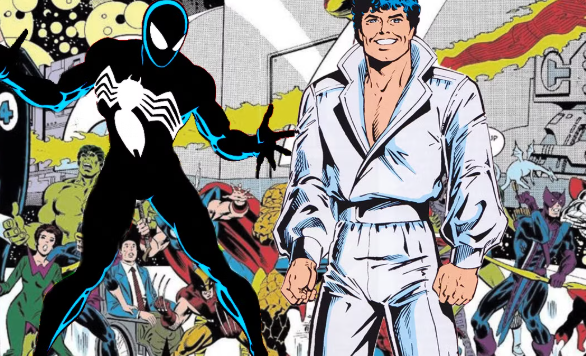
Imagine, for a moment, that you are a child with a bedroom floor covered in action figures. You have your heroes in one corner and your villains in the other. You don’t care about complex continuity or subtle character arcs; you simply want to see what happens when the unstoppable force meets the immovable object. This primal desire to see the “ultimate showdown” is the DNA of one of the most significant events in comic book history.
The original Secret Wars was more than just a story; it was a seismic shift in how stories were told. It introduced the concept of the “Mega-Event,” a massive crossover that pulled characters from every corner of a shared universe into a single, cohesive narrative. It changed the status quo for some of the world’s most famous characters and left a legacy that continues to define the medium. Whether you are a seasoned collector or a newcomer curious about the roots of modern superhero storytelling, understanding this twelve-issue odyssey is essential.
1. The Birth of the Modern Mega-Crossover
Before this cosmic clash, crossovers were typically small-scale affairs—a guest appearance here, a brief team-up there. Secret Wars shattered that mold, acting as the industry’s first true “maxi-series.” It proved that audiences were hungry for large-scale, high-stakes narratives that demanded their attention across multiple months.
The story was designed to be accessible. You didn’t need to have read twenty years of The Avengers or The X-Men to understand the stakes. The premise was elegantly simple: a mysterious, god-like entity plucks the greatest heroes and villains from Earth and places them on a distant planet to fight for their greatest desires. This “battle royale” format allowed for a streamlined narrative that focused on action and character dynamics rather than dense lore. By centering the entire Marvel Universe around one singular event, it created a blueprint for every “Crisis” or “Civil War” that would follow, establishing the crossover as a staple of the comic book industry.
2. The Omnipotent Curiosity of The Beyonder
Every great conflict needs a catalyst, and in this instance, that catalyst was The Beyonder. He wasn’t a man in a suit or a traditional villain with a quest for world domination. Instead, The Beyonder was an entity from a dimension outside our own—a being of such immense power that he viewed our universe as a mere speck. He was, in essence, a curious child looking into an ant farm.
The Beyonder’s motivation was simple: “I am from beyond! Slay your enemies and all you desire shall be yours!” He didn’t take sides; he merely set the stage. His presence introduced a level of “cosmic horror” and wonder that was rare at the time. He didn’t have a physical form for much of the story, existing only as a voice from a blinding rift of light. This forced the heroes and villains to confront the fact that they were insignificant in the grand scheme of the multiverse. His existence raised profound philosophical questions about free will and the nature of desire, elevating the story from a simple brawl to a study of the human (and superhuman) condition.
3. Battleworld: A Patchwork Planet of Chaos
The setting for this epic struggle wasn’t just any planet; it was Battleworld. Created by The Beyonder, this world was a “patchwork” planet constructed from fragments of hundreds of different worlds across the universe, including a significant chunk of Denver, Colorado. This bizarre landscape provided a surreal backdrop for the fighting, featuring alien forests, futuristic fortresses, and desolate plains.
Battleworld served as a brilliant narrative device. Because it was made of disparate parts, the environment itself was unpredictable. One moment the heroes might be fighting in a familiar urban setting, and the next, they were navigating a gravity-defying alien wasteland. It also emphasized the “wrongness” of the situation. The characters were displaced, stripped of their support systems, and forced to survive in a world that shouldn’t exist. This sense of isolation ramped up the tension, making every decision feel more desperate and every alliance more fragile.
4. The Origin of Spider-Man’s Iconic Black Suit
If you were to ask a casual fan about the long-term impact of the original Secret Wars, they would likely point to a single image: Spider-Man in a sleek, jet-black costume. During the heat of battle, Peter Parker’s classic red-and-blue suit was shredded. He discovered a machine he believed to be a fabric replicator, but instead, it released a strange, black orb that flowed over his body, forming a new suit that responded to his thoughts and provided an endless supply of webbing.
This wasn’t just a cosmetic change. This “alien costume” was eventually revealed to be a sentient symbiote—a discovery that would lead to the birth of one of Marvel’s most popular anti-heroes, Venom. At the time, however, it was a shocking departure for the character. The black suit became a symbol of the lasting consequences of the war. While many characters returned to Earth relatively unchanged, Spider-Man brought back something dark and mysterious that would haunt him for years to come. It remains one of the most successful character redesigns in history, proving that events of this scale could have permanent, meaningful impacts on individual titles.
5. Doctor Doom’s Quest for Godhood
While the story featured a massive roster of villains, Victor Von Doom quickly emerged as the central antagonist. While others were content to fight for The Beyonder’s prize, Doom’s ego would not allow him to be a mere pawn in someone else’s game. He viewed The Beyonder not as a god to be served, but as a rival to be usurped.
Doom’s arc in Secret Wars is a masterclass in character writing. He uses his peerless intellect to analyze the “impossible” science of The Beyonder, eventually orchestrating a plan to steal the entity’s near-infinite power. For a brief period, Doctor Doom became the most powerful being in existence. This transformation showcased the core of Doom’s character: his unyielding will and his belief that he is the only one fit to rule. It also shifted the stakes of the story from a tactical skirmish to a desperate struggle against a man who had become a god, forcing heroes and villains to contemplate an unthinkable alliance to stop him.
6. The Evolution of the Molecule Man
One of the most surprising developments in the series was the treatment of Owen Reece, the Molecule Man. Traditionally a C-list villain with a massive inferiority complex, Reece found himself among the heavy hitters like Galactus and Ultron. Under the pressure of Battleworld, and through the influence of Doctor Doom, Reece began to realize the true extent of his powers—powers that could manipulate the very building blocks of reality.
Reece’s journey provided the emotional heart for the villainous side of the roster. His blossoming romance with the newly created villainess Volcana showed a vulnerable, human side to a character who could dismantle a galaxy with a thought. His growth from a stuttering, insecure man into a multiversal powerhouse was one of the most compelling subplots of the series. It demonstrated that Secret Wars wasn’t just about the icons; it was about giving lesser-known characters a chance to shine and evolve in ways that changed them forever.
7. She-Hulk Joins the Fantastic Four
The “First Family” of Marvel, the Fantastic Four, saw a major shake-up following the events on Battleworld. Ben Grimm, the Thing, discovered that on this patchwork planet, he had the ability to revert to his human form at will. When the war ended and it was time to return home, Ben chose to stay behind on Battleworld to explore this new-found freedom and self-discovery.
This left a vacancy in the Fantastic Four, which was filled by Jennifer Walters, the She-Hulk. This wasn’t a temporary cameo; She-Hulk remained a member of the team for a significant period in their solo title. This “roster swap” was a brilliant way to keep the momentum of the crossover going in individual books. It breathed new life into the Fantastic Four’s dynamic, replacing the gruff, powerhouse energy of the Thing with the confident, witty, and equally strong She-Hulk. It reinforced the idea that after Secret Wars, the Marvel Universe would never be the same.
8. Tensions and Factions Among the Heroes
The “Hero” side of the conflict was far from a united front. The story highlighted the deep-seated distrust and ideological differences between various groups. The Avengers, the X-Men, and solo heroes like Spider-Man and the Hulk often clashed over strategy and leadership. The X-Men, in particular, felt isolated, eventually forming their own “third faction” alongside Magneto, whom The Beyonder had classified as a hero.
This internal conflict added a layer of realism to the fantastical premise. It reminded readers that these characters weren’t just archetypes; they had histories, prejudices, and egos. Watching Captain America try to maintain order while Wolverine bristled at his authority, or seeing the Avengers struggle to trust Magneto, provided as much drama as the physical battles. It explored the idea that “good” isn’t a monolith and that even when faced with an omnipotent threat, human nature (and mutant nature) often gets in its own way.
9. The Commercial Origins: Marvel and Mattel
While the story is celebrated as a creative milestone, its origins were surprisingly commercial. The project was born from a partnership between Marvel Comics and the toy company Mattel. Mattel was looking to launch a new line of action figures and requested a “bridge” story that would feature all of Marvel’s top characters in one place.
Interestingly, the title itself was the result of market research. Mattel found that children responded most positively to the words “Secret” and “War.” Thus, Marvel Superheroes Secret Wars was born. While some might scoff at the “toy commercial” origins, the creative team—led by writer Jim Shooter—took the mandate and ran with it. They proved that commercial interests and high-quality storytelling aren’t mutually exclusive. By taking the “action figure” concept seriously, they created a narrative with genuine stakes, complex characterization, and lasting consequences that far outlived the toy line that inspired it.
10. A Legacy That Defines the Multiverse
The original Secret Wars ended with the heroes returning to Earth, but the ripples it sent through the industry are still felt today. It popularized the idea of the “event comic,” a tradition that continues to drive the industry. It established the “Secret Wars” brand as one of the most prestigious in Marvel’s catalog, leading to multiple sequels and spiritual successors that have reimagined the concept for new generations.
The story’s influence extends beyond just the comics. It introduced themes of multiversal instability and the danger of god-like power that have become central to modern superhero cinema and television. It taught creators that you can have the “big, loud action” while still telling a story about identity, morality, and the consequences of our greatest desires. Every time a modern crossover event rearranges the stars of a fictional universe, it is standing on the shoulders of the patchwork planet called Battleworld.
Further Reading
- Marvel Superheroes Secret Wars – Jim Shooter, Mike Zeck, and Bob Layton. (The original 12-issue collection).
- Spider-Man: Birth of Venom – Various Authors. (Explores the immediate aftermath of the black suit’s arrival on Earth).
- Marvel Comics: The Untold Story – Sean Howe. (Provides incredible behind-the-scenes context on the era this story was created).
- Essential Fantastic Four Vol. 13 – John Byrne. (Covers the period where She-Hulk joins the team following the war).
- 10 Things You Should Know About Kang the Conqueror – Marvel Comics
- 10 Things You Should Know About The Sentry – Marvel Comics
- 10 Things You Should Know About Ghost Rider – Marvel Comics
- 10 Essential Things to Know About The Mole Man – Marvel Comics Lore
- 10 Essential Things to Know About War Machine – Marvel Comics Lore
- 10 Things You Should Know About Doctor Doom (Victor von Doom) – Marvel Comics
- 10 Things You Should Know About Hercules – Marvel Comics
- 10 Things You Should Know About Valeria Richards – Marvel Comics
- 10 Things You Should Know About Franklin Richards – Marvel Comics
- 10 Things You Should Know About The Human Torch (Johnny Storm) – Marvel Comics



