
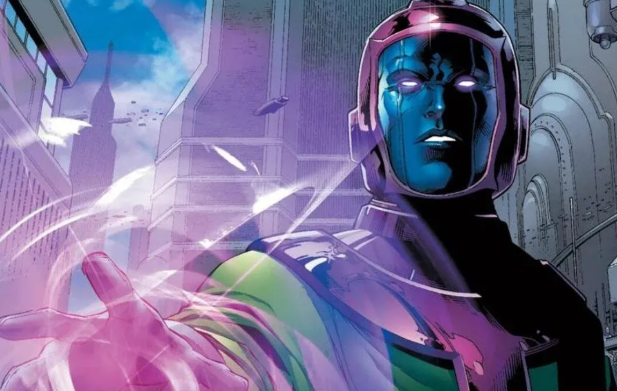
The Time-Traveler’s Gambit: 10 Mind-Bending Facts About Kang the Conqueror That Define the Marvel Multiverse
In the sprawling tapestry of the Marvel Universe, most villains seek to rule a city, a planet, or perhaps a galaxy. But for Nathaniel Richards, these goals are small-minded. He doesn’t just want to rule space; he intends to own every second of history from the dawn of time to the heat death of the universe. Known most famously as Kang the Conqueror, he is a villain defined by paradox, a man who has lived a thousand lifetimes and worn a dozen faces, often appearing as his own greatest ally and most bitter enemy.
Kang represents the ultimate deconstruction of the “invader” archetype. He possesses no innate superpowers—no super-strength, no flight, no cosmic rays. Instead, he wields the terrifying power of an intellect born in the 31st century and the technological spoils of a thousand fallen civilizations. To face Kang is not just to fight a man; it is to fight the inevitability of time itself. This guide serves as a “go-to” resource for understanding the convoluted, brilliant, and tragic history of Marvel’s premier chronarch. To know Kang is to understand that in the multiverse, “victory” is often just a precursor to a new timeline of defeat.
1. The Boredom of Utopia: The Origin of Nathaniel Richards
Before he was a conqueror, he was a scholar. Born in the 31st century of an alternate Earth, Nathaniel Richards lived in a world that had achieved total peace. War, hunger, and disease had been eradicated, leaving a society that was as perfect as it was stagnant. For a man of Nathaniel’s ambition, this utopia was a cage. He was a descendant of either the heroic Reed Richards or the villainous Victor Von Doom (the records are famously contradictory), and he felt the weight of that legacy pressing down on his idle shoulders.
His life changed when he discovered the time-travel technology left behind by his ancestors. Nathaniel didn’t just see a way out of his boring century; he saw an opportunity to bring “order” to the chaotic past. He realized that the peaceful world he lived in was only possible because someone—himself—would eventually go back and pave the way. This realization turned a bored intellectual into a cosmic predator. He didn’t just stumble into time travel; he embraced it as a weapon to shatter the monotony of his existence, proving that the most dangerous thing in the universe is a genius with too much time on his hands.
2. The Pharaoh Rama-Tut: A First Foray into History
Nathaniel’s first major stop in the timestream wasn’t a futuristic battlefield, but Ancient Egypt. Using his advanced 31st-century technology, he easily subjugated the era and installed himself as the Pharaoh Rama-Tut. He traded his lab coat for a crown and ruled with an iron fist, intending to find and claim the mutant En Sabah Nur (who would later become Apocalypse) as his heir. This era is crucial because it established Kang’s “modus operandi”: he doesn’t just visit an era; he attempts to rewrite its foundation to suit his narrative.
His reign was eventually challenged by the Fantastic Four, who had traveled back in time themselves. This encounter served as Nathaniel’s first introduction to the “Age of Heroes,” and it left him with a deep-seated resentment toward the super-powered individuals of the 20th and 21st centuries. He realized that to truly conquer time, he would have to eliminate the defenders of the “Heroic Age.” Although he was forced to flee his Egyptian throne, the experience of being worshipped as a god only sharpened his appetite for power. Rama-Tut remains one of his most frequently revisited identities, representing the point where a scholar first tasted the intoxicating wine of absolute rule.
3. Iron Lad and the Tragic Rejection of Destiny
One of the most poignant aspects of the Kang mythos is the “Young Avengers” era, where a teenage version of Nathaniel Richards learns of his future as a monster. Horrified by the vision of the conqueror he is destined to become, the young Nathaniel flees to the past, dons a suit of advanced bio-kinetic armor, and founds the Young Avengers under the name Iron Lad. This creates a heartbreaking paradox: the hero’s greatest struggle is against his own future.
Iron Lad represents the “human” side of Kang—the part of him that still believes in heroism and choice. However, the Marvel Universe operates on a rigid timeline; for the Sentry or the Avengers to exist as they do, Kang must exist. Eventually, Iron Lad is forced to accept that by trying to be a hero, he is causing reality to unravel. To save the universe, he must return to his own time and begin the journey toward becoming the very villain he hates. This cycle of self-loathing and inevitability adds a layer of Shakespearean tragedy to Kang, showing that even the master of time cannot escape the gravitational pull of his own character flaws.
4. The Master of Chronopolis: A City Outside Time
Kang does not live in a palace on a planet; he rules from Chronopolis, a massive city-state located in the realm of Limbo, a dimension where time does not exist in the conventional sense. Chronopolis is a literal “crossroads of history.” Each district of the city is linked to a different time period Kang has conquered, from the prehistoric past to the far-flung future. Walking through its streets, one might step from a Victorian London square directly into a neon-soaked cyberpunk alleyway.
Chronopolis serves as Kang’s trophy room and his laboratory. From here, he can observe any point in the timestream without being subject to its flow. This vantage point gives him an “objective” view of history, allowing him to spot the precise moment a timeline diverges. It is also protected by the “Anachronauts,” a group of elite warriors Kang plucked from different eras, each the greatest fighter of their respective time. Chronopolis is more than a base; it is a physical manifestation of Kang’s ego—a place where he has successfully forced all of history to coexist under his singular banner.
5. The Council of Cross-Time Kangs: A Multitude of Selves
Because Kang travels through time so frequently, he constantly creates “variants” of himself. Every time he makes a different choice or branches a timeline, a new Kang is born. To manage this chaotic proliferation, the “Prime Kang” established the Council of Cross-Time Kangs. This assembly consists of hundreds of versions of Nathaniel Richards, all wearing the iconic purple and green armor, theoretically working together to ensure their collective dominance over the multiverse.
However, the Council is rarely a harmonious group. Because every Kang is inherently a conqueror with a massive ego, they spent as much time plotting against each other as they did against the Avengers. The Prime Kang often used the Council as a way to “prune” inferior versions of himself, ensuring that only the most ruthless and capable Nathaniel Richards remained. This concept highlights the existential horror of Kang: he is an infinite army. Killing one Kang is meaningless because there are always a thousand more waiting in the wings of history, each one learning from the mistakes of the last.
6. Immortus: The Final, Weary Form
If Rama-Tut is the beginning and Kang is the prime, then Immortus is the end. Immortus is an elderly version of Nathaniel Richards who has grown tired of conquest. He resides in Limbo and serves as a custodian of time on behalf of the Time-Keepers, cosmic beings tasked with protecting the “correct” flow of history. Unlike the fiery and aggressive Kang, Immortus is a master of manipulation, preferring to change history through subtle nudges and diplomatic treachery rather than open war.
The relationship between Kang and Immortus is one of pure hatred. Kang views Immortus as a “spineless academic” who has sold his soul to alien masters, while Immortus views Kang as a “childish brat” who doesn’t understand the responsibility of power. The irony is that they are the same man. Kang’s entire life is a desperate struggle to avoid becoming the weary servant that is Immortus. This internal conflict often plays out on a cosmic scale, with the two versions of the same man fighting “Time Wars” that span eons, each trying to erase the other from the ledger of existence.
7. A Villain Without Superpowers: The Might of Future Tech
What makes Kang truly terrifying is that his threat level is entirely self-made. In a world of gods and mutants, Kang stands tall through sheer technological superiority. His battle armor is a masterpiece of 40th-century engineering, composed of a neuro-kinetic synthetic alloy that responds to his thoughts. It grants him superhuman strength, the ability to project powerful energy blasts, and a localized force field that can withstand a direct hit from a nuclear weapon or the hammer of Thor.
Beyond his personal armor, Kang’s arsenal includes “Time-Bolts,” which can age an opponent to dust in seconds, and his “Damocles Base,” a massive sword-shaped starship that can rain destruction from orbit. He also utilizes “Growing Man” androids, which absorb the kinetic energy of attacks to grow larger and stronger. Kang’s power is a testament to the idea that knowledge is the ultimate weapon. He doesn’t need to be “special” by birth; he simply needs to be smarter and better-equipped than everyone else. This makes him a perfect foil for the Avengers, as he forces them to rely on their wits as much as their powers.
8. The Kang Dynasty: The Man Who Actually Won
Many villains claim they will conquer the world, but Kang is one of the few who actually did it. In the celebrated “Kang Dynasty” storyline, Kang arrived in the modern era not as a subtle infiltrator, but as a formal invader. He launched a full-scale assault on Earth, successfully forced the United Nations to sign an official document of surrender, and turned Washington D.C. into a wasteland. For a significant period of time, Kang was the undisputed ruler of the planet.
This victory was a crucial moment in Marvel history because it proved Kang wasn’t just a “time-travel gimmick.” He was a military genius capable of out-strategizing the world’s greatest heroes. During his reign, he managed to keep the Avengers on the defensive by manipulating global tensions and using his future knowledge to stay three steps ahead. While he was eventually defeated, the “Kang Dynasty” left a permanent scar on the Marvel Universe. It served as a grim reminder that the only thing keeping the world safe is the fact that Kang usually prefers the “game” of conquest to the actual burden of administration.
9. A Twisted Code of Honor: Why He Refuses to Cheat
One of Kang’s most baffling traits is his strict code of warrior honor. Despite having the ability to travel back in time and kill the Avengers while they are infants, he almost never does. To Kang, a victory is only meaningful if it is “earned” through superior strategy and combat. He views himself as a Great Conqueror in the vein of Alexander the Great or Genghis Khan. If he were to simply erase his enemies from history, it would be an admission that he wasn’t strong enough to defeat them in the present.
This code of honor is often his undoing. He will give his opponents a fighting chance, or engage in one-on-one duels with Captain America or Thor, simply to prove his superiority. He wants his enemies to know they have been beaten by a better man. This “conqueror’s ego” is the only thing that keeps the Marvel timeline intact. If Kang ever lost his sense of pride and decided to be “efficient” rather than “honorable,” the Age of Heroes would end in a heartbeat. He is a villain who is trapped by his own need for validation, making him as much a victim of his personality as his enemies are victims of his tech.
10. The Architect of the Multiverse: Why He is Unstoppable
Ultimately, Kang is an “evergreen” threat because he is woven into the very fabric of the multiverse. He is what is often called a “Nexus Being”—a focal point of temporal energy that anchors reality. Because of his constant meddling, there is no “true” version of history that doesn’t involve him in some capacity. He has built empires in the past, ruled the future, and manipulated the present so thoroughly that removing him would cause the entire Marvel timeline to collapse like a house of cards.
This is the ultimate irony of Kang the Conqueror. The heroes can beat him, they can imprison him, and they can even kill him—but they can never truly get rid of him. He is the shadow cast by history itself. As long as there is a future, there will be a Nathaniel Richards who grows bored with peace and looks back at the past with a hunger for power. He is an infinite loop of ambition, a man who conquered time only to find that he is a prisoner of the very history he sought to own.
Further Reading
- Avengers: The Kang Dynasty by Kurt Busiek
- Avengers Forever by Kurt Busiek and Carlos Pacheco
- Kang the Conqueror: Only Myself Left to Conquer by Collin Kelly and Jackson Lanzing
- Young Avengers: Sidekicks by Allan Heinberg and Jim Cheung
- 10 Things You Should Know About Kang the Conqueror – Marvel Comics
- 10 Things You Should Know About The Sentry – Marvel Comics
- 10 Things You Should Know About Starlight From The Boys TV Show
- 10 Things You Should Know About Ghost Rider – Marvel Comics
- DC Comics: 10 Essential Things to Know About Shazam
- DC Comics: 10 Essential Things to Know About Sinestro
- DC Comics: 10 Essential Things to Know About The Reverse Flash
- DC Comics: 10 Essential Things to Know About Hal Jordan
- DC Comics: 10 Essential Things to Know About The Green Lanterns
- DC Comics: 10 Essential Things to Know About Mr Freeze



