
Hell on Wheels: 10 Bone-Chilling Secrets of Ghost Rider’s Dark Marvel Legacy
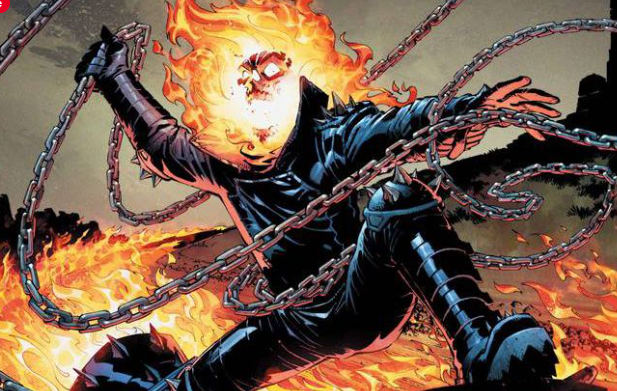
In the neon-lit corridors of the Marvel Universe, where gods throw hammers and billionaires fly in iron suits, there exists a darker, grittier corner reserved for the supernatural. At the center of this maelstrom of brimstone and chrome is the Ghost Rider. With a flaming skull that defies the laws of biology and a motorcycle that can outrun the devil himself, the Spirit of Vengeance is one of the most visually iconic and philosophically complex characters in comic book history.
However, beneath the leather jacket and the hellfire lies a mythos that spans millions of years and involves celestial contracts, demonic possessions, and an endless battle for the human soul. To understand the Ghost Rider is to look into the abyss of the Marvel underworld and realize that sometimes, the scariest monster is the one fighting on your side. Whether you are a casual fan of the films or a comic book reader looking to deepen your lore, these ten pillars of the Ghost Rider legend will serve as your roadmap through the underworld.
1. The Tragic Pact of Johnny Blaze
The most famous iteration of the character is Johnny Blaze, a stunt motorcyclist whose life was defined by the roar of the engines and the smell of the carnival. Johnny’s journey into darkness began not with a desire for power, but with an act of desperate love. To save his mentor and father figure, Crash Simpson, from terminal cancer, Johnny performed a ritual to summon a demon. He struck a bargain with Mephisto, the Marvel Universe’s most prominent devil figure, trading his eternal soul for a miracle.
In a cruel twist of irony—a hallmark of Mephisto’s deals—Crash Simpson was cured of cancer only to die almost immediately afterward in a failed motorcycle stunt. Johnny was left bound to the demon Zarathos, transforming every night into the Ghost Rider. This origin story establishes the character as a tragic figure, a man trapped in a biological and spiritual prison. He is the ultimate “deals-gone-wrong” cautionary tale, highlighting the theme that in the Marvel supernatural world, the price of a miracle is often more than any human can afford to pay.
2. Zarathos: The Demon Behind the Flame
It is a common misconception that the Ghost Rider is simply Johnny Blaze with fire powers. In reality, the Ghost Rider is a composite entity. For a significant portion of the character’s history, the power came from an ancient, powerful demon named Zarathos. Long ago, Zarathos was a rival to Mephisto, feeding on souls and commanding a massive following. When Mephisto defeated him, he stripped Zarathos of his memory and bound him to human hosts as a form of eternal punishment and amusement.
This creates a constant internal struggle. Johnny Blaze is often at war with the entity sharing his body, trying to steer the demon’s destructive impulses toward the guilty rather than the innocent. This duality adds a layer of psychological horror to the character. Unlike other heroes who “turn on” their powers, Johnny is essentially a jailer for a cosmic monster. When the Ghost Rider takes control, the human host often becomes a passenger in their own body, witnessing the horrific justice the Spirit of Vengeance metes out. Understanding Zarathos is key to realizing that the Ghost Rider is not just a hero; he is a force of nature that humans can barely hope to contain.
3. The Penance Stare: The Ultimate Psychological Weapon
In the arsenal of superhero abilities, few are as terrifying or as absolute as the Penance Stare. When the Ghost Rider locks eyes with a sinner, he forces them to feel all the pain, suffering, and emotional trauma they have ever inflicted on others throughout their entire lives—simultaneously. It is not a physical attack; it is a spiritual mirror that reflects the target’s own cruelty back onto their soul. For those with a long history of malice, the experience is often enough to leave them in a permanent catatonic state or kill them outright.
The Penance Stare is a fascinating philosophical tool because it bypasses traditional combat. It doesn’t matter how strong or fast a villain is; if they have a conscience and a history of causing harm, they are vulnerable. However, the move has its limitations. It traditionally does not work on beings who feel no remorse, those who are genuinely blind, or entities whose minds are too alien to process human emotion. It serves as a narrative device to explore the weight of sin and the idea that true justice comes from self-reckoning rather than external punishment.
4. A Multi-Generational Legacy of Riders
While Johnny Blaze is the “face” of the franchise, the Ghost Rider is actually a title held by many throughout history. Marvel lore has revealed that Spirits of Vengeance have existed since the dawn of humanity. There was a Ghost Rider in 1,000,000 BC who rode a flaming woolly mammoth. There have been Riders in the Wild West (originally known as the Phantom Rider), Riders in the Viking Age on flaming horses, and even a Ghost Rider in the distant future who travels through space on a cosmic motorcycle.
This “Legacy” aspect turns the Ghost Rider into a foundational element of the Marvel Universe. It suggests that the world has always needed a champion of vengeance to balance the scales of the supernatural. Each Rider brings their own flavor to the mantle. For instance, Danny Ketch, the 1990s Rider, focused on the “Spirit of Vengeance” as a more ghostly, urban vigilante. This deep history allows writers to tell stories across different time periods and genres, from Westerns to sci-fi, proving that the flaming skull is a universal symbol of justice that transcends any single era or host.
5. The Hellfire Arsenal and Chain Manipulation
The powers of a Ghost Rider extend far beyond simple pyrokinesis. They wield “Hellfire,” a mystical flame that burns the soul rather than the flesh. Hellfire is remarkably versatile; a Rider can use it to transform ordinary vehicles into “Hell-Cycles,” imbue weapons with supernatural properties, and even project it as devastating blasts of energy. One of the most iconic sights in comics is the Ghost Rider’s chain, which he can manipulate with his mind to grow in length, turn into a spear, or spin with the speed of a buzzsaw.
This control over matter allows the Ghost Rider to be an incredibly creative combatant. He can “possess” a machine, turning a standard shotgun into a weapon that fires bursts of soul-searing flame. This mechanical synergy is what gives the character his distinct “metal” aesthetic. He represents the fusion of ancient magic and modern machinery. The ability to transform the world around him into a hellish reflection of his own power makes him one of the most visually dynamic characters in the Marvel roster, ensuring that every fight is a spectacular display of fire and steel.
6. The Manipulation of Mephisto
To know the Ghost Rider is to know his greatest adversary and occasional puppet master: Mephisto. In the Marvel Universe, Mephisto is a supreme manipulator who thrives on the corruption of pure souls. He doesn’t just want to kill his enemies; he wants to trick them into choosing their own damnation. The Ghost Rider is Mephisto’s greatest “project” and his greatest failure. By binding Zarathos to humans, Mephisto hoped to create a weapon he could control, but the human spirit’s resilience frequently turns that weapon against him.
The relationship between a Rider and Mephisto is a game of high-stakes cosmic chess. Mephisto often appears in human guise to offer “fair” deals that are anything but. This constant threat adds a layer of paranoia to the Ghost Rider’s life. Even when he is saving the world, he has to wonder if he is inadvertently playing into one of Mephisto’s long-term schemes. This rivalry elevates the Ghost Rider’s stories from simple superhero brawls to epic struggles over the very concepts of fate, free will, and the ultimate destination of the soul.
7. The Midnight Sons: Marvel’s Supernatural Avengers
The Ghost Rider often operates as a loner, but when the threats become too large for one spirit to handle, he joins the “Midnight Sons.” This is a loose collective of Marvel’s most powerful supernatural heroes, including figures like Blade the Vampire Hunter, Morbius the Living Vampire, Moon Knight, and Doctor Strange. They are the “secret defenders” who handle the threats that the Avengers or the X-Men are ill-equipped to face—demonic invasions, ancient curses, and vampiric uprisings.
Being part of this group highlights the Ghost Rider’s role as a specialist. While someone like Captain America deals with political or extraterrestrial threats, the Ghost Rider is the “nuclear option” for the occult. The dynamic within the Midnight Sons is often tense, as many of these characters operate in moral gray areas. It provides a platform for some of the darkest stories in Marvel history, blending horror elements with superhero action. For fans, the Midnight Sons represent the peak of Marvel’s “dark” side, with the Ghost Rider serving as the team’s most powerful—and most unpredictable—member.
8. Danny Ketch and the Blue Flame Era
In the early 1990s, the Ghost Rider mythos underwent a massive resurgence with the introduction of a new host, Danny Ketch. When Danny touched a mystical medallion on a discarded motorcycle, he was transformed into a new version of the Rider. This era introduced the iconic spiked leather jacket and the heavy, industrial-looking bike that many fans associate with the character today. The Danny Ketch era also introduced the concept that the Ghost Rider’s power was linked to a complex family tree involving an ancestor named Noble Kale.
This period was crucial because it modernized the character, moving him away from the 1970s “stunt-man” vibe into a grittier, urban horror setting. It also explored the idea of “Vengeance” as a distinct entity from Zarathos. The Danny Ketch stories were darker and more gothic, leaning into the mystery of the Spirit’s origins. This era proved that the Ghost Rider concept was flexible enough to be reinvented for new generations, and it established the “Medallion of Power” lore that would eventually link all the various Riders together in a grand, cosmic tapestry.
9. Robbie Reyes and the Hell-Charger Revolution
In a bold departure from tradition, the Marvel Universe introduced Robbie Reyes, a young mechanic from East Los Angeles who became the Ghost Rider—but with a twist. Instead of a motorcycle, Robbie drives a black 1969 Dodge Charger known as the “Hell-Charger.” Furthermore, his spirit is not Zarathos or a traditional Spirit of Vengeance, but the ghost of his estranged, satanic uncle, Eli Morrow. This change brought a fresh, modern perspective to the character, focusing on the struggles of inner-city life and the importance of family.
Robbie Reyes’ inclusion in the Ghost Rider legacy was initially controversial among purists, but he quickly became a fan favorite. His relationship with his younger brother, Gabe, provides a powerful emotional core that hadn’t been seen in previous iterations. The Hell-Charger itself became an instant icon, showing that the “Rider” title is about the spirit and the speed, not just the two wheels. Robbie’s tenure as a Ghost Rider, including his time as a core member of the Avengers, proved that the mantle could evolve to reflect diverse backgrounds and modern sensibilities while staying true to its roots of protecting the innocent.
10. The Unfathomable Power Ceiling
One of the most surprising things about the Ghost Rider is just how powerful he actually is. In several storylines, it has been stated by characters like Doctor Strange that the Ghost Rider’s power is essentially limitless. He is a “Heavenly” weapon (or a demonic one, depending on the host) whose upper limits are only restricted by the imagination and the “humanity” of the host. If the human host were to fully step aside and let the Spirit of Vengeance take complete control, the Ghost Rider would possess god-like abilities capable of altering reality and defeating the strongest beings in the universe.
This makes the Ghost Rider a “sleeping giant” in the Marvel Universe. He is one of the few beings that the Hulk is genuinely wary of, and he has gone toe-to-toe with cosmic entities like Galactus and Thor. The tragedy is that the Rider can never truly unleash this power without losing his soul or causing collateral damage. He is a hero defined by restraint. Knowing that the flaming skeleton on the motorcycle is actually a walking apocalypse adds a layer of tension to every story. He isn’t just fighting villains; he’s fighting the urge to become a monster far worse than the ones he hunts.
Further Reading
- Ghost Rider: Road to Damnation by Garth Ennis and Clayton Crain
- Essential Ghost Rider Vol. 1 by Gary Friedrich and Roy Thomas
- Ghost Rider: Trail of Tears by Garth Ennis and Clayton Crain
- All-New Ghost Rider: Engines of Vengeance by Felipe Smith and Tradd Moore
- 10 Things You Should Know About Kang the Conqueror – Marvel Comics
- 10 Things You Should Know About The Sentry – Marvel Comics
- 10 Things You Should Know About Starlight From The Boys TV Show
- 10 Things You Should Know About Ghost Rider – Marvel Comics
- DC Comics: 10 Essential Things to Know About Shazam
- DC Comics: 10 Essential Things to Know About Sinestro
- DC Comics: 10 Essential Things to Know About The Reverse Flash
- DC Comics: 10 Essential Things to Know About Hal Jordan
- DC Comics: 10 Essential Things to Know About The Green Lanterns
- DC Comics: 10 Essential Things to Know About Mr Freeze



