
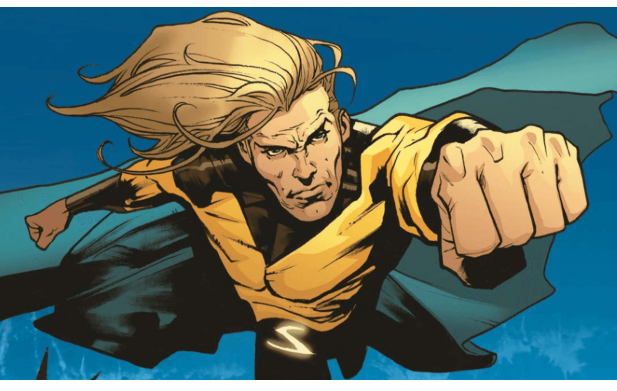
The Sentry: 10 Terrifying Secrets of Marvel’s Most Powerful (and Forgotten) Hero
In the vast pantheon of Marvel Comics, few figures are as polarizing or as paradoxically profound as Robert Reynolds, better known as The Sentry. Imagine a hero with the physical might of Superman, the cosmic significance of the Silver Surfer, and the fractured psyche of a man losing a battle with his own mind. He is the “Golden Guardian of Good,” a shining beacon of hope who carries within him a darkness so absolute it threatens to consume the entire multiverse.
The Sentry is not your typical caped crusader. His introduction to the Marvel Universe was a masterstroke of meta-fiction, suggesting that he had always been there—standing alongside the Fantastic Four and the Avengers—only for the world to collectively forget him. This narrative choice makes him a “go-to” study for fans interested in how comic books can deconstruct the archetype of the “perfect” hero. To understand The Sentry is to look into a mirror that reflects both the highest aspirations of heroism and the deepest shadows of the human condition.
1. The Genius Meta-Fiction of the “Forgotten” History
One of the most fascinating aspects of this character is how he was integrated into the Marvel mythos. Unlike most characters who are introduced as “new,” the creators utilized a brilliant marketing and narrative hook: they claimed Robert Reynolds was a long-lost creation of the Silver Age that everyone—both readers and characters—had simply forgotten. This wasn’t just a plot point; it was a psychological layer that defined his existence.
In the story, it is revealed that the world’s memory of the Sentry was wiped to protect reality. He wasn’t just a hero; he was a pillar of the community who mentored Spider-Man, calmed the Hulk, and served as a confidant to Reed Richards. By framing his history this way, the writers created an immediate sense of weight and tragedy. We aren’t just meeting a powerful man; we are mourning a legend who lost his place in the sun. This meta-narrative forces the reader to question the reliability of history itself, making the Sentry a uniquely haunting presence in a universe usually defined by its continuity.
2. The Duality of the Void: A Cosmic Price for Power
The Sentry’s existence is defined by a terrifying cosmic balance. For every heroic deed he performs as the Sentry, an equal and opposite force of malice is unleashed through his dark half: The Void. The Void is not merely a “bad personality”; it is a primordial, shadowy entity capable of breaking the spirits of the strongest heroes and wiping out entire civilizations. This duality turns the traditional superhero power fantasy into a cautionary tale.
The relationship between Robert Reynolds and the Void is a struggle of cosmic proportions. If Robert saves a city, the Void might destroy another. This creates an impossible moral dilemma: the more the Sentry helps the world, the more he endangers it. This “zero-sum” existence is what forced the heroes of Earth to erase their memories of him in the first place. The Void represents the consequence of absolute power, serving as a reminder that in the Marvel Universe, some gifts come with a price tag that no one can afford to pay.
3. The Power of a Million Exploding Suns
When describing the Sentry’s power level, the phrase “the power of a million exploding suns” is often used, and it is rarely an exaggeration. He is frequently cited as the most powerful human in the Marvel Universe, possessing strength that rivals or exceeds that of the Hulk and Thor. However, his abilities extend far beyond simple physical brawn. He possesses flight, invulnerability, and energy projection on a scale that can alter the very fabric of reality.
What makes his power truly terrifying is its origin. While it initially appears to be a physical transformation, it is later suggested that his abilities are tied to molecular manipulation. He can essentially “write” his own reality, which explains why he is so difficult to kill. He has survived total disintegration and returned simply because he willed himself back into existence. This level of power makes him a wild card in any conflict; he is a literal “deus ex machina” who is held back only by the fragility of his own mind.
4. An Origin Born of Desperation and Chemicals
The Sentry’s origin story is a dark subversion of the Captain America “Super Soldier” trope. Robert Reynolds was not a hand-picked hero or a noble soldier; he was a troubled individual, often depicted as a man struggling with addiction, who broke into a laboratory and consumed a “Golden Sentry Serum.” This serum was an attempt to replicate and magnify the effects of the original super-soldier formula by a factor of thousands.
Instead of creating a disciplined hero, the serum interacted with Robert’s unstable chemistry to birth something god-like and uncontrollable. This origin grounds the character in a sense of “accidental divinity.” He didn’t earn his powers through merit or heritage; he stumbled into them through a series of poor choices. This creates a fascinating internal conflict: Robert is a man who was never prepared for the responsibility of being a god, leading to a perpetual sense of “imposter syndrome” that the Void is all too happy to exploit.
5. A Masterclass in Mental Health Themes in Comics
While many superheroes have “flaws,” the Sentry’s struggles with mental health are central to his identity. He is frequently depicted as suffering from agoraphobia, schizophrenia, and generalized anxiety. At his peak, he is a man who could move planets but is often too terrified to leave his own watchtower. This vulnerability makes him one of the most relatable—and tragic—characters in the Marvel stable, despite his god-like status.
The portrayal of his mental health isn’t just a plot device; it is an allegory for the internal battles many people face. The Void is often interpreted as a manifestation of Robert’s depression or his “darker impulses” given physical form. By placing these very human struggles inside the world’s most powerful being, Marvel created a narrative where the greatest threat isn’t a space alien or a mad scientist, but the hero’s own mind. It’s a sophisticated take on the genre that resonates with anyone who has ever felt at war with themselves.
6. The Sentinel of Liberty’s Relationship with the Avengers
The Sentry’s tenure with the Avengers—particularly during the “New Avengers” era—redefined the team’s power dynamics. For a time, he served as their “secret weapon,” a heavy hitter who could end a fight with a single blow. However, his presence also brought a constant undercurrent of dread. The heroes weren’t just worried about the villains; they were worried about what would happen if their teammate lost control.
His relationships with individual Avengers were equally complex. He shared a unique bond with the Hulk, as he was one of the few beings who could soothe the Green Goliath’s rage. Conversely, characters like Iron Man and Captain America often looked at him with a mixture of awe and pity. He was a teammate they wanted to help, but also a bomb they weren’t sure how to diffuse. This dynamic added a layer of psychological tension to the team’s adventures, proving that the most dangerous part of being an Avenger isn’t the mission—it’s the person standing next to you.
7. The Watchtower and the CLOC System
Every great hero needs a base of operations, and the Sentry’s Watchtower is as iconic as it is mysterious. Originally appearing atop the Avengers Tower (and later in other locations), the Watchtower is a high-tech sanctuary filled with advanced technology and alien artifacts. It is managed by an artificial intelligence known as CLOC (Centrally Located Organic Computer), which monitors the world for crises and helps Robert manage his overwhelming sensory input.
CLOC serves as a fascinating supporting character, acting as Robert’s primary connection to the outside world. Because the Sentry can hear every cry for help across the globe simultaneously, CLOC filters these signals to prevent Robert from suffering a total mental breakdown. The Watchtower isn’t just a home; it’s a life-support system for a man who is constantly being crushed by the weight of his own senses. It symbolizes the isolation that comes with supreme power—a golden cage designed to keep the hero sane and the world safe.
8. His Role as a Mentor to the Marvel Icons
In the “retconned” history of the Marvel Universe, the Sentry was a mentor to some of the greatest names in the business. He was a close friend to a young Peter Parker, helping the boy navigate the early days of being Spider-Man. He was also a stabilizing force for the Fantastic Four, often acting as a bridge between their scientific explorations and the public’s understanding of heroism.
These “forgotten” relationships add a layer of bittersweet nostalgia to the character. When characters eventually remember him, they aren’t just remembering a powerhouse; they are remembering a friend they let down. This history suggests that the Marvel Universe was a brighter, more hopeful place when the Sentry was active. His disappearance didn’t just remove a protector; it left a hole in the social fabric of the hero community, one that was eventually filled with the cynicism and infighting of the modern age.
9. The Inevitability of the Death and Rebirth Cycle
Death in comic books is often a revolving door, but for the Sentry, it is a thematic necessity. He has “died” multiple times, often in spectacular, cosmic fashion, only to return later. This isn’t just a trope; it reflects the idea that the Sentry (and the Void) are fundamental forces of the universe that cannot truly be extinguished. They are two sides of a coin that must exist as long as there is light and shadow.
Whether he is being torn apart by a god or sacrificing himself to save the world, his “deaths” are always momentous. They often signal a major shift in the status quo of the Marvel Universe. His resurrections are equally impactful, usually heralded by a return of the “Golden Age” aesthetic followed quickly by the creeping dread of the Void’s return. This cycle reinforces the character’s status as a mythic figure—a being who exists beyond the normal boundaries of mortality and narrative.
10. The Ultimate Deconstruction of the Superman Archetype
Perhaps the most significant thing to know about the Sentry is his role as a “deconstruction.” If Superman represents the ideal of what humanity can be, the Sentry represents the reality of what would happen if a flawed, modern human were given the powers of a god. He is the answer to the question: “Can a person with a broken mind handle infinite power?”
The Sentry challenges the idea that power inherently makes one a hero. He shows that without a stable foundation of mental health and self-actualization, great power is simply a burden that can lead to great tragedy. By subverting the “shining hero” trope, the creators of the Sentry forced the audience to look closer at the psychic toll of heroism. He remains a singular figure in comics because he doesn’t offer easy answers; he only offers a complex, beautiful, and terrifying look at the limits of the human soul.
Further Reading
- The Sentry by Paul Jenkins and Jae Lee
- New Avengers: Sentry by Brian Michael Bendis
- The Sentry: Age of the Sentry by Jeff Parker
- The Sentry: Man of Two Worlds by Jeff Lemire
- 10 Things You Should Know About Kang the Conqueror – Marvel Comics
- 10 Things You Should Know About The Sentry – Marvel Comics
- 10 Things You Should Know About Ghost Rider – Marvel Comics
- 10 Essential Things to Know About The Mole Man – Marvel Comics Lore
- 10 Essential Things to Know About War Machine – Marvel Comics Lore
- 10 Things You Should Know About Doctor Doom (Victor von Doom) – Marvel Comics
- 10 Things You Should Know About Hercules – Marvel Comics
- 10 Things You Should Know About Valeria Richards – Marvel Comics
- 10 Things You Should Know About Franklin Richards – Marvel Comics
- 10 Things You Should Know About The Human Torch (Johnny Storm) – Marvel Comics



