
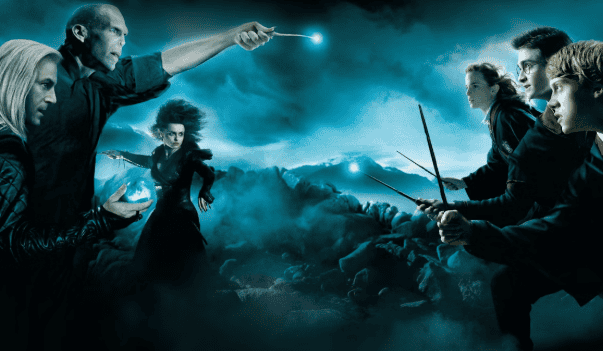
The story of Harry Potter is more than just a tale of a boy with a lightning-shaped scar; it is a modern epic that explores the fundamental struggle between good and evil, the weight of destiny, and the enduring power of love. At its core, the narrative follows an orphaned boy who discovers on his eleventh birthday that he is a wizard. From the moment he steps onto Platform $9 \frac{3}{4}$, readers are transported into a meticulously crafted universe where magic is woven into the very fabric of reality, hidden just behind the veil of the mundane “Muggle” world.
This saga is built on the foundation of classic hero archetypes, yet it subverts them with complex character development and a magic system that serves as a metaphor for social and emotional growth. Whether you are a curious beginner or a seasoned enthusiast looking for a refresher, understanding the “Potterverse” requires looking past the wand-waving to the themes of choice versus fate. The following ten pillars provide a comprehensive overview of the story, the lore, and the mechanics that make this wizarding world an evergreen masterpiece of literature.
1. The Protection of Ancient Magic and the Boy Who Lived
The catalyst for the entire saga is a single night in a village called Godric’s Hollow. When the dark wizard Lord Voldemort attempted to kill the infant Harry Potter, he was thwarted by an “ancient magic” he did not understand: a mother’s sacrificial love. Lily Potter gave her life to save her son, creating a blood-based magical shield that caused Voldemort’s killing curse to rebound. This event left Harry with a lightning-bolt scar and a permanent connection to his enemy.
This protection is the narrative’s most vital concept. It isn’t a spell cast with a wand, but a deeper, visceral magic that resides in the blood. Because of this sacrifice, Harry became “The Boy Who Lived,” the only person known to survive the Avada Kedavra curse. This protection remained active as long as Harry could call the place where his mother’s blood dwelt “home,” which is why he was sent to live with his aunt, Petunia Dursley. Understanding this fundamental protection is key to recognizing why Harry survives multiple encounters with the Dark Lord, as it serves as both a physical and spiritual barrier against Voldemort’s hatred.
2. Hogwarts: A Living Sanctuary of Knowledge and Mystery
Hogwarts School of Witchcraft and Wizardry is far more than a backdrop; it is a character in its own right. Founded by four of the greatest witches and wizards of their age—Godric Gryffindor, Helga Hufflepuff, Rowena Ravenclaw, and Salazar Slytherin—the castle is a labyrinth of shifting staircases, hidden rooms, and ancient secrets. The school represents the transition from the isolation of childhood to the responsibilities of the magical adult world.
The Four Houses serve as the social and psychological framework for the students. Gryffindors are known for bravery, Hufflepuffs for loyalty and hard work, Ravenclaws for wit and learning, and Slytherins for ambition and cunning. The Sorting Hat, a sentient magical artifact, determines where a student belongs based on their inherent traits and, most importantly, their choices. Hogwarts provides a safe haven for Harry, being the first place he truly feels at home. However, it also houses great dangers, such as the Chamber of Secrets and the Forbidden Forest, reminding students that knowledge and power must be handled with caution and respect.
3. The Dark Lord’s Descent into Immortality
Lord Voldemort, born Tom Riddle, is the primary antagonist whose shadow looms over the entire series. His character is a cautionary tale of what happens when great talent is decoupled from empathy. Obsessed with his own mortality and his “noble” wizarding heritage, Riddle transformed himself into a monster, shedding his humanity in pursuit of absolute power. He lead a group of followers known as Death Eaters, who sought to overthrow the Ministry of Magic and establish a regime where wizards ruled over Muggles.
Voldemort’s greatest fear was death, which he viewed as a “shameful human weakness.” To combat this, he utilized the darkest of all magics: Horcruxes. By committing acts of supreme evil, he split his soul and encased the fragments in physical objects. As long as these fragments remained intact, he could not truly die. This pursuit of immortality is what ultimately led to his downfall; by fragmenting his soul, he became unstable and incapable of understanding the very magic—love and sacrifice—that Harry used to defeat him. His story is a masterclass in the trope of the “dark mirror” to the protagonist.
4. The Triad of Friendship: Harry, Ron, and Hermione
At the heart of the story’s emotional resonance is the bond between Harry Potter, Ron Weasley, and Hermione Granger. This trio represents a perfect balance of traits necessary to overcome overwhelming odds. Harry provides the courage and the “saving people” instinct; Ron provides loyalty, street-smarts (or “wizard-smarts”), and a sense of belonging through his large, loving family; and Hermione provides the intellectual firepower and logic required to solve the complex mysteries they face.
Their friendship is not without friction, making it relatable to a general audience. They argue, experience jealousy, and face periods of estrangement. However, their unity is what differentiates them from the solitary, selfish nature of the villains. While Voldemort has “followers” who serve him out of fear, Harry has friends who support him out of love. This distinction is a recurring theme: the idea that strength comes from community and vulnerability, whereas the villain’s isolation is his greatest vulnerability. The trio’s growth from wide-eyed children to battle-hardened young adults is the narrative’s primary engine.
5. The Prophecy: Fate vs. Choice
A significant portion of the mid-saga tension revolves around a prophecy made by Sybill Trelawney. The prophecy stated that “either must die at the hand of the other for neither can live while the other survives.” This established Harry and Voldemort as two sides of the same coin, destined to face one another in a final conflict. For a long time, Harry feels burdened by this “destiny,” believing he has no choice but to be the hero.
However, the story eventually reveals a more profound truth: the prophecy only became true because Voldemort chose to believe it. By attacking Harry as a baby, Voldemort “marked him as his equal,” effectively creating his own worst enemy. As Albus Dumbledore frequently reminds Harry, it is not our abilities that show what we truly are, but our choices. Harry’s heroism is not found in the fact that a prophecy named him, but in the fact that he would have hunted Voldemort down anyway to stop the suffering he caused. This nuanced take on the “Chosen One” trope adds significant depth to the plot.
6. Blood Purity and the Social Hierarchy of Magic
The Wizarding World is not a utopia; it is plagued by a deep-seated prejudice known as “blood purity.” This social hierarchy divides magical folk into Pure-bloods (those with only magical ancestors), Half-bloods (those with both magical and Muggle ancestors), and Muggle-borns (wizards born to non-magical parents). There is also a marginalized group called “Squibs”—non-magical people born to wizarding families.
The villains, specifically the Death Eaters, champion the idea of “Magic is Might,” believing that Muggle-borns are “stealing” magic and are inferior. This serves as a clear allegory for real-world racism and classism. Harry, a Half-blood himself, and Hermione, a Muggle-born, consistently prove these prejudices wrong through their skill and character. The conflict between the progressive members of the wizarding world and the elitist “old families” (like the Malfoys) adds a layer of political intrigue and social commentary that makes the evergreen story feel grounded and relevant across generations.
7. Severus Snape: The Enigma of Redemptive Love
Perhaps the most complex character in the entire saga is Severus Snape, the Potions Master at Hogwarts. For the majority of the story, Snape acts as an antagonist to Harry, fueled by a long-standing grudge against Harry’s father, James. Snape is a cold, cynical, and seemingly cruel teacher who appears to be working for Voldemort. His true allegiance is the ultimate “slow-burn” mystery of the series.
The resolution of Snape’s arc reveals that he was a double agent working for Dumbledore, motivated by his lifelong, unrequited love for Harry’s mother, Lily. His story is one of profound regret and secret heroism. Snape’s character challenges the reader’s perception of “good” and “evil,” showing that a person can be deeply unpleasant and still be on the side of the light. His redemption is not found in becoming a “nice” person, but in his unwavering commitment to protecting Lily’s son at the cost of his own life and reputation. His story underscores the theme that love can be a powerful, albeit painful, transformative force.
8. The Deathly Hallows vs. The Horcruxes
In the final stages of the story, two sets of magical objects take center stage: the Horcruxes and the Deathly Hallows. While the Horcruxes represent Voldemort’s attempt to avoid death through evil and fragmentation, the Deathly Hallows—the Elder Wand, the Resurrection Stone, and the Invisibility Cloak—represent the quest to become the “Master of Death.” According to legend, whoever unites these three objects will possess ultimate power over mortality.
This creates a philosophical fork in the road for Harry. Should he hunt for the Hallows to gain the power to defeat Voldemort, or should he focus on the grueling task of destroying the Horcruxes? The Hallows represent the temptation of power, while the Horcruxes represent the reality of the Dark Lord’s corruption. Ultimately, the story posits that the true “Master of Death” is not the one who avoids it or seeks to control it, but the one who accepts death as an inevitable part of life. Harry’s willingness to walk toward his own end to save others is what truly makes him the master of the Hallows.
9. Albus Dumbledore’s Grand Design
Albus Dumbledore, the Headmaster of Hogwarts, serves as Harry’s mentor and the architect of Voldemort’s eventual defeat. Dumbledore is the only wizard Voldemort ever feared, not just for his immense magical power, but for his wisdom and his understanding of human nature. However, as the story progresses, Dumbledore is revealed to be a flawed man with a complicated past, including a period where he himself was tempted by the ideas of wizarding supremacy.
Dumbledore’s “Grand Design” involved a long-term plan to ensure Voldemort’s downfall, often requiring him to withhold information from Harry for the “greater good.” This creates a tension in their relationship, as Harry realizes his mentor has been manipulating events from behind the scenes. Dumbledore represents the “wise old man” archetype, but with a twist of modern realism—he is a man who made massive mistakes and spent the rest of his life trying to atone for them. His belief in the power of love over the power of the wand is the guiding light that Harry follows to the end.
10. The Ultimate Victory: Love as the Ancient Magic
The climax of the Harry Potter story is not won through a more powerful spell or a faster wand-flick; it is won through the same “ancient magic” that started the story. In a poetic reversal, Harry chooses to sacrifice himself to protect his friends and the defenders of Hogwarts. By doing so, he provides them with the same magical protection his mother once gave him. Voldemort, unable to grasp the concept of self-sacrifice, inadvertently destroys the fragment of his own soul within Harry while leaving Harry’s soul intact.
The final battle is a culmination of every theme discussed: the power of choice, the strength of friendship, and the acceptance of mortality. Harry returns from the brink of death to face Voldemort one last time. Voldemort falls because his spells cannot harm those Harry protected, and because his own hubris led him to use a wand (the Elder Wand) that actually owed its allegiance to Harry. The story concludes not with a coronation, but with the restoration of peace, proving that the greatest magic of all is the quiet, persistent power of the human spirit to choose what is right over what is easy.
Further Reading
- The Harry Potter Series (Books 1-7) by J.K. Rowling
- The Tales of Beedle the Bard by J.K. Rowling (Provides essential wizarding world folklore)
- The Philosophy of Harry Potter: Self-Knowledge, and Personal Growth by Peter G. Bolt
- Harry Potter and Philosophy: If Aristotle Ran Hogwarts edited by David Baggett and Shawn E. Klein
- Unlock the Magic: The Ultimate Guide to Watching the Harry Potter Movies in Perfect Order
- The Boy Who Lived Returns: Everything We Know About the Epic Harry Potter TV Series Adaptation
- Beyond the Seven Books: The Definitive Chronological Journey Through the Harry Potter Universe
- The Boy Who Lived: The Ultimate Guide to the Harry Potter Saga and Its Hidden Depths
- 10 Things You Should Know About Fantastic Beasts: The Secrets of Dumbledore (2022)
- 10 Things You Should Know About Fantastic Beasts: The Crimes of Grindelwald (2018)
- 10 Things You Should Know About Fantastic Beasts and Where to Find Them (2016)
- 10 Things You Should Know About Harry Potter and the Deathly Hallows – Part 2 (2011)
- 10 Things You Should Know About Harry Potter and the Deathly Hallows – Part 1 (2010)
- 10 Things You Should Know About Harry Potter and the Half-Blood Prince (2009)



