
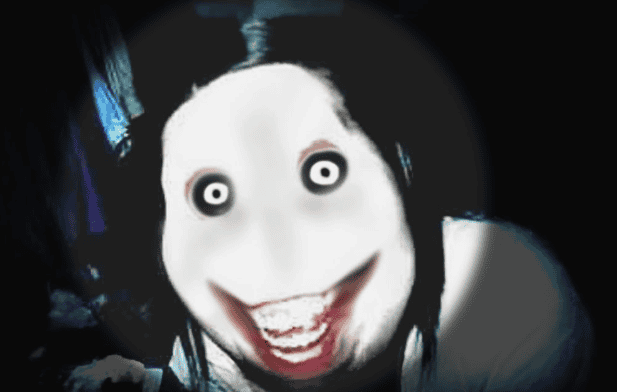
The internet is a vast, dark forest, and in its deepest thickets, monsters dwell. Before the era of high-budget streaming horror, the digital world birthed its own nightmares through a medium known as “Creepypasta.” Among the pantheon of these digital demons—alongside the faceless Slender Man and the glitchy Ben Drowned—stands a figure whose pale, unblinking face has haunted the dreams of millions: Jeff the Killer. With his permanent, carved smile and his terrifying command to “Go to sleep,” Jeff has become the quintessential slasher of the internet age.
But who is he, really? Behind the grainy, overexposed image that defined a generation of online horror lies a complex, often contradictory lore that has evolved through countless retellings, fan fiction, and community debates. For beginners, the story of Jeff is more than just a scary face; it is a tragic tale of bullying, psychological collapse, and the birth of a monster. Understanding Jeff the Killer requires peeling back the layers of internet history to see how a simple short story transformed into a global phenomenon. Whether you are a seasoned horror enthusiast or a newcomer curious about this digital legend, this guide explores the essential truths behind the pale man in the white hoodie.
1. The Tragic Transformation of Jeff Woods
At the heart of the Jeff the Killer mythos is the story of Jeff Woods, a teenager whose life takes a sharp, violent turn after moving to a new neighborhood. Unlike many supernatural monsters who are born from ancient curses, Jeff’s origin is rooted in the mundane reality of suburban life and the devastating impact of extreme bullying. The lore describes Jeff as a sensitive boy who, along with his brother Liu, finds himself targeted by a trio of local thugs. This conflict escalates until it reaches a boiling point, resulting in a brutal physical confrontation.
The tragedy of Jeff is that he wasn’t always a monster. The “lore” emphasizes a slow-burn psychological shift where Jeff begins to feel a “darkness” or a “feeling” rising within him during these fights. It suggests that the trauma of the attacks acted as a catalyst, unlocking a latent psychosis. This transition from a normal student to a violent vigilante, and eventually a full-blown serial killer, provides a grounded—if exaggerated—exploration of how environment and trauma can warp a human soul. For fans, this makes Jeff a more relatable, albeit terrifying, figure compared to ghosts or demons.
2. The Infamous Incident at the Birthday Party
The definitive turning point in Jeff’s descent into madness occurs during a neighborhood birthday party. This sequence is a staple of the Jeff the Killer lore and serves as the “origin of the scars.” While attending the party, Jeff is cornered by his bullies, leading to a desperate and bloody struggle. In the chaos, Jeff is doused in bleach and set on fire. This specific detail—the combination of chemical burns and searing heat—is what creates the iconic, ghostly white complexion that defines his look.
This event is narratively significant because it marks the physical death of Jeff Woods and the birth of Jeff the Killer. The hospital stay that follows is a period of suspense in the story, as both his family and the reader wait to see what lies beneath the bandages. When the wrappings finally come off, the reflection Jeff sees in the mirror isn’t one of horror, but of twisted satisfaction. The party wasn’t just a fight; it was a baptism in fire that burned away his humanity, leaving behind something far more predatory and unrecognizable.
3. The Carved Smile and the Price of Happiness
Perhaps the most disturbing aspect of Jeff’s appearance is his mouth. According to the lore, upon returning home from the hospital, Jeff finds himself unable to stop looking at his new, distorted face. In a fit of peak insanity, he decides that he wants to be able to see his face forever and that he should always look happy. To achieve this, he uses a kitchen knife to carve a permanent grin into his cheeks, stretching from ear to ear. This act of self-mutilation is the ultimate sign of his complete psychological break.
The “Chelsea Smile” or “Glasgow Grin” has become Jeff’s most recognizable trait. In the context of the story, this smile represents a mockery of human emotion. Jeff no longer feels happiness in the way a normal person does; his joy is found exclusively in the terror of others. By carving his face, he ensures that the world will always see a mask of glee, even as he commits the most heinous acts. It is a visual representation of his madness—a permanent, unmoving expression of the chaos that now dictates his every move.
4. The Eyelids That Never Close
To complement his permanent smile, Jeff takes his self-alteration a step further by burning off his own eyelids. His reasoning, as documented in the original stories, is that he wanted to be able to look at his “beautiful” face in the mirror without ever having to blink or look away. This detail adds a layer of supernatural-adjacent horror to his character. While Jeff remains biologically human, the lack of eyelids gives him an alien, predatory stare that is deeply unsettling to the human psyche.
From a lore perspective, the “unblinking stare” serves a dual purpose. First, it emphasizes his obsession with his own transformation. Second, it makes him an effective hunter. Imagine waking up in the middle of the night to find a man standing over you, his eyes wide and drying, never flickering as he watches you sleep. This specific trait is what makes his catchphrase, “Go to sleep,” so ironic and terrifying. He is a creature that can never sleep, yet he demands that his victims succumb to a permanent slumber.
5. Homicidal Liu: The Survivor and the Rival
No exploration of Jeff the Killer lore is complete without mentioning his brother, Liu Woods. In the original tale, Liu is the protective older brother who even goes to juvenile detention to protect Jeff from the consequences of their first fight with the bullies. However, after Jeff’s transformation, Liu becomes one of his first victims. Jeff attacks his family in the middle of the night, and while his parents perish, Liu’s fate became a major branch of Creepypasta mythology.
In many versions of the lore, Liu survives the attack and becomes “Homicidal Liu.” This character serves as a foil to Jeff—a man driven by the same trauma but shaped into a different kind of monster. Some stories depict Liu as having a split personality, while others show him as a vengeful spirit or a vigilante hunting his brother. The relationship between Jeff and Liu adds a Shakespearean layer of tragedy to the lore, turning a simple slasher story into a fractured family epic where two brothers are locked in an eternal cycle of violence.
6. The Significance of the Catchphrase
“Go to sleep.” These three words are inextricably linked to Jeff the Killer. Within the lore, these are the last words his victims hear before they are killed. The phrase is often whispered, a chilling contrast to the violent nature of his crimes. It functions as a dark lullaby, a command that strips away the victim’s agency and marks the end of their story. The catchphrase has become so iconic that it is frequently used in fan art, narrations, and even as a shorthand for the Creepypasta genre itself.
Psychologically, the phrase “Go to sleep” highlights Jeff’s delusional state. In his mind, he is perhaps “freeing” people from the world or giving them the rest he can no longer achieve himself. It turns his murders into a ritual. He doesn’t just kill for the sake of killing; he performs a twisted version of a bedtime routine. This specific detail is what elevated Jeff from a generic internet monster to a character with a distinct, terrifying personality that lingers in the mind long after the screen goes dark.
7. Jane the Killer: The Nemesis
As the Jeff the Killer story grew in popularity, the community expanded the “Jeff-Verse” by introducing Jane the Killer (Jane Arkensaw). Jane is often depicted as a neighbor who witnessed Jeff’s transformation and subsequent massacre. In the most popular iterations of her lore, Jeff targets her family and leaves her scarred and burned, similar to himself, but with a mask to hide her face. Unlike Jeff, Jane retains her morality and devotes her life to hunting him down.
Jane represents the “victim’s revenge” trope within the lore. While Jeff is the chaotic evil, Jane is the vengeful neutral, a character born from his wake of destruction. Their rivalry is a core pillar of the extended Creepypasta mythos, often leading to “Who would win?” debates and crossover stories. Jane provides a necessary perspective on Jeff’s actions, showing the collateral damage he leaves behind and providing a protagonist for the audience to root for in an otherwise bleak and nihilistic world.
8. The Mystery of the Original Image
One of the most fascinating aspects of Jeff the Killer lore isn’t the story itself, but the origins of the image that accompanies it. The high-contrast, distorted face with the black-ringed eyes and the red smile is arguably the most famous image in internet horror history. For years, the origins of this photo were shrouded in mystery, leading to numerous urban legends. Some claimed it was a photoshopped image of a girl who had passed away, while others believed it was a still from a lost horror film.
The reality of the image involves early internet photo-editing culture and the “Sesseur” persona, the original creator of the Jeff the Killer character. The image was likely created using a combination of a real face and heavy digital manipulation to create the “uncanny valley” effect. This mystery actually helped the lore grow; the lack of a clear origin made the character feel like a digital ghost that had manifested out of the ether of the early web. It remains a testament to how a single, striking visual can anchor a legend in the collective consciousness.
9. Jeff as a “Modern Slasher” Archetype
Jeff the Killer occupies a unique space in horror as a “Modern Slasher.” He is the digital successor to characters like Michael Myers or Jason Voorhees. Like his predecessors, he is a silent, seemingly unstoppable force of nature characterized by a mask-like face and a signature weapon (the kitchen knife). However, Jeff is distinct because he was “crowdsourced.” His lore wasn’t written by a single screenwriter but was molded, edited, and expanded by thousands of internet users over many years.
This collaborative nature of his lore is why there are so many different versions of his story. Some versions focus on the supernatural, suggesting Jeff is an immortal entity, while others keep him strictly human. This flexibility has allowed the character to endure. He is a template upon which every generation of internet users can project their fears. Whether he is seen as a tragic victim or a pure engine of malice, Jeff’s role as the archetypal internet slasher is firmly cemented in the history of digital folklore.
10. The Enduring Legacy of the White Hoodie
Today, Jeff the Killer is more than just a scary story; he is a cultural icon within the horror community. His influence can be seen in indie horror games, fan films, and even mainstream media that draws inspiration from internet “creepypastas.” The image of the man in the white hoodie, stained with blood and wearing a carved smile, has become a shorthand for a specific type of visceral, raw horror that defined the early social media era.
The legacy of Jeff the Killer lies in his simplicity. He doesn’t require a complex backstory involving ancient gods or cosmic horror to be scary. He is the monster under the bed, the stranger in the hallway, the person who hides in the shadows of your own home. By taking the familiar—a teenage boy, a family home, a kitchen knife—and twisting it into something unrecognizable, the Jeff the Killer lore taps into primal fears that remain relevant regardless of how much technology advances. He reminds us that the most terrifying monsters aren’t the ones from space, but the ones we create ourselves.
Further Reading
- The Creepypasta Collection: Modern Urban Legends You Can’t Unread by MrCreepyPasta
- Lore: Monstrous Creatures by Aaron Mahnke
- Creepypasta: The Mythology of the Internet (Anthology) by Various Authors
- The Big Book of Ghost Stories by Otto Penzler (For context on traditional vs. digital folklore)
- 10 Creepiest Creepypastas You Should Know
- 10 Things You Should Know About The Lore Of The Creepypasta Ted the Caver
- 10 Things You Should Know About The Lore Of The Creepypasta Zalgo
- 10 Things You Should Know About The Lore Of The Creepypasta The Midnight Game
- 10 Things You Should Know About The Lore Of The Creepypasta Username: 666



