
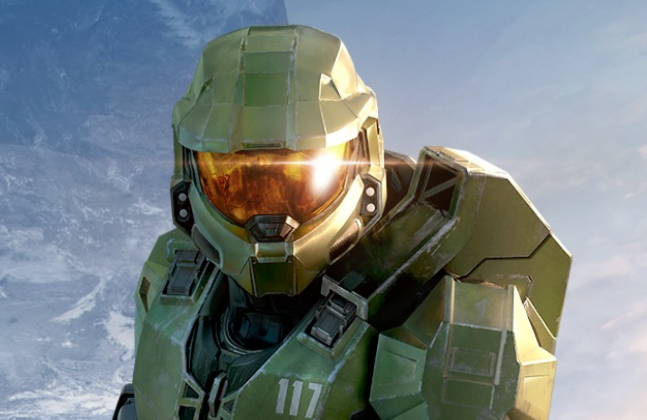
In the pantheon of science fiction legends, few figures loom as large—both literally and figuratively—as Master Chief Petty Officer John-117. As the face of the Halo universe, he is more than just a soldier; he is a symbol of humanity’s resilience in a galaxy teeming with ancient threats and genocidal alien empires. While many players know him through the visor of his Mjolnir armor, the lore surrounding his origin, his psychological makeup, and his destiny is a deep well of complex storytelling. From his controversial conscription as a child to his pivotal role in the Reclaimer Saga, Master Chief’s journey is a masterclass in building a modern mythological hero.
Understanding the “Man in the Armor” requires looking beyond the combat. The Master Chief represents the pinnacle of the SPARTAN-II program, a group of warriors whose very existence was forged in secrecy and sacrifice. His story is inextricably linked to the brilliance of Dr. Catherine Halsey and the evolving intelligence of Cortana, creating a narrative tapestry that explores what it means to be human when you have been built for war. For those looking to dive into the core of the Halo mythos, these ten pillars of lore provide a comprehensive overview of the soldier who saved the galaxy.
1. The Conscription of John-117: A Childhood Forged in Fire
The origin of the Master Chief is far removed from the heroic pedestal he occupies today. Born on the colony world of Eridanus II, the boy known simply as John was identified by Dr. Catherine Halsey as a “perfect” candidate for the SPARTAN-II program. At just six years old, he was a head taller than his peers, possessed incredible physical proportions, and exhibited a fierce, competitive drive. His life changed forever when he was covertly kidnapped by the Office of Naval Intelligence (ONI) and replaced with a “flash clone”—a genetically unstable duplicate that would eventually die of natural causes to cover his disappearance.
Transported to the planet Reach, John and 74 other children were thrust into a brutal regime of military training, education, and psychological conditioning. Under the watchful eye of Chief Petty Officer Franklin Mendez and the AI Déjà, these children were stripped of their identities and rebuilt as the ultimate defenders of humanity. For John, this meant the end of a normal life and the beginning of a lifelong commitment to the defense of the colonies. This controversial origin remains a point of moral friction in the lore, highlighting the dark sacrifices made by the UNSC to ensure the survival of the species against the looming Insurrectionist and Covenant threats.
2. The Bio-Augmentation Gamble: Redefining Human Limits
At the age of fourteen, the SPARTAN-II candidates underwent a series of experimental biological and cybernetic augmentations that would either turn them into super-soldiers or kill them. These procedures were incredibly invasive, including carbide ceramic ossification to make bones virtually unbreakable, muscular enhancement injections to increase tissue density, and a superconducting fibrification of neural dendrites to boost reaction times to superhuman levels. The results were devastating: of the 75 children, only 33 emerged as fully functional Spartans. Many others died during the procedures or suffered crippling “washouts” that left them permanently disabled.
John-117 was among the few who successfully integrated these enhancements. The augmentations granted him the strength to flip vehicles and the reflexes to dodge incoming fire in a way that appears as a blur to a normal human. His reaction time is estimated to be ten times faster than a baseline soldier’s, a trait often referred to as “Spartan Time.” This physical transformation effectively turned him into a biological weapon, a precursor to the integration with Mjolnir armor. This stage of his development is critical to the lore, as it marks the moment he ceased to be a conventional human and became a living engine of war, capable of enduring the most extreme conditions in the galaxy.
3. The “Luck” Factor: Why John-117 Was Halsey’s Favorite
While every Spartan-II was an elite specimen, Dr. Catherine Halsey always maintained that John-117 was special for a reason that science could not fully quantify: he was lucky. During their first meeting on Eridanus II, Halsey tested the six-year-old John by asking him to guess which side a coin would land on. John didn’t just guess; he caught the coin in mid-air and accurately identified the eagle before even looking at it. This innate sense of intuition and “luck” became a recurring theme throughout his career, often being cited as the reason he survived encounters that claimed the lives of his fellow Spartans.
In the lore, this luck is sometimes framed as a form of genetic destiny or a “geas” (a genetic command) planted by the ancient Forerunners. Regardless of its origin, John’s ability to tip the scales in his favor during impossible odds is what separates him from other high-performing Spartans like Fred-104 or Kelly-087. While others may be faster or better marksmen, John’s tactical flexibility and sheer fortune allowed him to become the “Chief” in the eyes of his peers and the “Reclaimer” in the eyes of the Forerunner constructs. This metaphysical trait adds a layer of destiny to his character, making him a focal point for the galaxy’s grander narrative.
4. Mjolnir Powered Assault Armor: The Second Skin
The Master Chief is rarely seen without his Mjolnir Powered Assault Armor, a multi-million-credit exoskeleton that is arguably the most advanced piece of hardware in human hands. The armor is not just a protective shell; it is a biomechanical system that connects directly to the Spartan’s neural interface. A layer of liquid metal crystal between the external plates and internal padding amplifies the wearer’s strength and speed by a factor of five. For a normal human, the suit’s response time is so fast that attempting to move in it would result in shattered bones, but for a Spartan with augmented reflexes, it becomes a seamless extension of their body.
The evolution of the Mjolnir system is a central part of the Halo chronology. From the Mark IV prototypes used during the early Covenant War to the sophisticated GEN3 systems utilized in recent conflicts, each iteration has added vital capabilities. The Mark V introduction was a turning point, as it added energy shielding (adapted from Jackal technology) and the capacity to house an artificial intelligence. This technological marvel allows the Master Chief to survive orbital drops, atmospheric re-entry, and direct hits from plasma weaponry. It is the armor that turned the man into the “Demon,” a name given to him by the Covenant out of both fear and a begrudging respect for his seemingly unstoppable nature.
5. The Demon Moniker: A Covenant Perspective
To the humans of the UNSC, the Master Chief is a savior and a hero. However, to the alien races of the Covenant, he is known as “The Demon.” This epithet was not given lightly; it was earned over decades of the Human-Covenant War, where John-117 was responsible for the destruction of thousands of alien craft, the assassination of high-ranking commanders, and the eventual annihilation of the sacred Halo rings. The Sangheili (Elites) in particular viewed him as a blasphemous force of nature—a warrior who defied their gods and single-handedly dismantled their religious hegemony.
The “Demon” title reflects the psychological impact the Spartans had on the Covenant military. Seeing a green-armored giant on the battlefield was often a death sentence for entire platoons. The Covenant’s fear was so great that they eventually focused entire fleets on his location, yet he consistently eluded capture. This perspective is vital for understanding the Master Chief’s place in the broader universe; he isn’t just a soldier fighting a war, he is a figure of mythological terror for an entire collective of alien species. This duality—savior of one race, destroyer of another—is a core theme of the lore, particularly when he later forms uneasy alliances with former enemies like the Arbiter.
6. The Bond with Cortana: The Soul of the Soldier
One of the most complex relationships in science fiction is the partnership between Master Chief and the AI Cortana. Unlike standard military AIs, Cortana was created from a flash-clone of Dr. Halsey’s own brain, giving her a level of wit, intuition, and independence that other constructs lacked. When she was paired with John-117 just before the Fall of Reach, their connection was intended to be a tactical integration. However, as they navigated the horrors of the Halo rings and the Flood, their relationship evolved into something much deeper—a mutual dependence that defined their humanity.
Cortana acted as the Chief’s “voice” and moral compass, providing him with the data he needed while he provided her with the physical agency to change the galaxy. Their bond was tested during the “Rampancy” of Cortana, a terminal state for AIs where they eventually think themselves to death. The lore explores the lengths to which John will go to save his partner, even defying direct orders from the UNSC leadership. This relationship humanizes the Chief, revealing that beneath the titanium armor lies a man capable of profound loyalty and grief. Even after her eventual “death” and the subsequent arrival of new AI companions, the shadow of Cortana remains the defining emotional arc of his story.
7. The Reclaimer Mantle: Destiny Among the Stars
As the Halo saga progressed, the lore expanded to reveal that the Master Chief’s role in the galaxy was predestined by an ancient race known as the Forerunners. Millions of years ago, the Forerunners selected humanity to be the “Reclaimers” of the Mantle of Responsibility—the guardianship of all life in the galaxy. John-117 is the primary vessel for this destiny. This is why he is one of the few beings capable of activating Forerunner technology, from the small light bridges in ancient ruins to the galaxy-purging Halo Array itself.
This “Reclaimer” status elevates the Master Chief from a simple war hero to a cosmic figure. The Forerunner AI monitors, like 343 Guilty Spark, often address him with a mixture of reverence and confusion, sometimes mistaking him for Forerunners from the past. The lore suggests that the Chief’s genetic code (his “essence”) was specifically tailored over generations to ensure he would be in the right place at the right time to reclaim the Forerunner’s legacy. This connection to the ancient past adds a layer of “space opera” grandiosity to the franchise, placing the Chief at the center of a billion-year-old conflict involving the Precursors, the Flood, and the Mantle itself.
8. Physicality and Presence: The Giant in the Room
Master Chief’s physical presence is a key part of his legend. Standing at approximately seven feet tall in his Mjolnir armor and weighing nearly 1,000 pounds, he is an imposing figure that dwarfs almost any baseline human. Even without his armor, John stands at six feet ten inches, possessing a massive frame and skin that is unnaturally pale due to the majority of his life being spent inside a suit or in cryosleep. His face is rarely shown in the primary media, a creative choice that allows the audience to project themselves onto him, but he is described in the novels as having short hair, serious eyes, and a face marred by the scars of a thousand battles.
His weight and height aren’t just for show; they have practical implications in the lore. He can sprint at speeds exceeding 60 miles per hour for short bursts and possesses the strength to punch through solid steel. However, his size also means he requires specialized vehicles and equipment; a standard UNSC Warthog or Pelican must be modified to accommodate the sheer weight and bulk of a Spartan in full kit. This physical disconnect from regular humanity emphasizes his role as a “living tank,” a being that has sacrificed the ability to fit into normal society in exchange for the power to save it.
9. The SPARTAN-II Legacy: The Last of His Kind
While there have been several “generations” of Spartans—including the mass-produced Spartan-III and the volunteer-based Spartan-IV—the Master Chief belongs to the “Gold Standard” of the SPARTAN-II program. These Spartans are unique because of their lifelong training and the extreme nature of their augmentations, which were never fully replicated in later programs due to ethical and financial constraints. For much of the war, the Master Chief was believed to be one of the last surviving Spartan-IIs, leading to the public propaganda that “Spartans never die; they only go Missing in Action (MIA).”
Being part of this original brotherhood defines the Chief’s worldview. He views his fellow Spartans (Blue Team) as his only true family. The loss of his teammates—Sam, who died early in the war, or the many who fell on Reach—has left a lasting impact on his psyche. Despite the arrival of newer, more numerous Spartans, the Master Chief remains the benchmark for excellence. He carries the legacy of a program that was born from dark necessity, serving as a living bridge between the UNSC’s shadowy past and its uncertain future. This “old-school” veteran status gives him a gravitas that commands respect from every rank and species in the galaxy.
10. A Career of Constant War: The Most Decorated Soldier
John-117’s service record is unparalleled in human history. Over a career spanning more than thirty years of active duty, he has participated in over 200 ground engagements and countless space battles. He has been awarded every major medal and commendation the United Nations Space Command has to offer, including the Colonial Cross, the Legion of Honor, and multiple Purple Hearts. Interestingly, there is only one medal he has never received: the Prisoner of War Medallion, because he has never been captured by the enemy.
This relentless pace of combat has taken a toll, both physically and mentally. The lore often explores the idea that the Master Chief is a man who doesn’t know how to exist without a war to fight. He has seen planets glassed, friends killed, and entire civilizations rise and fall. His service record is a testament to his endurance and his singular focus on duty. As the galaxy shifts into a new era of conflict involving the Banished and the mysterious Endless, the Master Chief remains the UNSC’s most potent asset—a soldier whose very presence can change the tide of a war. He is the ultimate veteran, a man whose life is the history of the Human-Covenant War written in blood and titanium.
Further Reading
- Halo: The Fall of Reach by Eric Nylund
- Halo: First Strike by Eric Nylund
- Halo: Silent Storm by Troy Denning
- Halo: Shadows of Reach by Troy Denning
- 10 Things You Should Know About the Covenant – Halo Lore
- 10 Things You Should Know About Red vs Blue – Halo
- 10 Things You Should Know About The Halo TV Show (2022)
- 10 Things You Should Know About Master Chief John-117 Halo Lore
- The Halo Universe Explained in Simple Terms – Halo Lore



