
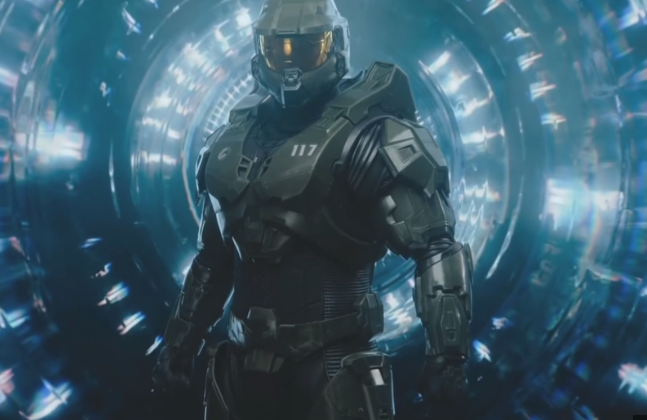
The transition of a legendary video game franchise to the silver screen is a journey fraught with peril and potential. When the Halo television series finally emerged after a decade of development, it brought with it a bold, reimagined vision of the 26th-century conflict between humanity and the Covenant. For enthusiasts who spent years behind the visor of the Master Chief, the show represented a monumental shift—a chance to explore the “man inside the suit” in a way that the fast-paced gameplay of the original medium rarely allowed. This series serves as a massive pillar of modern science fiction television, blending high-stakes military drama with deep, philosophical questions about identity, memory, and the cost of survival.
As an introductory resource, it is essential to understand that this production was never intended to be a simple mirror of the games. Instead, it is a separate entity that draws from the rich well of the franchise’s lore to build something entirely its own. From its controversial narrative choices to its breathtaking visual effects, the series offers a unique perspective on the Human-Covenant War. Whether you are a veteran Spartan or a newcomer to the United Nations Space Command (UNSC), these ten insights into the show’s production, lore, and creative philosophy provide a comprehensive look at how a digital legend became a live-action epic.
1. The Genesis of the Silver Timeline
One of the most significant decisions made by the creators of the series was the establishment of the Silver Timeline. In most franchise adaptations, writers struggle to fit new stories into a pre-existing, decade-long canon without creating contradictions. To avoid “breaking” the established lore found in the novels and games, the show exists in its own parallel universe. This allows the narrative to remain faithful to the spirit of the characters and the setting while having the freedom to change specific outcomes, timelines, and relationships. It is a “remix” of the Halo mythos that preserves the core DNA of the series while inviting a fresh perspective.
The Silver Timeline serves a dual purpose: it protects the “Core Canon” that fans have cherished since the dawn of the 21st century, and it provides a “jumping-on point” for new viewers who might be intimidated by twenty years of history. In this timeline, events like the first contact with the Halo rings or the discovery of the Forerunner artifacts happen under different circumstances. This creative independence ensures that even the most dedicated fans can be surprised by the plot twists and character deaths, making the show a living, breathing story rather than a predictable retelling of a story already told.
2. Unmasking the Icon: The Master Chief’s Face
For twenty years, the Master Chief was defined by his anonymity. His helmet was a blank canvas upon which players could project themselves. The TV series made the polarizing choice to remove that helmet early in the first season, revealing the face of John-117, played by Pablo Schreiber. This wasn’t a decision made for shock value; it was a fundamental shift in storytelling. On television, the audience needs to connect with the protagonist’s emotions, and a stoic, faceless soldier is a difficult anchor for a multi-season drama. By unmasking the Chief, the show explores his vulnerability and his journey to reclaim the humanity that was stripped from him.
The act of unmasking symbolizes John’s internal rebellion against the rigid conditioning of the SPARTAN-II program. As he begins to experience suppressed memories and genuine human emotion, his refusal to hide behind his armor reflects his growing independence from Dr. Halsey’s control. While this remains a point of intense discussion among the community, it serves as the emotional engine of the series. It transforms the Master Chief from a “vessel for the player” into a complex, tragic figure who is struggling to understand who he is when he isn’t pulling a trigger.
3. The Portrayal of Dr. Catherine Halsey
In the wider Halo lore, Dr. Catherine Halsey is one of the most morally ambiguous figures in science fiction. The TV series leans heavily into this complexity, portraying her not as a simple villain, but as a visionary whose genius is matched only by her ruthlessness. As the architect of the SPARTAN-II program, Halsey is responsible for the kidnapping and biological augmentation of children to create the ultimate defenders of humanity. The show focuses on the “mother-creator” dynamic she shares with the Spartans, a relationship built on a foundation of lies and high-stakes manipulation.
Played with a cold, intellectual grace, the show’s version of Halsey provides a fascinating look at the “ends justify the means” philosophy. Her interactions with the UNSC leadership and her own daughter, Miranda Keyes, highlight a woman who is always the smartest person in the room—and the most dangerous. The series explores the psychological toll her experiments took on the Spartans, positioning her as a creator who truly loves her “children” but is willing to sacrifice their souls for the survival of the human race. This nuanced take on her character is a highlight of the production, offering a sophisticated look at the ethics of scientific advancement in a time of war.
4. The Creation of Makee: A Human in the Covenant
Perhaps the most radical departure from the source material is the introduction of Makee, a human woman who was raised by the Covenant. In the original games, the Covenant is an alien hegemony that views humanity as an existential threat to be exterminated. The show introduces Makee as a “Blessed One,” an individual with the rare genetic markers required to activate Forerunner technology. Her presence provides a human face to the alien threat, allowing the series to explore the inner workings of the Covenant capital, High Charity, and the religious zealotry of the Prophets.
Makee serves as a mirror to John-117. Both are “tools” used by powerful forces—one by the UNSC, the other by the Covenant. Her journey explores themes of indoctrination and the search for belonging. By having a human character within the Covenant ranks, the show can depict the alien perspective without relying solely on subtitles or alien dialogue. This addition adds a layer of “space opera” intrigue to the series, creating a unique romantic and ideological tension that challenges the Chief’s worldview and forces him to question the nature of the “enemy.”
5. Visualizing High Charity and the Covenant
The visual design of the series is a testament to the massive production budget and the ambition of the creative team. One of the most breathtaking realizations is the depiction of High Charity, the mobile capital city of the Covenant. While the games provided a sense of scale, the TV series uses high-end visual effects to create a sprawling, bioluminescent metropolis that feels truly alien and ancient. The architecture, the lighting, and the sheer density of the alien population provide a sense of place that is both beautiful and terrifying.
The production also excels in the practical realization of the Covenant species. The Sangheili (Elites) are depicted as towering, powerful warriors with a physical weight that makes them a credible threat on screen. The use of animatronics and motion-capture technology ensures that these creatures don’t just look like digital puppets, but like living, breathing organisms. This commitment to visual fidelity extends to the weaponry and vehicles—the glowing plasma of a Covenant carbine or the iconic silhouette of a Banshee—ensuring that the world feels tactile and grounded despite its fantastical nature.
6. The Ethics of the SPARTAN-II Program
While the games often gloss over the darker aspects of the Spartan origin story to keep the focus on the action, the TV series puts the Spartan-II program’s ethics at the forefront. The show delves into the “memory pellets” and neural suppressants used to keep the Spartans compliant. When John-117 removes his emotional regulator, he begins to experience the trauma of his childhood and the reality of what was done to him. This narrative choice shifts the show into a “medical thriller” space, exploring the trauma of the soldiers who were built to be weapons.
This focus allows for a deeper exploration of the supporting Spartans, known as Silver Team (Kai, Riz, and Vannak). Each member of the team reacts differently to the revelation of their past, creating a rich ensemble dynamic. We see how the conditioning affects their ability to form relationships and how they grapple with their identity as “monsters” or “heroes.” By centering the story on the cost of the Spartan program, the show asks the audience to consider if the survival of humanity is worth the systematic destruction of a child’s humanity.
7. The Conlang: Creating a Covenant Language
To add a layer of authenticity to the alien interactions, the production brought in David Peterson, the renowned linguist who created the Dothraki and Valyrian languages for other major television hits. Peterson developed a unique “conlang” (constructed language) for the Covenant, expanding upon the vocalizations and sounds heard in the original games. This allows the Prophets and the Elites to communicate in a way that feels linguistically consistent and culturally distinct, rather than just sounding like guttural growls.
The use of a dedicated language adds to the “first contact” mystery of the series. When the human characters encounter the Covenant, the language barrier reinforces the sense of the “other.” For the actors playing characters like Makee, learning this language was a major part of the role, requiring them to master specific phonetics and rhythms. This attention to detail is a hallmark of high-end science fiction, helping to build a world that feels as though it has a history and a culture that predates the arrival of the human characters on the screen.
8. The Action Choreography and “Spartan Time”
One of the greatest challenges in adapting a first-person shooter is translating the “feel” of the combat to a cinematic format. The Halo series utilizes a style of action choreography that emphasizes the superhuman speed and strength of the Spartans. Often referred to as “Spartan Time,” these sequences show the warriors moving through combat with a level of precision and lethality that makes regular humans look like they are standing still. The use of practical suits and wirework, combined with digital enhancements, creates a visceral experience.
The action isn’t just about gunplay; it’s about the “dance” of the Spartans. We see them utilize their environment, their enhanced reflexes, and their specialized gear in ways that honor the “sandbox” nature of the games. Whether it is a Spartan-II flipping a vehicle or a frantic close-quarters battle with an Elite, the choreography is designed to make the audience feel the weight of the Mjolnir armor. These set pieces serve as the “high-octane” payoffs for the slower, character-driven moments, ensuring that the show never loses its identity as a premier action series.
9. The Role of Cortana: From AI to Integration
The relationship between Master Chief and the AI Cortana is the most iconic partnership in the franchise. In the TV series, the introduction of Cortana is handled as a major narrative arc involving “neural integration.” Rather than just being a chip in his helmet, this version of Cortana is a digital entity cloned from Halsey’s brain and implanted directly into John’s neural network. This creates a literal “voice in his head” that he cannot escape, leading to a complex dynamic of trust, surveillance, and eventual friendship.
Jen Taylor, the legendary voice actress who has portrayed Cortana since the very first game, returned to provide the voice and motion capture for the character. This provides a vital bridge to the original source material and a sense of continuity for long-time fans. The show explores the idea of Cortana as a tool for Halsey to control the Chief, but as she observes John’s growth and humanity, she begins to develop her own agency. This evolution of the AI from a supervisor to a true partner is a central theme, highlighting the series’ interest in the intersection of technology and the soul.
10. The Legacy of the “Great Journey”
The ultimate goal of the Covenant, and the looming threat of the series, is the discovery of the Halo Array. The show treats the “Great Journey” not just as a religious quest, but as a cosmic mystery that both sides are desperate to solve. The artifacts—known as “Keystones”—serve as the primary drivers of the plot, connecting John-117 to an ancient Forerunner past that he doesn’t yet understand. This sense of a “grander destiny” gives the show a sense of scale that spans the entire galaxy.
The series explores how different characters perceive the artifacts: Halsey sees them as a key to human evolution, the Prophets see them as a path to godhood, and John sees them as a way to unlock his own suppressed memories. This multifaceted approach to the “MacGuffin” ensures that the stakes are personal as well as global. As the show moves toward the eventual discovery of the first Halo ring, it builds a sense of dread and wonder, reminding the audience that while the war is fought in the mud and the blood, the ultimate fate of the universe lies among the stars of a forgotten civilization.
Further Reading
- Halo: The Fall of Reach by Eric Nylund
- Halo: First Strike by Eric Nylund
- Halo: Contact Harvest by Joseph Staten
- Halo: Silent Storm by Troy Denning
- The Art of Halo: The Television Series by various authors
- 10 Things You Should Know About the Covenant – Halo Lore
- 10 Things You Should Know About Red vs Blue – Halo
- 10 Things You Should Know About The Halo TV Show (2022)
- 10 Things You Should Know About Master Chief John-117 Halo Lore
- The Halo Universe Explained in Simple Terms – Halo Lore



