
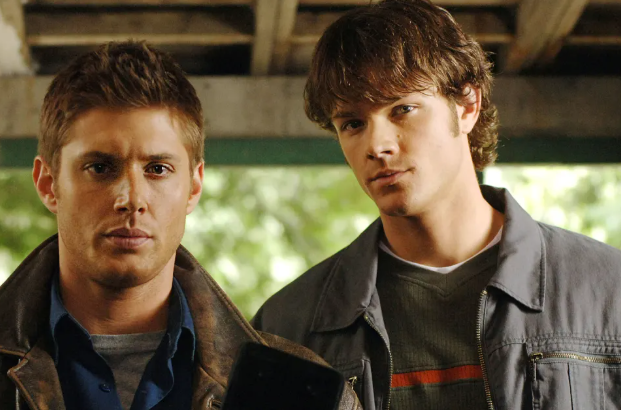
Across the lonely, rain-slicked highways of the American Midwest, a black 1967 Chevrolet Impala growls like a caged beast. Inside, two brothers carry the weight of the world, armed with rock salt, silver bullets, and a family legacy forged in fire. What began as a simple search for a missing father transformed into an epic saga of cosmic proportions, pitting humanity against angels, demons, and the very architects of existence. For the dedicated viewer, the “Winchester Gospel” is not just a story; it is a meticulously crafted mythology that draws from ancient folklore, urban legends, and modern meta-fiction.
To understand the lore of this series is to take a deep dive into the collective nightmares of human history. The show didn’t just invent monsters; it revitalized them, giving a modern edge to creatures that have haunted our campfire stories for centuries. This guide explores the hidden layers of the “family business,” from the practical magic behind the scenes to the complex hierarchies of the celestial realms. Buckle up—it’s going to be a long, bumpy ride through the shadows of the crossroads.
1. The Urban Legend Roots of “Bloody Mary” and the Mirror Realm
In the early days of the hunting life, the Winchesters tackled the “monsters of the week,” and perhaps none were as terrifying as the spirit in the mirror. While many children grow up whispered the name “Bloody Mary” as a schoolyard dare, the show’s lore takes a deeper, more psychological approach. In the series, Mary is not just a ghost; she is a “vengeful spirit” who targets those harboring secret guilt. This adds a layer of moral complexity to the folklore: the monster is a literal reflection of the victim’s own internal darkness.
The production team took great care to ground this in traditional ghost lore. According to paranormal theory, mirrors are “windows to the soul” or gateways to a “liminal space.” By shattering a mirror in the show, a hunter isn’t just breaking glass; they are disrupting a spiritual conduit. This specific episode set the tone for how the series would treat urban legends—not as mere fairy tales, but as biological and spiritual realities that follow a strict set of rules. It established that a ghost’s “tether” to the physical world (like a corpse or a cherished object) must be salted and burned, a ritual that became the bread and butter of the Winchester brothers’ survival.
2. The Impala as the “Mighty Fortress” of Winchester Lore
The 1967 Chevrolet Impala, affectionately dubbed “Baby” by Dean, is far more than a vehicle; she is the third lead of the show and the only true home the brothers have ever known. In the context of the lore, the car is a mobile armory and a sanctuary. The trunk features a false bottom meticulously lined with devil’s traps and protective sigils, housing everything from a grenade launcher to holy water. This transformation of a classic muscle car into a rolling fortress represents the fusion of Americana and the occult that defines the series.
What many fans might miss is the symbolic weight the car carries regarding the theme of free will. Despite being a machine, the Impala is often the catalyst for the brothers’ most human moments. The “legacy” of the car—complete with a plastic army man wedged in the ashtray and a LEGO block in the vents—acts as a physical record of their childhood. In a world where cosmic entities try to rewrite their destiny, the car remains an unchangeable, physical anchor. It is the “non-biological” family member that protects them from the literal and figurative storms of the road, proving that home isn’t a place, but a four-wheeled vessel of memory.
3. The Origins and “Five Exceptions” of The Colt
In the hierarchy of mystical weaponry, few items carry the weight of The Colt. According to the lore, the gun was forged by Samuel Colt himself in 1835, alongside thirteen special bullets, under the light of Halley’s Comet. It was designed to be the ultimate equalizer—a weapon capable of killing almost any supernatural being in existence. This artifact introduced a crucial “leveling up” of the show’s stakes, moving the brothers from local ghost hunters to players on a global, supernatural stage.
However, the most fascinating piece of lore regarding the gun is the “Five Exceptions.” It is stated that there are only five beings in all of creation that the Colt cannot kill. This revelation fundamentally changed how fans viewed the power scaling of the universe. It implied that even the most powerful human-made artifacts have limits when faced with primordial forces. While the identity of these five entities was debated for years, the rule served a narrative purpose: it maintained the “underdog” status of the Winchesters. Even with a god-killing gun in their hands, there would always be something bigger, older, and hungrier lurking in the dark.
4. Castiel and the Columbo-Inspired Angelic Vessel
The introduction of angels into the series’ lore was a seismic shift, but the character of Castiel brought a specific, grounded aesthetic to the celestial. When he first appears, his iconic look—a tan trench coat over a slightly disheveled suit—was a deliberate homage to the television detective Columbo. This design choice was meant to reflect Castiel’s role as a “heavenly investigator” who is somewhat out of place in the human world. It suggests that even an emissary of God can appear as a humble, blue-collar worker.
The lore behind “vessels” is equally complex. Angels cannot walk the Earth in their “true form” without incinerating human eyes or causing ears to bleed; their true voice is described as a sonic boom that can shatter glass. To interact with the physical world, they must gain the explicit consent of a human host. This “Consent Clause” is a vital part of the show’s mythology, emphasizing the sanctity of human choice. It creates a tragic irony: the most powerful beings in the universe are utterly dependent on a “yes” from a fragile, mortal creature. This dynamic explores the burden of faith and the physical toll that hosting a divine presence takes on the human body.
5. The Men of Letters: The Ivy League of the Occult
For much of the series, the Winchesters operated as “blue-collar” hunters, learning their trade through trial, error, and old journals. However, the discovery of the “Men of Letters” introduced a “white-collar” side to the lore. This secret society was a global network of scholars, scientists, and historians who studied the supernatural through a lens of academia rather than combat. They were the librarians of the occult, keeping meticulous records in a hidden, high-tech bunker that eventually became the brothers’ permanent base of operations.
This addition bridged the gap between raw hunting and scientific inquiry. The Men of Letters lore suggests that the battle against evil isn’t just about strength; it’s about knowledge. The Bunker itself is a treasure trove of artifacts, including an “Oz” computer, a telescope that tracks celestial movements, and a library containing every spell ever recorded. This shift in the lore allowed the show to explore “High Magic” and ancient civilizations, elevating the Winchester legacy from mere monster-slayers to the “Legates” or “Protectors” of the world’s most dangerous secrets. It gave the brothers a sense of belonging to a lineage that predated their father’s journal.
6. The “Carry On Wayward Son” Musical Tradition
While not a “monster” or a “spell,” the inclusion of the song “Carry On Wayward Son” is an essential piece of the series’ lore. It is the unofficial anthem that signals the climax of a story arc. The lyrics mirror the journey of Sam and Dean—the “weary head” of the hunter, the “heaven surely waits for you” promise, and the “no more” ending of the struggle. This tradition transformed a classic rock track into a liturgical hymn for the fanbase.
The music in the series acts as a “sonic signature.” Because Dean Winchester is a fan of classic rock, the soundtrack is dominated by the “heavy hitters” of the 70s and 80s. This isn’t just a stylistic choice; it’s a character trait. In the lore of the show, these songs are the “battle hymns” of the road. When that specific Kansas track begins to play, it acts as a narrative trigger for the audience, signifying that the “Road So Far” has led to a moment of reckoning. It is a rare example of a show using a piece of pop culture to create its own internal, sacred tradition.
7. The Hierarchy of Hell and the Smoke Form
The series revolutionized the visual depiction of demons. Moving away from the “horns and pitchforks” imagery, the lore establishes demons as “corrupted human souls” that have spent centuries being tortured in Hell until their humanity is stripped away. In their natural state on Earth, they appear as “Demonic Smoke”—a sentient, billowing cloud of black soot that can enter a human host through any opening (usually the mouth).
This “possession lore” is terrifying because it implies that any person on the street could be a host for an ancient evil. The show categorizes demons by their eye color: black for common soldiers, red for crossroads demons, yellow for the generals, and white for the primordial few. This hierarchy creates a structured, bureaucratic version of Hell that feels like a dark reflection of a corporate empire. Crossroads demons, in particular, represent the ultimate “monkey’s paw” scenario—offering a person their heart’s desire in exchange for their soul, with a ten-year clock ticking down until the Hellhounds arrive to collect. It turns the concept of damnation into a contractual obligation.
8. Enochian: The Language of the Divine
To give the celestial elements of the show a sense of ancient weight, the creators utilized “Enochian”—a real occult language first recorded by 16th-century astrologer John Dee. In the lore of the series, Enochian is the “mother tongue” of creation. It is used in powerful spells, carved into the ribs of the Winchesters to hide them from angelic sight, and etched into the walls of the Bunker to ward off intruders.
The use of a real (albeit obscure) linguistic system adds a layer of “verisimilitude” to the show. When characters chant in Enochian, it doesn’t sound like “fantasy gibberish”; it sounds like a structured, authoritative language. This linguistic lore reinforces the idea that the universe is governed by ancient, immutable laws. To speak Enochian is to command the very fabric of reality. For the Winchesters, learning fragments of this language was a necessity for survival, allowing them to banish angels with blood-drawn sigils and engage in “cosmic hacking” to bypass the defenses of Heaven itself.
9. The Prophet of the Lord and the Meta-Fictional Twist
One of the most daring turns in the series’ lore is the introduction of the “Supernatural” book series within the show’s own universe. A character named Chuck Shurley is introduced as a struggling author who has been “writing” the lives of Sam and Dean under a pen name. It is later revealed that Chuck is a “Prophet of the Lord,” and his books are actually the “Winchester Gospel.” This meta-fictional layer suggests that the brothers’ lives are being observed and recorded by a higher power.
This development turned the lore on its head. It forced the characters to confront the idea that their “free will” might be a scripted performance for a divine audience. It also allowed the show to engage directly with its fans; the “books” have their own “fandom” within the show, complete with conventions and fan-fiction. This “lore-within-lore” structure serves as a commentary on the nature of storytelling itself. It asks whether a hero is truly a hero if their path is pre-ordained, or if the “acting out” against the script is where true humanity resides.
10. Purgatory: The Landscape of Pure Instinct
For much of the series, the afterlife was a binary choice between Heaven and Hell. However, the lore eventually expanded to include “Purgatory”—a grey, desolate forest where the souls of all “monsters” go after they die. Unlike Hell, which is about punishment, Purgatory is about survival. It is described as a place of “pure instinct,” where creatures hunt each other for eternity in a never-ending cycle of predator and prey.
Visually and narratively, Purgatory stripped the show back to its most basic elements. When a character is trapped there, they are forced to become as savage as the things they hunt. The lore of Purgatory also introduced the “Leviathans”—primordial entities that predated even the angels and were locked away because they were too hungry and too powerful for the rest of creation. This “pre-biblical” lore suggested that the universe is far older and more dangerous than even the Bible suggests, with Purgatory acting as a “trash bin” for the creator’s most terrifying mistakes.
Further Reading
- Supernatural: The Official Companion by Nicholas Knight
- A comprehensive guide to the making of the early seasons, featuring deep dives into the monster lore.
- The Mythology of Supernatural by Nathan Robert Brown
- An exploration of the real-world myths, legends, and religious texts that the show draws from.
- John Winchester’s Journal by Alex Irvine
- A physical recreation of the most important artifact in the show, containing “handwritten” notes on ghosts, demons, and lore.
- The Science of Supernatural by Mark Brake
- An interesting look at how the show’s “magic” and monsters might intersect with real-world scientific theories.



