
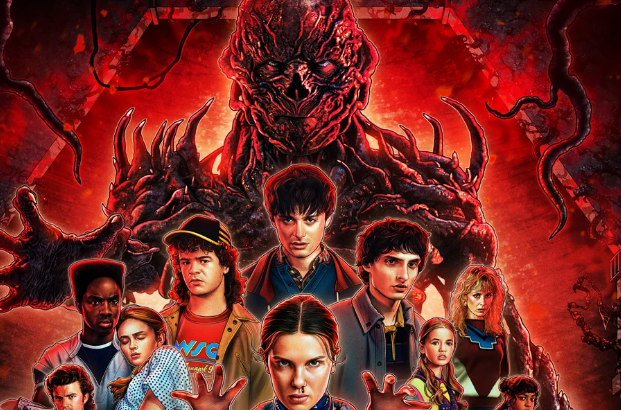
Welcome to Hawkins, Indiana—a place where the neon glow of the local arcade masks a chilling darkness lurking just beneath the surface. When the series first flickered onto screens, it felt like a warm, nostalgic embrace of the 1980s, but it quickly evolved into a complex tapestry of government conspiracies, parallel dimensions, and the enduring power of friendship. For both the casual viewer and the dedicated “nerd” in the basement, the lore of this world is as deep as the rift in the Hawkins National Laboratory.
This article serves as your ultimate guide to the secrets of the series. We will peel back the wallpaper of the Byers’ home to find the hidden influences, real-life inspirations, and behind-the-scenes magic that make the show a modern masterpiece of the supernatural. Whether you are here for the Dungeons & Dragons references or the psychological depth of the characters, these ten deep dives will transform the way you view the struggle against the Mind Flayer.
1. The Chilling Reality of the Montauk Project Connection
While the town of Hawkins is fictional, the foundation of the series is rooted in a very real, very eerie urban legend. Before the show settled on its iconic title, the original working title was actually Montauk. This name referred to the “Montauk Project,” a series of alleged secret government experiments conducted at Camp Hero on Long Island. Conspiracy theorists have long claimed that these experiments involved time travel, psychological warfare, and the kidnapping of children to develop psychic abilities—sound familiar?
The Duffer Brothers drew heavy inspiration from these tales of dark science. In the show, the Hawkins National Laboratory acts as a surrogate for these rumored facilities. The character of Eleven, with her sensory deprivation tank and telekinetic prowess, is a direct narrative descendant of the “test subjects” described in Montauk lore. By grounding the supernatural elements in actual American folklore and the historical context of Project MKUltra, the show creators added a layer of “this could actually happen” grit that makes the horror feel significantly more visceral. It transforms a simple monster story into a cautionary tale about the lengths to which a government might go during a period of high-stakes global tension.
2. Crafting the Demogorgon: A Masterclass in Practical Effects
In an era dominated by digital imagery, the creators made a conscious decision to return to the roots of classic cinema by utilizing practical effects for the show’s first primary antagonist. The Demogorgon was not merely a cluster of pixels; it was a physical presence on set. A performer wore a complex animatronic suit that stood over six feet tall, featuring a “flower-petal” head that could actually open and close through a series of intricate motors.
This choice was vital for the atmosphere. Much like the shark in Jaws or the xenomorph in Alien, the physical reality of the creature allowed the actors—especially the children—to react to something tangible. The jerky, unnatural movements of the suit performer gave the Demogorgon a predatory, animalistic quality that CGI often struggles to replicate. When you see the creature’s glistening skin and rows of needle-like teeth, you are seeing the work of prosthetic artists who spent months perfecting the texture of “otherworldly” flesh. This commitment to the tactile nature of horror ensures that the creature remains terrifying, standing the test of time as a physical icon of the Upside Down.
3. The Sensory Deprivation Tank and Psychic Echoes
One of the most visually striking elements of the series is the “Void”—the pitch-black, watery space Eleven enters to find people across great distances. This isn’t just a cool visual effect; it is a representation of how the show interprets the expansion of the human mind. The use of a sensory deprivation tank to trigger these states is based on the real-world scientific theories of John C. Lilly, who explored the boundaries of consciousness in the mid-20th century.
In the lore of the show, the Void serves as a psychic bridge. It represents a state of total isolation where the physical world falls away, leaving only the “echoes” of others. The water on the floor of the Void symbolizes the fluid nature of consciousness and the way psychic energy ripples through the universe. When Eleven walks through this space, she is essentially a radio receiver tuning into a specific frequency. This conceptual depth adds a layer of psychological realism to her powers; she isn’t just “magic,” she is a biological instrument being pushed to its breaking point by scientists who treat her like a weapon rather than a child.
4. Dungeons & Dragons as a Narrative Roadmap
For the core group of friends, Dungeons & Dragons (D&D) is far more than a pastime; it is the lens through which they understand their reality. The Duffer Brothers used the game not just for 80s flavor, but as a structural device. By naming the creatures—the Demogorgon, the Mind Flayer, and others—after D&D monsters, the boys are able to apply the logic of the game to the illogical horrors of their lives.
This creates a brilliant narrative symmetry. In D&D, the Mind Flayer is an entity that enslaves the minds of others to build its empire, which perfectly mirrors the creature’s behavior as it attempts to consume Hawkins. The game provides a vocabulary for the “unknown.” When the characters sit around the basement table, they are practicing for the real-life battles they will face. This suggests a powerful theme: that stories and games are essential tools for survival. They help us categorize our fears and find a way to fight them. Without the strategic thinking learned from their character sheets, the party would have been lost in the first few days of the mystery.
5. The Evolution of Steve Harrington: The Subverted Trope
In the original script, Steve Harrington was intended to be a stereotypical “villainous jock” who might not even survive the first story arc. However, the performance provided by the actor led the creators to see a different path. Steve’s transformation from a selfish high school kingpin to the “babysitter” of the group is one of the most celebrated character evolutions in modern television.
This shift serves a larger purpose in the lore: it highlights the theme that the “monsters” aren’t always what they seem, and neither are the heroes. Steve’s redemption arc is built on his willingness to protect those who have no one else. His chemistry with the younger characters, particularly Dustin, provides the show with its emotional heart. By subverting the 80s trope of the “bully who gets what’s coming to him,” the show adds layers of humanity to its world. It reminds the audience that in the face of true cosmic horror, old social hierarchies crumble, and unlikely alliances are the only things that can keep the darkness at bay.
6. The Visual Language of the Upside Down
What exactly is the Upside Down? The show describes it as a “dark reflection” or a “shadow” of our world. To achieve this look, the production team used a combination of practical and digital techniques to create a sense of terminal decay. The floating “spores” or “dust” in the air are meant to represent a biological invasion, as if the Upside Down is a singular, massive organism that is slowly digesting our reality.
The color palette is strictly limited to cold blues, grays, and blacks, contrasting sharply with the warm, amber-hued nostalgia of Hawkins. This visual dichotomy tells the story of two worlds in conflict: one full of life and light, the other a graveyard of what used to be. The vines that snake across the buildings are part of a “hive mind,” meaning that every inch of the Upside Down is sentient and connected to the central antagonist. When a character steps into this realm, they aren’t just in a different place; they are inside a hostile entity that is actively trying to rewrite the laws of physics and biology to suit its own cold, dark needs.
7. The Cinematic DNA of the Duffer Brothers
The series is often called a “love letter” to the 80s, but its DNA is specifically woven from the works of Steven Spielberg, Stephen King, and John Carpenter. The influence of Spielberg is seen in the “suburban wonder” and the focus on broken families finding unity through the extraordinary. Stephen King’s influence is felt in the “small town with a dark secret” vibe and the coming-of-age grit. John Carpenter’s touch is present in the synth-heavy music and the body-horror elements of the creatures.
These influences are not just for show; they create a familiar “visual shorthand” for the audience. By using the framing of a Spielberg film, the creators make the audience feel safe, only to pull the rug out from under them with King-style horror. The show even uses a specific film grain and a color grading process designed to mimic the look of 35mm film from that era. This meticulous attention to detail ensures that the series doesn’t just look like the 80s—it feels like a lost masterpiece found in a dusty VHS box at the back of a rental store.
8. The “Group Chat” Chemistry and Authentic Dialogue
One of the reasons the show’s lore feels so grounded is the authentic chemistry between the child actors. The creators famously allowed the young cast to influence their own dialogue, incorporating their real-life slang, bickering, and inside jokes into the scripts. This led to a sense of “lived-in” friendship that is nearly impossible to fake.
The way the characters talk to one another—with a mix of fierce loyalty and constant teasing—reflects the reality of childhood. This authenticity is vital because it raises the stakes. If the audience didn’t believe in the friendship between Mike, Dustin, Lucas, and Will, the search for the missing boy would feel like a mere plot device. Instead, it feels like a personal mission for the viewer. This human element is the “anchor” for the supernatural lore; the more we care about the people, the more terrifying the monsters become. The show understands that at the end of the day, the biggest “fact” of the series is that love and friendship are the ultimate weapons against the Void.
9. Hidden Easter Eggs and Foreshadowing
The series is a treasure trove of “blink-and-you’ll-miss-it” details that foreshadow future events. For instance, the very first D&D game played in Mike’s basement predicts the trajectory of the entire first arc. The characters’ fates are often mirrored in the clothes they wear, the posters on their walls (like The Thing or Jaws), and even the toys they play with.
The creators use the environment to tell the story. Pay attention to the background of the Wheeler house or the laboratory; the set decorators placed specific books and objects that hint at the scientific theories being tested. These Easter eggs reward repeat viewings and foster a massive community of fans who dissect every frame. This level of detail transforms the show from a passive viewing experience into an interactive mystery. It suggests that everything in Hawkins is connected, and no detail is too small to be significant in the grand design of the Upside Down’s invasion.
10. The Sound of the Supernatural: The Synth Revolution
The music of the series is as much a character as Eleven or Hopper. The soundtrack, composed primarily using vintage analog synthesizers, harks back to the scores of the 1980s while feeling entirely fresh. The pulsing, rhythmic beats create a sense of constant momentum and underlying anxiety, mimicking the heartbeat of someone running for their life.
The use of specific musical themes for different locations and characters helps to define the lore through sound. The “Hawkins” theme is warm and nostalgic, while the music associated with the lab and the Upside Down is dissonant and cold. This auditory world-building helps the audience intuitively understand where they are and what the emotional “temperature” of the scene is. The synths provide a bridge between the digital present and the analog past, perfectly encapsulating the show’s ability to modernize nostalgia for a new generation of viewers.
Further Reading
- Stranger Things: Worlds Turned Upside Down by Gina McIntyre
- The official behind-the-scenes companion that offers an in-depth look at the show’s development.
- The Montauk Project: Experiments in Time by Preston B. Nichols and Peter Moon
- The book that helped popularize the legends that inspired the creation of the series.
- Notes from the Upside Down: An Unofficial Guide to Stranger Things by Guy Adams
- A deep dive into the 80s references, film influences, and hidden meanings throughout the show.
- Stranger Things and Philosophy: Thus Spake the Demogorgon edited by Jeffrey A. Ewing and Kevin S. Decker
- An academic yet accessible look at the deeper themes of friendship, science, and morality within the series.
- 10 Twin Peaks TV SHOW Facts That Still Puzzle Fans
- 10 Poltergeist (1982) Movie Facts That Are Still Creepy
- 10 Hellraiser (1987) Movie Facts That Built Its Legacy
- 10 Essential Facts About Predator (1987) – Movie Facts
- 10 Things You Probably Didn’t Know About The Actor Eddie Murphy
- 10 Things You Should Know About Ferris Bueller’s Day Off (1986) – Movie Facts and Hidden Details
- 10 Things You Should Know About Beverly Hills Cop (1984) – Movie Facts and Hidden Details
- 10 Things You Should Know About Ghostbusters 2 (1989) – Movie Facts and Hidden Details
- 10 Things You Should Know About The Thing (1982) – Movie Facts and Hidden Details
- Stranger Things – Season 5 Full Recap and Spoilers Explained



