
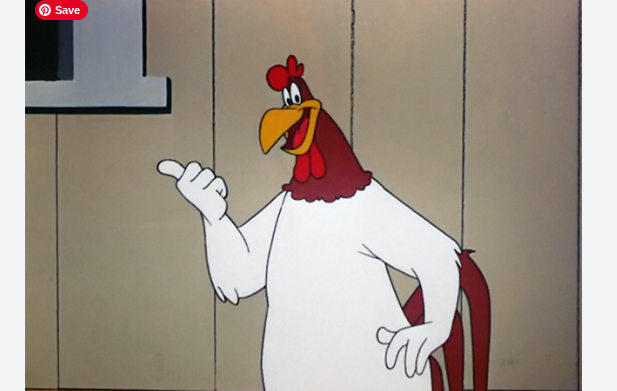
Boy, I Say, Boy! 10 Legendary Facts About Foghorn Leghorn Every Fan Needs to Know
When it comes to the pantheon of animation, few characters possess a screen presence as physically and aurally commanding as Foghorn Leghorn. With a chest puffed out like a bellows and a voice that could crack a weathercock, this boisterous rooster has strutted through the Looney Tunes landscape for decades, leaving a trail of confused dogs and exasperated hawks in his wake. To the casual observer, he is simply a loud chicken; to the connoisseur of classic animation, he is a masterclass in comedic timing, linguistic flair, and the art of the Southern tall tale.
Foghorn Leghorn isn’t just a character; he’s an atmospheric force. He dominates every frame he occupies, not through brute strength—though he is quite large—but through the sheer velocity of his rhetoric. He is a satirical take on the blustery Southern gentleman, a archetype of a man who loves the sound of his own voice so much that he often forgets to check if anyone is actually listening. Whether he is spanking a sleeping hound with a wooden plank or explaining the “facts of life” to a pint-sized chickenhawk, Foghorn represents the peak of character-driven humor from the Golden Age of Animation. In this guide, we delve deep into the feathers and the folklore to uncover the essential truths about the barnyard’s most vocal inhabitant.
1. The Surprising Radio Roots of a Southern Icon
While Foghorn Leghorn is a cornerstone of visual animation, his soul was born in the airwaves of radio. The character’s distinctive cadence and “I say” verbal tics were directly inspired by Senator Claghorn, a popular character on The Fred Allen Show. Senator Claghorn was a blustery Southern politician who refused to drink from a “Dixie” cup if it was made in the North and famously repeated himself for emphasis. Director Robert McKimson and voice legend Mel Blanc recognized the comedic gold in this verbal pattern and transposed it onto a literal barnyard rooster.
This transition from radio to animation allowed the creators to heighten the absurdity. While the radio version relied purely on the listener’s imagination, the animated Foghorn could back up his bluster with physical comedy. The repetition in his speech—”Look at me when I’m talkin’ to ya, boy!”—serves a dual purpose. It establishes his dominance and provides a rhythmic beat for the slapstick humor to follow. By borrowing from the world of political satire and radio comedy, the animators gave Foghorn a level of sophistication and cultural depth that few other “funny animals” possessed at the time. He wasn’t just a bird; he was a personality with a history.
2. The Directorial Vision of Robert McKimson
While many Looney Tunes icons were the collaborative result of several directors, Foghorn Leghorn was uniquely the “baby” of Robert McKimson. McKimson is often overshadowed by the high-concept genius of Chuck Jones or the wild energy of Tex Avery, but he was a technical master of character design and physical weight. He wanted a character who felt substantial, someone whose presence would immediately shift the gravity of a scene. Foghorn was designed to be much larger than his co-stars, a towering white Leghorn who literally looked down his beak at the world.
Under McKimson’s direction, the Foghorn shorts focused on a very specific type of humor: the “tit-for-tat” escalation. Unlike the surrealist journeys seen in other cartoons, Foghorn’s world was grounded in a consistent barnyard reality. McKimson used Foghorn to explore the comedy of ego. The humor doesn’t just come from the anvils and explosions, but from Foghorn’s unshakable belief that he is the smartest person in the room, even as he is walking directly into a trap. This directorial focus ensured that the character remained consistent across his entire filmography, creating a cohesive legacy of pride and pratfalls.
3. The Linguistic Architecture of “I Say, Boy!”
One cannot discuss Foghorn Leghorn without dissecting his peculiar and hypnotic way of speaking. His dialogue is a rhythmic masterpiece of Southern vernacular, filled with interruptions, parenthetical asides, and the famous “I say” bridge. This wasn’t just a gimmick; it was a way to control the pacing of the cartoon. By repeating himself, Foghorn forces the other characters (and the audience) to follow his train of thought, even when that train is headed off a cliff. He uses language as a steamroller, flattening any potential objections before they can be uttered.
The phrases “Now, pay attention!” and “That’s a joke, son!” have become permanent fixtures in the English lexicon. These aren’t just catchphrases; they are defensive mechanisms. Foghorn uses them to mask his own failures. If a prank goes wrong, he explains the “logic” of it to his victim, turning his own embarrassment into a “teaching moment.” This linguistic prowess makes him one of the most intellectually complex characters in the Looney Tunes roster. He isn’t just reacting to his environment; he is attempting to narrate it into submission. His voice is his greatest tool and his most hilarious flaw.
4. The Perpetual Feud with the Barnyard Dog
Every great comedic lead needs a foil, and for Foghorn Leghorn, that foil is the stoic, nameless Barnyard Dog (often referred to as George P. Dog). Their relationship is one of the most fascinating “eternal wars” in animation. Unlike the predatory chase of Wile E. Coyote and the Road Runner, the feud between the rooster and the dog is based entirely on boredom and petty spite. They live in close quarters and have seemingly decided that the only way to pass the time is to subject each other to increasingly elaborate and painful pranks.
The dynamic is almost ritualistic. Foghorn will walk up to the dog’s kennel—the dog usually being tied to a rope—and strike him with a board or paint his tail. The dog, in turn, will set a trap that relies on Foghorn’s massive ego. There is a strange sense of mutual respect in their animosity; they need each other. Without the dog to annoy, Foghorn has no audience for his lectures. Without Foghorn to guard against, the dog has no purpose on the farm. Their battles are a dance of classic slapstick, where the comedy lies in the anticipation of the inevitable “whack” and the indignant reaction that follows.
5. Henery Hawk: The Tiny Predator and the Great Deceiver
If the Barnyard Dog is Foghorn’s equal in combat, Henery Hawk is his greatest psychological burden. Henery is a tiny “chickenhawk” who is desperately trying to catch his first chicken. The recurring joke is that Henery has no idea what a chicken actually looks like. Foghorn, ever the opportunist, uses this ignorance to his advantage. Rather than simply running away, Foghorn often tries to convince Henery that someone else—usually the Barnyard Dog—is actually a chicken.
This leads to a delightful irony where Foghorn is essentially mentoring his own would-be assassin. He takes Henery under his wing (literally) and “helps” him hunt, all while redirecting the hawk’s predatory instincts toward his enemies. However, Foghorn’s hubris almost always backfires. Despite his size and bluster, he often finds himself being dragged away by the surprisingly strong little hawk. The interaction between the massive, loquacious rooster and the tiny, deadpan hawk provides a brilliant contrast in scale and temperament, proving that in the world of Looney Tunes, the loudest voice isn’t always the one in control.
6. A Masterclass in Physical Comedy and “Weight”
In the world of hand-drawn animation, conveying weight is one of the most difficult tasks. A character needs to feel like they occupy space and are subject to gravity. Foghorn Leghorn is perhaps the best example of “heavy” animation. When he walks, you can almost hear the ground shake. His movements are broad and theatrical; he doesn’t just point at something, he leans his entire body into the gesture. This physicality is essential to his character because it mirrors his oversized personality.
The animators used Foghorn’s bulk to maximize the impact of the slapstick. When Foghorn falls, he falls hard. When he is flattened by a steamroller or caught in an explosion, the visual “squash and stretch” is more extreme because there is more of him to distort. This creates a satisfying visual payoff for the audience. We see this massive, self-important figure reduced to a pancake or a pile of feathers, only for him to pop back up, dust himself off, and continue his lecture as if nothing happened. The physical resilience of the character is a testament to the “indestructible ego” that defines him.
7. Mel Blanc’s Vocal Performance: Beyond the Script
While the writing for Foghorn Leghorn was sharp, it was the vocal genius of Mel Blanc that breathed life into the rooster. Blanc didn’t just provide a voice; he created a symphony of sounds. The way Foghorn clears his throat, the sharp intake of breath between “I say”s, and the subtle shifts in pitch when he goes from confident to terrified are all nuances Blanc brought to the recording booth. He understood that Foghorn’s voice needed to be “expensive”—it needed to sound like it belonged to a man who thought he was royalty.
Blanc’s performance is a masterclass in breath control. Foghorn’s long-winded sentences require a specific kind of stamina to deliver without losing the comedic beat. Furthermore, Blanc had to maintain the character’s Southern charm even when he was screaming in pain or shouting at the Barnyard Dog. The “Man of a Thousand Voices” considered Foghorn one of his most enjoyable characters to play because of the sheer energy required. The voice is so iconic that even today, a simple “I say, boy” is enough to conjure the image of the rooster in the mind of any listener.
8. The Satire of the Southern Gentleman
Foghorn Leghorn is a caricature of a very specific cultural figure: the post-bellum Southern aristocrat. He carries himself with an air of unearned authority, frequently using metaphors involving farming, weather, and “common sense” to belittle those around him. This satire was particularly potent during the era of his creation, as it poked fun at the self-important rhetoric of regional politicians and land owners. By making this figure a rooster—an animal known for making noise at dawn regardless of whether anyone wants to hear it—the animators delivered a biting critique of blowhards everywhere.
However, the genius of the character is that he remains likable despite his arrogance. We don’t hate Foghorn for his ego; we find it endearing because it is so fragile. He is a “gentleman” who is constantly getting hit in the face with a shovel. This balance of pomposity and vulnerability is what makes him a timeless comedic figure. He represents the part of all of us that wants to be the expert, the leader, and the loudest voice, while simultaneously reminding us of the hilarity that ensues when we take ourselves too seriously.
9. The Role of Folk Music and Rhyme
Music has always been the heartbeat of Looney Tunes, and Foghorn Leghorn’s cartoons frequently utilized traditional American folk songs to ground the character in his rural setting. He is most famously associated with the song “Camptown Races,” often humming or singing it while he struts around the barnyard or prepares a prank. This musical choice reinforces his identity as a product of the American South and adds a jaunty, carefree layer to his personality. He is a bird who is genuinely happy with his life, provided he is the one in charge.
Beyond folk songs, Foghorn’s speech often borders on doggerel or nursery rhymes. He uses rhythmic comparisons—”As sharp as a bowling ball,” or “As much sense as a pounded thumb”—to mock his targets. These “Foghorn-isms” are essentially verbal slapstick. They are colorful, nonsensical, and delivered with the confidence of a Shakespearean soliloquy. The intersection of music and rhythmic speech makes his cartoons feel like operettas of the absurd, where the dialogue is just as choreographed as the physical gags.
10. A Legacy that Transcends the Barnyard
Though he began his journey in the short films of the mid-20th century, Foghorn Leghorn has become a global cultural icon whose influence extends far beyond animation. He has appeared in major motion pictures, starred in high-profile commercials, and remains one of the most recognizable silhouettes in merchandising. His “teacher/student” dynamic with younger characters has been parodied and paid tribute to in countless other shows and films.
The reason for his enduring popularity is his universality. Everyone knows a “Foghorn Leghorn”—the uncle who tells the same story five times, the boss who explains things you already know, or the friend who can’t stop talking even when the movie has started. He is the ultimate “loudmouth,” and through him, we find a way to laugh at the noise of the world. He remains a symbol of the Golden Age of Animation, a time when character was king and a well-placed “I say” was worth more than a thousand explosions. As long as there is ego and as long as there are people who like to talk, Foghorn Leghorn will be there to show us how it’s done.
Further Reading
- The 100 Greatest Looney Tunes Cartoons by Jerry Beck
- That’s Not All Folks! by Mel Blanc and Philip Bashe
- Looney Tunes and Merrie Melodies: A Complete Illustrated Guide to the Warner Bros. Cartoons by Jerry Beck and Will Friedwald
- Reading the Rabbit: Explorations in Warner Bros. Animation edited by Kevin S. Sandler



