
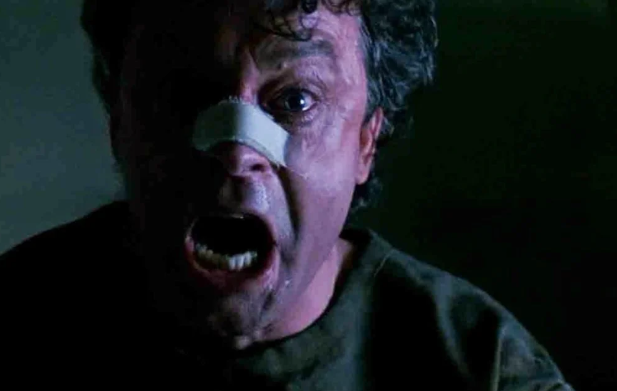
10 Spine-Tingling Secrets of The Exorcist III: Why This Forgotten Sequel Is a Masterpiece of Terror
In the pantheon of horror cinema, few shadows loom as large as the original story of a young girl in Georgetown. However, for decades, a massive internal rift existed within the franchise. After a sequel that was widely panned for straying too far into the avant-garde, the series seemed destined to fade. That was until the original creator, William Peter Blatty, stepped back into the director’s chair to adapt his own novel, Legion. The result was not just a return to form, but a film that many scholars now argue surpasses the original in terms of psychological depth, atmospheric dread, and philosophical complexity.
The Exorcist III is a rare breed of film: a sequel that functions as a standalone meditation on the nature of evil. It swaps the visceral, “pea-soup” shock value of the first installment for a slow-burn detective noir aesthetic. It treats the supernatural not as a spectacle, but as a cold, encroaching reality that infects the mundane settings of hospitals and police stations. To understand why this film continues to haunt the dreams of cinephiles, one must look past the studio-mandated title and into the intricate, often troubled production that birthed a masterpiece. Here are ten facts that reveal the hidden genius behind the Gemini Killer’s reign of terror.
Keyword Research
- Primary Evergreen Keyword: The Exorcist III movie facts
- Secondary/Long-Tail Keywords: William Peter Blatty Legion, Gemini Killer mystery, George C. Scott horror movies, hospital corridor jump scare, psychological horror masterpieces, Jason Miller Father Karras return, Exorcist III production secrets.
1. The Blatty Vision: From “Legion” to the Big Screen
The foundation of this film is rooted in literature rather than a simple Hollywood pitch. William Peter Blatty, the mastermind behind the original novel and screenplay, wrote a sequel titled Legion that focused on the detective from the first story, William Kinderman. Blatty initially had no intention of directing a “horror” movie; he wanted to create a theological thriller that explored the persistence of the soul and the presence of ancient malice in a modern, clinical world.
The transition from page to screen was fraught with artistic tension. Blatty’s original cut of the film did not even feature an exorcism—an irony considering the title it was eventually given. He envisioned a quiet, intellectual exploration of a man’s faith being tested by a series of impossible murders. This literary pedigree is why the dialogue in the film feels so much more substantial than typical genre fare. The characters speak with a rhythmic, noir-inspired wit that grounds the supernatural elements in a tangible, gritty reality. Understanding this film requires acknowledging it as Blatty’s personal “corrective” to the franchise’s trajectory.
2. The Greatest Jump Scare in Cinema History
If you ask any horror enthusiast about the “hallway scene,” they know exactly what you are referring to. The film features a long, static wide shot of a hospital corridor. For several minutes, the audience watches the mundane movements of nurses and security guards in complete silence. Then, in a moment of perfectly timed cinematic violence, a figure clad in white emerges behind a nurse with a pair of surgical shears, accompanied by a deafening, metallic crash of sound.
What makes this fact so enduring is the technical mastery behind it. Most jump scares rely on quick cuts and “stingers,” but Blatty utilized a wide-angle lens and a total lack of musical cues to lull the audience into a false sense of security. The “shears” used in the scene were actually a specialized prop designed to look terrifyingly clinical. This single moment has been studied by film students as a masterclass in tension and release. It proves that horror is most effective when it disrupts the boring, everyday routines of life, turning a familiar sterile environment into a slaughterhouse in the blink of an eye.
3. The Forced Exorcism and Studio Interference
The film’s title is a bit of a misnomer, as the “Exorcism” portion was never part of Blatty’s original plan. The production company, Morgan Creek, became nervous that a movie called The Exorcist III featuring no actual exorcism would alienate audiences. Against Blatty’s wishes, the studio demanded a large-scale, special-effects-heavy climax. This led to expensive reshoots where a new character, Father Morning, was inserted into the narrative to perform the titular ritual.
This interference created a “Frankenstein’s Monster” of a finale. While the reshot ending features impressive pyrotechnics and supernatural manifestations, it clashes tonally with the quiet, psychological dread of the preceding ninety minutes. Despite this, the film’s core remains so strong that it survives the studio’s meddling. For fans, the “forced” ending is a fascinating glimpse into the eternal struggle between an artist’s vision and a studio’s commercial fears. It serves as a reminder that even a masterpiece can be scarred by the industry that produces it, yet still retain its soul.
4. The Haunting Dual Performance of Patient X
One of the most unsettling elements of the film is the portrayal of “Patient X,” the individual residing in a high-security psychiatric ward who claims to be the Gemini Killer. In a brilliant casting move, the role is shared by two actors: Jason Miller (reprising his role as Father Karras) and Brad Dourif (as the spirit of the Gemini Killer). Blatty used a “morphing” technique, where the camera would cut between the two actors mid-sentence, suggesting that two souls were fighting for control of one body.
Brad Dourif’s performance, in particular, is often cited as one of the greatest in horror history. His monologues are delivered with a terrifying, high-pitched intensity that suggests a mind completely untethered from human morality. Meanwhile, the sight of Jason Miller—the hero of the original film—now broken and inhabited by a demon, provides a deep emotional resonance. This “dual-casting” was a logistical nightmare during production, requiring the actors to perfectly match each other’s physical movements and vocal inflections to create a seamless, shifting presence that keeps the audience in a state of constant equilibrium.
5. The Real-Life Inspiration of the Gemini Killer
The antagonist of the film, the Gemini Killer, was not entirely a work of fiction. William Peter Blatty drew heavy inspiration from the real-life “Zodiac Killer” who terrorized Northern California. Like the Zodiac, the Gemini Killer taunts the police with cryptic messages and commits murders that seem to follow a bizarre, ritualistic logic. The film even incorporates the detail of the killer severing the index fingers of his victims, a trait that adds a grounded, procedural horror to the supernatural plot.
By linking the demonically possessed killer to a real-world archetype of a serial murderer, Blatty made the evil feel more immediate and possible. The Gemini isn’t just a monster from hell; he is a man who enjoys the “theatricality” of his crimes. This blend of “true crime” and “theology” creates a unique atmosphere where the police procedural elements feel as authentic as the religious ones. It suggests that human evil and demonic evil are two sides of the same coin, making the Gemini Killer one of the most frighteningly “human” villains in the entire franchise.
6. Erasing the Legacy of the Second Film
In a bold move for a franchise sequel, The Exorcist III completely ignores the events of the second movie. Blatty had no involvement in the first sequel and found its storyline to be a betrayal of the themes he established. As a result, this film acts as a direct chronological and thematic successor to the original. It returns the setting to Georgetown and focuses on the lingering trauma of the characters who survived the events of the 1970s.
This decision to “de-canonize” a previous entry was ahead of its time. By stripping away the confusing mythology of the second film, Blatty was able to restore the sense of mystery and danger that made the original so impactful. This “course correction” is a major reason why the film has seen a massive resurgence in popularity. It treats the audience with respect, acknowledging that the “true” story of the Exorcist is about the struggle of faith and the heavy price of victory, rather than ancient African spirits or psychic locusts.
7. George C. Scott’s Powerhouse Lead Performance
Replacing the lead of a major franchise is always a risk, but casting George C. Scott as Lieutenant Kinderman was a masterstroke. Known for his intense, commanding presence in films like Patton, Scott brought a weary, cynical humanity to the role. His Kinderman is a man who loves “lemon pie” and Groucho Marx, but who is also deeply haunted by the senselessness of the crimes he investigates.
Scott’s performance is the anchor of the film. His “explosions” of rage are legendary, but it is his quiet moments of grief—specifically when mourning his friend Father Dyer—that give the movie its heart. Most horror movies feature “cardboard” protagonists who exist merely to react to the monster. In this film, the protagonist’s internal life is just as interesting as the supernatural mystery. Scott’s ability to move from high-comedy banter to soul-crushing despair makes the final confrontation with evil feel deeply personal rather than just a battle of special effects.
8. The Theological Depth of the Script
While many horror films are content with “good vs. evil” tropes, this script delves into the “Problem of Evil” with academic rigor. The film is filled with philosophical debates about why a benevolent God would allow a “Gemini Killer” to exist. One of the most famous scenes involves Kinderman and Father Dyer discussing the nature of a “just” universe while sitting in a cinema.
Blatty, a devout Catholic with a Jesuit education, infused the film with real theological questions. The demon in this film doesn’t just want to possess a body; it wants to prove that God is indifferent or cruel. This elevates the stakes from a physical survival story to an existential battle for the truth of the universe. The “horror” comes from the idea that perhaps the demon is right—that the universe is a cold, uncaring place where the innocent suffer for no reason. This intellectual weight is what keeps fans coming back to the film long after the jump scares have lost their initial shock.
9. The Long-Lost “Legion” Director’s Cut
For years, the “original” version of the film—the one without the reshot exorcism and with more of Brad Dourif’s performance—was considered a lost holy grail of cinema. Fans knew that Blatty’s original vision was significantly different, but the footage was thought to be destroyed. However, through the dedication of film historians and preservationists, a “Director’s Cut” was eventually assembled using “workprint” footage found in various archives.
Though the quality of the restored footage varies, this version (often titled Legion) allows audiences to see the film Blatty intended to make. It is a much more subdued, atmospheric piece that relies on performance and dialogue rather than special effects. The existence of these two different versions of the same movie provides a unique opportunity for fans to see how editing and studio notes can fundamentally change the “soul” of a film. It turned the movie into a living piece of film history, a puzzle that fans are still piecing together.
10. The Revolutionary Sound Design of Dread
The auditory experience of this film is just as important as the visuals. The sound design is famously “uncomfortable,” utilizing a low-frequency hum and “industrial” noises that create a sense of constant anxiety. Blatty also used “disembodied” voices and whispers that seem to come from behind the viewer, a technique that was highly advanced for the time.
In the psychiatric ward scenes, the sound is used to suggest that the walls themselves are alive. The echoes, the distant screams, and the subtle, rhythmic thumping create an environment where the “normal” world feels thin and easily punctured. This focus on “audio-horror” means that the film is just as scary if you close your eyes. It treats sound not just as a way to scare the audience, but as a way to build a world that feels fundamentally “wrong.” This attention to detail ensures that the film’s atmosphere remains evergreen, as the feeling of being “watched” by sound is a primal fear that never goes out of style.
Further Reading
- The Exorcist III: Legion by William Peter Blatty (The original novel)
- William Peter Blatty on The Exorcist: From Novel to Screen by William Peter Blatty
- The Friedkin Connection: A Memoir by William Friedkin (For context on the original film’s legacy)
- Foundations of Horror: The Cinema of William Peter Blatty by Various Authors
- 10 The Exorcist III (1990) Movie Facts You Didn’t Know
- 10 Scream (1996) Movie Facts That Changed Horror
- 10 Hostel (2005) Movie Facts That Shocked Viewers
- 10 Hellraiser (1987) Movie Facts That Built Its Legacy
- 10 Candyman (1992) Movie Facts That Still Give Chills
- 10 Essential Facts About The Texas Chainsaw Massacre (1974)
- 10 Essential Facts That Explain the World of The Walking Dead TV Show
- From – Season 1 Full Recap and Spoilers Explained
- 10 Things You Should Know About The Thing (1982) – Movie Facts and Hidden Details
- 10 Fascinating Supernatural Facts You Probably Missed – TV Show Lore



