
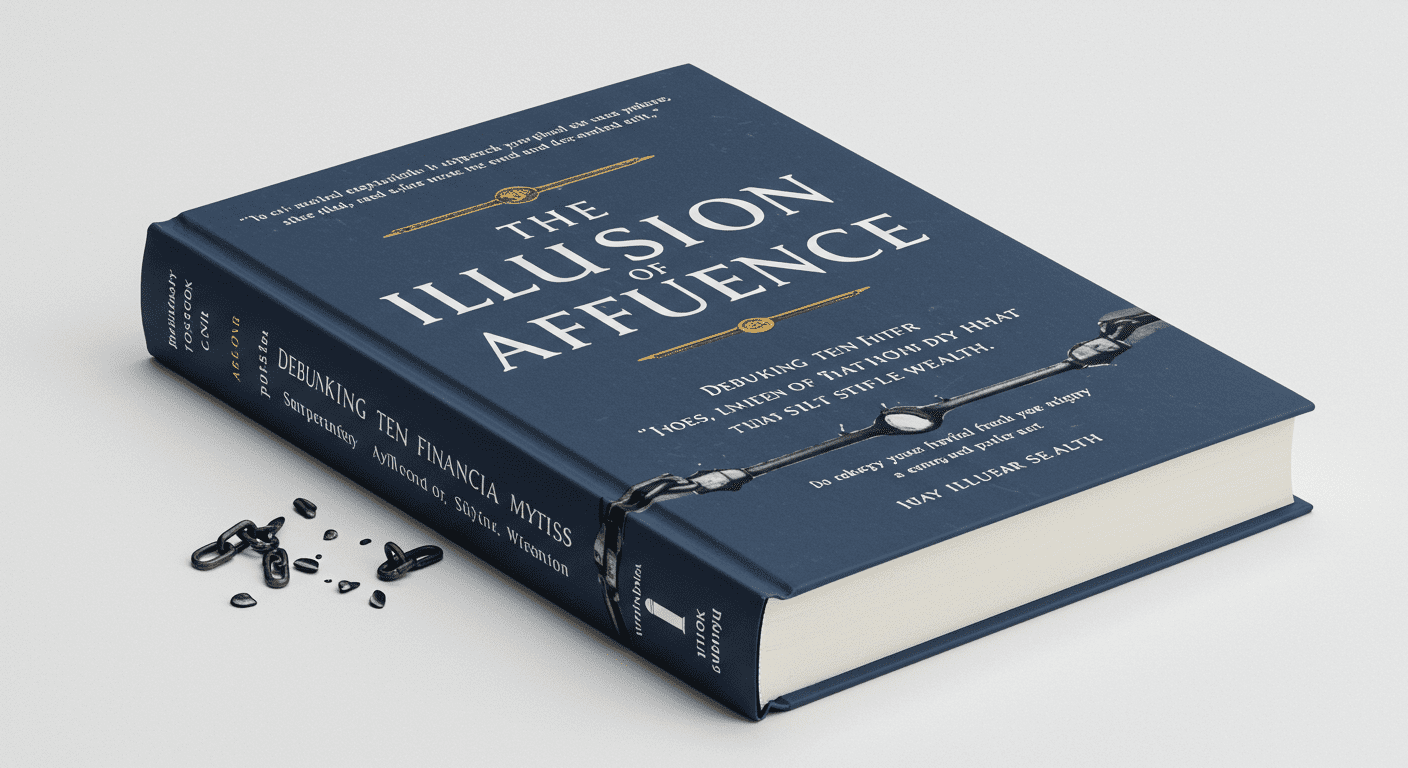
The pursuit of financial security, let alone wealth, is a journey fraught with misinformation. We are bombarded with conventional wisdom, often perpetuated by popular culture and well-meaning but ill-informed individuals, that can lead us astray. These myths, while seemingly innocuous, can subtly sabotage our financial well-being, creating a chasm between our aspirations and our realities. To navigate this complex landscape, we must disentangle fact from fiction, replacing ingrained misconceptions with informed strategies.
1. The Myth of Instant Riches: “Get Rich Quick” Schemes
The allure of rapid wealth is a siren song that has shipwrecked countless individuals. From pyramid schemes to speculative investments promising astronomical returns, the “get rich quick” mentality preys on our desire for immediate gratification. History, however, reveals a consistent pattern: sustainable wealth is built over time, through disciplined saving, strategic investing, and a long-term perspective. The Dutch Tulip Mania in the 17th century, the South Sea Bubble in the 18th, and the dot-com bubble in the late 20th, all serve as stark reminders of the perils of speculative bubbles and the importance of due diligence. As economist John Kenneth Galbraith famously observed, “There are two kinds of forecasters: those who don’t know, and those who don’t know they don’t know.”
2. The Myth of Inevitable Debt: “Debt is a Necessary Evil”
While some forms of debt, such as mortgages or student loans, can be strategic investments in our future, the notion that debt is an unavoidable aspect of life is a dangerous fallacy. Consumer debt, particularly credit card debt with exorbitant interest rates, can create a cycle of financial dependency. The average American household carries thousands of dollars in credit card debt, a burden that stifles savings and impedes wealth accumulation. The ancient Roman philosopher Seneca warned, “He who indulges in too many pleasures lays up store for sorrows.” This observation holds true for modern financial habits.
3. The Myth of Market Timing: “I’ll Invest When the Market is Right”
Attempting to predict market fluctuations is a fool’s errand. Even seasoned financial professionals struggle to consistently time the market. The concept of “buy low, sell high” sounds simple in theory, but emotions often cloud our judgment, leading to impulsive decisions. Studies have shown that investors who attempt to time the market often underperform those who adopt a “buy and hold” strategy, consistently investing over the long term. Time in the market, rather than timing the market, is the key to building wealth.
4. The Myth of Financial Illiteracy: “Investing is Only for the Wealthy”
The perception that investing is a privilege reserved for the affluent is a significant barrier to wealth creation. With the advent of online brokerage platforms and fractional shares, investing has become more accessible than ever before. Starting early, even with small amounts, can yield substantial returns over time, thanks to the power of compounding. The concept of compounding interest, described by Albert Einstein as the “eighth wonder of the world,” underscores the importance of long-term investment.
5. The Myth of Passive Savings: “My Savings Account is Enough”
While saving is essential, simply hoarding money in a low-interest savings account is not a viable strategy for building wealth. Inflation erodes the purchasing power of money over time, meaning that your savings may actually be decreasing in real value. Diversifying investments across various asset classes, such as stocks, bonds, and real estate, is crucial for outpacing inflation and maximizing returns. The history of inflation in various economies, from the Weimar Republic to modern emerging markets, illustrates the importance of protecting one’s wealth against inflationary pressures.
6. The Myth of Job Security: “My Job Will Provide for My Future”
In an era of rapid technological change and economic uncertainty, relying solely on a single source of income is a risky proposition. Job security is no longer guaranteed, and diversifying income streams is essential for financial resilience. Consider the impact of automation on various industries and the rise of the gig economy, both of which highlight the need for adaptability and multiple income sources.
7. The Myth of Uncontrollable Expenses: “I Can’t Cut Back on Spending”
The belief that our expenses are fixed and immutable is a common misconception. Careful budgeting, tracking expenses, and identifying areas for reduction can significantly impact our financial health. The concept of “frugality” is not about deprivation but about mindful spending and prioritizing needs over wants. The Stoic philosophers, like Epictetus, emphasized the importance of controlling one’s desires and living within one’s means.
8. The Myth of Tax Inevitability: “Taxes Will Always Take a Big Chunk”
While taxes are a reality, strategic tax planning can minimize their impact on our wealth. Utilizing tax-advantaged accounts, such as 401(k)s and IRAs, and understanding tax deductions and credits can significantly reduce our tax burden. The intricacies of tax law, as evidenced by historical tax reforms, underscore the importance of seeking professional advice.
9. The Myth of Social Security Solvency: “Social Security Will Cover My Retirement”
Relying solely on Social Security for retirement income is a dangerous gamble. The long-term solvency of the Social Security system is uncertain, and even if it remains intact, the benefits may not be sufficient to maintain a comfortable lifestyle. Planning for retirement requires a multifaceted approach, including personal savings, investments, and potentially other sources of income. The demographic shifts and economic projections related to social security highlight the need for proactive retirement planning.
10. The Myth of Financial Complexity: “I Don’t Understand Finances”
Financial literacy is not an innate trait; it is a learned skill. With the abundance of educational resources available, from books and online courses to financial advisors, there is no excuse for remaining financially illiterate. Taking the time to understand basic financial concepts, such as budgeting, investing, and debt management, is essential for building wealth. The history of financial education initiatives, such as those promoted by Benjamin Franklin, underscores the importance of knowledge in achieving financial independence.
Conclusion
The journey to financial well-being requires a critical examination of ingrained beliefs and a willingness to embrace new perspectives. By debunking these ten financial myths, we can empower ourselves to make informed decisions, cultivate sound financial habits, and build a secure future. Financial success is not a matter of luck or privilege; it is a product of knowledge, discipline, and perseverance.
Here at Zentara.blog, our mission is to take those tricky subjects and unlock them, making knowledge exciting and easy to grasp for everyone. But the adventure doesn’t stop on this page! We’re constantly exploring new frontiers and sharing discoveries across the digital universe.
Want to dive deeper into more mind-bending Top 10s and keep expanding your world? Come join us on our other platforms – we’ve got unique experiences waiting for you on each one!
- Get inspired by visual wonders and bite-sized facts: See the world through Zentara’s eyes on Pinterest! Pin our fascinating facts and stunning visuals to your own boards. Explore Pins on Pinterest: https://uk.pinterest.com/zentarablog/
- Discover quick insights and behind-the-scenes peeks: Hop over to Tumblr for snippets, quotes, and unique content you won’t find anywhere else. It’s a different flavour of discovery! Follow the Fun on Tumblr: https://www.tumblr.com/zentarablog
- Ready for deep dives you can listen to or watch? We’re bringing our accessible approach to video and potentially audio! Subscribe to our YouTube channel and tune into future projects that make learning pop! Subscribe on YouTube: https://www.youtube.com/@ZentaraUK
- Seeking even more knowledge in one place? We’ve compiled some of our most popular topic deep dives into fantastic ebooks! Find them on Amazon and keep the learning journey going anytime, anywhere. Find Our Ebooks on Amazon: https://www.amazon.co.uk/s?k=Zentara+UK&ref=nb_sb_noss
- Connect with us and fellow knowledge seekers: Join the conversation on BlueSky! We’re sharing updates, thoughts, and maybe even asking you what wonders we should explore next. Chat with Us on BlueSky: https://bsky.app/profile/zentarablog.bsky.social
- Perfect for learning on the move! We post multiple 10-minute podcasts per day on Spotify. Pop on your headphones and fill your day with fascinating facts while you’re out and about! Listen on Spotify: https://open.spotify.com/show/3dmHbKeDufRx95xPYIqKhJ
Every click helps us keep bringing honest, accessible knowledge to everyone. Thanks for exploring with us today – see you out there in the world of discovery!




Leave a Reply