
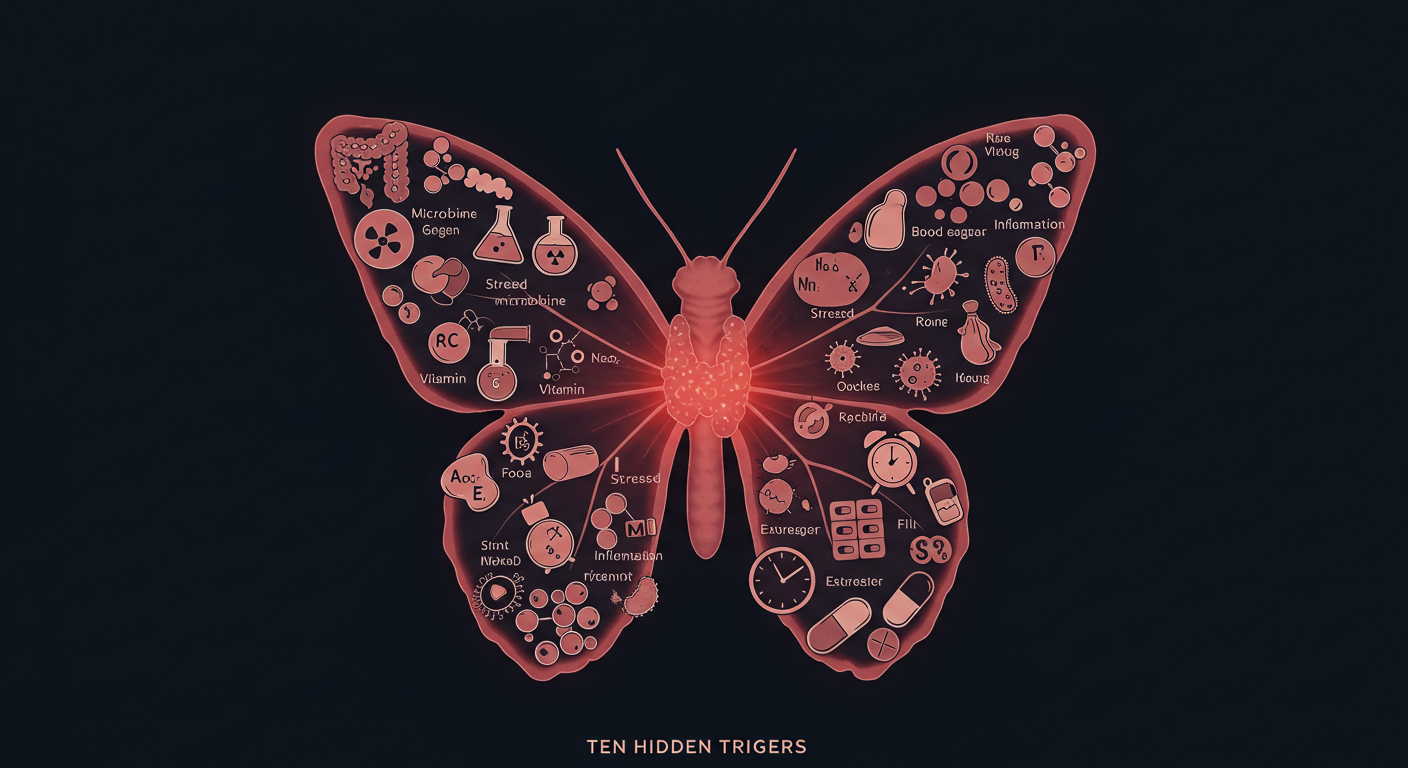
The thyroid, a small, butterfly-shaped gland nestled in the neck, orchestrates a vast symphony of metabolic processes. When this conductor falters, the resulting dissonance can manifest in a bewildering array of symptoms, from fatigue and weight fluctuations to mood disturbances and cognitive fog. While conventional wisdom often points to iodine deficiency or autoimmune diseases as primary culprits, a deeper dive reveals a network of less obvious, yet equally potent, triggers that can disrupt this delicate hormonal balance. These hidden factors, often overlooked in routine medical assessments, warrant closer scrutiny, as they can significantly impact overall well-being.
1. The Silent Inflammatory Cascade: Gut Dysbiosis and Leaky Gut
The gut, often referred to as the “second brain,” harbors a complex ecosystem of microorganisms that play a crucial role in immune regulation and nutrient absorption. An imbalance in this ecosystem, known as gut dysbiosis, can trigger a cascade of inflammatory responses that extend beyond the digestive tract. Studies have shown a strong correlation between gut dysbiosis and autoimmune thyroid diseases, such as Hashimoto’s thyroiditis. The integrity of the gut lining is also crucial. “Leaky gut,” or increased intestinal permeability, allows undigested food particles and toxins to enter the bloodstream, further fueling systemic inflammation. As noted in a study published in the Journal of Clinical Endocrinology & Metabolism, “Alterations in gut microbiota composition and function are associated with autoimmune thyroid diseases, suggesting a potential role for gut health in thyroid pathogenesis.” This disruption can lead to a chronic state of low-grade inflammation, which can impair thyroid hormone production and conversion.
2. The Endocrine Disruptors: Environmental Toxins
Modern life exposes us to a cocktail of environmental toxins, many of which act as endocrine disruptors, interfering with hormonal signaling. Perchlorate, found in rocket fuel and contaminated water, can inhibit iodine uptake by the thyroid. Bisphenol A (BPA), present in plastics and food packaging, has been linked to thyroid hormone disruption. Phthalates, used in personal care products and industrial chemicals, can also alter thyroid function. A report by the Environmental Working Group highlighted the pervasive presence of these chemicals and their potential impact on thyroid health. These exposures, often cumulative and chronic, can subtly undermine thyroid function over time.
3. The Stress Response: Chronic Cortisol Elevation
The body’s stress response, mediated by the hypothalamic-pituitary-adrenal (HPA) axis, involves the release of cortisol. While acute stress can be adaptive, chronic stress leads to sustained cortisol elevation, which can suppress thyroid hormone production and conversion. Cortisol interferes with the conversion of T4 (inactive thyroid hormone) to T3 (active thyroid hormone), reducing the availability of the latter. Furthermore, chronic stress can exacerbate autoimmune thyroid diseases by impairing immune regulation. As research published in Frontiers in Endocrinology indicates, “Chronic stress can significantly influence the HPA axis and thyroid function, potentially contributing to the development or exacerbation of thyroid disorders.”
4. The Nutrient Deficiencies: Beyond Iodine
While iodine is essential for thyroid hormone synthesis, other nutrients play equally critical roles. Selenium is required for the conversion of T4 to T3 and acts as an antioxidant, protecting the thyroid from oxidative damage. Zinc is involved in thyroid hormone receptor function and overall thyroid health. Iron deficiency can impair thyroid hormone production and exacerbate symptoms of hypothyroidism. Vitamin D, often considered a hormone itself, is vital for immune regulation and thyroid function. These deficiencies, often subtle and overlooked, can create a silent burden on thyroid function.
5. The Silent Inflammatory Foods: Dietary Triggers
Certain foods can trigger inflammatory responses that indirectly impact thyroid health. Gluten, for example, has been implicated in autoimmune thyroid diseases due to molecular mimicry, where gluten proteins resemble thyroid tissue, leading to immune cross-reactivity. Dairy, soy, and processed foods can also contribute to inflammation and gut dysbiosis. Identifying and eliminating these dietary triggers can be a crucial step in restoring thyroid balance.
6. The Hidden Infections: Viral and Bacterial Culprits
Certain infections, such as Epstein-Barr virus (EBV) and Helicobacter pylori, have been linked to autoimmune thyroid diseases. EBV, a ubiquitous herpesvirus, can trigger autoimmune responses in susceptible individuals. H. pylori, a bacterium that infects the stomach, has been associated with Hashimoto’s thyroiditis. These infections can create a chronic inflammatory state that disrupts thyroid function.
7. The Blood Sugar Rollercoaster: Insulin Resistance
Insulin resistance, a condition characterized by impaired insulin signaling, can disrupt thyroid function. Elevated insulin levels can interfere with the conversion of T4 to T3 and exacerbate autoimmune thyroid diseases. Furthermore, insulin resistance is often associated with chronic inflammation, which can further impair thyroid function. Maintaining stable blood sugar levels through a balanced diet and regular exercise is crucial for thyroid health.
8. The Sleep Deprivation: Circadian Rhythm Disruption
The circadian rhythm, the body’s internal clock, regulates various physiological processes, including hormone secretion. Sleep deprivation and circadian rhythm disruption can impair thyroid hormone production and conversion. Melatonin, a hormone produced during sleep, plays a role in thyroid regulation. Ensuring adequate sleep and maintaining a regular sleep-wake cycle are essential for thyroid health.
9. The Estrogen Dominance: Hormonal Imbalance
Estrogen dominance, a condition characterized by an excess of estrogen relative to progesterone, can disrupt thyroid function. Estrogen can increase the production of thyroid-binding globulin (TBG), which binds to thyroid hormones, reducing their availability to tissues. This can lead to symptoms of hypothyroidism, even with normal thyroid hormone levels. Addressing estrogen dominance through lifestyle modifications and targeted therapies can improve thyroid function.
10. The Hidden Medications: Pharmaceutical Interference
Certain medications, such as lithium, amiodarone, and interferon-alpha, can interfere with thyroid function. Lithium, used to treat bipolar disorder, can induce hypothyroidism. Amiodarone, an antiarrhythmic drug, can cause both hypothyroidism and hyperthyroidism. Interferon-alpha, used to treat certain viral infections and cancers, can trigger autoimmune thyroid diseases. Awareness of these potential drug-induced thyroid disorders is crucial for appropriate management.
Implications and Future Directions
The recognition of these hidden triggers underscores the complexity of thyroid health and the need for a holistic approach to diagnosis and treatment. Future research should focus on elucidating the intricate interplay between these factors and developing personalized interventions. Integrating functional medicine principles, which emphasize addressing the root causes of disease, can offer a more comprehensive approach to thyroid care. Personalized nutrition, stress management techniques, and targeted supplementation can play a vital role in restoring thyroid balance.
Conclusion
The thyroid, a seemingly small gland, plays a pivotal role in maintaining overall health. Unmasking the hidden triggers of thyroid imbalance requires a nuanced understanding of the interconnectedness of various physiological systems. By addressing these factors, we can move towards a more holistic and effective approach to thyroid care, restoring the body’s silent symphony to its harmonious state.
Further Reading
- “Gut microbiota and autoimmune thyroid diseases” – Journal of Clinical Endocrinology & Metabolism
- “Environmental Working Group Reports on Endocrine Disruptors” – EWG.org
- “The impact of chronic stress on the hypothalamic-pituitary-adrenal axis and thyroid function” – Frontiers in Endocrinology
- “The Role of Micronutrients in Thyroid Function” – Nutrients
- “Molecular Mimicry and Autoimmune Diseases” – Clinical Immunology
- “Epstein-Barr Virus and Autoimmune Thyroid Disease” – Autoimmunity Reviews
- “Helicobacter pylori and Hashimoto’s Thyroiditis” – Thyroid Research
- “Insulin Resistance and Thyroid Function” – Endocrine Connections
- “Circadian Rhythm and Thyroid Hormone Regulation” – Journal of Biological Rhythms
- “Estrogen Dominance and Thyroid Health” – Integrative Medicine: A Clinician’s Journal




Leave a Reply