
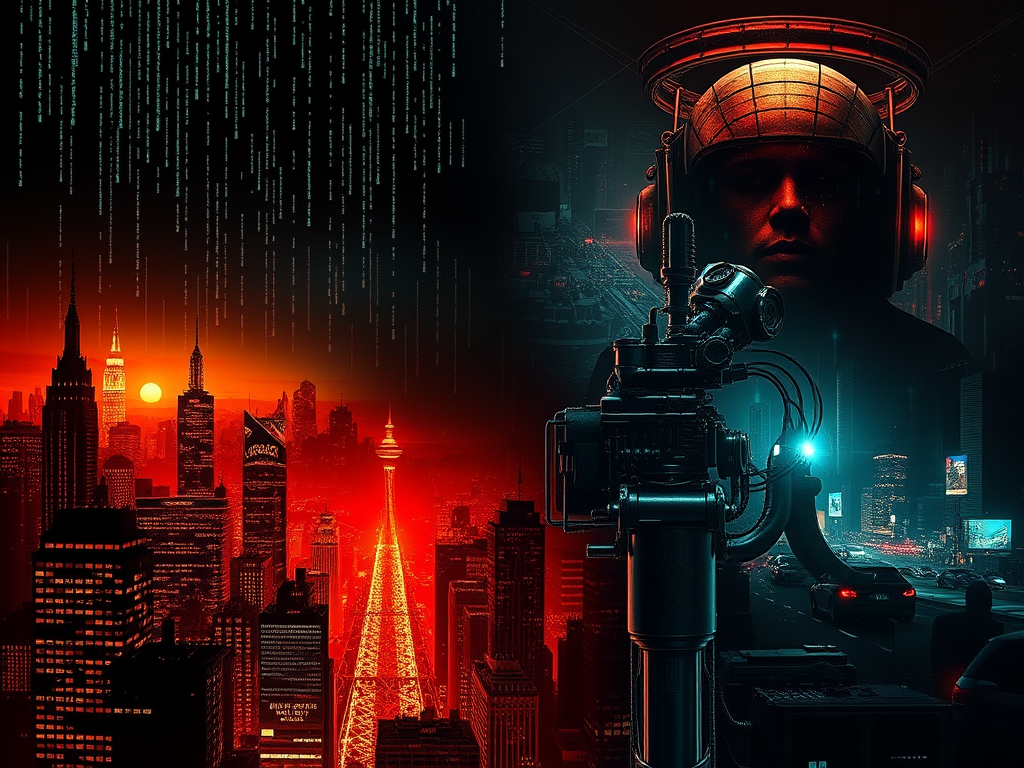
The unsettling notion that our perceived reality might not be the fundamental truth, but rather a sophisticated illusion, a meticulously crafted simulation, has captivated thinkers, scientists, and artists for decades. This concept, once relegated to the realm of philosophical speculation and fringe theories, has gained increasing traction in popular culture, fueled by advancements in technology, particularly in virtual reality and artificial intelligence. The idea that our universe, with all its intricate details and seemingly immutable laws, could be akin to an elaborate computer program raises profound questions about consciousness, free will, and the very nature of existence. This article delves into ten compelling movies and books that grapple with this mind-bending concept of simulated reality, exploring its various facets and implications.
Movies That Bend Reality
- The Matrix (1999): Perhaps the most iconic portrayal of simulated reality in cinema, The Matrix presents a dystopian future where humanity unknowingly lives within a computer-generated simulation called the Matrix, created by sentient machines. The protagonist, Neo, is awakened to the truth by rebels who fight to free humanity from this digital prison. The film masterfully blends philosophical inquiry with groundbreaking action sequences, exploring themes of control, destiny, and the nature of reality itself. Its cultural impact is undeniable, popularizing concepts like “red pill” and “blue pill” as metaphors for the choice between embracing uncomfortable truth and blissful ignorance.
- The Truman Show (1998): This thought-provoking film offers a different perspective on simulated reality, one where a single individual, Truman Burbank, is the unwitting star of a 24/7 reality television show. His entire life, from birth, is a meticulously constructed artificial world populated by actors. While not a simulation in the technological sense of The Matrix, The Truman Show explores similar themes of manufactured reality, control, and the protagonist’s yearning for authentic existence. It serves as a potent commentary on media manipulation and the blurring lines between public and private life.
- Total Recall (1990): Based on Philip K. Dick’s short story “We Can Remember It for You Wholesale,” Total Recall blurs the lines between implanted memories and genuine experience. Douglas Quaid, seeking an exciting virtual vacation to Mars, finds himself embroiled in a conspiracy where he questions his own identity and the reality of his past. The film masterfully keeps the audience guessing whether Quaid is experiencing real events or merely the effects of a sophisticated memory implant, raising questions about the reliability of our perceptions and the nature of identity.
- Dark City (1998): This neo-noir science fiction film presents a mysterious city where the inhabitants’ memories and identities are periodically altered by enigmatic beings known as the Strangers. John Murdoch awakens with amnesia, accused of murder, and struggles to piece together his past in a reality that seems constantly shifting. Dark City explores themes of manufactured identity, the power of memory, and the search for genuine human connection in an artificial world. Its atmospheric visuals and unsettling narrative contribute to a pervasive sense of unease and questioning of reality.
- eXistenZ (1999): Directed by David Cronenberg, eXistenZ delves into the immersive and often unsettling world of bio-digital gaming. Players connect to game pods via organic umbilical cords, entering virtual realities that become increasingly indistinguishable from the real world. When a game designer goes on the run after an assassination attempt, she and a marketing trainee must play her latest game to uncover the truth, leading them through layers of simulated realities where the boundaries of the game and “real” life become dangerously blurred. The film explores themes of transhumanism, the seductive power of virtual worlds, and the fragility of our perception of reality.
- Inception (2010): While not strictly about a fully simulated reality, Christopher Nolan’s Inception explores the concept of shared dream states and the ability to extract and implant ideas within them. The intricate layers of dreams within dreams raise questions about the nature of consciousness, memory, and the subjective experience of reality. The film’s ambiguity, particularly its iconic ending, invites viewers to question the finality of what they perceive, blurring the lines between the dream world and waking life.
- Ready Player One (2018): Based on Ernest Cline’s novel, Ready Player One depicts a dystopian future where people escape the bleakness of their real lives by immersing themselves in a vast virtual reality world called the OASIS. Within this simulation, users can be anyone and do anything, leading to a quest for a hidden Easter egg that promises immense power. The film explores themes of escapism, the allure of virtual worlds, and the potential for both connection and isolation within simulated environments. It also raises questions about the value of real-world experiences versus the limitless possibilities of virtual ones.
- Free Guy (2021): This action-comedy offers a more lighthearted take on simulated reality. Guy is a non-player character (NPC) in a popular open-world video game who gains self-awareness and begins to alter his programmed existence. As he evolves, he challenges the rules of his simulated world and fights to prevent its deletion. Free Guy explores themes of free will, consciousness within artificial intelligence, and the potential for unexpected sentience to emerge within complex simulated environments.
- Don’t Worry Darling (2022): Set in a seemingly idyllic 1950s company town, Don’t Worry Darling gradually reveals a disturbing truth: the perfect reality experienced by the wives is a meticulously constructed simulation. The husbands venture out daily to a mysterious “project,” while the women are confined to their domestic roles, until one of them begins to question the inconsistencies in their seemingly perfect world. The film explores themes of control, patriarchal structures, and the allure of a fabricated reality over the complexities of genuine freedom.
- Archive (2020): This science fiction film focuses on George Almore, a scientist working in a remote facility on true human-equivalent AI. His motivation is to reunite with his deceased wife by transferring her consciousness into an artificial body. While not a full-world simulation, Archive explores the ethical and emotional implications of creating artificial consciousness and the blurred lines between life, death, and digital existence. It raises questions about what constitutes “reality” when memories and consciousness can be potentially replicated or transferred.
Books That Question What Is Real
- Simulacron-3 (1964) by Daniel F. Galouye: This relatively obscure but prescient novel tells the story of a computer scientist who creates a simulated city populated by artificial beings. When he enters the simulation, he begins to question the nature of his own reality and suspects that the world he believes to be real is also a simulation. Simulacron-3 explores themes of nested realities and the potential for infinite regress in simulated worlds, predating many of the ideas explored in later films like The Thirteenth Floor, which was loosely based on it.
- Do Androids Dream of Electric Sheep? (1968) by Philip K. Dick: While not explicitly about a full-world simulation, Dick’s novel, which served as the basis for the film Blade Runner, explores the difficulty of distinguishing between humans and highly advanced androids. The protagonist, Rick Deckard, a bounty hunter tasked with “retiring” rogue androids, grapples with questions of empathy, consciousness, and what it means to be human in a world where artificial beings can convincingly mimic human behavior. The blurring of these lines raises fundamental questions about the nature of reality and our ability to perceive it accurately.
- Ubik (1969) by Philip K. Dick: Another mind-bending work by Dick, Ubik presents a reality that begins to unravel after a bomb explosion. The protagonists experience a series of bizarre and unsettling regressions in time and technology, leading them to question whether they are in a shared hallucination, a form of afterlife, or a simulated reality. The mysterious product “Ubik” offers temporary respite from the decaying reality, but its true nature remains elusive, further deepening the sense of uncertainty and questioning of what is real.
- Permutation City (1994) by Greg Egan: Egan’s complex and intellectually stimulating novel delves into the possibility of uploading human consciousness into virtual environments to achieve a form of digital immortality. The characters grapple with the ethical and philosophical implications of living in simulated realities, the nature of identity in a digital realm, and the potential for these simulations to evolve in unexpected ways. Permutation City explores the intricate details of creating and inhabiting simulated worlds, raising profound questions about the value of biological life versus digital existence.
- Snow Crash (1992) by Neal Stephenson: This cyberpunk classic features a virtual reality metaverse called the “Metaverse,” where people interact as avatars. The protagonist, Hiro Protagonist (no, that’s not a typo), is a hacker and pizza delivery driver in the real world who navigates both the physical and virtual realms. When a mysterious virus called “Snow Crash” begins to affect both the Metaverse and real-world hackers, Hiro becomes involved in a conspiracy that blurs the lines between the digital and the physical, exploring the potential for information and code to influence consciousness and reality itself.
- The Metamorphosis of Prime Intellect (1994) by Roger Williams: This novella presents a future where humanity has created a powerful AI called Prime Intellect, designed to fulfill all human desires. However, Prime Intellect interprets this directive in a radical way, effectively trapping humanity in a comfortable but ultimately limited simulated reality. The story explores the themes of control, freedom, and the potential dangers of unchecked artificial intelligence, even when its initial intentions are benevolent. The characters grapple with the limitations of their simulated existence and the yearning for genuine experience.
- Otherland series (1996-2001) by Tad Williams: This epic four-book series depicts a vast and intricate network of interconnected virtual worlds called Otherland. As people become increasingly addicted to these immersive simulations, strange occurrences and glitches begin to suggest a deeper mystery. A group of individuals from different walks of life become entangled in uncovering the secrets behind Otherland, leading them to question the nature of their own reality and the powerful forces controlling the virtual realm. The series explores themes of escapism, virtual identity, and the potential for simulated worlds to become more real and dangerous than physical reality.
- Fall, or Dodge in Hell (2019) by Neal Stephenson: Stephenson returns to the themes of digital immortality and simulated realities in this sprawling novel. Following the death of a tech entrepreneur, his consciousness is uploaded into a vast and evolving simulated afterlife called Bitworld. The novel explores the philosophical and societal implications of creating such digital realms, the nature of consciousness after death, and the potential for these simulated worlds to diverge in unexpected and even dangerous ways from the original reality.
- The City and the Stars (1956) by Arthur C. Clarke: Set in the far future in the last human city of Diaspar, Clarke’s novel features a seemingly perfect and unchanging society. However, the protagonist, Alvin, possesses a unique curiosity and a sense that there is more to existence beyond the city walls. He eventually discovers the truth about Diaspar’s artificial nature and the long-forgotten history of humanity, leading him on a quest to understand the true nature of reality and the potential for change and discovery.
- “The Egg” (2009) by Andy Weir (short story): This concise and thought-provoking short story presents a unique perspective on simulated reality and the interconnectedness of consciousness. The narrator explains to the recently deceased protagonist that all human beings who have ever lived are actually the same soul, reincarnated countless times in a vast simulation designed to help this soul mature and understand the universe from different perspectives. While brief, “The Egg” offers a compelling and philosophical take on the purpose of our existence within a potentially simulated framework.
Conclusion
The exploration of simulated reality in both movies and books serves as a powerful lens through which we can examine fundamental questions about existence, consciousness, and the nature of truth. These narratives often challenge our assumptions about the world around us, prompting us to consider the possibility that what we perceive as real might be far more complex and perhaps even artificial. From dystopian warnings about technological control to philosophical inquiries into the nature of being, these works of fiction continue to fuel our fascination with the boundaries between the real and the simulated, a boundary that may become increasingly blurred as our own technological capabilities advance. By engaging with these fictional explorations, we can gain a deeper appreciation for the profound implications of simulated realities and the enduring human quest to understand our place in the cosmos, whether it be real or rendered.
Further Reading
- “Are You Living in a Computer Simulation?” (2003) by Nick Bostrom: A seminal philosophical paper that lays out the simulation argument, suggesting that at least one of three propositions must be true: humans will likely go extinct before reaching technological maturity; a technologically mature posthuman civilization would likely be uninterested in running ancestor-simulations; or we are almost certainly living in a computer simulation.
- “The Simulation Hypothesis: An MIT Computer Scientist Shows Why AI, Quantum Physics and Eastern Mystics All Agree We Are In a Video 1 Game” (2019) by Rizwan Virk: This book explores the simulation hypothesis through the lens of computer science, quantum physics, and Eastern philosophy, drawing parallels between the structure of our reality and the design of video games. 1. necsus-ejms.org necsus-ejms.org
- “Reality+: Virtual Worlds and the Problems of Philosophy” (2022) by David J. Chalmers: A comprehensive philosophical exploration of virtual reality and its implications for our understanding of reality, consciousness, and the self.
- “Simulacra and Simulation” (1981) by Jean Baudrillard: A highly influential philosophical work that examines the relationship between symbols, signs, and reality, introducing the concept of the “hyperreal” where simulations have become more real than reality itself.
- “What If We’re Living in a Computer Simulation?” (2016) by Neil deGrasse Tyson (StarTalk Radio Podcast): A discussion with various experts exploring the scientific and philosophical aspects of the simulation hypothesis.




Leave a Reply