
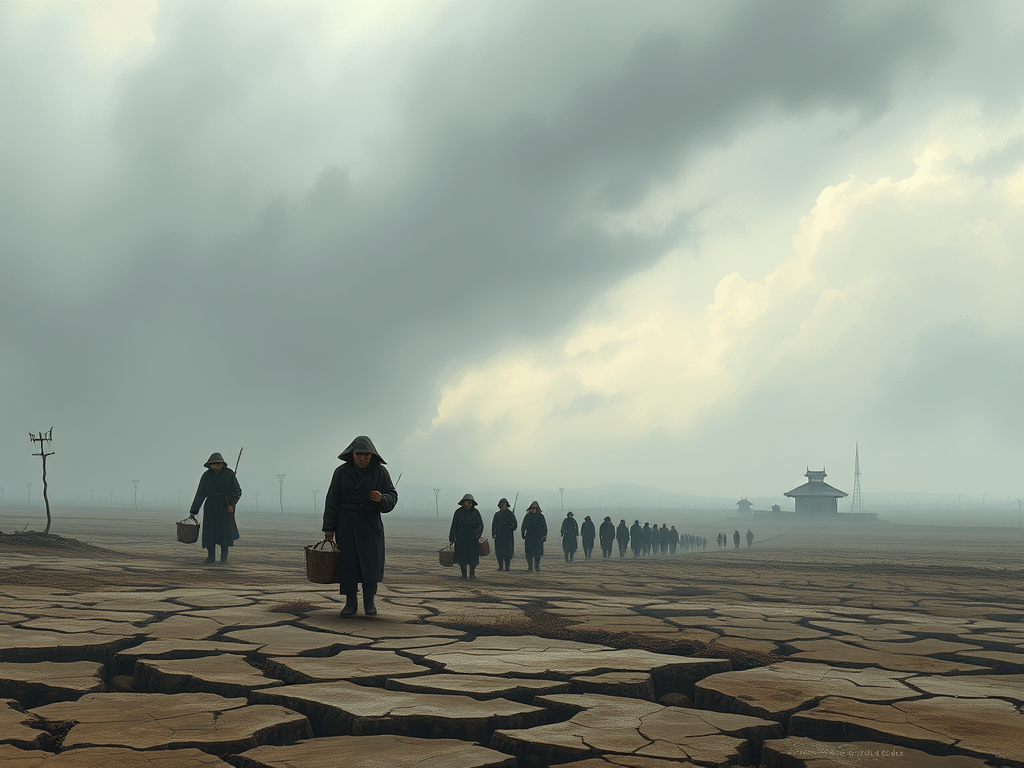
Imagine living in a country where suddenly there isn’t enough food for everyone. Not just for a day or two, but for years. This is what happened in China between 1958 and 1962 during a terrible time known as the Great Chinese Famine. It was a period of immense hardship and suffering, affecting millions of people across the country.
This wasn’t just a simple case of bad weather, although that played a part. It was a complicated tragedy caused by a mix of big government plans, how farming was done, and unfortunate natural events. Understanding what happened helps us learn important lessons about history, leadership, and how important it is to grow enough food for everyone.
So, what exactly led to this devastating famine? Let’s explore the ten key things that happened.
1. Starting the Great Leap Forward Plan
One of the biggest reasons for the famine was something called the “Great Leap Forward.” This was a huge plan started by China’s leader, Mao Zedong, in 1958. His big idea was to quickly turn China from a country that mostly farmed into a powerful country with lots of factories, like other big nations at the time. He wanted China to produce lots of steel and grain very fast. Think of it like trying to build a skyscraper and grow a whole forest at the same time, but much too quickly and without the right tools or plans. This sudden push for rapid change, called the Great Leap Forward, became the main backdrop for everything else that went wrong, pulling farmers away from their fields and setting unrealistic goals that were impossible to meet. The focus shifted drastically from careful, sustainable farming to meeting impossible targets for both industry and agriculture.
2. Farmers Had to Join Communes
Before the Great Leap Forward, most farmers in China worked on their own small plots of land. But as part of the new plan, the government made farmers group together into very large collective farms called “communes.” These communes were huge, sometimes with thousands of people. Instead of working for themselves and their families, farmers now worked for the commune. Their tools, land, and even their animals were taken and belonged to the commune. The idea was that working together on a large scale would be more efficient and produce more food. However, this also meant that farmers didn’t own the food they grew anymore. The commune decided where the food went. This change, forcing farmers into communes, took away their personal motivation and connection to the land, which had a big impact on how much food was actually grown.
3. Focus Shifted from Farming to Making Steel
As part of the Great Leap Forward, there was a massive push to increase the amount of steel China produced. Steel is important for building factories, machines, and infrastructure, and making lots of it was seen as a sign of becoming a modern, powerful country. Ordinary people, including farmers, were encouraged and sometimes forced to build small furnaces in their backyards and melt down metal objects to make steel. They melted pots, pans, tools, and anything else they could find. This sounded like a good idea for boosting industry, but it meant that many people who should have been working in the fields growing food were instead busy trying to make steel. The steel produced this way was often of very poor quality and not useful, but the effort took away vital labour from farming, leading to less food being planted and harvested.
4. Unrealistic Goals and Exaggerated Reports
The government set incredibly high targets for how much grain the communes should produce. Leaders in each region were under huge pressure to show they were doing well and supporting the Great Leap Forward. To look good and avoid trouble, many local officials started exaggerating the amount of grain their communes had grown. They reported numbers that were much higher than the reality. These false reports went up the chain of command, all the way to the top leaders in Beijing. Because the government believed these exaggerated numbers, they took away too much grain from the communes as taxes and for feeding people in the cities or selling to other countries. This left the farmers who had actually grown the food with very little or nothing to eat, even in places where the harvest hadn’t been terrible.
5. Taking Away Food from the Farmers
Since the government believed the reports of huge harvests, they collected a large portion of the grain from the communes. This grain was needed to feed people in the cities, supply the army, and also for export to other countries, sometimes in exchange for industrial equipment needed for the Great Leap Forward. However, because the harvest numbers were faked, the amount of grain taken away was often much more than the communes could afford to lose. Imagine working hard all year to grow food, only for someone to take almost all of it based on a false idea of how much you had. This left many farming families and entire communes with almost no food reserves, making them extremely vulnerable when food became scarce. The grain collection policy, based on false data, directly contributed to the starvation in rural areas.
6. Poor Weather and Natural Disasters
On top of the problems caused by the government’s policies, China also faced difficult weather conditions during these years. There were droughts in some areas, which meant there wasn’t enough rain for crops to grow. In other places, there were floods, which destroyed crops and damaged farmland. Swarms of locusts, insects that eat crops, also appeared in some regions, devouring the precious harvest. While bad weather and natural disasters happen in farming, they were made much worse by the other problems. With fewer people working the land because of the steel push, and the disruption caused by the communes, the ability to deal with these natural challenges was severely reduced. The poor weather wasn’t the main cause of the famine, but it hit a system that was already weakened by human mistakes and made the situation much more desperate.
7. Killing Birds (The Four Pests Campaign)
Another unusual policy during this time was the “Four Pests Campaign.” As part of improving hygiene and protecting crops, the government decided to get rid of four types of pests: rats, flies, mosquitoes, and sparrows. The idea was that sparrows ate grain, so killing them would save food. People across the country were mobilized to scare sparrows so they couldn’t land, eventually causing them to drop dead from exhaustion, or they would destroy their nests and eggs. Millions of sparrows were killed. However, people didn’t realize that sparrows also ate insects. With fewer sparrows, insect populations, including pests that did eat crops (like locusts, which were mentioned earlier), exploded. This led to even more damage to the crops that were already struggling due to other issues. This misguided campaign, aimed at protecting food, actually made the food shortage worse by disrupting the natural balance.
8. Lack of Knowledge and Experience in Communes
When farmers were forced into communes, the traditional ways of farming that had been passed down through generations were often ignored. Decisions about what crops to plant, how to plant them, and when to harvest were often made by commune leaders or government officials who had little to no actual farming experience. They might order farmers to plant crops too close together, or in unsuitable soil, or use farming methods that didn’t work well. There was also pressure to adopt new, untested farming techniques that were supposed to increase yields but often failed. This lack of practical knowledge and experience in managing large collective farms led to mistakes that resulted in lower crop yields. The disruption of traditional farming knowledge within the commune system contributed significantly to the food production crisis.
9. Difficulty for People to Move and Find Food
During the famine, as food became scarce in rural areas, many people desperately wanted to move to cities or other regions where they hoped to find food. However, the government had strict controls on movement. People needed permission to leave their communes or villages, and this permission was often denied. The government wanted to prevent a large-scale migration to the cities, which would cause chaos there and also reveal the true extent of the food crisis. This meant that people were often trapped in areas where there was no food, unable to go elsewhere to find it. The lack of freedom to move significantly worsened the suffering, as people couldn’t escape the famine-stricken areas to seek help or find alternative sources of food.
10. The Government Hid the Problem
Even as millions of people began to suffer and die from starvation in the countryside, the central government in China did not immediately acknowledge the true scale of the problem. Based on the false reports of bumper harvests, they continued to take grain and promote the success of the Great Leap Forward. Local officials who tried to report the truth about the famine were often punished. News of the suffering was suppressed, and the outside world had little idea of what was really happening. This delay in admitting the severity of the crisis meant that help was not organized, and the harmful policies that were contributing to the famine were not stopped or changed quickly enough. The government’s efforts to hide the problem prolonged the suffering and made the famine much more devastating than it might otherwise have been.
The Great Chinese Famine was a truly terrible event in history, caused by a combination of ambitious but flawed government policies, poor implementation, false reporting, and unfortunate natural events. It shows how important it is for governments to listen to their people, make realistic plans, and ensure there is enough food for everyone.
Further Reading
Here are some books you might find helpful if you want to learn more about this period in Chinese history (ask a parent or teacher to help you find them):
- Mao’s Great Famine: The History of China’s Most Devastating Catastrophe, 1958-62 by Frank Dikötter (Note: This is a detailed academic book, likely needing adult help to understand fully, but is a key source).
- The Cambridge Illustrated History of China by Patricia Buckley Ebrey (Look for sections covering the late 1950s and early 1960s).
- China: A History by John Keay (Again, find the relevant chapters on this time period).
Here at Zentara.blog, our mission is to take those tricky subjects and unlock them, making knowledge exciting and easy to grasp for everyone. But the adventure doesn’t stop on this page! We’re constantly exploring new frontiers and sharing discoveries across the digital universe.
Want to dive deeper into more mind-bending Top 10s and keep expanding your world? Come join us on our other platforms – we’ve got unique experiences waiting for you on each one!
- Get inspired by visual wonders and bite-sized facts: See the world through Zentara’s eyes on Pinterest! Pin our fascinating facts and stunning visuals to your own boards. Explore Pins on Pinterest: https://uk.pinterest.com/zentarablog/
- Discover quick insights and behind-the-scenes peeks: Hop over to Tumblr for snippets, quotes, and unique content you won’t find anywhere else. It’s a different flavour of discovery! Follow the Fun on Tumblr: https://www.tumblr.com/zentarablog
- Ready for deep dives you can listen to or watch? We’re bringing our accessible approach to video and potentially audio! Subscribe to our YouTube channel and tune into future projects that make learning pop! Subscribe on YouTube: https://www.youtube.com/@ZentaraUK
- Seeking even more knowledge in one place? We’ve compiled some of our most popular topic deep dives into fantastic ebooks! Find them on Amazon and keep the learning journey going anytime, anywhere. Find Our Ebooks on Amazon: https://www.amazon.co.uk/s?k=zentara+uk&crid=2273NA7RAJ1EU&sprefix=zentara+uk%2Caps%2C90&ref=nb_sb_noss
- Connect with us and fellow knowledge seekers: Join the conversation on BlueSky! We’re sharing updates, thoughts, and maybe even asking you what wonders we should explore next. Chat with Us on BlueSky: https://bsky.app/profile/zentarablog.bsky.social
- Perfect for learning on the move! We post multiple 10-minute podcasts per day on Spotify. Pop on your headphones and fill your day with fascinating facts while you’re out and about! Listen on Spotify: https://open.spotify.com/show/3dmHbKeDufRx95xPYIqKhJ
Every click helps us keep bringing honest, accessible knowledge to everyone. Thanks for exploring with us today – see you out there in the world of discovery!




Leave a Reply