
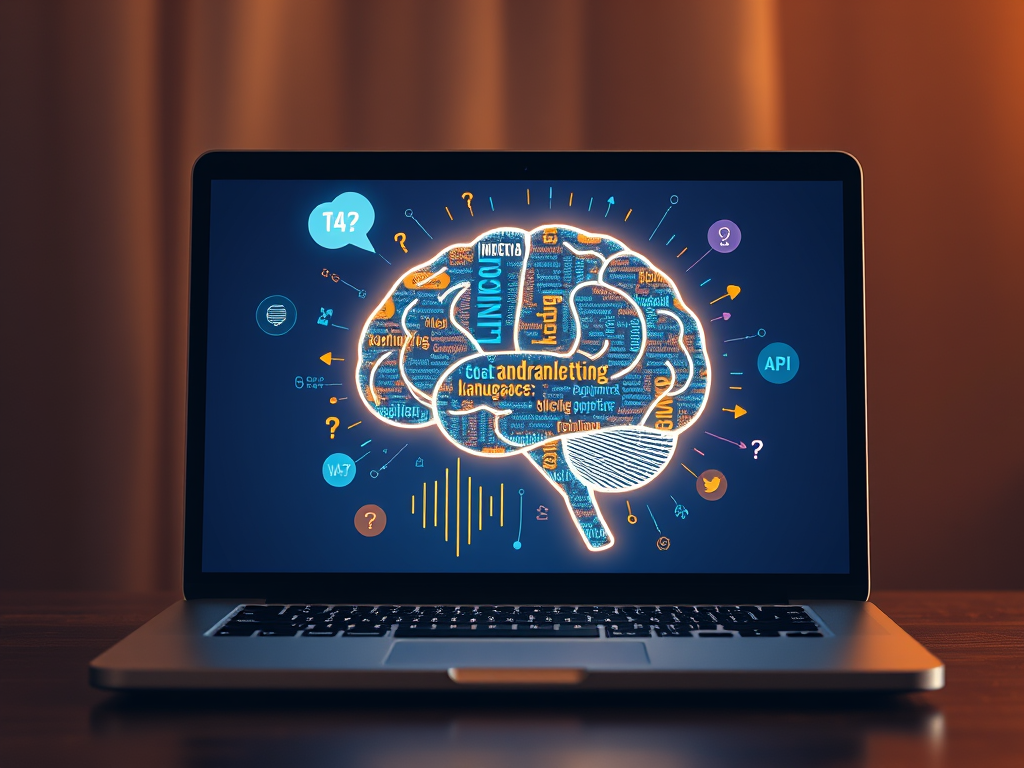
Imagine talking to your computer, asking it questions, or even getting it to write a story for you – and it answers back using words just like a person would! It might seem like science fiction, but it’s real, and it’s happening right now thanks to something called Large Language Models, or LLMs for short.
LLMs are a type of artificial intelligence (AI) that are designed to understand and generate human language. Think of the AI chatbot you might have interacted with – that’s very likely an LLM! They are pretty incredible pieces of technology that are changing the way we use computers and access information. But what are LLMs for kids? How do they work, and why are they called large? Get ready to have your mind blown with these ten awesome facts about the computer brains that are learning to talk like us!
Learning about these models can help you understand the technology behind things like smart assistants, translation apps, and even some video game characters. They are built on some seriously clever ideas, but we can break them down into simple, cool facts. Let’s explore the secrets behind large language models explained for kids!
1. LLM Stands for “Large Language Model” – and the “Language Model” Part is Key!
Okay, let’s start with the name itself: Large Language Model (LLM). The “Language Model” part is super important. Think of it like a very, very, very smart program that understands the patterns and rules of human language. It’s like a detective that has read millions and millions of books, articles, and websites.
Because it’s “read” so much, it has learned how words usually go together. For example, if you start a sentence with “The cat sat on the…”, the model knows that words like “mat,” “rug,” or “fence” are very likely to come next, while words like “bicycle” or “mountain” are much less likely. It’s constantly predicting the most probable next word based on the words that came before it. This basic idea – predicting the next word – is at the heart of how these models work and how they can generate text that makes sense, helping you understand what are LLMs for kids.
2. The “Large” Part Means They’ve Read a Library the Size of the Internet!
Now, about the “Large” part! This is where things get truly mind-blowing. When we say “large,” we mean gigantically large. These models are trained on enormous amounts of text data – literally trillions of words! Imagine reading every book in the biggest library you can think of, then reading every newspaper, every magazine, and a huge chunk of the internet – that’s still probably only a tiny fraction of the text an LLM has processed!
Why do they need to be so large? Because language is complicated! To truly understand all the nuances, exceptions, jokes, and different ways people talk and write, the model needs to see examples of everything. The more data they are trained on, the better they become at recognizing patterns, understanding context, and generating coherent, human-like text. So, why are LLMs large? It’s all about having enough information to become incredibly good at handling language.
3. They Don’t Just Read Words; They Break Them Into Tiny Puzzle Pieces
When you read a book, you see words as complete units. But for an LLM, it’s a bit different. They often break down words into smaller pieces, sometimes called “tokens.” These can be whole words, parts of words (like “ing” or “ed”), punctuation marks, or even individual characters.
Think of it like deconstructing a complex Lego model. Instead of just seeing the finished spaceship, the LLM sees all the individual bricks, plates, and connectors. This helps the model handle new or unusual words it hasn’t seen before by combining the pieces it does know. It also makes processing the massive amount of text more efficient. Understanding these tokens helps the model build relationships between different parts of sentences and documents, which is crucial for how do AI chatbots work.
4. Learning is Like Filling a Giant, Multidimensional Knowledge Map
So, how do these models “learn” from all that text? It’s not like they study or memorize facts in the way we do. Instead, their learning process is about finding patterns and relationships between those tiny puzzle pieces (tokens) based on how often they appear together and in what order within the training data.
Imagine a giant map in the model’s “brain” with millions or billions of points. Each point represents a word or token. The learning process is like drawing connections between these points based on how related they are. Words that are used similarly or often appear near each other end up closer together on this map. Over time, this map becomes incredibly complex, allowing the model to understand meanings, synonyms, and even abstract concepts based on how words are used. This complex mapping is fundamental to how do LLMs learn.
5. Generating Text is Mostly About Predicting the Very Next Word
This is one of the most surprising large language models explained for kids facts! When an LLM writes a sentence or answers a question, it’s essentially playing a highly sophisticated prediction game. Based on the text it has already generated (or the prompt you gave it), it calculates the probability of what the next word should be.
It doesn’t just pick the single most likely word; it considers several possibilities with high probabilities. Then, it often makes a slightly random choice among these likely options. This little bit of randomness is important because if it always picked the absolute most probable word, the text would be very repetitive and boring. By sometimes choosing a slightly less probable but still sensible word, it can create more varied, creative, and human-sounding text. This prediction mechanism is the core function that makes them what are LLMs for kids know as AI chatbots.
6. Building Sentences is Like Linking Predictions Together
Once the LLM predicts the first word after your prompt, it then uses that word (and the original prompt) to predict the next word. Then it uses those words to predict the word after that, and so on, word by word. It’s like building a chain, where each new link is chosen based on the links that came before it.
This step-by-step prediction process allows the model to build full sentences, paragraphs, and even entire articles or stories. It keeps predicting until it reaches an end punctuation mark or a point where the prediction probabilities drop significantly. The model is constantly checking back on the text it has already generated to make sure the next prediction makes sense in the overall context. This iterative prediction is key to how do AI chatbots work to generate coherent responses.
7. They Use Something Called “Attention” to Understand Context
Think about how you read. You don’t just look at one word at a time; your brain connects words from earlier in the sentence or even earlier in the paragraph to understand the full meaning. LLMs do something similar using a mechanism called “attention.”
Attention allows the model to focus on the most important words in the input text (your question or prompt) and the text it has already generated when predicting the next word. For example, if you ask “What is the capital of France?”, the model will pay extra “attention” to the words “capital” and “France” when deciding the next word. This helps it understand the relationships between different words over longer distances in the text, making its answers more accurate and contextually relevant. This ability to focus is crucial for understanding large language models.
8. They Don’t “Know” Facts, But They Can Use Information They’ve Seen
This is a subtle but important point when you think about what are LLMs for kids. LLMs don’t have brains or conscious thoughts like humans. They don’t know that Paris is the capital of France in the way you do. Instead, through processing massive amounts of text, they have seen the phrase “The capital of France is Paris” (and similar phrases) countless times.
So, when you ask the question, the pattern recognition and prediction mechanisms kick in. Based on the high probability of “Paris” following “The capital of France is,” the model generates that answer. They are brilliant at recalling and synthesizing information based on the patterns in the data they were trained on, but they don’t have independent knowledge or understanding outside of that data. This explains why they can sometimes get facts wrong if the information wasn’t clear or consistent in their training data.
9. They Sound Human Because They Learned from Human Text!
Have you ever been amazed at how human-like an LLM can sound? The reason is simple: they learned by reading our words! Their training data includes conversations, stories, articles, and text written by millions of different people with all sorts of writing styles.
By analyzing these vast amounts of human-generated text, the models learn not just grammar and spelling, but also common phrases, idioms, tones, and even how people structure arguments or tell stories. They pick up on the patterns that make language sound natural and conversational. So, the human-like quality comes directly from the human examples they’ve processed. This training process directly impacts what makes an AI sound human.
10. They Don’t Have Feelings or Consciousness (Not Like Humans, Anyway!)
Finally, and this is a really important point for large language models explained for kids: while they can sound incredibly smart and sometimes even empathetic in their writing, LLMs do not have feelings, consciousness, or personal experiences like humans do.
They don’t think or feel in the way we understand those words. They are complex mathematical models and computer programs designed to process and generate text based on patterns. When an LLM writes something that sounds emotional or thoughtful, it’s because it has learned from its training data how humans express those ideas and emotions using language, and it’s generating text that matches those patterns. So, while they are incredibly powerful tools for language, they are not alive or conscious beings. Understanding this helps clarify how do AI chatbots work at a fundamental level.
Further Reading
Want to explore more about AI, computers, and how they work? Check out these books:
- AI for Kids: A Beginner’s Guide to Artificial Intelligence by Aditya Y. Prakash
- Coding for Kids: Python by DK
- The AI Revolution: The Future of Artificial Intelligence by Michael O’Mara Books (Part of the ‘Future Is Now’ series)
- Robotics for Young People: A Robot Building Book for Beginners by Chris Smith
Here at Zentara.blog, our mission is to take those tricky subjects and unlock them, making knowledge exciting and easy to grasp for everyone. But the adventure doesn’t stop on this page! We’re constantly exploring new frontiers and sharing discoveries across the digital universe.
Want to dive deeper into more mind-bending Top 10s and keep expanding your world? Come join us on our other platforms – we’ve got unique experiences waiting for you on each one!
- Get inspired by visual wonders and bite-sized facts: See the world through Zentara’s eyes on Pinterest! Pin our fascinating facts and stunning visuals to your own boards. Explore Pins on Pinterest: https://uk.pinterest.com/zentarablog/
- Discover quick insights and behind-the-scenes peeks: Hop over to Tumblr for snippets, quotes, and unique content you won’t find anywhere else. It’s a different flavour of discovery! Follow the Fun on Tumblr: https://www.tumblr.com/zentarablog
- Ready for deep dives you can listen to or watch? We’re bringing our accessible approach to video and potentially audio! Subscribe to our YouTube channel and tune into future projects that make learning pop! Subscribe on YouTube: https://www.youtube.com/@ZentaraUK
- Seeking even more knowledge in one place? We’ve compiled some of our most popular topic deep dives into fantastic ebooks! Find them on Amazon and keep the learning journey going anytime, anywhere. Find Our Ebooks on Amazon: https://www.amazon.co.uk/s?k=zentara+uk&crid=2273NA7RAJ1EU&sprefix=zentara+uk%2Caps%2C90&ref=nb_sb_noss
- Connect with us and fellow knowledge seekers: Join the conversation on BlueSky! We’re sharing updates, thoughts, and maybe even asking you what wonders we should explore next. Chat with Us on BlueSky: https://bsky.app/profile/zentarablog.bsky.social
- Perfect for learning on the move! We post multiple 10-minute podcasts per day on Spotify. Pop on your headphones and fill your day with fascinating facts while you’re out and about! Listen on Spotify: https://open.spotify.com/show/3dmHbKeDufRx95xPYIqKhJ
Every click helps us keep bringing honest, accessible knowledge to everyone. Thanks for exploring with us today – see you out there in the world of discovery!




Leave a Reply