
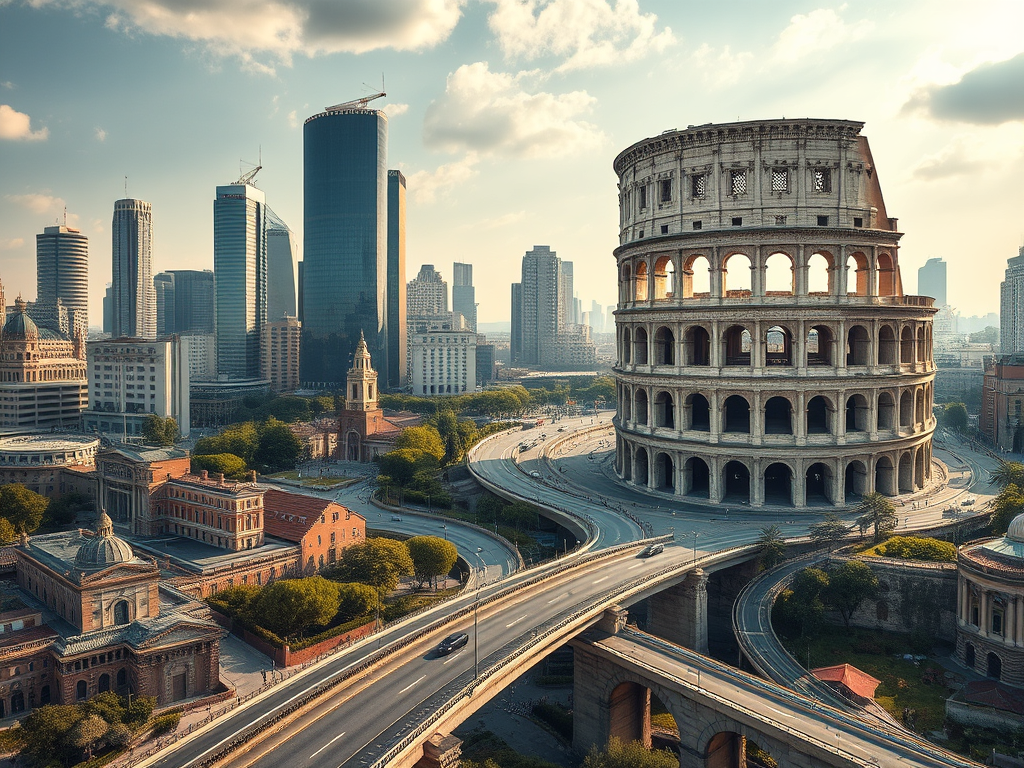
Imagine a world without tall buildings reaching for the sky, without smooth roads connecting cities, or without strong bridges crossing wide rivers. It’s hard to picture, right? We see these things every day, and they seem so normal. But think about what makes them possible. Often, the unsung hero is a simple mixture of rock, sand, water, and a special kind of glue called cement: concrete!
Concrete might seem plain and a little grey, but it’s one of the most important inventions in human history. It’s been around for thousands of years, evolving from ancient times to the super-strong stuff we use today. It’s not just a building material; it’s a world-shaper. It has allowed us to build bigger, stronger, and more complex things than ever before. It has influenced where and how we live, travel, and work.
In this article, we’re going to explore the incredible story of how this humble material became a superpower, changing our world in ten amazing ways. Get ready to discover the secrets hidden within that grey mixture and understand why we literally build our world on concrete!
1. The Ancient Romans Mastered Super-Strong Concrete
Let’s travel back in time over 2,000 years! Imagine the powerful Roman Empire building their incredible structures that still stand today. How did they do it? They used concrete! But not exactly the same kind we use now. Roman concrete was special. They mixed volcanic ash with lime, water, and rocks. This mix created a material that was incredibly durable, especially when exposed to water.
Think about the Colosseum in Rome, where gladiators fought and huge crowds cheered. Parts of it are made of Roman concrete and are still standing! Even more impressive are the ancient Roman aqueducts – massive stone channels that carried fresh water over long distances to cities. The Romans used concrete to build sturdy foundations and waterproof linings for these aqueducts, a task that would have been much harder with just stone. Their mastery of concrete allowed them to build things that lasted for centuries, shaping their empire and leaving a legacy that still teaches engineers today. This early use of concrete shows just how powerful and long-lasting this material could be, setting the stage for its future impact on the world and demonstrating why concrete is important for lasting structures. The secrets of this strong, historical building material allowed the Romans to achieve engineering marvels.
2. Letting Buildings Reach for the Sky
Before concrete became widely used, building really tall structures was a massive challenge. Imagine trying to stack stones higher and higher – it gets wobbly and difficult! While materials like steel are also crucial for skyscrapers, concrete plays a vital role, especially in creating strong foundations and structural elements like columns and floors. When concrete is combined with steel (called reinforced concrete), it becomes incredibly strong and can handle immense weight and pressure.
This combination was a game-changer. It meant engineers could design buildings that were much taller and more stable than ever before. Think about the early skyscrapers that started appearing in cities like New York and Chicago in the late 1800s and early 1900s. While steel provided the skeleton, concrete was essential for floors, fireproofing, and foundations that could support the enormous weight. It’s like concrete provided the solid muscles and skin around the steel bones. This ability to build vertically meant cities could grow upwards, fitting more people and businesses into smaller areas. It literally changed the skyline of the world and transformed urban living, showing how concrete infrastructure enabled new possibilities in construction.
3. Paving the Way for Modern Travel
Have you ever ridden your bike on a smooth path or driven in a car on a straight, even road? Much of that comfortable travel is thanks to concrete. While asphalt is also used for roads, concrete is often preferred for busy highways, airport runways, and heavy-duty industrial areas because of its incredible strength and durability. It can withstand the constant pounding of heavy trucks and thousands of cars every day for decades.
Before widespread concrete roads, travel was often a bumpy, dusty, or muddy mess. Getting from one town to another, especially with goods to trade, could be slow and difficult. The invention and widespread use of concrete paving transformed transportation. It allowed for faster, more reliable travel, making it easier to move people and goods across vast distances. This helped economies grow, connected communities that were once isolated, and paved the way for the automobile age. Think of the massive highway systems crisscrossing continents – they are huge examples of how concrete infrastructure has fundamentally changed how we navigate our world and facilitated modern transportation networks using materials for construction like this incredibly strong mix.
4. Creating the Foundations of Public Health
It might not be the first thing you think of, but concrete has played a crucial role in improving public health and sanitation around the world. Before modern plumbing and sewage systems, waste disposal was a major problem in crowded areas, leading to the spread of diseases. Concrete provided a waterproof, durable, and relatively inexpensive material to build essential infrastructure that keeps us healthy.
Think about underground sewer pipes that carry waste away from our homes – many of these are made of concrete. Water treatment plants, which clean our water before it comes out of the tap, rely heavily on concrete structures like tanks and channels. Even simple things like concrete floors in homes and public buildings are easier to clean and more hygienic than dirt or wood floors, which can harbor pests and germs. Concrete also helps build reservoirs and dams that store clean drinking water. By providing a reliable material for these vital systems, concrete helped cities become cleaner, safer places to live, dramatically reducing the spread of many infectious diseases and highlighting a less obvious use of concrete in our daily lives.
5. Building Dams to Control Water Power
Water is a powerful force, and controlling it is essential for irrigation, generating electricity, and preventing floods. Dams are massive barriers built across rivers to hold back vast amounts of water, creating reservoirs. To build something strong enough to resist the immense pressure of millions of gallons of water, engineers need an incredibly robust material. That material is often concrete.
Large modern dams like the Hoover Dam in the United States or the Three Gorges Dam in China are astonishing examples of concrete construction. These structures are colossal, containing millions of cubic yards of concrete. They are designed to last for centuries, withstanding constant water pressure and the forces of nature. These concrete giants allow us to store water for farming in dry areas, generate clean hydroelectric power, and protect communities downstream from devastating floods. Building such massive structures would be almost impossible without the strength and versatility of concrete, demonstrating another critical use of concrete in modern life and its role in harnessing natural resources through large-scale concrete infrastructure projects.
6. Making Homes and Buildings More Affordable
In many parts of the world, concrete is a relatively affordable and widely available building material. This has made it possible to construct homes, schools, hospitals, and other essential buildings much faster and more economically than using only traditional materials like stone or brick, especially on a large scale. While fancy buildings might use other materials, concrete provides a solid, basic structure for many types of construction.
This affordability means that more people can access safe and durable housing. Entire neighborhoods and cities have been built using concrete frameworks and walls. Think about apartment buildings in busy cities or simple, sturdy homes in developing areas – concrete often forms the core structure. This widespread use has helped house growing populations and provide essential facilities for communities. The relative ease of working with concrete (compared to cutting and shaping large stones, for example) also speeds up construction times, making projects more efficient. This aspect of concrete highlights its significant impact on society by providing accessible building options and supporting urban development with cost-effective materials for construction.
7. Allowing for Creative and Complex Shapes
While we often think of concrete as being used for straight walls and flat floors, it’s actually incredibly versatile and can be molded into almost any shape imaginable before it hardens. This property has given architects and engineers immense creative freedom, allowing for the design of stunning and complex structures that would be difficult or impossible to build with rigid materials like stone or wood alone.
Think about the graceful curves of a modern art museum, the unique shape of an opera house, or the elegant arches of a bridge. Concrete can be poured into forms to create sweeping curves, intricate patterns, and dramatic cantilevers (parts of a building that stick out without support from below). Reinforced concrete, in particular, allows for thinner, lighter structures that can still be incredibly strong. This ability to be shaped has transformed architecture, moving beyond simple boxes and allowing for breathtaking designs that capture the imagination. It shows that concrete isn’t just about brute strength; it’s also a material for artistic expression and innovative building techniques.
8. Resisting Fire and the Forces of Nature
Safety is paramount when building, and concrete offers excellent protection against some of the most destructive forces: fire and natural disasters like storms and floods. Concrete is non-combustible, meaning it doesn’t catch fire or burn. This makes it a critical material for creating fire-resistant walls, floors, and structural elements in buildings, providing crucial time for people to escape during a fire.
Beyond fire, concrete structures are also highly resistant to wind damage from hurricanes and tornadoes, and they can withstand the impact of floods much better than many other materials. While no building material is indestructible, the sheer mass and strength of concrete provide a high level of resilience against extreme weather events. This durability and resistance mean that buildings and infrastructure made of concrete are often safer and last longer, reducing the need for frequent repairs or rebuilding after disasters. It’s a material that provides security and peace of mind, showcasing another vital reason why concrete is important for reliable and safe construction in various environments, making it a key component in resilient concrete infrastructure.
9. Powering Industry and Trade
The growth of modern industry and global trade relies heavily on infrastructure built with concrete. Factories, warehouses, power plants, and port facilities all require strong, durable foundations and structures to operate efficiently. Concrete provides the ideal base for heavy machinery, storage areas, and the constant movement of goods.
Think about a busy shipping port: enormous cranes move heavy containers, and trucks and trains transport goods to and from the docks. The docks themselves, the storage yards, and the connecting roads and rail lines are all built to withstand immense weight and constant activity. Concrete is essential for creating these robust, long-lasting industrial environments. Similarly, factories need strong floors and walls to support machinery and production lines. The reliability and strength of concrete have been fundamental to the expansion of industrial capabilities and the facilitation of global trade, allowing for the construction of the large-scale facilities needed to produce and move goods around the world. This highlights its less visible but critical role in the economy and uses of concrete in industrial settings.
10. Connecting the World with Tunnels and Bridges
Imagine trying to get through a mountain or across a wide canyon without a tunnel or a bridge. It would be a much longer and harder journey! Tunnels and bridges are essential connections that overcome geographical barriers, and concrete is a vital material in their construction, especially for larger and more complex projects.
Concrete is used to create the strong linings of tunnels, supporting the earth above and ensuring safety. For bridges, concrete is used in foundations, piers (the supports holding up the bridge deck), and often the bridge deck itself. Reinforced concrete allows for the construction of incredibly long and strong bridge spans that can carry heavy traffic. These structures connect communities, enable commerce, and make travel across challenging terrain possible. They are feats of engineering that rely on the strength and durability of concrete to literally bridge gaps and open up new routes, demonstrating how concrete infrastructure connects places and people, shaping our ability to travel and interact across varied landscapes.
Concrete might be grey and often overlooked, but its impact on the world is anything but dull. From the ancient wonders of Rome to the soaring skyscrapers and vast networks of roads and bridges that define our modern landscape, concrete has been a silent, strong force shaping human civilization. It has allowed us to build bigger, stronger, safer, and more connected communities, fundamentally changing where we live, how we travel, and what we can create. The history of concrete is truly the history of building a modern world.
Further Reading
- Building Big by David Macaulay (Explores large structures like bridges, tunnels, and dams, often featuring concrete)
- The Way Things Work Now by David Macaulay (Explains the principles behind various machines and structures, including construction)
- Skyscrapers: A History of the World’s Most Famous Buildings by Judith Dupre (Focuses on tall buildings, where concrete plays a vital role)
- How Cities Work by Libby Purves and Stephen Biesty (Looks at the hidden systems of cities, including infrastructure like sewers and roads)
Here at Zentara.blog, our mission is to take those tricky subjects and unlock them, making knowledge exciting and easy to grasp for everyone. But the adventure doesn’t stop on this page! We’re constantly exploring new frontiers and sharing discoveries across the digital universe.
Want to dive deeper into more mind-bending Top 10s and keep expanding your world? Come join us on our other platforms – we’ve got unique experiences waiting for you on each one!
- Get inspired by visual wonders and bite-sized facts: See the world through Zentara’s eyes on Pinterest! Pin our fascinating facts and stunning visuals to your own boards. Explore Pins on Pinterest: https://uk.pinterest.com/zentarablog/
- Discover quick insights and behind-the-scenes peeks: Hop over to Tumblr for snippets, quotes, and unique content you won’t find anywhere else. It’s a different flavour of discovery! Follow the Fun on Tumblr: https://www.tumblr.com/zentarablog
- Ready for deep dives you can listen to or watch? We’re bringing our accessible approach to video and potentially audio! Subscribe to our YouTube channel and tune into future projects that make learning pop! Subscribe on YouTube: https://www.youtube.com/@ZentaraUK
- Seeking even more knowledge in one place? We’ve compiled some of our most popular topic deep dives into fantastic ebooks! Find them on Amazon and keep the learning journey going anytime, anywhere. Find Our Ebooks on Amazon: https://www.amazon.co.uk/s?k=Zentara+UK&ref=nb_sb_noss
- Connect with us and fellow knowledge seekers: Join the conversation on BlueSky! We’re sharing updates, thoughts, and maybe even asking you what wonders we should explore next. Chat with Us on BlueSky: https://bsky.app/profile/zentarablog.bsky.social
- Perfect for learning on the move! We post multiple 10-minute podcasts per day on Spotify. Pop on your headphones and fill your day with fascinating facts while you’re out and about! Listen on Spotify: https://open.spotify.com/show/3dmHbKeDufRx95xPYIqKhJ
Every click helps us keep bringing honest, accessible knowledge to everyone. Thanks for exploring with us today – see you out there in the world of discovery!




Leave a Reply