
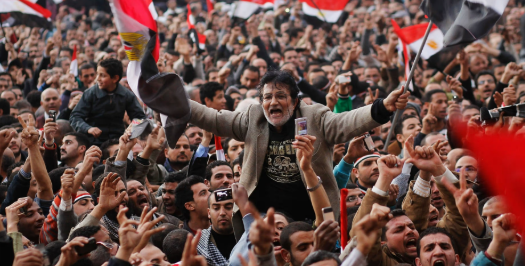
The Arab Spring was a series of pro-democracy uprisings, protests, and armed rebellions that swept across much of the Arab world beginning in late 2010. For decades, the Middle East and North Africa had been characterized by autocratic regimes, limited political freedoms, widespread corruption, and often stagnant economies struggling to provide opportunities for a rapidly growing and increasingly educated youth population. These underlying grievances created a powder keg, waiting for a spark.
That spark came on December 17, 2010, in Tunisia, when a young street vendor named Mohamed Bouazizi set himself on fire in protest of police harassment and the confiscation of his vegetable cart. His desperate act of self-immolation resonated deeply with millions suffering from similar indignities and frustrations across the region. News of the Tunisian protests, amplified by the nascent power of social media, quickly spread, inspiring similar movements and demonstrations in neighboring countries.
The Arab Spring represented a collective outcry against long-standing authoritarian rule, demanding dignity, freedom, economic justice, and greater political participation. While initially promising, leading to the overthrow of several long-serving dictators, the outcomes varied dramatically from country to country. Some nations experienced relatively peaceful transitions towards more democratic governance, while others descended into protracted civil wars, widespread instability, and humanitarian crises. The movement fundamentally reshaped the political landscape of the Middle East and North Africa, highlighting both the deep-seated desire for change and the complex challenges inherent in achieving it in a region characterized by diverse populations, external influences, and entrenched power structures.
This article delves into ten key facts about the Arab Spring, exploring its origins, its spread, and its varied, often profound, consequences across the region.
1. The Spark in Tunisia: Mohamed Bouazizi’s Self-Immolation
The Arab Spring began on December 17, 2010, in the small, unassuming city of Sidi Bouzid, Tunisia, with the self-immolation of Mohamed Bouazizi, a 26-year-old street vendor. Bouazizi, frustrated by constant police harassment and the confiscation of his unlicenced fruit and vegetable cart – his sole means of income – set himself on fire in front of a local government office. His desperate act, driven by a deep sense of injustice, quickly ignited protests in his hometown that rapidly spread across Tunisia. Bouazizi’s death on January 4, 2011, intensified the public outcry, leading to nationwide demonstrations that ultimately forced long-time authoritarian President Zine El Abidine Ben Ali to flee the country on January 14, 2011. This swift and unexpected success, often referred to as the “Jasmine Revolution,” became the initial inspiration for similar movements throughout the Arab world.
2. A Digital Revolution: The Role of Social Media
While not the sole cause, social media played an unprecedented role in the Arab Spring uprisings, particularly in their early stages. Platforms like Facebook, Twitter, and YouTube became crucial tools for activists to organize protests, share information, document abuses, and mobilize support, bypassing state-controlled media. News of events in Tunisia, for instance, spread like wildfire through online networks, inspiring solidarity and action in Egypt, Libya, and beyond. Videos of police brutality and large-scale demonstrations went viral, galvanizing local populations and attracting international attention. This digital connectivity fostered a sense of collective identity and empowerment among protestors, enabling rapid dissemination of real-time updates and fostering coordination among diverse groups. However, it’s also important to note that as the uprisings progressed, regimes learned to counter these tools, often by shutting down internet access or using social media for surveillance and propaganda.
3. Economic Grievances as a Root Cause: Jobs, Poverty, and Corruption
Beneath the surface of political repression, deep-seated economic grievances fueled the widespread discontent that characterized the Arab Spring. High unemployment, particularly among educated youth, rampant poverty, and systemic corruption were critical factors. Many regimes were perceived as kleptocracies, where wealth was concentrated in the hands of ruling elites and their cronies, leaving little opportunity for ordinary citizens. The increasing cost of living, coupled with a lack of social mobility, created a sense of hopelessness and frustration, especially for young people. Mohamed Bouazizi’s act of self-immolation perfectly encapsulated this economic despair, becoming a powerful symbol of the millions struggling to earn a dignified living in economies rigged against them. These economic hardships, combined with a lack of political voice, formed a potent cocktail for popular uprisings.
4. Overthrowing Autocrats: Leaders Deposed in Several Nations
One of the most immediate and significant impacts of the Arab Spring was the successful overthrow of long-standing authoritarian leaders in several countries. Following Tunisia’s Zine El Abidine Ben Ali, Egypt’s Hosni Mubarak, who had ruled for nearly 30 years, resigned in February 2011 after 18 days of massive protests in Tahrir Square. In Libya, Muammar Gaddafi, who had been in power for over four decades, was overthrown and killed in October 2011 after a civil war and NATO intervention. Yemen’s Ali Abdullah Saleh, president for 33 years, eventually stepped down in February 2012, though the country later descended into civil war. These dramatic leadership changes demonstrated the fragility of seemingly impregnable autocratic regimes and inspired hope for widespread democratic transitions across the region.
5. Tunisia: The Sole Success Story (Relatively)
Among the countries significantly affected by the Arab Spring, Tunisia stands out as the most successful (albeit imperfect) example of a transition to a more democratic system. After Ben Ali’s ouster, Tunisia embarked on a path of constitutional reform, held free and fair elections, and established new democratic institutions. The country adopted a progressive new constitution in 2014, enshrining civil liberties and women’s rights. While Tunisia has faced ongoing economic challenges, political instability, and a resurgence of authoritarian tendencies in recent years, it largely avoided the widespread violence and civil war that plagued many of its neighbors. This relative success is often attributed to a more cohesive civil society, a professional military that remained largely neutral, and a tradition of political compromise.
6. Egypt: From Revolution to Military Rule
Egypt’s experience was a rollercoaster of hope and disappointment. After Hosni Mubarak’s removal, the country held its first democratic presidential elections, which brought Mohamed Morsi of the Muslim Brotherhood to power in June 2012. However, Morsi’s presidency was short-lived, marked by political polarization and widespread discontent over his perceived Islamist agenda and economic mismanagement. In July 2013, following massive protests against Morsi, the military, led by General Abdel Fattah el-Sisi, staged a coup, removing Morsi from power. El-Sisi later won presidential elections and has since consolidated power, leading to a more authoritarian government than even Mubarak’s, with a severe crackdown on dissent and human rights. Egypt’s trajectory highlighted the complex challenges of transitioning from authoritarianism and the potential for a “deep state” to reassert control.
7. Libya: State Collapse and Civil War
In Libya, the uprising against Muammar Gaddafi quickly escalated into a full-scale civil war, drawing in international intervention, including a NATO-led air campaign. While Gaddafi’s regime was ultimately toppled, the country descended into chaos. The absence of strong state institutions, coupled with a proliferation of armed militias and tribal divisions, led to a power vacuum and protracted conflict. Libya remains deeply fractured, plagued by rival governments, competing militias, and the presence of extremist groups, leading to a humanitarian crisis and ongoing instability. The Libyan experience serves as a stark warning about the potential consequences of regime change without adequate planning for post-conflict governance and security.
8. Syria: A Protracted and Devastating Civil War
The protests in Syria, which began in March 2011, were met with an exceptionally brutal crackdown by President Bashar al-Assad’s regime. What started as peaceful demonstrations quickly transformed into an armed rebellion and then a devastating, multi-sided civil war. The Syrian conflict drew in regional and international powers, including Russia, Iran, the United States, and various Gulf states, each supporting different factions. The war has led to one of the worst humanitarian crises of the 21st century, with hundreds of thousands killed, millions displaced internally and externally, and vast swathes of the country destroyed. The rise of extremist groups like ISIS further complicated the conflict, turning Syria into a complex battleground with no clear end in sight.
9. Bahrain and Yemen: Crushed Uprisings and Ongoing Instability
While Tunisia, Egypt, Libya, and Syria garnered the most international attention, other countries also experienced significant Arab Spring-inspired unrest with varied outcomes. In Bahrain, a Shi’a majority-led uprising against the Sunni monarchy in February 2011 was brutally suppressed with the help of Saudi Arabian and Emirati forces. The protests were largely crushed, and the government imposed severe restrictions on dissent, leading to ongoing human rights concerns. In Yemen, the departure of President Ali Abdullah Saleh did not bring stability. The country plunged into a devastating civil war involving the Houthi movement, backed by Iran, and a Saudi-led coalition. This conflict has led to one of the world’s worst humanitarian disasters, marked by widespread famine and disease.
10. The Enduring Legacy: Shattered Myths and Lingering Unrest
More than a decade after its inception, the legacy of the Arab Spring remains complex and contested. While it did not usher in a wave of democracy across the region, it undeniably shattered the myth of invulnerable authoritarian rule in the Arab world. It demonstrated that ordinary citizens could rise up and challenge entrenched power structures, inspiring ongoing calls for reform and greater accountability. However, the uprisings also exposed deep societal fissures, empowered extremist groups in some areas, and led to increased instability and human suffering in others. The long-term consequences, including intensified regional rivalries and new forms of authoritarianism, continue to unfold, proving that the desire for dignity and justice in the Middle East is an enduring force, even if its path remains fraught with challenges.
Further Reading
- The Battle for the Arab Spring: Revolution, Counterrevolution and the Prospects for Democracy in the Middle East by Lin Noueihed and Alex Warren
- The New Middle East: The World After the Arab Spring by Paul Danahar
- Black Wave: Saudi Arabia, Iran, and the Forty-Year Rivalry That Unraveled the Middle East by Kim Ghattas (Covers broader regional context including post-Arab Spring developments)
- Tunisia: An Arab Anomaly by Safwan M. Masri
- A Rage for Order: The Middle East in Turmoil, from Tahrir Square to ISIS by Robert F. Worth
Here at Zentara.blog, our mission is to take those tricky subjects and unlock them, making knowledge exciting and easy to grasp for everyone. But the adventure doesn’t stop on this page! We’re constantly exploring new frontiers and sharing discoveries across the digital universe. Want to dive deeper into more mind-bending Top 10s and keep expanding your world? Come join us on our other platforms – we’ve got unique experiences waiting for you on each one!
Get inspired by visual wonders and bite-sized facts: See the world through Zentara’s eyes on Pinterest!
Pin our fascinating facts and stunning visuals to your own boards. Explore Pins on Pinterest: https://uk.pinterest.com/zentarablog/
Discover quick insights and behind-the-scenes peeks: Hop over to Tumblr for snippets, quotes, and unique content you won’t find anywhere else. It’s a different flavour of discovery! Follow the Fun on Tumblr: https://www.tumblr.com/zentarablog
Ready for deep dives you can listen to or watch? We’re bringing our accessible approach to video and potentially audio! Subscribe to our YouTube channel and tune into future projects that make learning pop! Subscribe on YouTube: https://www.youtube.com/@ZentaraUK
Seeking even more knowledge in one place? We’ve compiled some of our most popular topic deep dives into fantastic ebooks! Find them on Amazon and keep the learning journey going anytime, anywhere. Find Our Ebooks on Amazon: https://www.amazon.co.uk/s?k=Zentara+UK&ref=nb_sb_noss
Connect with us and fellow knowledge seekers: Join the conversation on BlueSky! We’re sharing updates, thoughts, and maybe even asking you what wonders we should explore next. Chat with Us on BlueSky: https://bsky.app/profile/zentarablog.bsky.social
Perfect for learning on the move! We post multiple 10-minute podcasts per day on Spotify. Pop on your headphones and fill your day with fascinating facts while you’re out and about! Listen on Spotify: https://open.spotify.com/show/3dmHbKeDufRx95xPYIqKhJFollow us on Instagram for bytesize knowledge! We post multiple posts per day on our official Instagram account. https://www.instagram.com/zentarablog/ Every click helps us keep bringing honest, accessible knowledge to everyone. Thanks for exploring with us today – see you out there in the world of discovery!




Leave a Reply