
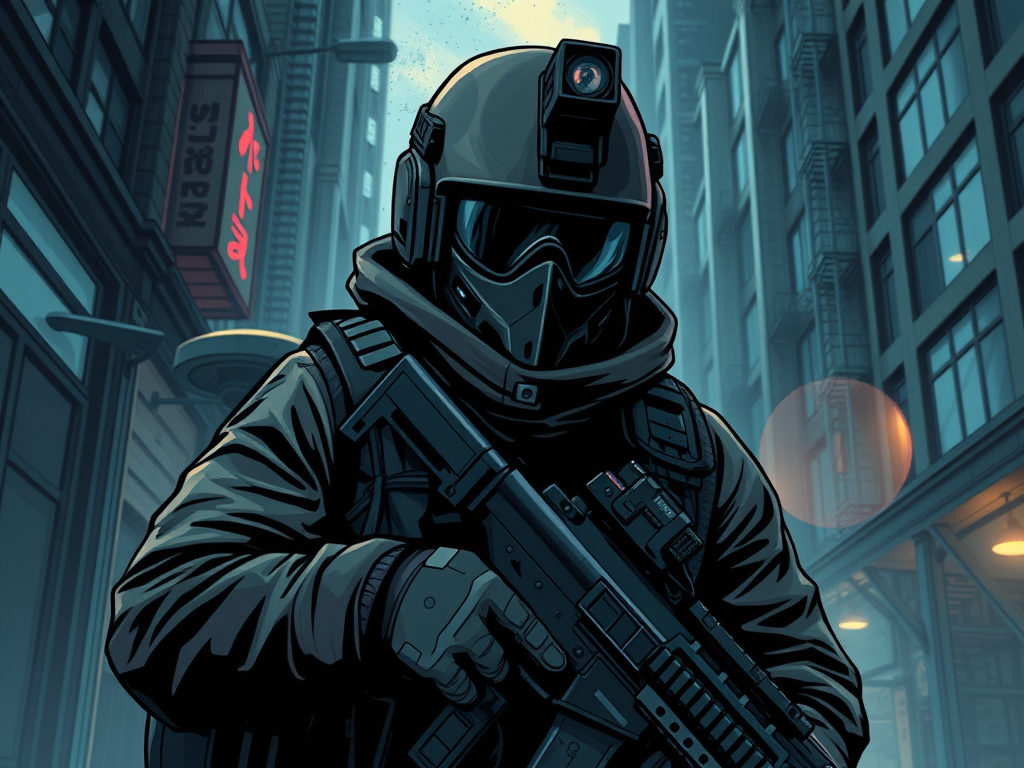
In the shadowy world of modern warfare and counter-terrorism, information is the ultimate weapon. While the public is familiar with the direct-action prowess of units like the SAS and SBS, a third, lesser-known pillar of the UK’s Special Forces (UKSF) operates almost entirely in the unseen. This is the Special Reconnaissance Regiment (SRR), a unit whose operators are masters of covert surveillance and intelligence gathering. Formed in the crucible of the 21st-century’s new and ambiguous conflicts, the SRR is the eyes and ears of the British military, often working in the grey zones where conventional forces cannot. They are the silent watchers, blending into the background to provide the critical intelligence that shapes missions and saves lives. To understand the SRR is to understand a fundamental shift in modern conflict, where knowing your enemy is often more important than confronting them head-on. Let’s delve into ten fascinating facts about this enigmatic and elite regiment.
1. A Modern Unit Forged from Decades of Covert Experience
While the SRR was officially formed on April 6, 2005, its operational DNA can be traced back decades, particularly to the shadowy conflict in Northern Ireland. The unit inherited its core skills from the 14th Intelligence Company, also known as “The Det.” This legendary covert unit was comprised of male and female soldiers who specialized in plain-clothes surveillance operations against paramilitary groups during The Troubles. They were the pioneers of the techniques that the SRR now masters on a global scale. The creation of the SRR was a formal recognition by the Ministry of Defence that the nature of warfare had changed. The “War on Terror” presented a new kind of enemy, one that didn’t wear a uniform or operate from a fixed position. To combat these threats, a dedicated, Tier 1 special forces unit specializing in high-stakes surveillance and reconnaissance was deemed essential. The SRR, therefore, isn’t just a new regiment; it’s the culmination of hard-won experience, a formalization of a capability that the British Army had been honing in secret for over thirty years. It represents an evolution, taking the vital lessons of close-target reconnaissance from Belfast and Derry to the complex battlefields of the 21st century.
2. The Elusive Motto: “Reconnaissance” Says It All
Unlike the famed mottos of its sister units—the SAS’s “Who Dares Wins” and the SBS’s “By Strength and Guile”—the Special Reconnaissance Regiment’s motto is simply “Reconnaissance.” This might seem understated, but it is a powerful statement of intent and focus. The choice reflects the unit’s core purpose: the relentless and discreet gathering of intelligence. There is no bravado, no hint of aggression, only a singular dedication to their craft. This speaks volumes about the mindset of an SRR operator. Their victory is not found in a dramatic firefight, but in the successful acquisition of information that prevents a conflict, identifies a key enemy figure, or provides the critical “pattern of life” intelligence that allows other special forces units to strike with surgical precision. The motto embodies the quiet professionalism and the low-profile nature of the regiment. Their work is done in the shadows, and their success is often measured by events that don’t happen—a bombing averted, an ambush avoided—all because of the information they gathered. “Reconnaissance” is a testament to the idea that in modern warfare, the most powerful weapon is knowledge.
3. Selection Is Open to All, But Mastered by Few
A truly fascinating aspect of the SRR is its open-door policy for applicants. Unlike many other special forces units that traditionally drew from specific combat arms, any serving member of the British Armed Forces—man or woman, regular or reserve—can volunteer for SRR selection. This inclusivity is a strategic advantage. The regiment understands that the skills required for elite surveillance are not confined to a particular gender or military background. An operator’s value lies in their intellect, mental resilience, and their ability to blend into any environment. In fact, female operators are among the SRR’s most effective assets, able to operate in situations and cultures where a male presence would arouse immediate suspicion. The selection process, however, is notoriously difficult and shrouded in secrecy. It is designed to test not just physical fitness, but extreme mental fortitude, observation skills, and the psychological robustness to handle the pressures of prolonged, high-stakes covert operations. Candidates are put through a grueling series of assessments that filter for an almost superhuman level of attention to detail and an unbreakable character, ensuring that only the most suitable individuals earn the right to wear the SRR’s distinctive emerald grey beret.
4. Masters of “Human Environment” Reconnaissance
The SRR’s specialty is often described as “human environment” reconnaissance and surveillance. This is a delicate and highly advanced skillset that goes far beyond simply hiding in a bush with a pair of binoculars. SRR operators are experts at blending into civilian populations to conduct close-target reconnaissance. This might involve setting up covert observation posts in urban apartments, operating from vehicles, or simply walking the streets, appearing as just another face in the crowd. Their mission is to gather “pattern of life” intelligence—to understand the daily routines, contacts, and habits of a high-value target. They use a combination of traditional human intelligence (HUMINT) techniques and cutting-edge technology, including advanced listening devices, micro-cameras, and sophisticated tracking equipment. Think of them as the ultimate method actors. An SRR operator must not only look the part but live it, convincingly adopting a cover story and maintaining it under potentially lethal scrutiny for weeks or even months at a time. This deep immersion is what allows them to gather the intimate, granular intelligence that is impossible to obtain from a drone feed or satellite image.
5. A Key Piece of the “Tier 1” UKSF Trinity
The Special Reconnaissance Regiment is a “Tier 1” unit, placing it on an equal footing with the Special Air Service (SAS) and the Special Boat Service (SBS). Together, these three units form the holy trinity of UK Special Forces, controlled by the Director Special Forces. While the SAS and SBS are primarily the “strikers” or “assaulters”—the units called upon for direct action, hostage rescue, and offensive operations—the SRR is the dedicated “finder” or “enabler.” There is a symbiotic relationship between the three. The SRR will often be deployed first, tasked with locating, identifying, and monitoring a target. They provide the detailed, real-time intelligence that allows the SAS or SBS to plan and execute a raid with maximum effectiveness and surprise. For example, the SRR might spend weeks confirming the exact location of a terrorist leader, mapping their routines, and identifying any threats around the location. Only when this complete intelligence picture is built will the SAS or SBS be sent in to conduct the “kinetic” part of the mission. This integrated approach ensures that UKSF operations are intelligence-led, making them more precise, more effective, and ultimately, safer for the operators involved.
6. The “Badge” Is Rarely Seen, and That’s the Point
The cap badge of the SRR is a striking and symbolic design. It features the Corinthian helmet, a classic symbol of the warrior, but with the eye slit covered, representing the secretive and observant nature of the unit’s work. Behind the helmet is the Excalibur sword, symbolizing the elite status and cutting-edge capability of the regiment. While this badge exists, it is rarely worn in public, and the identity of SRR operators is a closely guarded secret. Anonymity is their greatest protection. Unlike conventional soldiers, their effectiveness—and their personal safety—depends on their ability to remain unknown. They operate under a strict code of secrecy, and their names and faces are not public knowledge. This low profile is a core tenet of their operational security. If their identities were compromised, they would be unable to perform their primary function of blending into the background, and they and their families could become targets for retribution. The fact that the SRR is often referred to as the “SAS’s secret sister regiment” is a testament to how successfully they have maintained this veil of secrecy.
7. Pioneers in Technical Surveillance
While human observation skills are paramount, the SRR is also at the forefront of technical surveillance. The regiment has access to and helps develop some of the most advanced surveillance technology in the world. This includes state-of-the-art optical and listening devices, miniature unmanned aerial vehicles (micro-drones) for discreet observation, and sophisticated electronic warfare tools for intercepting communications. SRR operators are trained to be masters of this “spy tech,” deploying it in creative ways to monitor targets without being detected. They might use a micro-camera disguised as a rock to observe a compound or employ highly sensitive microphones to listen to conversations through walls. This fusion of human intelligence with cutting-edge technology is what gives the SRR its decisive edge. It allows a small team to gather a vast amount of information with a minimal physical footprint, reducing the risk of compromise. They are constantly adapting and innovating, ensuring they stay several steps ahead of their adversaries in the ever-evolving technological arms race of modern espionage.
8. A Global Remit: From Hostile States to Home Soil
The “Special” in Special Reconnaissance Regiment refers not just to their skills, but to their global remit. The SRR is not confined to a single theatre of war. It is an asset that can be deployed by the UK government anywhere in the world where high-fidelity intelligence is required. They have been reported to have operated in Iraq and Afghanistan, tracking insurgents and bomb-makers, and in other global hotspots like Libya and Syria. Their skills are equally applicable to counter-espionage and national security tasks. The SRR provides a capability that can be used to monitor the activities of hostile state intelligence services or to track terrorist cells operating within the UK itself. This flexibility makes them an invaluable tool of national power. Whether they are observing a warlord in a failed state, tracking a terrorist network in a bustling metropolis, or supporting a police operation in a British city, the core task remains the same: to deliver clarity and understanding in complex and dangerous environments, providing decision-makers with the intelligence they need to act.
9. Not Just Spies, But Highly Trained Soldiers
It is a common misconception to think of the SRR as simply “spies” in uniform. While their primary role is intelligence gathering, every operator is a highly trained Special Forces soldier first and foremost. They undergo rigorous and advanced combat training, including weapons handling, close-quarter battle (CQB), and battlefield medical skills. This is a crucial necessity of their work. SRR operators often work in small teams, deep within hostile territory, and far from friendly support. If their cover is blown or a situation turns violent, they must have the skills and aggression to fight their way out of trouble. They are not passive observers; they are warriors trained for the worst-case scenario. This combat capability ensures they can survive in the high-threat environments they are sent to and gives them the confidence to operate effectively under extreme pressure. They are the epitome of the “quiet professional,” possessing the subtle skills of a spy and the lethal capabilities of a Tier 1 soldier.
10. The Unseen Role in High-Profile Events
The very nature of the SRR’s work means that its successes are almost never publicised. However, it is widely acknowledged within defence circles that the regiment has played a crucial, albeit unseen, role in many of the UK’s most significant security operations of the past two decades. When a high-profile terrorist plot is foiled, or a key hostile operative is captured, it is often the culmination of a long and patient surveillance operation conducted by the SRR. They provide the foundational intelligence—the who, what, where, and when—that makes a successful outcome possible. For example, during the 2012 London Olympics, the SRR was a key component of the massive security apparatus, providing covert surveillance to detect and deter potential threats. While the headlines may focus on the police or other special forces units who conduct the final action, the quiet, meticulous work of the SRR is the invisible thread that often runs through the entire operation. Their contribution, though uncredited, is a vital part of the UK’s national security architecture.
Further Reading
For those interested in the clandestine world of UK Special Forces and military intelligence, these books provide a deeper, though necessarily limited, insight:
- 14 Intelligene Company: The Inside Story of an Elite Covert Surveillance Unit by an anonymous former operator (writing as Frank Hughes)
- Stab-Proof Scarecrows: A Memoir of the Secret War in The Troubles by an anonymous former operator (writing as Abe Tucker)
- The Unseen War: A Reconnaissance and Surveillance Drifter in Northern Ireland by an anonymous former operator (writing as Mark L.
- SAS: Who Dares Wins – Leadership Secrets from the Special Forces by Anthony Middleton, Jason Fox, Matthew Ollerton, and Colin Maclachlan (While focused on the SAS, it provides context on the UKSF mindset).
Here at Zentara.blog, our mission is to take those tricky subjects and unlock them, making knowledge exciting and easy to grasp for everyone. But the adventure doesn’t stop on this page! We’re constantly exploring new frontiers and sharing discoveries across the digital universe. Want to dive deeper into more mind-bending Top 10s and keep expanding your world? Come join us on our other platforms – we’ve got unique experiences waiting for you on each one!
Get inspired by visual wonders and bite-sized facts: See the world through Zentara’s eyes on Pinterest!
Pin our fascinating facts and stunning visuals to your own boards. Explore Pins on Pinterest: https://uk.pinterest.com/zentarablog/
Discover quick insights and behind-the-scenes peeks: Hop over to Tumblr for snippets, quotes, and unique content you won’t find anywhere else. It’s a different flavour of discovery! Follow the Fun on Tumblr: https://www.tumblr.com/zentarablog
Ready for deep dives you can listen to or watch? We’re bringing our accessible approach to video and potentially audio! Subscribe to our YouTube channel and tune into future projects that make learning pop! Subscribe on YouTube: https://www.youtube.com/@ZentaraUK
Seeking even more knowledge in one place? We’ve compiled some of our most popular topic deep dives into fantastic ebooks! Find them on Amazon and keep the learning journey going anytime, anywhere. Find Our Ebooks on Amazon: https://www.amazon.co.uk/s?k=Zentara+UK&ref=nb_sb_noss
Connect with us and fellow knowledge seekers: Join the conversation on BlueSky! We’re sharing updates, thoughts, and maybe even asking you what wonders we should explore next. Chat with Us on BlueSky: https://bsky.app/profile/zentarablog.bsky.social
Perfect for learning on the move! We post multiple 10-minute podcasts per day on Spotify. Pop on your headphones and fill your day with fascinating facts while you’re out and about! Listen on Spotify: https://open.spotify.com/show/3dmHbKeDufRx95xPYIqKhJFollow us on Instagram for bytesize knowledge! We post multiple posts per day on our official Instagram account. https://www.instagram.com/zentarablog/ Every click helps us keep bringing honest, accessible knowledge to everyone. Thanks for exploring with us today – see you out there in the world of discovery!


Leave a Reply