
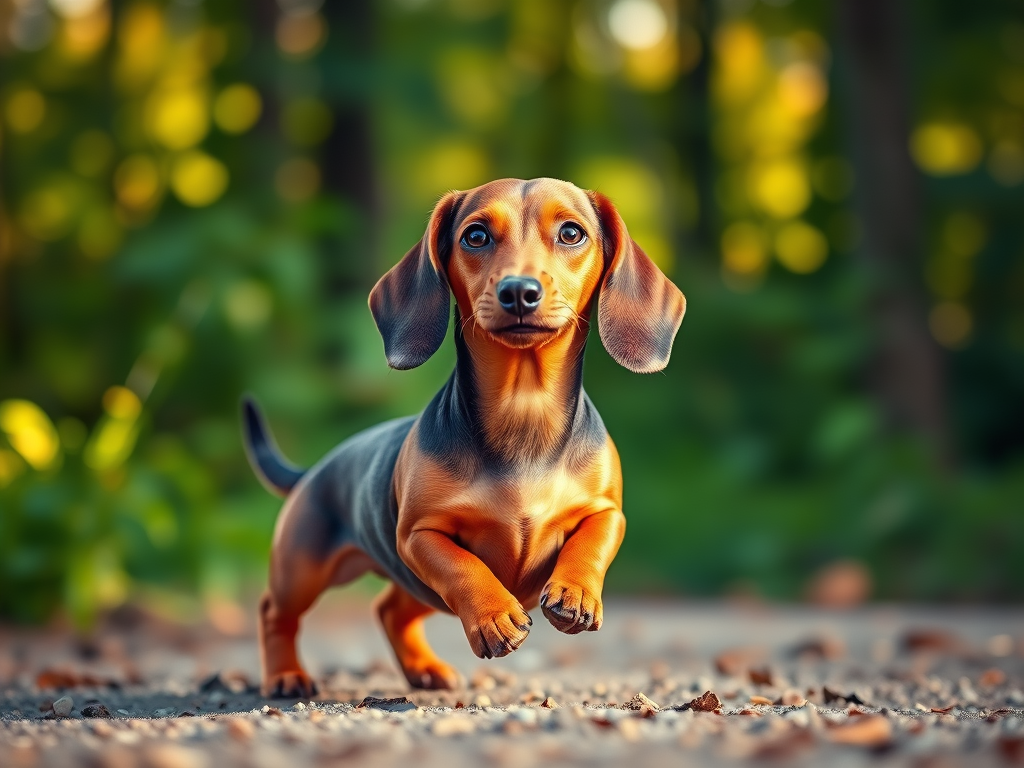
Instantly recognisable by its long body and short legs, the Dachshund is a breed that charms its way into hearts with a personality that is far bigger than its stature. Affectionately known as the “sausage dog,” “wiener dog,” or “doxie,” this charismatic canine packs a world of courage, intelligence, and stubbornness into its unique frame. But the Dachshund is much more than just a comical shape. It is a formidable hunter with a rich German heritage, bred for a purpose that required immense bravery and tenacity. From their surprising origins as fierce badger hunters to their status as beloved family companions and even royal favourites, the story of the Dachshund is as long and fascinating as its distinctive silhouette. To truly appreciate this iconic breed, we need to dig deeper than its cute exterior. Join us as we uncover the ten most fascinating facts about the one-and-only Dachshund.
1. Their Name Literally Means “Badger Dog”
The Dachshund’s charming nickname, “sausage dog,” belies its formidable original purpose. The breed’s name comes from German and translates literally to “badger dog” (Dachs means badger and Hund means dog). They were meticulously developed in Germany over several centuries, with origins tracing as far back as the 15th century, to be the ultimate badger-hunting machine. Badgers are surprisingly powerful and ferocious animals with sharp claws and a nasty bite, known for digging extensive underground burrows, or setts. The Dachshund’s unique body shape was a masterclass in functional design for this specific task. Its long, low body allowed it to enter and navigate narrow tunnels, while its short, powerful legs were perfect for digging and propelling it through the earth. Their courage had to be immense, as they were expected to face a formidable opponent in a confined, dark space, far from their human handler. This history is the key to understanding the modern Dachshund’s bold, sometimes rash, and incredibly tenacious personality.
2. They Come in Three Sizes and Three Coat Types
While many people picture a single type of “sausage dog,” the Dachshund is a remarkably diverse breed. They are officially recognised in two sizes in most of the world: Standard and Miniature. A Standard Dachshund typically weighs between 16 and 32 pounds, while the Miniature is 11 pounds and under. In their native Germany, there is also a third, intermediate size called kaninchen, or “rabbit,” which was developed for hunting rabbits and is determined by chest circumference rather than weight. Beyond size, the breed also sports three distinct coat varieties, each with its own history and grooming needs. The original and most common is the smooth coat. The long-haired variety was likely developed by crossbreeding with spaniels to create a coat that offered better protection in cold weather and thorny undergrowth. The wire-haired Dachshund, with its wiry coat and distinctive beard and eyebrows, was probably created by crossing the breed with terriers, enhancing their already tenacious and feisty nature for hunting in dense, rough terrain.
3. Their Distinctive Body Shape is a Health Risk
The very feature that makes the Dachshund so iconic—its long spine and short legs—is the result of a genetic condition called chondrodysplasia, a form of dwarfism. While this was selectively bred for its functional hunting purpose, it unfortunately makes the breed highly susceptible to back problems, specifically Intervertebral Disc Disease (IVDD). The Dachshund’s long spinal column is supported by very short ribs, putting immense strain on the vertebrae. IVDD occurs when the cushioning discs between the vertebrae bulge or burst, pressing on the spinal cord. This can cause anything from mild pain to severe nerve damage, paralysis, and loss of bladder and bowel control. It is the single biggest health concern for the breed, with studies showing that Dachshunds are up to 12 times more likely to suffer from IVDD than other breeds. Responsible ownership involves proactive measures to protect their back, such as preventing them from jumping on and off furniture, using ramps, maintaining a healthy weight to reduce strain, and using a harness instead of a collar to avoid pressure on the neck.
4. They Possess a Surprisingly Loud Bark
For such a small dog, the Dachshund has a remarkably loud and deep bark that sounds like it belongs to a much larger canine. This was no accident; it was a highly desirable trait for their original hunting role. When a Dachshund cornered its prey underground, its human handler, waiting on the surface, needed to know where to dig. The dog’s powerful, resonant bark acted as a subterranean tracking system, allowing the hunter to pinpoint its location. Today, this trait makes them excellent and highly effective watchdogs. A Dachshund will reliably sound the alarm when a stranger approaches the home. They are vigilant and courageous, and their big-dog bark can be a significant deterrent to potential intruders. While this makes them great for home security, it also means they can be prone to excessive barking if not properly trained and socialised from a young age. Owners need to be prepared to manage this vocal tendency.
5. They are Famously Stubborn and Intelligent
Dachshunds are consistently ranked as one of the more intelligent dog breeds, but this intelligence is often paired with a legendary stubborn streak. This isn’t a sign of low intelligence; rather, it’s a direct reflection of their breeding. They were developed to think for themselves and make independent decisions underground, often out of sight and earshot of their human partners. They needed the tenacity and single-mindedness to stay focused on their prey without giving up. This independent mindset persists in the modern pet Dachshund. They know what they want and can be masters of manipulation to get it. This makes training a unique challenge. They require patience, consistency, and a great sense of humour from their owner. Positive reinforcement techniques work best, but you have to be more clever and more persistent than your doxie. They excel at problem-solving, especially if the problem is how to get an extra treat or claim the best spot on the sofa.
6. They Were the First Official Olympic Mascot
The Dachshund’s universal appeal was cemented on the world stage when it was chosen as the very first official mascot for the Olympic Games. For the 1972 Summer Olympics in Munich, Germany, a colourful Dachshund named Waldi was created by German designer Otl Aicher. The choice was symbolic, representing the host nation of Bavaria and embodying the attributes required for an athlete: resistance, tenacity, and agility. Waldi was designed with a rainbow of colours to express the cheerful atmosphere and international spirit of the games. The marathon route for the 1972 Olympics was even designed in the shape of the dog. Waldi became an immense commercial success, with his image appearing on all sorts of merchandise, from plush toys to posters. This iconic role propelled the Dachshund from a well-loved dog breed to an international symbol of sport and friendly competition.
7. Their Popularity Dipped Due to Anti-German Sentiment
During World War I, the Dachshund’s strong association with Germany, its country of origin, led to a dramatic and unfortunate decline in its popularity, particularly in Allied nations like the United States and the United Kingdom. In a wave of anti-German sentiment, the breed was often used in propaganda posters to symbolise Germany. They were branded as “liberty pups,” and some owners were even persecuted for having a “German” dog. The American Kennel Club tried to rebrand them as “badger dogs” to distance them from their heritage, but their popularity plummeted nonetheless. The same phenomenon occurred during World War II. However, the breed’s undeniable charm and charismatic personality could not be suppressed for long. After each war, their numbers steadily rebounded as people once again embraced them for the wonderful companions they are, proving that their appeal transcends politics and prejudice.
8. They Have a Strong Prey Drive
Despite being cherished lap dogs, the hunting instinct runs deep in the Dachshund’s veins. They possess a very strong prey drive, which can manifest in a number of ways in a domestic setting. They are natural diggers, a hangover from their days of excavating badger setts, so owners should not be surprised to find holes in their garden or witness their doxie “digging” in blankets and pillows before settling down. This prey drive also means they have a tendency to chase small animals, such as squirrels, rabbits, and sometimes even cats. For this reason, it is crucial to have a securely fenced garden and to keep them on a lead in unenclosed areas. Their focus can be so intense when they are on a scent that recall commands can easily be ignored. This instinct also makes them fantastic competitors in earthdog trials, a modern canine sport that allows them to use their natural hunting and tunneling abilities in a safe and controlled environment.
9. They are Royal Favourites
The Dachshund’s charm has not gone unnoticed by royalty. Queen Victoria, a renowned dog lover, was particularly fond of the breed, which helped to popularise them in Great Britain during the 19th century. Her enthusiasm for her Dachshunds set a trend among the British aristocracy. This royal connection continues to this day. Queen Margrethe II of Denmark is a well-known Dachshund enthusiast and has owned many throughout her reign, often being photographed with her beloved canine companions. Their manageable size, big personality, and unwavering loyalty make them excellent companions for life in a palace or a more humble abode. The image of a queen walking her pack of doxies has further cemented the breed’s status as a sophisticated and cherished pet with a noble history.
10. Dachshunds Believe They Are Big Dogs
Perhaps the most defining and endearing fact about the Dachshund is that nobody has ever told them they are a small dog. They carry themselves with an air of self-importance and courage that completely belies their short stature. This “big dog in a small body” syndrome means they are fearless, sometimes to a fault, and will not hesitate to take on dogs many times their size. This boldness is a direct link to their badger-hunting past, where confronting a larger, fiercer animal was part of the job description. They are brimming with confidence and an unshakeable sense of their own significance. This is why they make such alert watchdogs and such entertaining, if sometimes challenging, companions. They demand respect and will give boundless love and loyalty in return. To live with a Dachshund is to live with a charismatic, courageous, and comical little character who is utterly convinced they are the ruler of the household.
Further Reading
For those who wish to learn more about the delightful Dachshund, from their history to their specific care needs, these books are excellent resources:
Dachshunds For Dummies by Eve Adamson
The Dachshund Handbook: The Essential Guide for New & Prospective Dachshund Owners by Linda Whitwam
A New Owner’s Guide to Dachshunds by Kaye Ladd
Dachshunds: Everything about Purchase, Care, Nutrition, Handling, and Behavior (A Complete Pet Owner’s Manual) by Chris C. Pinney
If Your Dog is a Dachshund, You Have a Friend for Life by Bruce Fogle
Here at Zentara.blog, our mission is to take those tricky subjects and unlock them, making knowledge exciting and easy to grasp for everyone. But the adventure doesn’t stop on this page! We’re constantly exploring new frontiers and sharing discoveries across the digital universe. Want to dive deeper into more mind-bending Top 10s and keep expanding your world? Come join us on our other platforms – we’ve got unique experiences waiting for you on each one!
Get inspired by visual wonders and bite-sized facts: See the world through Zentara’s eyes on Pinterest!
Pin our fascinating facts and stunning visuals to your own boards. Explore Pins on Pinterest: https://uk.pinterest.com/zentarablog/
Discover quick insights and behind-the-scenes peeks: Hop over to Tumblr for snippets, quotes, and unique content you won’t find anywhere else. It’s a different flavour of discovery! Follow the Fun on Tumblr: https://www.tumblr.com/zentarablog
Ready for deep dives you can listen to or watch? We’re bringing our accessible approach to video and potentially audio! Subscribe to our YouTube channel and tune into future projects that make learning pop! Subscribe on YouTube: https://www.youtube.com/@ZentaraUK
Seeking even more knowledge in one place? We’ve compiled some of our most popular topic deep dives into fantastic ebooks! Find them on Amazon and keep the learning journey going anytime, anywhere. Find Our Ebooks on Amazon: https://www.amazon.co.uk/s?k=Zentara+UK&ref=nb_sb_noss
Connect with us and fellow knowledge seekers: Join the conversation on BlueSky! We’re sharing updates, thoughts, and maybe even asking you what wonders we should explore next. Chat with Us on BlueSky: https://bsky.app/profile/zentarablog.bsky.social
Perfect for learning on the move! We post multiple 10-minute podcasts per day on Spotify. Pop on your headphones and fill your day with fascinating facts while you’re out and about! Listen on Spotify: https://open.spotify.com/show/3dmHbKeDufRx95xPYIqKhJ
Follow us on Instagram for bytesize knowledge! We post multiple posts per day on our official Instagram account. https://www.instagram.com/zentarablog/ Every click helps us keep bringing honest, accessible knowledge to everyone. Thanks for exploring with us today – see you out there in the world of discovery!



Leave a Reply