
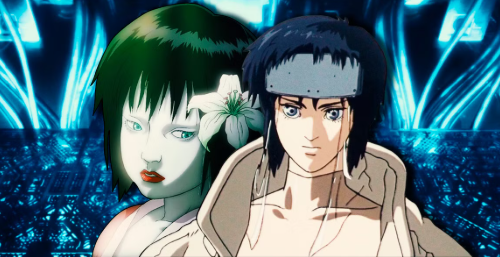
Thirty years after its initial release, Mamoru Oshii’s Ghost in the Shell has lost none of its chilling, beautiful, and profound power. More than just an anime, it is a landmark of science fiction cinema, a deep philosophical dive into the nature of identity in a hyper-technological age. Its vision of a world where the lines between human and machine have blurred to near invisibility has influenced a generation of filmmakers, artists, and thinkers. The rain-slicked streets of New Port City and the quiet existential struggles of Major Motoko Kusanagi have become iconic touchstones of the cyberpunk genre.
But the story of the film’s creation is as complex and revolutionary as its narrative. It was a project born from a unique fusion of clashing artistic visions, groundbreaking animation techniques, and a fearless philosophical inquiry that was rare for mainstream animation. To truly understand why Ghost in the Shell endures as a masterpiece, we must jack into its production history and explore the fascinating facts behind its genesis. Prepare to dive deep into the net as we uncover ten incredible facts about the 1995 classic, Ghost in the Shell.
1. It Pioneered a Revolutionary Blend of Cel and Digital Animation
In 1995, Computer Generated Imagery (CGI) was still in its relative infancy. While films like Jurassic Park had showcased its potential, its integration into traditional 2D animation was largely uncharted territory. Ghost in the Shell became a trailblazer, seamlessly fusing traditional, hand-drawn cels with what was then called “digitally generated imagery” (DGI). This wasn’t done as a gimmick, but as a core part of its aesthetic.
The production team, led by Oshii, used DGI to create effects that would have been painstakingly difficult or impossible with traditional methods. The iconic green computer displays, the Predator-like shimmer of the therm-optic camouflage, and the distorted first-person views from a cyborg’s eyes were all created digitally and then expertly composited with the hand-painted cels. This created a unique visual language, a “digitally-enhanced cel look,” that perfectly mirrored the film’s theme of technology integrating with the organic. This hybrid approach allowed for a level of visual sophistication and atmospheric depth that helped define the look of modern, high-budget anime for years to come.
2. The Director Scrapped the Manga’s Humor for Philosophical Focus
Anyone who has only seen the 1995 film would be shocked to read Masamune Shirow’s original manga. While the core characters and cyberpunk setting are the same, the tone is wildly different. Shirow’s manga is filled with goofy, slapstick humour, fourth-wall-breaking author notes, and frequent “chibi” (small, cartoonish) drawings of the characters during comical moments. Major Kusanagi herself is portrayed as far more expressive and less overtly melancholic.
Director Mamoru Oshii, known for his somber and philosophical filmmaking style, made the deliberate and critical decision to strip away all of the manga’s humour. He felt that the comedic elements would distract from the central questions he wanted to explore: what constitutes a “human” in an age of artificial bodies and networked consciousness? By removing the gags, Oshii transformed the story into a meditative, almost melancholic tone poem. This choice elevated the material from a clever sci-fi action story into a serious work of philosophical art, though it created a significant divergence from the source material that is still debated by fans today.
3. The Haunting Soundtrack Features an Ancient Japanese Wedding Song
The score for Ghost in the Shell, composed by the brilliant Kenji Kawai, is one of the most iconic in all of cinema. Its most famous track, “Making of a Cyborg,” which plays over the opening “shelling” sequence, is unforgettable for its powerful, ritualistic chanting. What many don’t know is the profound meaning behind those vocals. The lyrics are sung in ancient Japanese and are a creative fusion of a traditional wedding song and a lament.
Kawai’s genius was in using this chant to evoke a complex, multi-layered metaphor. The wedding song symbolizes the union of disparate elements—in this case, the organic brain and the mechanical body—to create a new entity, the Major. Simultaneously, the sorrowful, dirge-like tone mourns the “death” of the original being and questions the nature of the soul being born into this new shell. The music isn’t just accompanying the visuals; it is the film’s central theme, a ritual to bless a strange and uncertain birth into a new form of existence.
4. The City’s Design Was Based on Hong Kong, Not Tokyo
While Ghost in the Shell is a Japanese production, the visual identity of its setting, New Port City, was not inspired by a futuristic Tokyo. Mamoru Oshii and his art team, including the brilliant art director Hiromasa Ogura, travelled to Hong Kong for inspiration. They were captivated by the city’s unique atmosphere: a dense, vertical landscape where gleaming, hyper-modern skyscrapers towered over crowded, dilapidated streets filled with traditional markets and aging signage.
Oshii saw Hong Kong as a perfect real-world representation of the film’s themes. It was a city of contrasts, a place where the old and the new, the organic and the artificial, were constantly clashing and coexisting in a chaotic but vibrant harmony. The team took countless photographs, capturing the city’s humidity, its overwhelming density of information (from billboards to street signs), and its network of canals and waterways. This research is what gives New Port City its tangible, lived-in feel, making it a believable, multicultural metropolis of the future rather than a sterile sci-fi dystopia.
5. The “Shelling Sequence” Took a Full Year to Create
The film’s opening sequence, which meticulously details the construction of Major Kusanagi’s full-body prosthesis, is a masterclass in visual storytelling. In just a few minutes, without a single word of dialogue, it establishes the film’s central themes, aesthetic, and technological world. This iconic “shelling sequence” was an immense undertaking that reportedly took the animation team over a year to complete.
The process required an unprecedented level of collaboration and detail. It involved creating anatomical charts, mechanical blueprints, and layering hand-drawn animation with the aforementioned DGI to create the illusion of a synthetic body being assembled around a human brain. The animators studied biology and robotics to ensure every detail, from the synthetic muscle fibres to the fluid-filled artificial womb, felt authentic. The result is a sequence that is simultaneously beautiful, clinical, and deeply unsettling, perfectly encapsulating the film’s core question of where the soul—the “ghost”—resides within the technological “shell.”
6. The Film Was a Direct Blueprint for The Matrix
Ghost in the Shell‘s influence on Western cinema is immense, and nowhere is that more evident than in the 1999 blockbuster, The Matrix. The Wachowskis were so profoundly inspired by Oshii’s film that they pitched their project to producer Joel Silver by screening Ghost in the Shell for him and stating, “We want to do that for real.” The connections are undeniable and numerous.
The iconic “digital rain” of green code in The Matrix is a direct visual homage to the digital patterns in Ghost in the Shell‘s opening credits. The concept of “jacking in” to a global network via ports in the back of the neck is lifted directly from the film. Furthermore, the philosophical questions about the nature of reality, the acrobatic, wire-fu-esque action sequences, and even specific shots—like bullets creating slow-motion ripples in concrete walls—are heavily borrowed. While The Matrix became a cultural phenomenon in its own right, it stands on the shoulders of the philosophical and aesthetic groundwork laid by Ghost in the Shell.
7. Mamoru Oshii’s Signature Basset Hound Makes an Appearance
Fans of director Mamoru Oshii will know of his peculiar and charming directorial signature: the recurring appearance of his favourite dog breed, the basset hound. In nearly all of his major works, a melancholy-looking basset hound will appear, often as a brief, quiet moment of contemplation amidst chaos. Ghost in the Shell is no exception.
During a boat chase scene through the canals of New Port City, the camera briefly cuts to a shot of a basset hound sitting on a balcony, looking down at the action with a placid, slightly sad expression before turning away. This dog is widely considered to be a stand-in for Oshii himself, an observer within his own creation. It serves as a moment of mundane reality breaking through the high-tech sci-fi narrative, a small island of organic, unimpressed life in a world obsessed with technological transcendence. It’s a personal touch that adds a layer of quirky authorship to the otherwise serious film.
8. It Was an International Co-Production From the Start
The global success of Ghost in the Shell was not an accident; it was part of its DNA from the very beginning. In a move that was relatively uncommon for the anime industry in the mid-90s, the film was financed as an international co-production. While Japanese giants Kodansha (the manga publisher) and Bandai Visual were the primary backers, a significant portion of the funding also came from the United Kingdom’s Manga Entertainment.
This international partnership was crucial. It meant that the film was produced with a global audience in mind from day one. Manga Entertainment’s involvement ensured a swift and high-profile release in Western markets, helping it to bypass the niche, direct-to-video fate of many other anime films at the time. It became the first anime film to be released simultaneously in Japan, the UK, and the US, a strategy that paid off handsomely and helped cement its status as a worldwide cultural event, not just a domestic hit.
9. The Puppet Master’s Voice Was a Deliberately Genderless Creation
The film’s enigmatic antagonist, the Puppet Master, is a sentient program born from the “sea of information.” To reflect its nature as a non-human entity that had transcended biological constraints, the sound team created a unique and unsettling voice. In the original Japanese audio track, the Puppet Master’s voice was performed by a male actor, but it was then digitally altered and blended with elements of a female voice.
The goal was to create a vocal presence that was distinctly artificial and genderless, representing a new form of consciousness that existed beyond human classifications. This makes its final request to merge with Major Kusanagi even more profound. It is not a male entity seeking a female host, but a being of pure information seeking a physical shell to complete its evolution. This careful sound design adds an essential layer to the Puppet Master’s character, transforming it from a simple AI villain into a legitimate claimant for a new kind of life.
10. All Technology Was Designed with Real-World Plausibility in Mind
While Ghost in the Shell is set in the future, its creators went to great lengths to ensure its technology felt grounded and plausible. This commitment to realism, a hallmark of the “real robot” subgenre of anime, makes the world of 2029 feel disturbingly attainable. The firearms used by Section 9, for example, are fictional but are designed with incredible detail based on real-world engineering principles. Major Kusanagi’s primary weapon, the Seburo C-26A, is heavily inspired by real-life bullpup submachine guns like the FN P90.
This design philosophy extended to everything, from the multi-legged “Fuchikoma” think tanks (which were simplified from the manga for animation purposes) to the helicopters and cybernetics. Every piece of hardware looks functional, heavy, and meticulously engineered. This gritty, plausible approach to futurism ensures that the technology never feels like magic. It feels like an authentic extension of our own world, making the philosophical questions the film poses about the impact of that technology all the more urgent and relevant.
Further Reading
For those who wish to dive deeper into the net of cyberpunk and the brilliant minds behind Ghost in the Shell, these books offer a fantastic starting point.
- Ghost in the Shell (Manga) by Masamune Shirow. Reading the original source material is essential to appreciate the adaptation choices made by Mamoru Oshii and to experience the story’s more playful, action-oriented roots.
- The Cinema of Mamoru Oshii: Fantasy, Technology and Politics edited by Dani Cavallaro. This collection of essays provides a scholarly and in-depth analysis of the director’s major works, with a significant focus on the themes and techniques used in Ghost in the Shell.
The Anime Encyclopedia: A Century of Japanese Animation (3rd Revised Edition) by Jonathan Clements and Helen McCarthy. This comprehensive guide is an invaluable resource for placing Ghost in the Shell within the broader historical context of Japanese animation and understanding its revolutionary impact on the industry.




Leave a Reply