
Imagine walking through your city. You stroll down a paved road, glance up at a grand building with arched windows, check the date on your phone, and then head home to a comfortably heated apartment. It might seem like a scene from 2025, but every element mentioned has deep roots in an empire that crumbled over 1,500 years ago. Ancient Rome, a civilization renowned for its military might and sprawling territories, was also a hotbed of innovation. The Romans were master engineers and pragmatic problem-solvers, and their contributions to technology, law, and urban planning were so profound that they continue to shape our daily lives in ways we often don’t even realize.
The genius of Roman invention wasn’t always about creating something from scratch. Often, it was about taking an existing idea—from the Greeks, the Etruscans, or other cultures they encountered—and perfecting it on an unprecedented scale. They were the ultimate refiners and implementers, turning localized concepts into empire-wide standards. This legacy is not confined to dusty history books or museum exhibits; it is embedded in the very fabric of our modern world. From the legal principles that underpin our justice systems to the concrete that forms our cities, the echoes of Rome are all around us. This list delves into ten of the most significant Roman inventions and innovations that have stood the test of time, proving that while empires may fall, brilliant ideas are truly eternal.
1. Aqueducts and Advanced Plumbing: The Lifeline of the City
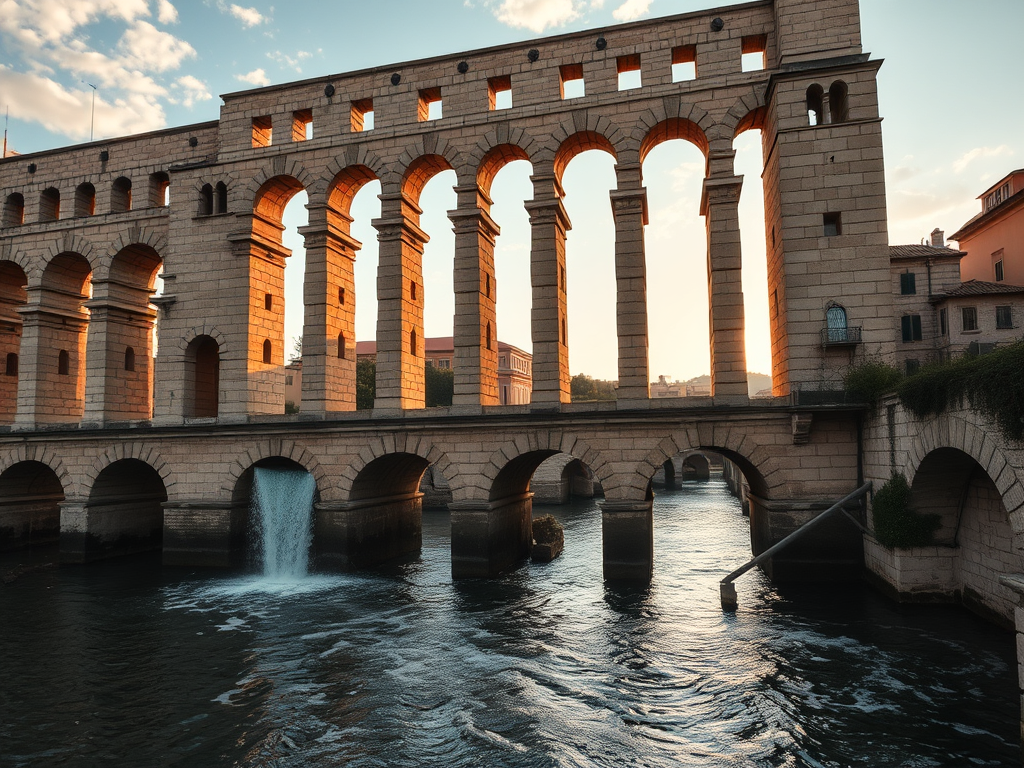
Long before modern water treatment plants and complex piping systems, the Romans engineered a solution to one of civilization’s greatest challenges: providing a consistent supply of clean water to a dense urban population. The Roman aqueducts were not merely ditches; they were monumental works of civil engineering. These sophisticated channels, often stretching for miles, used the subtle power of gravity to transport water from distant springs and rivers directly into the heart of their cities. Think of it as a natural, large-scale water slide designed with mathematical precision. The gradient of the aqueducts had to be just right—too steep, and the water would flow too fast, eroding the structure; too shallow, and it would stagnate. This required incredible surveying and planning, skills at which Roman engineers excelled.
Once the water reached the city, it didn’t just stop. It was channeled into a complex distribution system, supplying public baths (thermae), fountains, and even the private homes of the wealthy. This wasn’t just about convenience; it was a revolution in public health. By providing clean drinking water and simultaneously engineering vast sewer systems like the Cloaca Maxima to carry away waste, the Romans dramatically improved urban sanitation and reduced the spread of waterborne diseases. Today, our modern municipal water systems, which rely on gravity-fed pipelines and the separation of clean water from wastewater, are direct descendants of these ancient Roman principles. Every time you turn on a tap, you are benefiting from a concept perfected over two millennia ago.
2. The Enduring Strength of Roman Concrete: Building for Eternity
If you’ve ever marveled at the Colosseum or the Pantheon in Rome and wondered how they have survived earthquakes, weathering, and the passage of two thousand years, the answer lies in a revolutionary building material: Roman concrete, or opus caementicium. While earlier civilizations had used rudimentary forms of mortar, the Romans perfected the recipe, creating a substance that was not only incredibly strong but also remarkably durable. Their secret ingredient was volcanic ash, known as pozzolana. When mixed with lime and water, this ash formed a powerful hydraulic binder that could set even underwater. This unique property allowed the Romans to construct massive and enduring structures like harbors, bridges, and aqueducts in challenging environments.
What makes Roman concrete truly extraordinary is its ability to self-heal. Modern research has discovered that small lime clasts within the mixture would react with seeping water over time, forming new crystals that fill in any developing cracks. It’s as if the material was designed with its own internal repair system. In contrast, modern Portland cement-based concrete, while strong, tends to degrade over a much shorter lifespan. Today, engineers and scientists are studying the chemistry of Roman concrete, hoping to replicate its longevity and create more sustainable building materials for the future. The enduring legacy of Roman concrete is not just in the ancient structures that still stand, but also in the inspiration it provides for a new generation of construction technology.
3. The All-Pervading Arch: A Revolution in Architecture
The arch is one of the most recognizable and fundamental elements of Roman architecture, yet the Romans didn’t invent it. The concept had been known for centuries. However, it was the Romans who truly understood and harnessed its immense structural potential, making it the cornerstone of their building philosophy. The genius of the Roman arch lies in its ability to distribute weight. Instead of a flat lintel which bears all the pressure on its center, the curved shape of an arch channels the load downwards and outwards to its supports. This simple principle allowed them to build on a scale never before imagined, creating vast, open interior spaces without the need for forests of columns.
From this basic semi-circular arch, Roman engineers developed more complex forms like the barrel vault (a continuous, tunnel-like arch) and the groin vault (formed by the intersection of two barrel vaults). These innovations are the architectural DNA of many of the world’s most famous structures, from medieval cathedrals to modern train stations and government buildings. The Colosseum, with its tiers of repeating arches, is a testament to the strength and elegance of this design. The next time you see an arched bridge or a building with a vaulted ceiling, remember that you are looking at a direct application of Roman engineering—a simple yet profound solution that literally reshaped the world and continues to support our modern infrastructure.
4. A Network of Roads: Paving the Way for the Future
The saying “all roads lead to Rome” wasn’t just a metaphor; it was a literal description of one of the most impressive feats of ancient engineering. The Romans constructed a network of over 50,000 miles of paved roads, connecting the farthest reaches of their vast empire back to its capital. These weren’t simple dirt tracks. Roman roads were sophisticated, multi-layered constructions designed for durability and efficiency. They were built in straight lines whenever possible, cutting through hills and crossing rivers with sturdy bridges to ensure the fastest possible route. The construction was meticulous, typically involving a deep trench filled with layers of sand, gravel, and finally, topped with tightly-fitted paving stones.
This vast network was the circulatory system of the empire. It facilitated the rapid movement of troops, the efficient transport of goods for trade, and the swift delivery of communications via the Cursus Publicus, the state-run postal service. Roman roads were the backbone of their economic and military dominance. Their influence is so enduring that many modern European roads are built directly on top of the original Roman foundations. The concepts they pioneered—such as creating a stable, layered roadbed and ensuring proper drainage by crowning the surface—are still fundamental principles of modern highway construction. Every time you drive on a major road, you are traveling on an idea that was perfected by Roman engineers to hold an empire together.
5. The Julian Calendar: Organizing Our Time
How do we know what day it is? The answer lies in a system developed over two thousand years ago at the behest of Julius Caesar. Before his reforms in 46 BCE, the Roman calendar was a confusing, inaccurate lunar-based system that had fallen wildly out of sync with the seasons. To fix this, Caesar consulted with the best astronomers of his time and introduced what we now know as the Julian calendar. This new system was solar-based, defining a year as 365.25 days. To account for the quarter day, a “leap day” was added every four years to the end of February. This simple yet brilliant innovation created a remarkably accurate and stable system for tracking time.
The Julian calendar, with its twelve months and the concept of a leap year, was so effective that it remained the standard in the Western world for over 1,600 years. It was eventually refined into the Gregorian calendar in 1582 to correct a minor miscalculation in the length of the solar year, but the fundamental structure remained the same. The names of our months, such as July (for Julius Caesar) and August (for his successor, Augustus), are direct remnants of this Roman innovation. When you schedule an appointment or celebrate a birthday, you are participating in a system of timekeeping that was put in place to bring order and predictability to the Roman world—a testament to their lasting influence on the very structure of our daily lives.
6. Laws and Legal Principles: The Foundation of Modern Justice
Perhaps one of ancient Rome’s most profound and enduring legacies is in the field of law. The Romans developed a sophisticated legal framework that has served as the bedrock for many of the world’s modern legal systems, particularly in continental Europe and its former colonies. Their starting point was the Twelve Tables, a set of laws codified in the 5th century BCE that established basic principles of justice and rights for all citizens. Over centuries, this system evolved into a vast and complex body of jurisprudence, meticulously documented and analyzed by legal scholars. Roman law was remarkable for its emphasis on reason, equity, and the attempt to create a comprehensive system that could be applied universally across a diverse empire.
Key legal concepts that we take for granted today have their origins in Roman law. The idea of being “innocent until proven guilty,” the right to a trial, the importance of evidence, and the concept of contracts are all principles that were developed and refined in the Roman legal tradition. Legal terminology is still peppered with Latin phrases like pro bono (for the public good), habeas corpus (you shall have the body), and affidavit (he has sworn). The monumental Corpus Juris Civilis (Body of Civil Law), compiled under the Emperor Justinian I, preserved and systematized centuries of Roman legal thought, ensuring its survival and influence through the Middle Ages and into the modern era. Our entire concept of a codified, impartial justice system owes an immense debt to the legal minds of ancient Rome.
7. Newspapers and Public Information: The Original Daily Update
In an age before social media, 24-hour news channels, and even the printing press, how did a government communicate with its citizens? The Romans devised an ingenious solution: the Acta Diurna, which translates to “Daily Acts” or “Daily Public Records.” These were, in essence, the world’s first newspapers. Inscribed on stone or metal tablets, the Acta Diurna were posted in public places in Rome, such as the Forum, for all to see. They contained official announcements, news of military victories, gladiatorial game results, birth and death notices, and even human-interest stories. While literacy rates were not high, those who could read would often share the news with the crowds gathered around.
This system of public information was a powerful tool for the Roman state. It helped to create a sense of shared experience and identity among the populace and ensured that important government decrees were widely disseminated. The Acta Diurna established the fundamental idea of regularly communicating news and official information to the public, a concept that is central to modern governance and media. While the format has changed dramatically from a stone tablet to a smartphone screen, the core purpose remains the same: to keep the citizenry informed. This Roman invention laid the groundwork for the entire field of journalism and public communication, demonstrating their advanced understanding of civic engagement.
8. Bound Books (The Codex): Revolutionizing Reading
For much of ancient history, written knowledge was stored on cumbersome scrolls made of papyrus or parchment. To read a scroll, you had to unroll it with one hand while rolling it up with the other, and accessing a specific passage in the middle was a tedious process. Then, around the 1st century CE, the Romans began to popularize a new format that would change the world of information forever: the codex. A codex is what we would recognize today as a book—a collection of pages stacked together and bound along one edge. Initially made from wooden tablets coated with wax, they soon evolved to use pages of parchment.
The advantages of the codex over the scroll were immense. It was more compact, easier to carry, and could contain far more information on both sides of the page. Most importantly, it allowed for random access; a reader could flip to any page instantly, making it far easier to cross-reference and study texts. This new technology was particularly embraced by early Christians, who used the codex format to copy and distribute the scriptures, aiding the spread of the religion. The codex completely revolutionized how knowledge was stored, accessed, and disseminated. Every book on your shelf, every notebook you write in, is a direct descendant of this practical and powerful Roman invention that made information more accessible to the world.
9. Underfloor Heating (Hypocaust): Ancient Central Heating
The Romans were masters of comfort and luxury, and nowhere is this more evident than in their invention of a sophisticated form of central heating known as the hypocaust system. This ingenious method was used to heat public baths and the villas of the wealthy, providing a level of comfort that would not be seen again on a wide scale until the modern era. The system worked by raising the floor of the room on a series of pillars or stacks of tiles, creating a hollow space underneath. A furnace, located outside the room, would pump hot air and smoke from a fire into this space. The hot air would circulate beneath the floor, heating the tiles and radiating warmth upwards into the room.
The ingenuity didn’t stop there. The hot air was also channeled through hollow tiles or flues embedded within the walls, heating them as well before finally escaping through a chimney. This created a consistent, radiant heat that warmed the entire space evenly, much like modern underfloor heating systems. The hypocaust was a complex and expensive system to build and maintain, requiring a constant supply of fuel and labor to keep the fire going, which is why it was primarily reserved for public buildings and the elite. It stands as a remarkable example of Roman engineering applied to improving quality of life and is the direct precursor to the central heating systems that keep our homes warm today.
10. Apartment Buildings (Insulae): High-Density Urban Living
As the city of Rome grew into a sprawling metropolis with a population of over a million people, a new challenge arose: housing. There simply wasn’t enough space for everyone to live in single-family homes. The Roman solution was the insulae, multi-story apartment buildings that housed the vast majority of the city’s working-class population. These structures, often built with timber frames and mud bricks, could reach several stories high, representing one of the earliest forms of high-density urban housing. While often poorly constructed and prone to fire or collapse, they were a pragmatic response to the pressures of a massive urban center.
The insulae were the ancient equivalent of modern apartment complexes. The ground floors were typically occupied by shops and businesses (tabernae), with the residential apartments located on the floors above. The wealthiest tenants would live in the larger, more desirable apartments on the lower levels, while the poorest residents were crammed into the smaller, more dangerous rooms at the very top. This concept of mixed-use, multi-story residential buildings is a cornerstone of modern urban planning. As our cities continue to grow vertically, the basic model of the Roman insula—stacking homes on top of businesses to maximize space—remains as relevant today as it was in ancient Rome, demonstrating their pioneering approach to solving the timeless problem of urban living.
Further Reading
For those interested in delving deeper into the ingenuity of Roman civilization, here are a few accessible and enlightening books:
- “The Roman Engineers: A Study of Their Technical Skills and the Armies That Built the Empire” by L. A. H. Hyland
- “Engineering in the Ancient World” by J.G. Landels
- “Rubicon: The Last Years of the Roman Republic” by Tom Holland
- “SPQR: A History of Ancient Rome” by Mary Beard
Here at Zentara.blog, our mission is to take those tricky subjects and unlock them, making knowledge exciting and easy to grasp for everyone. But the adventure doesn’t stop on this page! We’re constantly exploring new frontiers and sharing discoveries across the digital universe. Want to dive deeper into more mind-bending Top 10s and keep expanding your world? Come join us on our other platforms – we’ve got unique experiences waiting for you on each one!
Get inspired by visual wonders and bite-sized facts: See the world through Zentara’s eyes on Pinterest!
Pin our fascinating facts and stunning visuals to your own boards. Explore Pins on Pinterest: https://uk.pinterest.com/zentarablog/
Discover quick insights and behind-the-scenes peeks: Hop over to Tumblr for snippets, quotes, and unique content you won’t find anywhere else. It’s a different flavour of discovery! Follow the Fun on Tumblr: https://www.tumblr.com/zentarablog
Ready for deep dives you can listen to or watch? We’re bringing our accessible approach to video and potentially audio! Subscribe to our YouTube channel and tune into future projects that make learning pop! Subscribe on YouTube: https://www.youtube.com/@ZentaraUK
Seeking even more knowledge in one place? We’ve compiled some of our most popular topic deep dives into fantastic ebooks! Find them on Amazon and keep the learning journey going anytime, anywhere. Find Our Ebooks on Amazon: https://www.amazon.co.uk/s?k=Zentara+UK&ref=nb_sb_noss
Connect with us and fellow knowledge seekers: Join the conversation on BlueSky! We’re sharing updates, thoughts, and maybe even asking you what wonders we should explore next. Chat with Us on BlueSky: https://bsky.app/profile/zentarablog.bsky.social
Perfect for learning on the move! We post multiple 10-minute podcasts per day on Spotify. Pop on your headphones and fill your day with fascinating facts while you’re out and about! Listen on Spotify: https://open.spotify.com/show/3dmHbKeDufRx95xPYIqKhJFollow us on Instagram for bytesize knowledge! We post multiple posts per day on our official Instagram account. https://www.instagram.com/zentarablog/ Every click helps us keep bringing honest, accessible knowledge to everyone. Thanks for exploring with us today – see you out there in the world of discovery!




Leave a Reply