
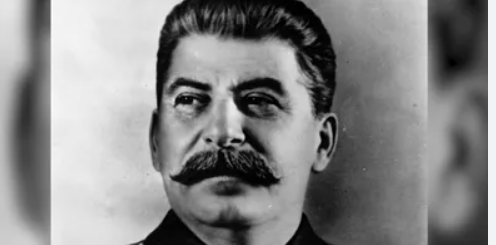
Life under the rule of Joseph Stalin was a period of immense, brutal, and world-altering transformation for the Soviet Union. From the late 1920s until his death in 1953, Stalin wielded absolute power, forging a modern industrial superpower through a crucible of terror, propaganda, and ideological fanaticism. For the ordinary Soviet citizen, this was an era defined by a constant, inescapable tension between grand, utopian promises and a grim, often terrifying reality. It was a time of monumental construction projects and mass starvation, of heroic sacrifice and whispered denunciations, where the state’s reach extended into every factory, every farm, every apartment building, and every mind. To comprehend this complex and tragic period is to explore the fundamental characteristics that shaped the daily existence of millions. Here are the top 10 defining characteristics of life under Stalin’s iron-fisted rule.
1. The Pervasive Cult of Personality
In Stalin’s Soviet Union, the leader was not merely a political figure; he was an omnipresent, god-like icon. A vast and sophisticated propaganda machine worked tirelessly to construct a cult of personality around Stalin, portraying him as the “Father of Nations,” the “Shining Sun of Humanity,” and the brilliant, all-knowing successor to Lenin. His image was everywhere: in giant posters hanging from buildings, in statues erected in every town square, in paintings, films, and songs. His name was invoked at the start and end of every speech, and his “genius” was credited for every real or imagined success, from record-breaking coal production to the ripening of the harvest.
For the average citizen, this cult was an inescapable part of daily life. Schoolchildren were taught to chant his praises, and newspapers were filled with fawning articles detailing his wisdom. This relentless deification served a crucial purpose: it fused the identity of the state with the identity of one man. To question Stalin was to question the entire Soviet project. This created a powerful emotional bond for some, but for everyone, it established a clear and dangerous line. Loyalty was not to an idea or a country, but to a single, infallible leader, making any form of dissent a personal betrayal of the great Stalin himself.
2. The Reign of The Great Terror and the NKVD
The most terrifying characteristic of Stalinism was the state’s use of mass, arbitrary terror to control the population. While state repression existed before, under Stalin it reached an industrial scale, particularly during the Great Purge (or Great Terror) of 1936-1938. The instrument of this terror was the secret police, the NKVD (a forerunner of the KGB). The NKVD was a state within a state, with the power to arrest, torture, and execute anyone without trial. The infamous knock on the door in the middle of the night could come for anyone: high-ranking Communist Party officials, Red Army commanders, engineers, artists, or ordinary factory workers.
Life was governed by a constant, gnawing fear. A misplaced joke, a comment from a disgruntled neighbour, or association with someone already arrested could lead to a denunciation and a one-way trip to the Lubyanka, the NKVD’s notorious Moscow headquarters. People were arrested for “counter-revolutionary activities,” “wrecking,” or being an “enemy of the people”—vague charges that required no real evidence. This terror was not just about eliminating opponents; its true purpose was to atomize society, to shatter bonds of trust between friends, family, and colleagues, ensuring that the only safe loyalty was to the state and to Stalin.
3. Life in the Gulag Archipelago
For millions arrested during the purges, the destination was the Gulag, a vast and brutal network of forced-labour camps that stretched across the most inhospitable regions of the Soviet Union, from the Siberian Arctic to the deserts of Kazakhstan. The Gulag was a cornerstone of the Stalinist system, serving a dual purpose: it was a tool of political repression, isolating and punishing perceived enemies, and it was a driver of the Soviet economy. Inmates of the camps, or “zeks,” were used as slave labour to build canals, mine gold, and cut timber under the most horrific conditions.
Life in the Gulag was a relentless struggle for survival against starvation, disease, and the brutality of the guards. Work quotas were impossibly high, and food rations were pitifully low. The writer Aleksandr Solzhenitsyn, who famously called it the “Gulag Archipelago,” described it as a separate nation hidden within the USSR, with its own laws, customs, and cruel logic. The existence of the Gulag cast a long, dark shadow over the entire society. Even for those not arrested, the knowledge that this parallel world of suffering existed was a powerful and constant deterrent against stepping out of line.
4. Rapid, Forced Industrialization and the Five-Year Plans
Stalin was determined to drag the Soviet Union from a peasant-based agrarian society into a modern industrial power in a single generation. The tool for this transformation was a series of ambitious, centrally planned economic programs known as the Five-Year Plans. Starting in 1928, the state poured all of its resources into heavy industry—coal, steel, electricity, and armaments—at the expense of everything else, particularly consumer goods. Entire cities, like Magnitogorsk in the Urals, were willed into existence, built from scratch by legions of workers in brutal conditions.
For the ordinary worker, life under the Five-Year Plans was one of immense hardship and heroic sacrifice. Propaganda glorified the shock worker, the “Stakhanovite” who smashed production records. But the reality was long hours, low pay, dangerous working conditions, and severe shortages of food, housing, and basic necessities. It was a life akin to being on a permanent war footing, where individual needs were ruthlessly subordinated to the grand goal of building “Socialism in One Country.” While the policy was successful in creating a formidable industrial base that would later help defeat Nazi Germany, it was achieved at a staggering human cost.
5. The Catastrophe of Collectivization and the Holodomor
Concurrent with industrialization, Stalin sought to completely transform the countryside through the policy of collectivization. This meant forcing millions of individual peasant households to give up their land and livestock and join large, state-controlled collective farms (kolkhozes). The policy was aimed at increasing grain production to feed the new industrial cities and to export for hard currency. It was also an ideological war against the more prosperous peasants, the kulaks, who were branded as class enemies.
The result was an unmitigated disaster and one of the great man-made tragedies of the 20th century. Peasants fiercely resisted, slaughtering their own livestock rather than handing them over. The state responded with overwhelming force, deporting and executing millions labelled as kulaks. The chaos and mismanagement led to a catastrophic drop in food production. In 1932-33, this culminated in a devastating famine, particularly in Ukraine, where it is known as the Holodomor (“death by starvation”). The state confiscated grain from the starving regions, sealing the borders to prevent people from escaping. Millions perished in a famine that was a direct and deliberate result of Stalin’s brutal policies.
6. The Suppression of All Dissent and Control of Information
In Stalin’s Soviet Union, there was no room for independent thought. The state held an absolute monopoly on information and ideas. All newspapers, radio broadcasts, and publishing houses were under the direct control of the Communist Party. The official party newspaper, Pravda (which ironically means “Truth”), dictated the one and only correct interpretation of events. History itself was constantly rewritten to suit the current political line. Figures who fell out of favour, like Leon Trotsky, were erased from photographs and history books, becoming “unpersons.”
This total control of information created a surreal and claustrophobic environment. Citizens were fed a constant diet of propaganda celebrating Soviet achievements while demonizing the capitalist West. Access to foreign news was impossible, and any expression of a dissenting opinion, even in private, could be reported to the NKVD. Censorship was absolute, not just in politics but in the arts as well. This created a society where everyone was forced to publicly participate in a grand political fiction, regardless of what they privately believed.
7. The Imposition of “Socialist Realism” in the Arts
Stalin understood the power of culture, and he demanded that it serve the state. The official artistic style of the era was known as Socialist Realism. It dictated that all art—be it literature, painting, music, or film—had to be optimistic, heroic, and easily understandable to the masses. Its purpose was not to explore the complexities of the human condition but to depict Soviet life as a joyous march towards a utopian communist future. Paintings showed smiling, muscular workers and rosy-cheeked collective farmers. Novels featured selfless heroes foiling the plots of saboteurs.
For artists, this was a creative straitjacket. The avant-garde and experimental art that had flourished after the 1917 revolution was now condemned as “bourgeois formalism.” Composers like Dmitri Shostakovich and writers like Boris Pasternak lived in constant fear of official denunciation. They had to choose between conforming to the party line, staying silent, or risking the Gulag. Socialist Realism effectively neutered the arts as a form of genuine expression, turning them into another branch of state propaganda designed to mould the “New Soviet Man.”
8. The Promotion of a New “Soviet Man” and Social Engineering
The ultimate goal of the Stalinist project was to forge a new type of human being: the “New Soviet Man.” This ideal citizen was to be selfless, collectivist, hard-working, and utterly devoted to the party and the state. The regime used every tool at its disposal—education, youth groups like the Young Pioneers, propaganda, and social pressure—to mould individuals into this collectivist ideal. The concept of the private sphere was attacked; one’s life was the property of the state.
This grand experiment in social engineering extended to every aspect of life. In the 1930s, there was a return to more conservative social values, known as the “Great Retreat.” Divorce was made more difficult, and abortion was outlawed in an effort to boost the birth rate and promote the traditional family as a stable, productive unit for the state. This attempt to re-engineer human nature itself, to create a society where individual desires were completely subsumed by the needs of the collective, was perhaps the most ambitious and ultimately totalitarian aspect of the Stalinist system.
9. The Paradox of Social Mobility and Education
Amidst the terror and hardship, one of the most complex characteristics of Stalinist society was the opportunity for massive social mobility, at least for some. The rapid industrialization and the purging of the old Bolshevik elite and pre-revolutionary intelligentsia created a huge vacuum in management and technical positions. The state invested heavily in education and technical training to fill these gaps. For a young person from a poor peasant or working-class background, the system offered a genuine, if ruthless, path to advancement.
A generation of new “red specialists” was created. A young man who was loyal to the party and willing to work hard could go from the factory floor to a position as a plant manager or a high-ranking bureaucrat in a remarkably short time. This created a stratum of society that had a vested interest in the Stalinist system and owed its entire career to it. It is this paradox—a society that simultaneously offered unprecedented opportunity for the loyal while brutally liquidating its perceived enemies—that helps explain the system’s strange resilience and the genuine support it received from a significant portion of the population.
10. Life in the Communal Apartment (Kommunalka)
For the vast majority of urban dwellers, the backdrop to life under Stalin was the kommunalka, or communal apartment. As peasants flooded into the cities to work in the new factories, a severe housing crisis erupted. The solution was to partition the large apartments of the former middle and upper classes, assigning one room to each family, with everyone sharing a single kitchen and bathroom. The kommunalka was a microcosm of Soviet society. It forced dozens of strangers into an intimate and often tense co-existence.
Privacy was non-existent. Every argument, every conversation, every secret was potentially overheard. This lack of privacy was a powerful tool of social control. A disgruntled neighbour could easily become an informer for the NKVD. Yet, the kommunalka also fostered a strange sense of community and solidarity for some, as residents had to cooperate to survive. It perfectly encapsulated the Stalinist ideal of the collective triumphing over the private. This forced intimacy, with all its potential for both conflict and camaraderie, was the daily, lived reality for millions and a defining feature of the Stalinist era.
Further Reading
To gain a deeper understanding of the complexities and horrors of life under Stalin, these books are essential and accessible starting points:
- The Gulag Archipelago by Aleksandr Solzhenitsyn – A monumental and devastating literary investigation into the Soviet camp system. It’s a difficult but essential read that exposed the truth of the Gulag to the world.
- Stalin: The Court of the Red Tsar by Simon Sebag Montefiore – A highly readable and deeply researched biography that focuses on Stalin’s personal life and his inner circle, revealing the paranoid and criminal nature of his rule.
- Everyday Stalinism: Ordinary Life in Extraordinary Times: Soviet Russia in the 1930s by Sheila Fitzpatrick – A landmark work of social history that moves beyond high politics to explore how ordinary Soviet citizens navigated the daily challenges and paradoxes of the Stalinist system.
- The Whisperers: Private Life in Stalin’s Russia by Orlando Figes – A powerful and moving history of private life during the Stalin era, using letters, diaries, and interviews to explore how people tried to maintain their humanity in a world of terror and surveillance.
Here at Zentara.blog, our mission is to take those tricky subjects and unlock them, making knowledge exciting and easy to grasp for everyone. But the adventure doesn’t stop on this page! We’re constantly exploring new frontiers and sharing discoveries across the digital universe. Want to dive deeper into more mind-bending Top 10s and keep expanding your world? Come join us on our other platforms – we’ve got unique experiences waiting for you on each one!
Get inspired by visual wonders and bite-sized facts: See the world through Zentara’s eyes on Pinterest!
Pin our fascinating facts and stunning visuals to your own boards. Explore Pins on Pinterest: https://uk.pinterest.com/zentarablog/
Discover quick insights and behind-the-scenes peeks: Hop over to Tumblr for snippets, quotes, and unique content you won’t find anywhere else. It’s a different flavour of discovery! Follow the Fun on Tumblr: https://www.tumblr.com/zentarablog
Ready for deep dives you can listen to or watch? We’re bringing our accessible approach to video and potentially audio! Subscribe to our YouTube channel and tune into future projects that make learning pop! Subscribe on YouTube: https://www.youtube.com/@ZentaraUK
Seeking even more knowledge in one place? We’ve compiled some of our most popular topic deep dives into fantastic ebooks! Find them on Amazon and keep the learning journey going anytime, anywhere. Find Our Ebooks on Amazon: https://www.amazon.co.uk/s?k=Zentara+UK&ref=nb_sb_noss
Connect with us and fellow knowledge seekers: Join the conversation on BlueSky! We’re sharing updates, thoughts, and maybe even asking you what wonders we should explore next. Chat with Us on BlueSky: https://bsky.app/profile/zentarablog.bsky.social
Perfect for learning on the move! We post multiple 10-minute podcasts per day on Spotify. Pop on your headphones and fill your day with fascinating facts while you’re out and about! Listen on Spotify: https://open.spotify.com/show/3dmHbKeDufRx95xPYIqKhJFollow us on Instagram for bytesize knowledge! We post multiple posts per day on our official Instagram account. https://www.instagram.com/zentarablog/ Every click helps us keep bringing honest, accessible knowledge to everyone. Thanks for exploring with us today – see you out there in a world of discovery!




Leave a Reply