
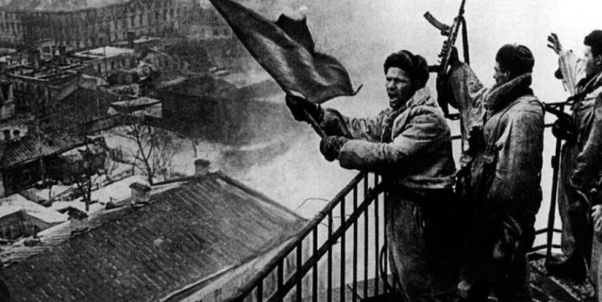
The Siege of Leningrad, a harrowing chapter in the annals of World War II, stands as a testament to the resilience of the human spirit in the face of unimaginable suffering. For 872 days, from September 8, 1941, to January 27, 1944, the city, now known as St. Petersburg, was encircled by German and Finnish forces, leading to one of the longest and most destructive blockades in modern history. The following are ten defining moments that shaped this brutal siege and left an indelible mark on the city and its people.
1. The Encirclement is Complete: The Beginning of the Blockade
The summer of 1941 saw the rapid advance of German forces into the Soviet Union under Operation Barbarossa. By early September, Army Group North had reached the outskirts of Leningrad. On September 8, 1941, the last land connection to the city was severed, marking the official beginning of the siege. This encirclement was a deliberate strategy by Adolf Hitler, who, instead of launching a full-scale assault, opted to starve the city into submission. The initial days were filled with a grim determination as citizens fortified their streets, but the reality of their isolation soon set in. The blockade cut off all vital supply routes, trapping nearly three million civilians and soldiers within a tightening ring of steel. This moment was pivotal as it transformed a bustling cultural hub into a besieged fortress, setting the stage for a protracted struggle for survival against an unseen enemy: starvation.
2. The Bombing of the Badayev Warehouses: A City’s Pantry in Flames
Just days into the siege, on September 8 and 10, 1941, the Luftwaffe launched devastating air raids targeting the city’s main food storage facility, the Badayev Warehouses. These warehouses held a significant portion of Leningrad’s food reserves. The resulting fires raged for hours, sending plumes of black smoke into the sky and the sweet, sickening smell of burning sugar across the city. The destruction of the Badayev Warehouses was a catastrophic blow. While not all of the city’s food was stored there, the loss of this central depot accelerated the onset of famine. Psychologically, it was a devastating moment, signaling to the inhabitants that the enemy was not just at their gates but was actively targeting their ability to survive. This act of strategic warfare immediately plunged the city into a desperate struggle for sustenance and became a grim harbinger of the starvation that would come to define the first winter of the siege.
3. The First Winter (1941-1942): The “Hungry Winter”
The winter of 1941-1942, often referred to as the “Hungry Winter,” was a period of almost indescribable suffering. With food supplies dwindling and temperatures plummeting to -30°C (-22°F), the city was gripped by a catastrophic famine. Rations were cut to starvation levels, with the daily bread allowance for civilians dropping to a mere 125 grams, a small piece often adulterated with sawdust and other non-edible materials. The lack of fuel meant that heating systems failed, and buildings froze. The people of Leningrad resorted to desperate measures to survive, burning furniture, books, and even floorboards for warmth. The city’s infrastructure collapsed; public transport ceased, and water pipes froze and burst. The streets became a landscape of death, with the bodies of those who had succumbed to starvation and cold often left where they fell. This winter represented the nadir of human suffering during the siege, a period when the will to live was tested daily against the relentless forces of hunger and cold.
4. The “Road of Life”: A Lifeline Across Frozen Waters
In the midst of the “Hungry Winter,” a glimmer of hope emerged in the form of the “Road of Life.” This was an ice road constructed across the frozen surface of Lake Ladoga, the only route connecting the besieged city to the Soviet-controlled mainland. Opening in November 1941, this perilous artery became Leningrad’s lifeline. Trucks braved thin ice, German air raids, and artillery bombardment to transport vital food and supplies into the city and to evacuate hundreds of thousands of civilians, primarily women and children. The journey was fraught with danger; vehicles frequently broke through the ice and sank, their drivers and precious cargo lost to the icy depths. Despite the immense risks, the “Road of Life” was instrumental in preventing the city’s complete collapse. It was a powerful symbol of defiance and ingenuity, a testament to the courage of the drivers who risked their lives on every treacherous crossing to keep the heart of Leningrad beating.
5. The Diary of Tanya Savicheva: A Child’s Chronicle of Loss
Amidst the staggering statistics of death and deprivation, the story of one young girl, Tanya Savicheva, provides a deeply personal and heart-wrenching account of the siege’s human cost. In a small notebook, the 11-year-old chronicled the deaths of her family members, one by one. Her entries are stark and devastating in their simplicity: “Zhenya died on Dec. 28th at 12:00 P.M. 1941,” “Grandma died on Jan. 25th at 3:00 P.M. 1942,” and so on, until the final, haunting entry: “The Savichevs are dead. Everyone is dead. Only Tanya is left.” Tanya herself was eventually evacuated but died in July 1944, her health irrevocably damaged by the starvation she had endured. Her diary, displayed at the Nuremberg Trials, became a powerful and enduring symbol of the suffering of the children of Leningrad and the immense tragedy that befell countless families during the blockade.
6. The Leningrad Premiere of Shostakovich’s Symphony No. 7: An Act of Cultural Defiance
In a remarkable display of artistic resilience, on August 9, 1942, Dmitri Shostakovich’s Symphony No. 7, the “Leningrad Symphony,” was performed in the besieged city. The story of this performance is as dramatic as the music itself. The score was flown into the blockaded city by a military aircraft. The orchestra was in a dire state; many of the musicians had died of starvation, and those who remained were severely weakened. The conductor, Karl Eliasberg, had to enforce strict discipline to get the emaciated musicians through rehearsals. On the day of the concert, the Soviet army launched a preliminary artillery bombardment to silence the German guns. As the powerful and defiant music filled the Philharmonia Hall and was broadcast across the city and to the German lines via loudspeakers, it served as a potent symbol of Leningrad’s unbroken spirit. It was a profound statement that even in the darkest of times, art and culture could not be extinguished.
7. Operation Iskra (Spark): The First Breach of the Blockade
For over a year, all attempts to break the German encirclement had failed. However, in January 1943, the Soviet forces launched Operation Iskra (“Spark”). This offensive, conducted by the Leningrad and Volkhov Fronts, aimed to create a land corridor to the city. After fierce and bloody fighting, on January 18, 1943, soldiers from the two fronts linked up, successfully breaking the blockade. A narrow land corridor, only about 8-10 kilometers wide, was established along the southern shore of Lake Ladoga. While the city was still subject to shelling and the threat of a renewed blockade remained, this breakthrough was a crucial turning point. A railway was quickly constructed through the newly liberated territory, allowing for a significant increase in the flow of supplies compared to the “Road of Life.” The success of Operation Iskra was a major morale booster for the people of Leningrad and a significant strategic victory for the Red Army.
8. The Full Liberation of Leningrad: The End of the 872-Day Siege
The final and complete lifting of the siege came a year after Operation Iskra. In January 1944, the Red Army launched the Leningrad-Novgorod Offensive, a major strategic operation designed to drive the German forces away from the city for good. The offensive was a resounding success. On January 27, 1944, the siege was officially declared over. The news was met with jubilant celebrations in Leningrad. After 872 days of unimaginable hardship, the city was free. The end of the blockade was a moment of profound relief and triumph, but it was also a time of deep mourning for the immense loss of life. The liberation of Leningrad was a pivotal moment on the Eastern Front, demonstrating the growing strength of the Red Army and marking another significant step towards the eventual defeat of Nazi Germany.
9. The Unveiling of the Piskaryovskoye Memorial Cemetery: A Monument to the Fallen
After the war, the staggering human cost of the siege became fully apparent. To honor the hundreds of thousands of civilians and soldiers who perished, the Piskaryovskoye Memorial Cemetery was established. Opened on May 9, 1960, it is the final resting place for nearly half a million victims of the siege, buried in mass graves. The sheer scale of the cemetery is a sobering testament to the magnitude of the tragedy. At the entrance, an eternal flame burns, and a solemn statue of the Motherland stands guard over her fallen children. The memorial complex serves as a powerful and enduring reminder of the suffering and sacrifice of the people of Leningrad. It is a place of pilgrimage and remembrance, ensuring that the memory of the siege and its victims will never be forgotten.
10. The Leningrad Affair: A Post-War Purge
In a cruel and ironic twist of fate, just a few years after their heroic endurance, the leaders and heroes of Leningrad’s defense became the targets of a post-war political purge known as the “Leningrad Affair.” In the late 1940s, Joseph Stalin, wary of the prestige and influence gained by the Leningrad party organization during the war, initiated a series of fabricated criminal cases against its leading figures. Many prominent officials who had played key roles in the city’s defense were arrested, tortured, and executed on baseless charges of treason and conspiracy. This brutal purge was a tragic postscript to the city’s wartime ordeal, a betrayal of the very people who had exemplified such extraordinary courage and resilience. The Leningrad Affair cast a dark shadow over the city’s post-war history and served as a stark reminder of the paranoid and ruthless nature of Stalin’s regime.
Further Reading
- The 900 Days: The Siege of Leningrad by Harrison E. Salisbury
- Leningrad: The Epic Siege of World War II, 1941-1944 by Anna Reid
- The Siege of Leningrad, 1941-1944: 900 Days of Terror by David M. Glantz
- Writing the Siege of Leningrad: Women’s Diaries, Memoirs, and Documentary Prose by Cynthia Simmons and Nina Perlina
- Leningrad: State of Siege by Michael Jones
Here at Zentara.blog, our mission is to take those tricky subjects and unlock them, making knowledge exciting and easy to grasp for everyone. But the adventure doesn’t stop on this page! We’re constantly exploring new frontiers and sharing discoveries across the digital universe. Want to dive deeper into more mind-bending Top 10s and keep expanding your world? Come join us on our other platforms – we’ve got unique experiences waiting for you on each one!
Get inspired by visual wonders and bite-sized facts: See the world through Zentara’s eyes on Pinterest!
Pin our fascinating facts and stunning visuals to your own boards. Explore Pins on Pinterest: https://uk.pinterest.com/zentarablog/
Discover quick insights and behind-the-scenes peeks: Hop over to Tumblr for snippets, quotes, and unique content you won’t find anywhere else. It’s a different flavour of discovery! Follow the Fun on Tumblr: https://www.tumblr.com/zentarablog
Ready for deep dives you can listen to or watch? We’re bringing our accessible approach to video and potentially audio! Subscribe to our YouTube channel and tune into future projects that make learning pop! Subscribe on YouTube: https://www.youtube.com/@ZentaraUK
Seeking even more knowledge in one place? We’ve compiled some of our most popular topic deep dives into fantastic ebooks! Find them on Amazon and keep the learning journey going anytime, anywhere. Find Our Ebooks on Amazon: https://www.amazon.co.uk/s?k=Zentara+UK&ref=nb_sb_noss
Connect with us and fellow knowledge seekers: Join the conversation on BlueSky! We’re sharing updates, thoughts, and maybe even asking you what wonders we should explore next. Chat with Us on BlueSky: https://bsky.app/profile/zentarablog.bsky.social
Perfect for learning on the move! We post multiple 10-minute podcasts per day on Spotify. Pop on your headphones and fill your day with fascinating facts while you’re out and about! Listen on Spotify: https://open.spotify.com/show/3dmHbKeDufRx95xPYIqKhJFollow us on Instagram for bytesize knowledge! We post multiple posts per day on our official Instagram account. https://www.instagram.com/zentarablog/ Every click helps us keep bringing honest, accessible knowledge to everyone. Thanks for exploring with us today – see you out there in the world of discovery!




Leave a Reply