
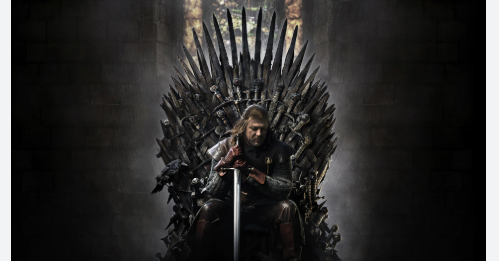
When Game of Thrones first captivated the world, it was defined by its shocking, brutal realism. This wasn’t a world of clear-cut good and evil. It was a world where honorable heroes got their heads chopped off, where wedding celebrations turned into massacres, and where political games were played with daggers in the dark. No one was safe.
This gritty realism, it turns out, is the show’s least fantastical element. Author George R.R. Martin is a passionate student of history, and he has often said that the most brutal events in his books are reflections, not inventions. He acts like a master chef, taking the raw, bloody, and fascinating ingredients of our own past and cooking them into a new and brilliant feast. To understand the “game of thrones” in Westeros, you must first understand the real-life power struggles, betrayals, and wars that wrote our own history.
Here are the top 10 historical events that inspired the shocking and unforgettable world of Game of Thrones.
1. The Wars of the Roses: The Real-Life Stark vs. Lannister
The single greatest inspiration for the entire series is this brutal, 30-year English civil war (1455-1487). The conflict was a dynastic power struggle between two rival branches of the royal family: the House of Lancaster (whose symbol was the red rose) and the House of York (whose symbol was the white rose). Sound familiar? George R.R. Martin swapped the flowers for sigils, creating the Lannisters (Lancaster) and the Starks (York).
The parallels are uncanny. The head of House York, Richard, Duke of York, was a powerful, honorable man who served as Lord Protector of the realm, much like Ned Stark serving as Hand of the King. And just like Ned, Richard challenged the legitimacy of the king’s heirs and was eventually betrayed and beheaded, his head displayed on a spike. Richard’s son, Edward IV, was a brilliant and handsome warrior, much like Robb Stark, who led a successful campaign against the Lancastrians. The Lancaster side featured a ruthless and manipulative queen, Margaret of Anjou, who fiercely protected her (possibly illegitimate) son’s claim—a clear blueprint for Cersei Lannister. The war was a messy, back-and-forth affair of broken alliances, child kings, and shocking betrayals that defined the “Game of Thrones historical inspirations” more than any other event.
2. The Black Dinner & Glencoe: The Horrifying Truth Behind the Red Wedding
The Red Wedding stands as one of the most traumatic episodes in television history. But the “was the Red Wedding a real event?” question has a horrifying answer: yes, twice. Martin combined two separate, infamous events from Scottish history.
The first was the Black Dinner of 1440. The 16-year-old Earl of Douglas and his younger brother, leaders of a powerful clan, were invited to dine with the 10-year-old King of Scotland at Edinburgh Castle. Midway through the feast, a black bull’s head—a symbol of death—was brought in and placed on the table. The terrified boys were then dragged into the courtyard, subjected to a mock trial, and brutally beheaded, all while the young king pleaded for their lives. This shocking betrayal of “guest right”—the sacred law of hospitality—was the core inspiration for the massacre at the Twins.
The second event was the Massacre of Glencoe in 1692. Soldiers from Clan Campbell were given food and shelter by the MacDonalds of Glencoe. After 12 days of feasting and living under their roof, the Campbell soldiers received an order: kill their hosts. They rose in the middle of the night and slaughtered the MacDonalds, who were completely defenseless against men they had treated as guests. This fusion of violating “guest right” with a calculated, treacherous slaughter gave us the Red Wedding.
3. Hadrian’s Wall: The Roman Frontier That Became “The Wall”
This one is a direct, physical inspiration. In 122 AD, the Roman Emperor Hadrian ordered the construction of a massive, 73-mile-long stone wall across the north of England. Its purpose was simple: to separate the Roman province of Britannia from the “barbarian” tribes of Caledonia (modern-day Scotland), namely the Picts. For hundreds of years, Roman soldiers—a brotherhood of men from all corners of the empire—were stationed at bleak, windswept castles along this wall, staring north into the mists, guarding the “civilized” world from the “wild” people beyond.
George R.R. Martin visited Hadrian’s Wall in the 1980s and had the foundational idea for his series. He stood on the wall and wondered what it would be like to be a Roman soldier, staring into the cold, hostile north, not knowing what might come out of the woods. He just “made it a little bigger and made it out of ice.” The Night’s Watch is a direct parallel to the Roman legions, and the Wildlings are a clear echo of the Picts. The Wall in Game of Thrones is simply Hadrian’s Wall with a magical, epic upgrade.
4. The Anarchy: The Succession Crisis That Tore a Kingdom Apart
While the Wars of the Roses maps to the Stark/Lannister conflict, the war between Stannis, Renly, and Joffrey has a different parallel: a 19-year English civil war known as The Anarchy (1135-1153). The conflict began when King Henry I of England died. His only legitimate son and heir had tragically drowned, so he named his daughter, Empress Matilda, as his successor.
The problem? The kingdom’s powerful, sexist barons didn’t want a woman to rule. When Henry I died, Matilda’s cousin, Stephen of Blois, raced to London, seized the treasury, and had himself crowned king. This kicked off a brutal two-decade war that was not a clean fight between two sides, but a chaotic “war of the five kings” style mess. Noble houses switched allegiances constantly, trying to back the winning horse. It was a war defined by a disputed succession, a woman’s “unfit” claim to the throne, and a charismatic but illegitimate usurper—a perfect mirror for the chaos that erupted after Robert Baratheon’s death and the ultimate inspiration for the House of the Dragon prequel series.
5. Byzantine “Greek Fire”: The Secret Weapon of King’s Landing
The terrifying, glowing-green substance known as Wildfire seems like pure fantasy, but it was one of the most feared and secret weapons of the ancient world. The Byzantine Empire, the eastern half of the Roman Empire, held its capital of Constantinople for a thousand years, thanks in large part to its secret weapon: Greek Fire.
Greek Fire was an incendiary liquid, a petroleum-based mixture whose exact formula has been lost to history. It was a state secret guarded as zealously as the “substance” of the Pyromancers in Game of Thrones. This weapon could be pumped through siphons mounted on the front of Byzantine ships, spraying a jet of flames onto enemy vessels. Its most terrifying quality, just like Wildfire, was that it ignited on contact with water and was virtually impossible to extinguish. The Battle of the Blackwater, where Tyrion Lannister uses a single ship full of Wildfire to destroy Stannis’s fleet, is a direct homage to the real-life naval battles where Greek Fire saved Constantinople from massive Arab fleets, securing the Byzantine Empire’s survival.
6. The Mongol Hordes: The Nomadic Terror of the Dothraki Sea
The Dothraki, the nomadic horse-lords of the “Great Grass Sea,” are a clear stand-in for the 13th-century Mongol Empire. Under their brilliant and ruthless leader, Genghis Khan (a perfect model for Khal Drogo), the Mongols united disparate nomadic tribes into the largest contiguous land empire in human history.
The parallels are striking. The Mongols were arguably the greatest light cavalry and mounted archers in history, living their entire lives on horseback. They were a steppe culture, living in the vast, open plains of Central Asia, which they called their “sea of grass.” They viewed settled, city-dwelling peoples with contempt, often sacking massive cities and slaughtering their inhabitants. The Dothraki share this entire culture, from their “khalasars” (Mongol “hordes”), their horse-based religion, their fear of the “poison water” (the ocean, which the Mongols were famously hesitant to cross), and their ability to unite under a single, powerful “Khal of Khals” to become an unstoppable force.
7. The Vikings: The Reavers of the Iron Islands
“We do not sow.” This motto perfectly encapsulates the warrior culture of the Ironborn, who are a direct fantasy adaptation of the Vikings. Hailing from the harsh, rocky, and resource-poor Iron Islands (Scandinavia), the Ironborn, like the Norsemen, turned to the sea to survive. They became a culture of reavers and raiders, “paying the iron price” for what they wanted instead of trading for it.
The parallels run deep. The iconic Viking longships are mirrored in the Ironborn’s fleet of longships. The Viking ethos of dying in battle to reach Valhalla is echoed in the Ironborn’s fanatical courage. Most notably, their “Drowned God” religion is a dark, twisted version of maritime beliefs. The ritual of drowning and resuscitating a believer (“What is dead may never die, but rises again, harder and stronger”) is a brutal spin on baptism, perfectly fitting for a culture that both lives by and dies by the sea. The Ironborn are, quite simply, Vikings transplanted into the world of Westeros.
8. Henry Tudor’s Conquest: The Dragon’s Return from Across the Sea
Daenerys Targaryen’s entire story arc—an exiled royal claimant across the Narrow Sea, building a foreign army to one day return and reclaim her family’s throne—is a direct parallel to the man who ended the Wars of the Roses: Henry Tudor.
Henry was a young man with a distant claim to the throne (on the Lancaster/Lannister side) who was forced to flee England as a teenager. He spent 14 years in exile in France (Daenerys’s Essos). While he was away, the English crown was held by the Yorkist “usurper” Richard III. Henry, like Dany, was the last hope for his dynasty. He painstakingly gathered support, ships, and a foreign army (French mercenaries) and finally crossed the English Channel (“the Narrow Sea”). He landed, marched inland, and defeated the royal army at the Battle of Bosworth Field, killing Richard III and taking the crown for himself. This story of an exiled claimant returning with a foreign army to conquer the kingdom is the exact blueprint for Daenerys’s entire journey.
9. The Church vs. The Crown: The Rise of the High Sparrow
The shocking rise of the Faith Militant and the High Sparrow—which saw Queen Cersei brought low by a religious zealot she herself empowered—is a classic medieval power struggle. The best parallel is the 12th-century conflict between King Henry II of England and Thomas Becket, the Archbishop of Canterbury.
Henry II, a powerful and short-tempered king, wanted to bring the Church under his royal control. To do this, he appointed his drinking buddy and loyal chancellor, Thomas Becket, to be the new Archbishop, assuming his friend would do his bidding. This is exactly what Cersei did, arming the High Sparrow to get rid of her political rival, Margaery Tyrell, thinking she could control him. Both Cersei and Henry II made the same colossal miscalculation. Becket, once in power, had a genuine religious conversion and became an incorruptible fanatic, fiercely defending the Church’s power against the king. The conflict escalated until a desperate Henry II famously cried, “Will no one rid me of this turbulent priest?” His knights took it as an order, rode to Canterbury, and murdered Becket, turning him into a martyr. Cersei, lacking knights, chose a more… explosive solution.
10. The Norman Conquest: How the Targaryens First Took Westeros
The original Targaryen conquest, which took place 300 years before the show begins, is a clear echo of the most important event in English history: the Norman Conquest of 1066. Before 1066, England was a fractured land of Anglo-Saxon kingdoms, similar to the Seven Kingdoms of Westeros. Across the English Channel lived William, Duke of Normandy, a man with a distant claim to the throne.
In 1066, William “the Conqueror” invaded England with a foreign army and, more importantly, a game-changing military technology: the armored, mounted knight and sophisticated siege warfare. The Anglo-Saxons, who fought on foot, were decisively defeated at the Battle of Hastings. William then conquered and unified the entire kingdom, replacing the old nobility with his own. This is a perfect parallel to Aegon “the Conqueror” Targaryen. Aegon (William) came from across the Narrow Sea (the English Channel) to a divided land (Westeros/England) and used a “game-changing” military technology—in his case, dragons—to conquer and unify the Seven Kingdoms, forging the Iron Throne.
Further Reading
The shocking, brutal, and compelling power of Game of Thrones comes from the fact that, at its core, it is a story about humanity. And as these events show, our own history is more bloody, complex, and fascinating than any fantasy novel.
For those interested in diving deeper into the real-life “Game of Thrones,” here are a few accessible and engaging books:
- The Wars of the Roses by Alison Weir
- A Distant Mirror: The Calamitous 14th Century by Barbara W. Tuchman
- Genghis Khan and the Making of the Modern World by Jack Weatherford
- The Sea Wolves: A History of the Vikings by Lars Brownworth
Here at Zentara.blog, our mission is to take those tricky subjects and unlock them, making knowledge exciting and easy to grasp for everyone. But the adventure doesn’t stop on this page! We’re constantly exploring new frontiers and sharing discoveries across the digital universe. Want to dive deeper into more mind-bending Top 10s and keep expanding your world? Come join us on our other platforms – we’ve got unique experiences waiting for you on each one!
Get inspired by visual wonders and bite-sized facts: See the world through Zentara’s eyes on Pinterest!
Pin our fascinating facts and stunning visuals to your own boards. Explore Pins on Pinterest: https://uk.pinterest.com/zentarablog/
Discover quick insights and behind-the-scenes peeks: Hop over to Tumblr for snippets, quotes, and unique content you won’t find anywhere else. It’s a different flavour of discovery! Follow the Fun on Tumblr: https://www.tumblr.com/zentarablog
Ready for deep dives you can listen to or watch? We’re bringing our accessible approach to video and potentially audio! Subscribe to our YouTube channel and tune into future projects that make learning pop! Subscribe on YouTube: https://www.youtube.com/@ZentaraUK
Seeking even more knowledge in one place? We’Bve compiled some of our most popular topic deep dives into fantastic ebooks! Find them on Amazon and keep the learning journey going anytime, anywhere. Find Our Ebooks on Amazon: https://www.amazon.co.uk/s?k=Zentara+UK&ref=nb_sb_noss
Connect with us and fellow knowledge seekers: Join the conversation on BlueSky! We’re sharing updates, thoughts, and maybe even asking you what wonders we should explore next. Chat with Us on BlueSky: https://bsky.app/profile/zentarablog.bsky.social
Perfect for learning on the move! We post multiple 10-minute podcasts per day on Spotify. Pop on your headphones and fill your day with fascinating facts while you’re out and about! Listen on Spotify: https://open.spotify.com/show/3dmHbKeDufRx95xPYIqKhJFollow us on Instagram for bytesize knowledge! We post multiple posts per day on our official Instagram account. https://www.instagram.com/zentarablog/ Every click helps us keep bringing honest, accessible knowledge to everyone. Thanks for exploring with us today – see you out there in the world of discovery!




Leave a Reply