
Table of Contents
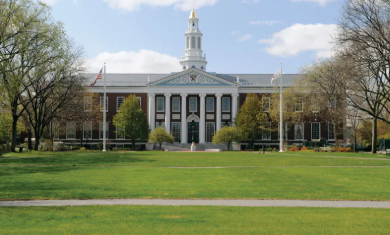
When people think of Harvard University, a specific set of images usually comes to mind: ivy-covered brick walls, prestigious law degrees, sweater vests, and perhaps the fictionalized versions of Mark Zuckerberg or Elle Woods walking through Harvard Yard. As the oldest institution of higher learning in the United States, founded in 1636, Harvard has cemented itself not just as a school, but as a global symbol of elite power, intellect, and tradition. It is the ultimate brand name in education, a place where presidents are forged and Nobel Prizes are polished.
However, you don’t survive for nearly 400 years without accumulating a massive amount of baggage, bizarre traditions, and dark secrets. Beneath the veneer of academic perfection lies a history filled with eccentricity. From books bound in grim materials to secret tribunals and tuition payments made in livestock, the true story of Harvard is far stranger than its glossy brochure suggests. It is a place where history is constantly being made, but where the ghosts of the past—sometimes literally, in the case of the library—still linger.
Whether you are an aspiring applicant, a history buff, or just someone curious about what really goes on behind those iron gates in Cambridge, Massachusetts, these insights peel back the crimson curtain.
Here are 10 interesting facts you didn’t know about Harvard University.
1. The Famous “John Harvard” Statue is a Fraud
The Statue of Three Lies. In the center of Harvard Yard sits a bronze statue of a seated man, traditionally the most photographed spot on campus. Tourists flock to it daily, rubbing the statue’s left shoe for good luck—a tradition so popular that the bronze on the toe has been polished to a shining gold while the rest of the statue has oxidized to green. The inscription reads: “John Harvard, Founder, 1638.” The problem? Every single piece of information on that pedestal is false.
Students and historians affectionately call it the “Statue of Three Lies.” First, the statue does not depict John Harvard. No portraits of the man survived a fire in 1764, so when the sculptor Daniel Chester French created the piece in 1884, he used a random student named Sherman Hoar as a model. You are rubbing the foot of a 19th-century student, not the 17th-century clergyman. Second, John Harvard was not the founder; he was a major benefactor who donated his library and half his estate to the school, but the college was established by a vote of the Great and General Court of the Massachusetts Bay Colony. Third, the college was founded in 1636, not 1638. The statue is a beautiful work of art, but as a historical record, it is 0 for 3.
2. Tuition Was Once Paid in Livestock and Groceries
When a gallon of goat wine covered your semester. Today, the cost of attending Harvard without financial aid hovers around a staggering $80,000 to $90,000 per year, a sum that requires complex loans, grants, and savings plans. However, in the university’s earliest days, the economy of the Massachusetts Bay Colony was barter-based, and hard currency was scarce. The administration, understanding the reality of their agrarian students, accepted tuition in whatever form the families could provide.
For many years in the 17th century, “tuition” was paid in produce, livestock, and household goods. Records from the time show payments made in bushels of wheat, malt, parsnips, and even butter. One particularly famous story involves a student who paid his tuition with a “fat, old goat,” while another settled his bill with a barrel of goat wine. This system reflects the humble, localized origins of what is now a global powerhouse. It wasn’t until much later that the university began to resemble the financial titan it is today. It serves as a reminder that even the most elite institutions began with a struggle to keep the lights on and the pantry stocked.
3. The Library Held a Book Bound in Human Skin
A macabre artifact hidden in the stacks. For decades, a dark rumor circulated among the students and librarians of Harvard’s Houghton Library: that one of the books in the collection was bound in human skin. While this sounds like the plot of a horror movie or an urban legend, in Harvard’s case, it was a verified fact. The book, a 19th-century treatise on the human soul titled Des destinées de l’âme (Destinies of the Soul), was indeed bound in the skin of a deceased female mental patient.
The binding was done by Dr. Ludovic Bouland in the 1880s, who inserted a note stating that “a book about the human soul deserved to have a human covering.” For years, this gruesome artifact remained in the library, available to scholars. However, as ethical standards regarding human remains in museum collections evolved, the university faced pressure to address the issue. In a significant move in 2024, Harvard officially removed the human skin binding from the book, acknowledging that its stewardship of the remains had failed to meet ethical standards. The skin was respectfully disposed of, and the book was rebound, but the legacy of this grim curiosity remains a chilling chapter in the university’s archival history.
4. The “Titanic” Connection to Widener Library
A mother’s grief and a swimming requirement myth. The Harry Elkins Widener Memorial Library is the centerpiece of Harvard’s library system, housing millions of volumes and standing as a monument to neoclassical architecture. It was built with a massive donation from Eleanor Elkins Widener in memory of her son, Harry, a 1907 Harvard graduate and avid book collector. The tragedy behind the donation is that Harry and his father perished on the RMS Titanic in 1912. Legend says Harry had placed a rare edition of Francis Bacon’s essays in his pocket just before the ship sank, choosing a book over his own survival.
A pervasive myth suggests that Mrs. Widener attached a stipulation to her donation: that every Harvard student must pass a swim test to graduate, ensuring no student would drown as her son did. While Harvard did have a swim test for many years (abolished in the 1970s), it was unrelated to the Widener donation. However, a true stipulation she did make was that the library’s exterior could not be altered. This created a problem as the library’s collection grew. To solve it without breaking the contract or changing the silhouette, Harvard had to expand downward, digging massive subterranean levels deep into the earth to store millions of additional books, creating an iceberg-like structure where much of the mass is underground.
5. Hollywood is Banned from Campus
Why you rarely see the real Harvard in movies. If you watch movies like Legally Blonde, The Social Network, or Good Will Hunting, you feel like you are seeing Harvard. In reality, you are likely seeing the University of Southern California, the University of Toronto, or Wheaton College. Since 1970, Harvard has maintained a strict policy that essentially bans commercial filming on its campus.
The administration argues that film crews are disruptive to the educational environment and the privacy of students. They are fiercely protective of their brand and do not want the university used as a mere backdrop for commercial entertainment. While they occasionally allow news crews or documentaries, big-budget Hollywood productions are almost always turned away. This has forced set designers to become masters of illusion, recreating Harvard Yard using brick facades and clever angles at other universities. The only major exception in recent history was for the film Love Story (1970), the chaos of which actually prompted the ban in the first place.
6. The Origin of the Color “Crimson”
A fashion choice that became an identity. Harvard’s school color is unmistakably crimson. It is the name of the student newspaper, the sports teams, and the very identity of the school. However, this color wasn’t chosen by a branding committee or a board of trustees. It was chosen on a whim by two students trying to help spectators tell teams apart during a rowing regatta.
In 1858, Charles William Eliot (who would later become a legendary president of Harvard) and his fellow oarsman Benjamin Crowninshield wanted to ensure their crew could be spotted by fans during a regatta on the Charles River. They bought six silk handkerchiefs in a deep red—specifically crimson—color and tied them around their heads. The color stuck. In 1875, the student body held a vote to decide between crimson and magenta (which had also been popular). Crimson won by a landslide, thanks to the handkerchiefs, and was officially adopted by the Harvard Corporation in 1910. It is a reminder that even the most entrenched traditions often start with a simple, practical solution to a minor problem.
7. The “Primal Scream” Tradition
Baring it all for better grades. Twice a year, on the night before final exams begin, the studious silence of Harvard Yard is shattered by a chaotic and naked tradition known as the “Primal Scream.” At the stroke of midnight, hundreds of students strip down to nothing—regardless of the freezing New England winter temperatures—and run a lap around the Old Yard while screaming at the top of their lungs.
The tradition began in the 1960s simply as a scream from dorm windows to vent frustration over studying. over the decades, it evolved (or devolved) into a streak. It serves as a collective release of the immense pressure cooker that is Harvard academic life. The event attracts not only students but also the school’s marching band, which plays motivational tunes while fully clothed, creating a surreal juxtaposition. While the administration doesn’t officially endorse the event, they generally turn a blind eye to the nudity, prioritizing student safety and crowd control over strict indecency enforcement during those stressful few minutes.
8. The “Secret Court” of 1920
A shameful purge erased from history. Not all of Harvard’s secrets are quirky or fun; some are deeply tragic. In 1920, the university convened a secret tribunal aimed at rooting out and expelling gay students. Led by a dean and acting with the full authority of the administration, this “Secret Court” interrogated students about their private lives, social circles, and sexual orientations.
The result was the expulsion of eight students, a recent graduate, and an assistant professor. Their lives were effectively ruined; they were kicked out without degrees, and the university placed a permanent stain on their records to ensure they would not be accepted by other institutions. The existence of this tribunal was buried in the archives and remained unknown to the public for over 80 years. It wasn’t until 2002 that the university newspaper, The Crimson, uncovered the files. The administration subsequently issued an apology, but the event serves as a stark reminder of the institutional prejudice that once thrived even in the highest halls of intellect.
9. The Counter-Culture Was Born in a Harvard Lab
Timothy Leary and the Psilocybin Project. When we think of the 1960s psychedelic revolution, we picture Woodstock or San Francisco, but the movement arguably had its intellectual birth in a Harvard psychology department. In 1960, Dr. Timothy Leary and Dr. Richard Alpert (later known as Ram Dass) began the Harvard Psilocybin Project to study the effects of magic mushrooms and LSD on the human mind.
Initially, these were sanctioned academic experiments. They tested the drugs on graduate students, prison inmates (in an attempt to reduce recidivism), and even religious figures to see if the substances could induce spiritual experiences. However, the experiments quickly became scientifically loose and ethically questionable, with the professors taking the drugs alongside the subjects. The university fired Alpert and declined to renew Leary’s contract in 1963, effectively kicking them out. This expulsion freed them to become the high priests of the counter-culture, urging a generation to “turn on, tune in, and drop out,” a mantra that originated from research started within the Ivy League.
10. It Operates Like a Hedge Fund with a University Attached
The staggering scale of the endowment. To call Harvard “rich” is a massive understatement. The university manages the largest academic endowment in the world. As of the most recent fiscal reports, the endowment stands at over $50 billion. To put that into perspective, Harvard’s savings account is larger than the Gross Domestic Product (GDP) of over 100 countries, including nations like Tunisia, Bolivia, and Slovenia.
This immense wealth fundamentally changes how the university operates. It is not dependent on tuition revenue in the same way other colleges are; in fact, tuition covers only a fraction of the operating costs. This wealth allows for a “need-blind” admission policy where accepted students from low-income families pay nothing. Critics and financial analysts often joke that Harvard is essentially “a hedge fund with a university attached” because its investment management company (HMC) is a financial juggernaut that rivals Wall Street firms. This financial power grants Harvard a level of autonomy and influence that transcends education, making it a major player in global economics and real estate.
Further Reading
- The Harvard Book: Selections from Three Centuries by William Bentinck-Smith
- My Monticello by Jocelyn Nicole Johnson (For a fictional but poignant look at legacy and history, though less direct history) — Correction: Better recommendation for factual history: Harvard Yard: A Love Story by William Martin.
- Theophilus North by Thornton Wilder (Captures the atmosphere of the elite northeast).
- Yesterdays at Harvard by Marcus Blakey (A look at the cultural evolution).
- The Intellectuals and the Flag by Todd Gitlin (Discusses the role of universities like Harvard in American life).
- Top Recommendation: Harvard: An Architectural History by Bainbridge Bunting (For those interested in the physical secrets of the buildings).
Keep the Discovery Going!
Here at Zentara, our mission is to take tricky subjects and unlock them, making knowledge exciting and easy to grasp. But the adventure doesn’t stop at the bottom of this page. We are constantly creating new ways for you to learn, watch, and listen every single day.
Watch & Learn on YouTube
Visual learner? We publish 4 new videos every day, plus breaking news shorts to keep you smarter than the headlines. From deep dives to quick facts, our channel is your daily visual dose of wonder.
https://www.youtube.com/@ZentaraUK
Listen on the Go on Spotify
Prefer to learn while you move? Tune into the Zentara Podcast! We drop a new episode daily, perfect for your commute, workout, or coffee break. Pop on your headphones and fill your day with fascinating facts.
Every click, view, and listen helps us keep bringing honest knowledge to everyone. Thanks for exploring with us today—see you out there in the world of discovery!




Leave a Reply