
Table of Contents
History is often written by the victors, and in the world of innovation, the victors are the iPhones, the lightbulbs, and the internal combustion engines. But for every world-changing success, there are thousands of ambitious flops—creations that promised to revolutionize our lives but instead ended up as punchlines or dusty relics in a warehouse.
Studying these failures is often more instructive than studying successes. Success can be a result of lucky timing or specific market conditions, but failure often reveals fundamental truths about human psychology, engineering limitations, and the dangerous gap between what inventors think we need and what we actually want. Some of these inventions were simply ahead of their time, while others were solutions looking for a problem that didn’t exist.
Here are the top 10 failed inventions that were hyped to change the world but crashed on the launchpad, along with the fascinating reasons why they missed the mark.
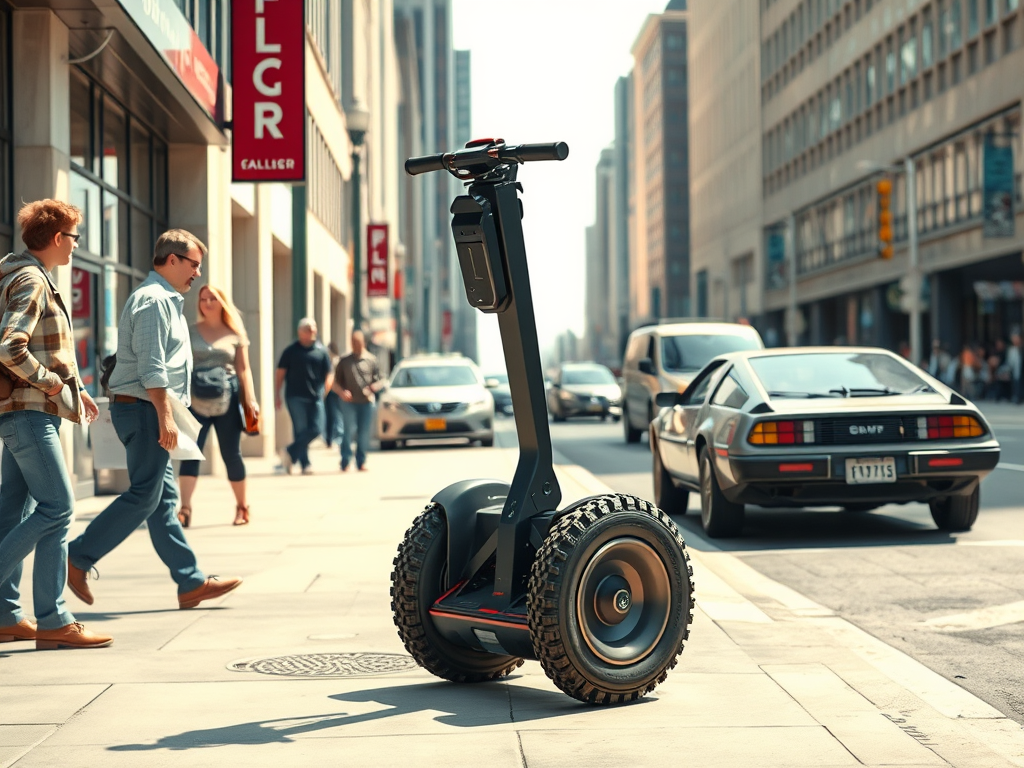
1. The Scooter That Stumbled: The Segway
The Hype: Code-named “Ginger” and shrouded in secrecy, the Segway Personal Transporter was unveiled in 2001 with rumors that it would redesign cities and be “to the car what the car was to the horse.” Visionaries like Steve Jobs and Jeff Bezos were reportedly impressed by early prototypes.
The Reality Check: The Segway is the poster child for “tech disasters.” While the self-balancing engineering was brilliant, the inventors ignored a crucial question: Where do you ride it? It was too fast for sidewalks (terrifying pedestrians) and too slow and exposed for roads (terrifying riders).
Furthermore, the price tag was astronomical—around $5,000 at launch. It solved a problem—walking—that most people didn’t feel needed an expensive, heavy, and dorky-looking solution. Instead of revolutionizing urban transport, it became the preferred vehicle for mall cops and tourists.
2. The Face Computer No One Wanted: Google Glass
The Hype: Released in 2013, Google Glass promised a future of “ubiquitous computing.” It was a wearable headset that displayed information in a smartphone-like hands-free format. It was supposed to end our addiction to looking down at screens by putting the internet right in our eye line.
The Reality Check: Google Glass failed because it ignored social norms. The device featured a camera that could record at any moment, making everyone around the wearer uncomfortable. Users were pejoratively dubbed “Glassholes.”
Beyond the privacy concerns, the device didn’t solve a burning problem. Checking a notification on your wrist (smartwatch) or in your pocket (phone) was socially acceptable; talking to your glasses and twitching your eye to scroll through menus was not. It serves as a reminder that technology must fit into human behavior, not force humans to adapt to awkward new behaviors.
3. The $400 Juice Press: Juicero
The Hype: In 2016, Silicon Valley poured $120 million into Juicero, a Wi-Fi-connected, luxury juice press. The pitch was “farm-to-glass” convenience. Users bought proprietary packets of chopped produce, and the machine squeezed them into fresh juice with exactly 4 tons of force.
The Reality Check: The bubble burst when Bloomberg News revealed a hilarious secret: You could squeeze the juice packets by hand just as effectively as the $400 machine could. The machine was an over-engineered marvel of unnecessary complexity. It had QR code scanners and internet connectivity just to verify if the juice was expired—a task a human can do by reading a date on the package.
Juicero became the symbol of Silicon Valley hubris—solving “rich people problems” with expensive hardware that offered no real advantage over simple manual labor.
4. The Format War Loser: Betamax
The Hype: Sony released Betamax in 1975, a year before JVC released VHS. By most technical metrics, Betamax was the superior format. It offered better video resolution, better sound, and a more stable picture. Videophiles and early adopters were convinced it was the future of home cinema.
The Reality Check: Superior technology doesn’t always win; sometimes, superior strategy does. Betamax tapes could only record for 60 minutes, which wasn’t long enough for a standard movie or a football game. VHS tapes could record for 2 to 4 hours.
Furthermore, Sony kept Betamax proprietary, while JVC licensed VHS technology to any manufacturer who wanted it. This flooded the market with cheaper VHS players, driving down costs and creating a massive library of rental movies. Consumers voted with their wallets for “good enough” quality that was cheaper and could record a whole movie.
5. The Flying Car That Couldn’t: The Ford Nucleon
The Hype: In the optimism of the Atomic Age (1950s), Ford proposed the Nucleon. It wasn’t a flying car, but it was just as radical: a nuclear-powered automobile. The concept suggested a car that could drive 5,000 miles without refueling, powered by a small uranium fission reactor in the trunk.
The Reality Check: The Nucleon never made it past the concept model stage, and for good reason. The engineering challenges were insurmountable. Shielding the driver and passengers from radiation would have required tons of lead, making the car impossibly heavy.
More importantly, the safety implications were terrifying. a minor fender bender could turn into a radioactive disaster zone. It highlights a common trap in innovation: just because we can harness a power source (like nuclear energy), doesn’t mean it scales down effectively or safely to consumer levels.
6. The Virtual Boy’s Headache: Nintendo Virtual Boy
The Hype: Decades before the Oculus Quest, Nintendo launched the Virtual Boy in 1995. It was marketed as the first portable video game console capable of displaying “true 3D graphics.” It promised to immerse players in a red-and-black digital world.
The Reality Check: The Virtual Boy was a disaster of ergonomics and display technology. It wasn’t truly portable (it had to sit on a table stand), and the monochrome red LED display caused eye strain, nausea, and headaches for many users within minutes.
Nintendo, usually the master of intuitive play, missed the mark by releasing an unfinished product to bridge a release gap. It sold poorly and was discontinued in less than a year. It teaches a vital lesson: immersion requires comfort. If the user feels sick using your product, no amount of cool graphics will save it.
7. The Smell of Failure: DigiScents iSmell
The Hype: In 2001, DigiScents unveiled the iSmell Personal Scent Synthesizer. The idea was “Scent-enabled Media.” The device, shaped like a shark’s fin, plugged into your computer and would release scents to match the website you were visiting or the movie you were watching.
The Reality Check: This invention failed the “sniff test”—literally. The device used a cartridge of 128 primary odors to mix smells, but the result was often a chemical mess. But the bigger issue was the lack of consumer desire.
While sound and sight are primary senses for information, smell is visceral and ambient. Users didn’t want their home office smelling like burning rubber during an action movie or cheap perfume while shopping online. It solved a problem that nobody had, adding sensory clutter rather than value.
8. The DeLorean’s Dark Timeline: The DMC-12
The Hype: Immortalized by Back to the Future, the DeLorean DMC-12 was the brainchild of automotive superstar John DeLorean. With its stainless steel body and gull-wing doors, it was supposed to be the ethical, safe, and futuristic sports car that disrupted the stagnant Detroit auto industry.
The Reality Check: Behind the futuristic look was underwhelming engineering. The car was heavy, underpowered, and plagued by quality control issues. The stainless steel body showed every fingerprint and was difficult to repair.
While the car is now a collector’s icon, the company collapsed in 1982 amidst financial ruin and a drug trafficking scandal involving its founder (of which he was later acquitted, but the damage was done). The DeLorean proves that style and celebrity branding cannot mask a product that fails on performance fundamentals.
9. The Social Network for Music: Apple Ping
The Hype: In 2010, Steve Jobs announced Ping as “Facebook and Twitter meet iTunes.” It was a social network built directly into iTunes, allowing you to follow artists and see what your friends were listening to. With Apple’s massive user base, it seemed too big to fail.
The Reality Check: Ping failed because it was a “walled garden.” It didn’t integrate with Facebook (which everyone was already using), so you had to rebuild your social graph from scratch. It was also sterile; artists used it for promotional blasts rather than genuine interaction.
Users didn’t want a separate social network just for music that lived inside a slow, bloated piece of software like iTunes. Apple quietly shut it down in 2012, learning that you cannot force social interaction; it has to happen organically where users already hang out.
10. The Internet Appliance: 3Com Audrey
The Hype: Released in 2000, the 3Com Audrey was a dedicated “internet appliance.” Before the iPad or cheap tablets, this device was designed to sit in the kitchen. It could browse the web, handle email, and sync with your PalmPilot. It was supposed to make the internet a household utility like a toaster.
The Reality Check: The Audrey was priced at $499, which was expensive for a device that could only do basic internet tasks. It lacked the power of a PC but was priced like a low-end one. It also launched right before the dot-com bubble burst.
More importantly, it misjudged the trajectory of technology. We didn’t want separate “internet appliances” for each room; we wanted portable devices that could go into any room. The smartphone and tablet eventually killed this entire category by being versatile rather than specialized.
Further Reading
To explore more about why innovations succeed or crash, consider these insightful books:
- “The Innovator’s Dilemma” by Clayton M. Christensen – A classic business book explaining why great companies fail to innovate and are often overtaken by smaller competitors.
- “Fucked Up: The Inside Story of the Dot Com Bubble” (or similar titles regarding the Dot Com bust) – Note: For a more general accessible title, try: “Boo Hoo: A Dot.com Story from Concept to Catastrophe” by Ernst Malmsten. – A first-hand account of a spectacular internet failure.
- “Ten Types of Innovation: The Discipline of Building Breakthroughs” by Larry Keeley – This book provides a framework for understanding what actually constitutes innovation beyond just “new gadgets.”
- “Bad Blood: Secrets and Lies in a Silicon Valley Startup” by John Carreyrou – While about a fraudulent invention (Theranos), it perfectly captures the “fake it ’til you make it” culture that leads to failed products.
Formatting Rules for Outro: Use an H2 Header for “Keep the Discovery Going!” Use H3 Headers for “Watch & Learn on YouTube” and “Listen on the Go on Spotify”. Ensure there is a full blank line between every paragraph and link. Embed the links into the text where indicated. [Begin Outro Text]
Keep the Discovery Going!
Here at Zentara, our mission is to take tricky subjects and unlock them, making knowledge exciting and easy to grasp. But the adventure doesn’t stop at the bottom of this page. We are constantly creating new ways for you to learn, watch, and listen every single day.
Watch & Learn on YouTube
Visual learner? We publish 4 new videos every day, plus breaking news shorts to keep you smarter than the headlines. From deep dives to quick facts, our channel is your daily visual dose of wonder.
Click here to Subscribe to Zentara on YouTube
Listen on the Go on Spotify
Prefer to learn while you move? Tune into the Zentara Podcast! We drop a new episode daily, perfect for your commute, workout, or coffee break. Pop on your headphones and fill your day with fascinating facts.
Click here to Listen on Spotify
Every click, view, and listen helps us keep bringing honest knowledge to everyone. Thanks for exploring with us today—see you out there in the world of discovery!




Leave a Reply