
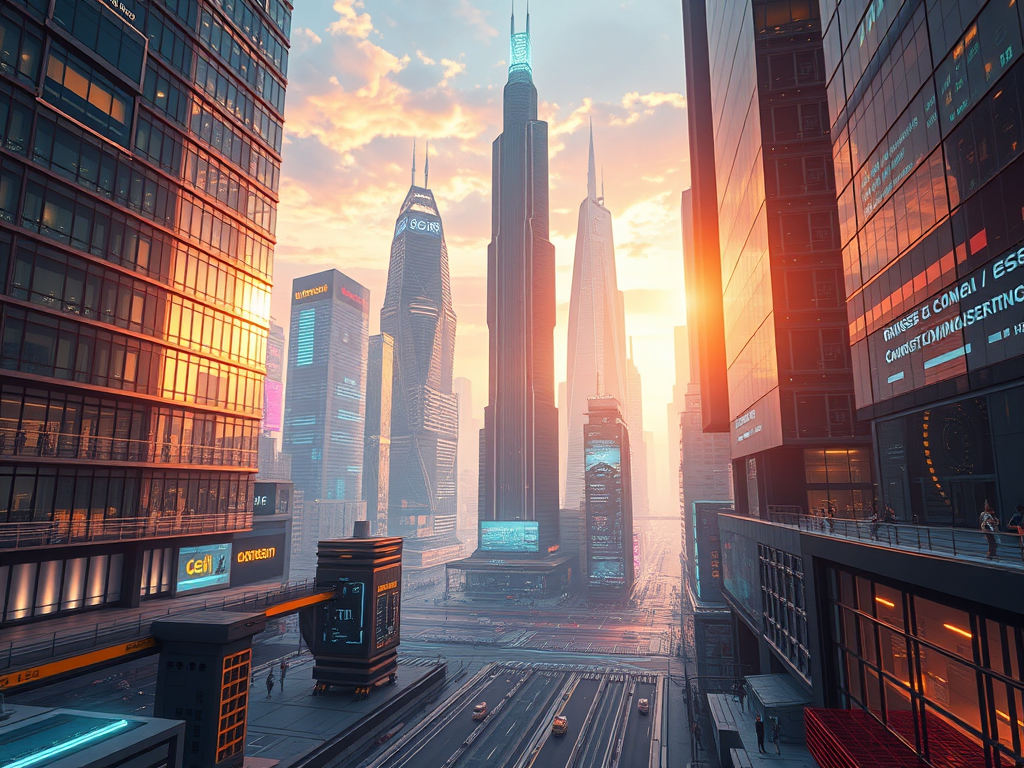
The year 2030 was once the distant horizon of science fiction, a year synonymous with “the future.” But as we stand in 2026, that horizon is no longer a blur; it is a rapidly approaching reality. We are living through a period of “exponential convergence,” where breakthroughs in one field—like artificial intelligence—are acting as a turbocharger for others, such as biotechnology or materials science. The next four years will bridge the gap between “experimental” and “essential,” fundamentally altering how we work, heal, and interact with the planet.
Understanding emerging technologies 2030 requires us to look past the gadgets and focus on the systems. We are moving away from a world where technology is a tool we “use” and toward one where it is a pervasive, intelligent environment that anticipates our needs. From computers that mimic the human brain to the ability to grow our infrastructure like a plant, the landscape of 2030 is being built on ten specific technological pillars. These innovations aren’t just changing what we can do; they are redefining what it means to be human in a hyperconnected world.
1. Agentic AI: From Digital Assistants to Autonomous Coworkers
For the past few years, we have lived in the era of Generative AI—models that could write poems or generate images when prompted. By 2030, we will have transitioned into the era of Agentic AI. Unlike current chatbots that wait for instructions, agentic systems are goal-oriented. They don’t just “talk”; they “do.” Imagine a digital coworker that doesn’t just draft an email but researches a project, coordinates with five other agents representing different departments, and executes a multi-step supply chain fix without you ever touching a keyboard.
Think of current AI like a very smart encyclopedia. You ask it a question, and it gives you an answer. Agentic AI is more like a highly skilled chief of staff. It understands your intent, navigates complex digital environments, and learns from its mistakes. By 2030, these multi-agent systems will be the backbone of the global economy, managing everything from personalized education paths to city-wide traffic grids. This shift from “assistive” to “autonomous” means that human roles will pivot toward high-level strategy and ethical oversight. We are no longer just using software; we are orchestrating a silicon-based workforce.
2. Commercial Quantum Computing: Breaking the Computational Ceiling
For decades, quantum computing was a theoretical dream confined to ultra-cold laboratories. But as of 2026, we have reached the “utility phase,” and by 2030, quantum systems will be solving problems that would take a classical supercomputer ten thousand years to crack. This isn’t just a faster computer; it’s a different kind of math altogether. While traditional computers use “bits” (1s and 0s), quantum computers use “qubits” that can exist in multiple states simultaneously, allowing them to explore billions of possibilities at once.
The most profound impact of quantum technology 2030 will be in chemistry and pharmacology. Imagine being able to simulate a new life-saving drug at the molecular level with 100% accuracy before ever testing it in a lab. We will be able to design “perfect” catalysts to pull carbon directly out of the atmosphere or create room-temperature superconductors that revolutionize energy transmission. It’s like moving from a magnifying glass to an electron microscope; suddenly, the invisible rules of the universe become a playground for innovation. This technology will be the key to solving the “unsolvable” problems of climate change and disease.
3. Brain-Computer Interfaces (BCIs): The Ultimate Human-Machine Fusion
The way we interact with technology is about to undergo its most radical change since the invention of the mouse. Brain-computer interfaces (BCIs), once the stuff of cyberpunk novels, are entering the mainstream. Companies like Neuralink and Synchron are already demonstrating that we can bridge the gap between biological thought and digital action. By 2030, this technology will move beyond medical rehabilitation for the paralyzed and toward “cognitive augmentation” for the general public.
Think of a BCI as a high-speed data port for your mind. Instead of typing on a screen or speaking to an assistant, you could “think” a message or control a smart home device through sheer intent. For the average person, this might look like a stylish headband or a subtle wearable that translates neural signals into commands. In the workplace, it could allow for “collaborative telepathy,” where designers can share visual concepts directly from mind to mind. While the ethical questions are massive, the potential to cure neurological disorders and expand human memory makes this one of the most transformative future technology trends of the decade.
4. Synthetic Biology: Writing the Code of Life
We are moving from a world where we “extract” resources from nature to a world where we “program” them. Synthetic biology and biomanufacturing are transforming cells into tiny factories. By 2030, we won’t just be mining for materials; we will be brewing them. Precision fermentation and DNA-based manufacturing are allowing us to create everything from lab-grown leather that is molecularly identical to the real thing, to carbon-negative concrete that “grows” and heals itself.
An analogy for this is the transition from a traditional printing press to a word processor. Instead of being stuck with the “ink” and “paper” nature gave us, we can now edit the underlying code (DNA) to create materials with specific properties. We are seeing the rise of “biofoundries” that can produce customized medicines, biofuels, and even drought-resistant crops on demand. This biotechnology 2030 shift is essential for a circular economy, as it allows us to produce what we need with a fraction of the land, water, and carbon footprint of traditional industrial processes. The “Green Revolution” of the 21st century will be written in the language of genetics.
5. Neuromorphic Computing: Computers That Think Like Brains
Our current AI models are brilliant but “energy hungry.” Training a single large model can consume as much electricity as a small town. Neuromorphic computing aims to solve this by building hardware that mimics the physical structure of the human brain. While traditional chips process data in a linear, power-intensive way, neuromorphic chips use “spiking neural networks” that only consume energy when they are actually processing information—much like the neurons in your head.
This is a massive leap in energy-efficient technology. By 2030, neuromorphic chips will allow for “AI at the edge”—meaning your smartphone or a tiny drone will have the processing power of today’s massive server farms without needing a constant internet connection or a giant battery. Imagine a hearing aid that can filter out background noise with the same precision as a human ear, or a robot that can learn to navigate a complex environment in real-time using only a fraction of the power of a lightbulb. This technology ensures that the “intelligence” of 2030 isn’t just powerful, but sustainable and ubiquitous.
6. Solid-State Batteries: The Engine of the Green Transition
The biggest bottleneck for the green energy transition has always been storage. Lithium-ion batteries have served us well, but they are heavy, slow to charge, and carry a risk of fire. Solid-state batteries represent the next “leapfrog” technology. By replacing the liquid electrolyte in a battery with a solid material, we can create batteries that are double the density, charge in minutes, and are significantly safer.
By 2030, solid-state battery technology will make the “electric vehicle (EV) revolution” irreversible. We will see planes that can fly short-haul routes on electricity and smartphones that last a week on a single charge. More importantly, this technology will allow us to stabilize our power grids. We can store the energy from a sunny day or a windy night and release it exactly when needed, making fossil-fuel-based “peaker plants” obsolete. It’s like moving from a leaky bucket to a high-tech thermos; we can finally hold onto the energy we harvest from the sun and wind without losing half of it along the way.
7. Physical AI and Advanced Humanoid Robotics
For years, robots were confined to cages in car factories. In 2026, we are seeing them step out into the “wild,” and by 2030, Physical AI will make them part of our daily landscape. Unlike the “dumb” robots of the past, these machines are equipped with advanced vision systems and tactile sensors that allow them to understand and navigate the unpredictable human world.
The “holy grail” is the general-purpose humanoid robot. Companies like Tesla (Optimus), Figure, and Boston Dynamics are creating machines that can perform human-like tasks—from folding laundry to stocking warehouse shelves. This isn’t just about automation; it’s about addressing the global labor shortage and aging populations. Imagine a robot that can assist an elderly person with mobility, or a construction bot that can work in environments too dangerous for humans. By 2030, the “robotics-as-a-service” model will be common, with machines handling the “3 D’s”: tasks that are Dull, Dirty, or Dangerous. They won’t replace us; they will liberate us from the most grueling aspects of physical labor.
8. Digital Provenance and Preemptive Cybersecurity
As AI becomes better at generating reality, the “truth” becomes our most valuable and vulnerable resource. We are already seeing the rise of AI-generated misinformation, and by 2030, “seeing is believing” will no longer be a valid rule of thumb. This has birthed the field of Digital Provenance—a technological “nutrition label” for every piece of data on the internet. Using blockchain and cryptographic watermarking, we will be able to track the origin of an image or video from the moment it was captured to the moment it hit your screen.
Simultaneously, preemptive cybersecurity will become the standard defense. Instead of waiting for a hack to happen and then patching the hole, AI-driven security platforms will “hunt” for vulnerabilities and neutralize threats before they can be exploited. This is like moving from a fire department that puts out fires to a system that prevents the air from becoming flammable. In a world where our cars, hearts (pacemakers), and power grids are all connected, this level of automated, proactive defense is the only way to maintain digital trust and social stability.
9. 6G and Ubiquitous Satellite Connectivity
If 5G was about faster movies, 6G technology is about a world where the distinction between “online” and “offline” disappears entirely. Expected to roll out around 2030, 6G will offer speeds up to 100 times faster than 5G, with “micro-second” latency. But the real breakthrough is the integration of terrestrial networks with low-Earth orbit (LEO) satellite constellations. This creates ubiquitous connectivity—the ability to have high-speed internet in the middle of the Sahara Desert or the North Pole.
This technology is the “nervous system” for the Internet of Things (IoT) 2030. It will enable “holographic communication,” where you can have a 3D, life-sized meeting with a colleague across the ocean as if they were in the room. It also allows for “precision everything”—from tractors that plant seeds with millimeter accuracy to autonomous drones that deliver medical supplies to remote villages. 6G isn’t just about speed; it’s about “sensing.” The network itself will act like a giant radar, allowing devices to “see” their environment and interact with it in ways we are only beginning to imagine.
10. Sustainable Materials and 4D Printing
The way we build our world is becoming dynamic. We are moving past 3D printing into the realm of 4D printing, where the “fourth dimension” is time. These are materials that are printed in 3D but are designed to change their shape or properties in response to an external stimulus, like heat, water, or light. Imagine a water pipe that can expand or contract based on the pressure, or a bridge that can “heal” its own cracks using embedded bacteria.
Combined with sustainable innovation, this allows us to create infrastructure with a much smaller environmental footprint. We are seeing the development of “biodegradable electronics” and “circular materials” that can be dissolved and reprinted into something else at the end of their life cycle. By 2030, the “waste” from one product will be the “ink” for the next. This shift represents the end of the “take-make-waste” industrial model and the beginning of a world where our built environment is as adaptive and resilient as a living forest.
Further Reading
- The Coming Wave: Technology, Power, and the Twenty-first Century’s Greatest Dilemma by Mustafa Suleyman
- Abundance: The Future Is Better Than You Think by Peter H. Diamandis and Steven Kotler
- The Genesis Machine: Our Quest to Rewrite Life in the Age of Synthetic Biology by Amy Webb and Andrew Hessel
- Radical Technologies: The Design of Everyday Life by Adam Greenfield
Keep the Discovery Going!
Here at Zentara, our mission is to take tricky subjects and unlock them, making knowledge exciting and easy to grasp. But the adventure doesn’t stop at the bottom of this page. We are constantly creating new ways for you to learn, watch, and listen every single day.
📺 Watch & Learn on YouTube
Visual learner? We publish 4 new videos every day, plus breaking news shorts to keep you smarter than the headlines. From deep dives to quick facts, our channel is your daily visual dose of wonder.
Click here to Subscribe to Zentara on YouTube
🎧 Listen on the Go on Spotify
Prefer to learn while you move? Tune into the Zentara Podcast! We drop a new episode daily, perfect for your commute, workout, or coffee break. Pop on your headphones and fill your day with fascinating facts.
Click here to Listen on Spotify
Every click, view, and listen helps us keep bringing honest knowledge to everyone. Thanks for exploring with us today—see you out there in the world of discovery!




Leave a Reply