
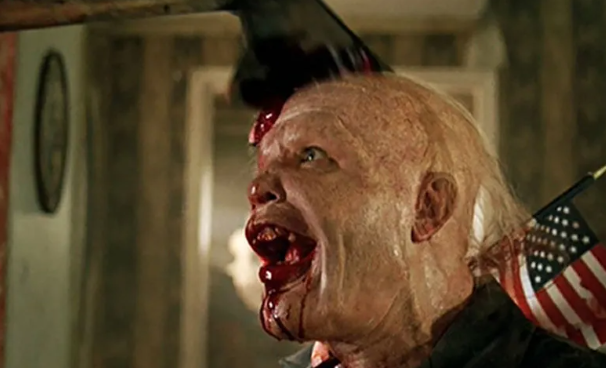
In the realm of extreme cinema, few titles evoke as much visceral dread as The Hills Have Eyes. Born from the mind of the “Master of Horror,” Wes Craven, this franchise has spent nearly five decades exploring the terrifying boundary between “civilized” society and the primal savagery lurking in the shadows of the American desert. It is a series that helped define the “survival horror” subgenre, blending social commentary with uncompromising brutality.
The story typically centers on an unsuspecting family—the quintessential “nuclear family”—whose journey through the desolate desert is cut short by a group of mutated, cannibalistic outcasts. From the grainy, low-budget grit of the 1977 original to the high-octane gore of the 2006 Alexandre Aja remake, the Hills Have Eyes franchise has remained a haunting reflection of our deepest societal fears. As of March 12, 2026, the franchise remains a touchstone for horror aficionados. Here are ten fascinating facts about the movies that made us all a little more nervous about taking the “scenic route.”
1. The Chilling Real-Life Inspiration of Sawney Bean
While the Hills Have Eyes franchise feels like a product of pure imagination, its core premise is rooted in a gruesome legend from 16th-century Scotland. Wes Craven based his story on the legend of Sawney Bean, the head of a 48-member clan who reportedly lived in a coastal cave and spent 25 years ambushing, murdering, and eating over 1,000 travelers.
Craven was fascinated by the idea of an isolated family that devolved into a primitive state of existence. He adapted this historical folklore to the American Southwest, replacing the Scottish caves with the desolate nuclear testing grounds of the Nevada desert. This “evergreen” connection to human history adds a layer of psychological weight to the films; it suggests that the line between “man” and “monster” is thinner than we’d like to believe. For an 11th-grade student of literature, this is a classic example of how ancient horror folklore is recycled and modernized to reflect contemporary anxieties about class, isolation, and the breakdown of the family unit.
2. A Tale of Two Families: The Mirror Image Theme
The structural genius of the original 1977 film lies in its use of “mirroring.” Craven didn’t just want to make a monster movie; he wanted to show that under extreme pressure, the “civilized” Carter family would become just as savage as the cannibalistic Jupiter clan. This is a recurring theme throughout the Hills Have Eyes franchise.
In the beginning, the Carters represent the American dream—structured, religious, and reliant on technology. The Jupiter clan represents the American nightmare—fragmented, pagan, and primal. However, as the film progresses and the Carters lose their resources and loved ones, they are forced to use the same primitive violence to survive. The famous ending of the original film, which stops on a red-tinted freeze-frame of a character’s face after committing a brutal act, serves as a haunting question: is there really a difference between the two families once the rules of society are stripped away? This social commentary is what elevated the film from a standard slasher to a “go-to” resource for academic horror study.
3. The Desert as a Living Antagonist
One of the most striking “interesting facts” about the production of both the original and the remake is the role of the environment. In the Hills Have Eyes franchise, the desert isn’t just a setting; it is a character that actively works against the protagonists. The isolation, the blistering heat, and the “unseen eyes” in the rock formations create a sense of claustrophobia in a wide-open space.
Filming the 1977 original was a grueling experience. The cast and crew faced 120-degree temperatures in the Mojave Desert, and because of the low budget, they often had to stay in character just to maintain their energy. Similarly, for the 2006 remake, director Alexandre Aja moved the production to Ouarzazate, Morocco. The harsh, rocky terrain provided a stark, oppressive beauty that made the survival horror feel incredibly immediate. The landscape itself acts as a prison, proving that nature can be just as indifferent and cruel as the villains hiding within it.
4. The Iconic Performance of Michael Berryman
You cannot discuss the Hills Have Eyes franchise without mentioning Michael Berryman, who played the character of Pluto in the original film and its 1984 sequel. Berryman, who was born with hypohidrotic ectodermal dysplasia (a condition that leaves one without sweat glands, hair, or fingernails), became the “face” of the franchise and a legend in the horror movie industry.
Berryman brought a unique humanity to a role that could have been a one-dimensional monster. His distinct appearance, which made him a favorite for sci-fi and horror directors, allowed him to portray Pluto with a mix of menace and curiosity. Interestingly, because he cannot sweat, filming in the desert was physically dangerous for him; crew members had to constantly douse him in water and keep him in the shade between takes. His performance helped cement the Jupiter clan as iconic horror villains, proving that a great actor can turn a physical condition into a powerful tool for storytelling.
5. The Remake that Broke the “Remake Curse”
In the early 2000s, the horror genre was flooded with lackluster remakes of 70s classics. However, the 2006 remake of The Hills Have Eyes is widely considered one of the few that actually improved upon or stood equal to the original. Produced by Wes Craven himself and directed by “New French Extremity” filmmaker Alexandre Aja, the film was a masterclass in modern tension.
Aja brought a high-gloss, high-intensity aesthetic to the story, amping up the gore and practical effects. While the original relied on grit and psychological terror, the remake utilized visceral, “stomach-churning” visuals to emphasize the mutations caused by nuclear testing. By leaning into the political subtext of the Cold War and nuclear fallout, Aja made the story feel relevant for a post-9/11 audience. It remains a definitive example of how to update a “cult classic” without losing the soul of the source material.
6. The Nuclear Fallout and Mutation Backstory
One of the most significant changes introduced in the 2006 remake and its sequel was the explicit connection to the U.S. government’s nuclear testing program. The films explain that the “hill people” are the descendants of miners who refused to leave their homes when the government began testing atomic bombs in the 1940s and 50s.
This speculative fiction element adds a layer of “tragic villainy” to the mutants. They aren’t just evil; they are the “forgotten” victims of American progress—deformed and driven mad by radiation. This backstory allows the films to touch on themes of government negligence and the “collateral damage” of war. For an intermediate level viewer, this transforms the killers from mere monsters into a vengeful, mutated class of “discarded people,” making their anger toward the affluent “tourists” feel grounded in a twisted kind of logic.
7. The 1984 Sequel and the “Dog Flashback”
Every long-running franchise has its quirks, and the Hills Have Eyes franchise is no exception. The Hills Have Eyes Part II (1984) is often remembered by fans for one of the most bizarre creative choices in horror history: a flashback sequence told from the perspective of a dog.
In the film, the family dog, Beast, survives the events of the first movie and returns for the sequel. At one point, the dog actually has a “memory” of the previous film’s events, complete with slow-motion footage of the original movie. This moment has become a staple of horror movie trivia, often cited as a sign of the sequel’s troubled production (the film was finished years after it was started to satisfy a contract). While the sequel is generally considered inferior to the original, this “dog flashback” has earned a permanent spot in the “so bad it’s good” hall of fame, highlighting the experimental (and sometimes nonsensical) nature of 80s horror sequels.
8. The Practical Effects Mastery of KNB EFX Group
The Hills Have Eyes franchise is a showcase for the evolution of special effects makeup. In the 1977 original, the budget was so low that they used real animal carcasses and primitive prosthetics to create the “look” of the Jupiter clan. Fast forward to the 2006 remake, and the effects were handled by the legendary KNB EFX Group (the team behind The Walking Dead).
The artists used a mix of animatronics, intricate silicone prosthetics, and “blood rigs” to create the various mutations. Each member of the mutant clan had a specific “deformity” based on real-world research into the effects of radiation. This commitment to practical effects is why the 2006 film still looks terrifying twenty years later; unlike early CGI, physical prosthetics interact with the desert light and the actors’ skin in a way that feels tangibly “real.” It’s a testament to the artistry of the horror movie industry‘s best craftsmen.
9. Breaking the Taboo: The “No One is Safe” Mentality
One reason the original Hills Have Eyes was so controversial in 1977 was its willingness to break established “rules” of cinema. Specifically, the film was incredibly bold in its treatment of the family’s elders and their pets. In a time when most movies protected the “innocents,” Craven’s film was unapologetically brutal.
The franchise is known for its “no one is safe” mentality. This unpredictability creates a high-stakes environment where the audience truly doesn’t know who will make it to the end credits. This subversion of horror movie tropes—where the “hero” might die in the first act—is a hallmark of the survival horror genre. It forces the viewer into a state of constant anxiety, mirroring the experience of the characters who are trapped in a landscape where the rules of civilization no longer apply.
10. The Enduring Legacy of the “Savage Family” Trope
The Hills Have Eyes franchise pioneered the “Savage Family” trope, which has since been seen in dozens of other films like Wrong Turn, Texas Chainsaw Massacre (in its later iterations), and House of 1000 Corpses. The idea of a “perverted” family unit acting as a dark reflection of the protagonists is now a staple of the genre.
By focusing on the “family vs. family” dynamic, the series explores the “nature vs. nurture” debate. Are the hill people evil because they were born that way, or because their environment and history left them with no other choice? This thematic depth is why the franchise remains an “evergreen” topic for discussion. Even as we move through 2026, the image of the “eyes in the hills” remains a powerful metaphor for the things we ignore in our society—the people and places left behind by progress—and the terrifying possibility that they might one day look back.
Further Reading
- Wes Craven: The Man and His Nightmares by John Wooley — A deep dive into the life and philosophy of the man who created the franchise.
- The Encyclopedia of Cannibal Movies by Various — Provides context for where The Hills Have Eyes fits in the history of “survival” cinema.
- Monsters in the Closet: Homosexuality and the Horror Film by Harry M. Benshoff — While the title suggests a specific focus, it offers excellent analysis of the “othering” of the Jupiter clan.
- Sawney Bean: The Real Life Story by Various — A historical look at the Scottish legend that inspired Wes Craven.




Leave a Reply