
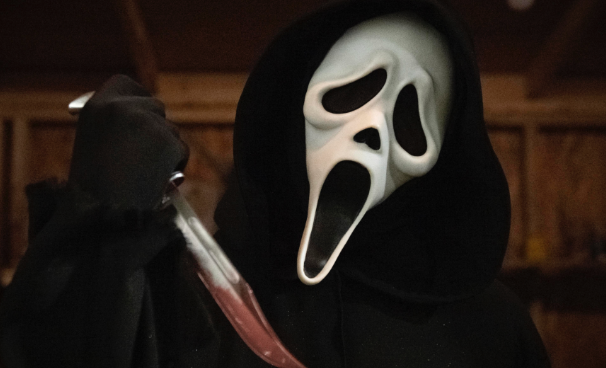
In 1996, the horror genre was on life support, struggling under the weight of tired sequels and predictable tropes. Then came a phone call that changed everything. Scream, directed by the legendary Wes Craven and written by Kevin Williamson, didn’t just scare audiences; it talked to them. By featuring characters who had actually watched horror movies and knew the “rules,” the Scream franchise created a revolutionary “meta” experience that reinvented the slasher for a modern audience.
Centered around the resilient Sidney Prescott and the iconic, ghost-faced killer known as Ghostface, the series has spanned six films, a television series, and nearly three decades of “whodunnit” mystery. As of March 2026, the franchise remains a pinnacle of slasher movie history, continuing to subvert expectations with every new entry. Whether you’re a “horror movie buff” or a casual viewer who is afraid of the dark, here are ten fascinating facts about the franchise that asked: “What’s your favorite scary movie?”
1. The Real-Life Inspiration: The Gainesville Ripper
While the Scream franchise is known for its witty dialogue and self-awareness, its origins are rooted in a terrifying true story. Screenwriter Kevin Williamson was inspired to write the script (originally titled Scary Movie) after watching a news special about Danny Rolling, known as the “Gainesville Ripper.” Rolling was a serial killer who terrorized student housing in Florida in 1990, creating an atmosphere of pervasive fear that gripped the entire community.
Williamson, who was house-sitting at the time and became spooked by an open window, began to imagine a scenario where a killer taunted their victims over the phone. This real-world connection is why the original 1996 film feels so visceral; beneath the “meta” jokes, there is a grounded sense of vulnerability that reflects the actual anxiety of a quiet town being invaded by an anonymous threat. This blend of true crime influence and cinematic fiction is what gives the series its “evergreen” tension, making the horror feel uncomfortably close to home.
2. The Accidental Discovery of the Ghostface Mask
The most recognizable symbol of the franchise, the Ghostface mask, was not an original creation of the film’s art department. While scouting locations for the first movie, producer Marianne Maddalena found a discarded mask in a house they were visiting. The mask had been produced by a costume company called Fun World as part of a “Fantastic Faces” series in the early 90s.
Wes Craven immediately fell in love with the mask’s “droopy” and expressive look, which reminded him of the figure in Edvard Munch’s painting, The Scream. Initially, the studio (Dimension Films) wanted an original design, fearing that a store-bought mask wouldn’t be “scary” enough. Craven shot several scenes with different masks but eventually insisted on the Fun World design. This decision was a stroke of genius; by using a mask that was commercially available, the film made the killer feel more “real”—anyone could go to a store and buy the identity of a murderer. This iconic horror design is now a permanent fixture in pop culture history.
3. The Voice Behind the Mask: Roger L. Jackson
One of the most essential “interesting facts” for fans is that the actor inside the Ghostface costume is almost never the one speaking. The chilling, sandpaper-voiced killer is voiced by Roger L. Jackson. In a brilliant move by Wes Craven to keep the actors genuinely unsettled, Jackson was never allowed to meet the cast during filming.
Instead, Jackson would hide on set with a real cellular phone, calling the actors during their scenes to deliver his lines live. When you see Drew Barrymore or Neve Campbell reacting to the voice on the phone, they are reacting to a real person speaking to them from the shadows, not a pre-recorded track or an actor standing in front of them. This technique provided a level of horror movie authenticity that is rarely matched. Jackson’s voice has appeared in every single movie and the television series, making him the only “constant” in a franchise where the identity of the killer changes with every installment.
4. Subverting the “Final Girl” Trope with Sidney Prescott
In traditional slasher movies, the “Final Girl” is often a passive survivor who escapes through luck or the intervention of others. Sidney Prescott, played by Neve Campbell, redefined this role. Sidney is proactive, intelligent, and fiercely resilient. Throughout the Scream franchise, she evolves from a victim into a “warrior,” someone who understands the killer’s tactics and refuses to play by their rules.
The series is essentially a long-form character study on how a person processes trauma. Unlike other horror icons who stay the same age, we see Sidney grow up, become a crisis counselor, and eventually a mother, all while dealing with the shadow of Ghostface. This 11th-grade level exploration of “agency and survival” is what makes Sidney one of the most respected characters in cinema. By the time of the 2022 and 2023 “requels,” her legacy is so strong that she serves as a mentor to a new generation, proving that a survivor’s story is just as compelling as the killer’s.
5. The School Shooting Scandal and “Scream 3”
The production of Scream 3 (2000) was heavily impacted by real-world events, specifically the Columbine High School shooting in 1999. In the wake of the tragedy, there was a massive cultural backlash against violent media, leading the studio to demand significant changes to the script. The original plan for Scream 3 involved a cult of Ghostface-obsessed teenagers in Woodsboro, but the studio feared this was too insensitive.
As a result, the setting was moved to Hollywood, and the tone was shifted to be more comedic and satirical, focusing on the production of a fictional movie-within-a-movie called Stab 3. This pivot is why Scream 3 is often seen as the “black sheep” of the franchise. For intermediate fans, this history explains the sudden shift in narrative tone and highlights the complex relationship between horror cinema and societal morality. It serves as a reminder that the Scream franchise has always been a mirror to the culture it inhabits.
6. The “Meta” Genius: Movies Within Movies
The most unique feature of the series is the Stab franchise—a series of fictional horror movies within the Scream universe based on the “real” events of the first film. This allows the characters to criticize the very movies they are in. For example, in Scream 2, characters attend a screening of Stab and point out how the actors (like Heather Graham playing Casey Becker) are far more “Hollywood” than the real people they are portraying.
This “meta-commentary” allows the writers to address horror movie sequels and reboots in real-time. By the time we reach Scream VI (2023), the characters are discussing “franchise rules,” explaining that in a long-running series, even the main characters are no longer safe. This “fourth-wall-breaking” humor makes the audience feel like they are “in on the joke,” turning a standard slasher into an intellectual puzzle. It’s a masterclass in storytelling techniques that keeps the franchise fresh even after thirty years.
7. The Opening Scene “Rule” and Celebrity Deaths
The original Scream shocked the world by killing off its biggest star, Drew Barrymore, in the first ten minutes. At the time, Barrymore was the face of the marketing campaign, leading audiences to believe she was the main character. By killing her off immediately, Wes Craven sent a message: “Nobody is safe.”
This established the “Opening Scene Rule” for the Scream franchise. Every movie since has attempted to top the previous one with a shocking, celebrity-led opening sequence. Whether it’s Jada Pinkett Smith in a movie theater or Lucy Hale in a fake-out opening, these scenes serve as a “micro-slasher” film before the main plot begins. This tradition is a key part of the slasher movie tropes that fans look forward to, maintaining a sense of high-stakes unpredictability from the very first frame.
8. The “Whodunnit” Format and Multiple Killers
Unlike Halloween (Michael Myers) or Friday the 13th (Jason Voorhees), Ghostface is not a supernatural entity or a single person. Ghostface is a “mantle” taken up by different people with different motivations—usually involving revenge or a twisted desire for fame. This transforms every movie into a murder mystery whodunnit.
The brilliance of the franchise is that there is almost always more than one killer. The first film’s revelation that Billy and Stu were working together was a massive plot twist that subverted the “lone slasher” trope. This allows for complex character motivations and keeps the audience guessing until the final act. It also means that Ghostface can be “clumsy”—tripping over furniture or getting hit with vases—which makes the threat feel more human and, in some ways, more terrifying because it could be someone you know.
9. Courteney Cox and the Record for Horror Longevity
As of March 2026, Courteney Cox (who plays the ambitious news reporter Gale Weathers) holds a world record: she is the only woman in history to appear in six consecutive installments of a horror franchise as the same character. While Neve Campbell missed the sixth entry due to a contract dispute, Cox has remained the “connective tissue” of the series.
Gale Weathers is one of the most complex characters in horror cinema history. She begins as a cold, fame-hungry antagonist and evolves into a hero, though she never loses her sharp, cynical edge. Her relationship with the late Dewey Riley (played by David Arquette) provided the emotional heart of the first five films. Cox’s dedication to the role has made Gale an “evergreen” icon, representing the media’s obsession with tragedy—a theme that is more relevant today than it was in 1996.
10. The 2020s Revival and “The Core Four”
The franchise successfully “rebooted” itself for a new generation with 2022’s Scream and 2023’s Scream VI. These films introduced a new set of survivors known as “The Core Four,” led by Jenna Ortega and Melissa Barrera. These entries addressed the modern era of “elevated horror” and “toxic fandom,” proving that the Scream franchise can still find new things to say about the genre.
Even as the series enters its fourth decade, its ability to adapt to current trends—like social media, “re-quels,” and internet culture—is unparalleled. The transition from the original trio (Sidney, Gale, and Dewey) to the new cast was handled with a deep respect for horror legacy, ensuring that the franchise remains a “go-to” resource for understanding the evolution of the slasher. As rumors of a seventh installment continue to circulate in 2026, one thing is certain: Ghostface is never truly dead as long as there are rules to be broken.
Further Reading
- The Scream Diaries by Various — A behind-the-scenes look at the making of the original trilogy, featuring interviews with Wes Craven.
- Men, Women, and Chain Saws: Gender in the Modern Horror Film by Carol J. Clover — Essential reading for understanding the “Final Girl” trope that Scream subverts.
- Scream: The Inside Story (Documentary) — An excellent visual resource for the production history and the Gainesville Ripper connection.
- Wes Craven: The Man and His Nightmares by John Wooley — A biography of the director that explores how his philosophy shaped the Scream franchise.




Leave a Reply