
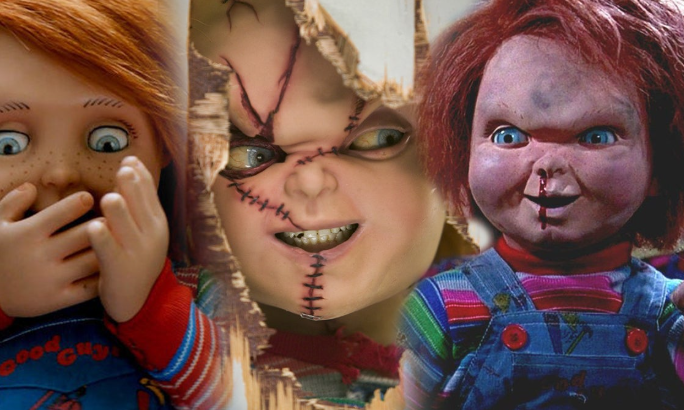
The image of a small, dungaree-clad doll with shock-red hair and a butcher knife is etched into the collective psyche of horror fans across the globe. Chucky, the primary antagonist of the Child’s Play movie franchise, stands as a titan among slasher icons, occupying the same hallowed ground as masked killers and dream-stalking phantoms. However, unlike many of his contemporaries who rely on silence and brute force, Chucky brings a foul-mouthed charisma and a twisted sense of humor to the screen. Whether you are a newcomer to the series or a seasoned “Friend ’til the End,” understanding the complexity of this franchise is essential. From its roots in psychological suspense to its later explorations of meta-comedy and family dynamics, the saga of Chucky is a fascinating study in cinematic evolution and creative tenacity.
1. The Dark Genesis of the “Lakeshore Strangler” Charles Lee Ray
At the heart of the franchise lies the soul of a man far more terrifying than any plastic toy. Before he was a doll, Chucky was Charles Lee Ray, a notorious serial killer known as the “Lakeshore Strangler.” The franchise begins with a desperate act of supernatural preservation: cornered in a toy store by the police, a mortally wounded Ray uses a voodoo incantation to soul-transfer his consciousness into a “Good Guy” doll. This foundational lore is more than just a plot device; it infuses the character with a human malice that distinguishes him from other “creepy doll” tropes. Ray’s name itself is a sinister Easter egg, constructed from the names of three infamous real-world killers: Charles Manson, Lee Harvey Oswald, and James Earl Ray. This trifecta of historical infamy sets a grim tone for the character’s origin, grounding the supernatural elements of the story in a very human tradition of violence.
2. The Rare Continuity of Don Mancini’s Creative Vision
One of the most remarkable aspects of the Child’s Play movie franchise is its narrative consistency. While other long-running horror series often suffer from convoluted reboots, conflicting timelines, and rotating creative teams, Chucky has largely remained under the guidance of his original creator, Don Mancini. Mancini, who wrote the initial screenplay, has stayed involved as a writer and eventually a director for almost every entry in the main timeline. This singular vision has allowed the franchise to grow organically. Instead of repeating the same formula, the series evolves alongside its creator’s interests, moving from straightforward horror to dark satire and beyond. This dedication ensures that characters introduced in early films remain relevant decades later, creating a sprawling, interconnected universe that rewards loyal viewers who have followed the story since the first “Good Guy” doll was unboxed.
3. The Mechanical Magic of Animatronic Practical Effects
Long before the advent of seamless computer-generated imagery, Chucky was brought to life through a marvel of mechanical engineering. The franchise is celebrated for its commitment to practical effects, utilizing complex animatronics to give the doll a range of human-like expressions and movements. In the early stages of the franchise, bringing Chucky to life required a small army of puppeteers, each controlling a different part of the doll’s anatomy—from the blink of an eye to the curl of a lip. This physical presence on set provides a tangible sense of menace that CGI often struggles to replicate. The “uncanny valley” effect—the discomfort felt when something looks almost human but not quite—is utilized to its full potential here. The weight of the doll, the way it interacts with the lighting, and its physical presence in the actors’ space contribute to a more immersive and frightening experience for the audience.
4. A Bold Transition from Pure Terror to Tongue-in-Cheek Humor
While the initial films in the series were played as straight-faced psychological slashers, the franchise eventually underwent a radical tonal shift. As the character of Chucky became a pop-culture celebrity, the filmmakers leaned into the inherent absurdity of a killer doll. This transition into “horror-comedy” or “meta-horror” allowed the series to reinvent itself. Rather than fading into obscurity like many slasher sequels, the later installments began to parody horror tropes and even the franchise’s own history. This self-awareness gave Chucky a voice that was both terrifying and hilariously cynical. By embracing the campy elements of the premise, the franchise found a second life, appealing to a broader audience that appreciated the wit as much as the gore. This flexibility is a key reason why the series remains a staple of the genre.
5. The Legal Tug-of-War and the “Two Chucky” Phenomenon
The business side of the Child’s Play movie franchise is nearly as dramatic as the films themselves. Due to complex licensing agreements and rights sales early in the series’ history, different studios have held stakes in the character at various times. This led to a unique situation where a modern remake was produced by one studio while the original creator continued the primary storyline elsewhere. For fans, this means there are technically two different versions of the lore: the classic supernatural storyline involving the soul of Charles Lee Ray, and a modern reimagining that leans into high-tech artificial intelligence gone wrong. Navigating these two distinct paths requires a bit of fan “detective work,” but it also showcases how a strong character like Chucky can be interpreted through different lenses—one rooted in ancient voodoo and the other in the fears of modern technology.
6. The Iconic Voice Performance of Brad Dourif
It is impossible to discuss Chucky without acknowledging the vocal mastery of Brad Dourif. While several actors have inhabited the physical doll or the human form of Charles Lee Ray, Dourif’s voice has defined the character for the vast majority of the series. His ability to pivot from a high-pitched, childlike “Good Guy” greeting to a gravelly, menacing snarl is a cornerstone of the franchise’s success. Dourif brings a Shakespearean level of intensity to the role, treating the foul-mouthed doll with the same gravity he would any dramatic character. This vocal performance gives Chucky a soul—literally and figuratively. Even when the doll isn’t moving, Dourif’s delivery ensures the character feels dangerous. The chemistry between the actor’s voice and the animatronic movements creates a synergy that has made Chucky one of the most recognizable voices in cinema history.
7. Jennifer Tilly and the Rise of Tiffany Valentine
The introduction of Tiffany Valentine, played with brilliant eccentricity by Jennifer Tilly, marked a turning point for the franchise. Tiffany brought a “Bonnie and Clyde” dynamic to the series, proving that Chucky didn’t have to be a lone wolf. Tilly’s performance—both as a human and as the voice of the Tiffany doll—infused the series with a glamorous, gothic energy. The character’s obsession with domesticity, contrasted with her murderous impulses, added layers of dark humor and twisted romance. Furthermore, the franchise eventually took a “meta” turn, with Jennifer Tilly playing a fictionalized version of herself within the movies. This blurring of reality and fiction is a hallmark of the series’ willingness to take risks, making it one of the most avant-garde franchises in the horror genre.
8. Subverting Traditional Family and Gender Dynamics
As the franchise progressed, it began to explore themes that were remarkably ahead of their time for the horror genre. With the introduction of Chucky and Tiffany’s offspring, the series delved into questions of gender identity and family belonging. Instead of sticking to a rigid slasher formula, the narrative explored the complications of being raised by two murderous dolls and the internal struggle of a child who doesn’t fit into the boxes their parents have built. This exploration of “found family” and the rejection of traditional societal norms has earned the franchise a dedicated following. By using a horror premise to discuss deeper human experiences of identity and acceptance, the Child’s Play movie franchise elevated itself from a simple “scary movie” to a more nuanced piece of storytelling.
9. The Psychological Roots of “Pediophobia”
Much of the franchise’s power stems from a very real psychological phenomenon: pediophobia, or the fear of dolls. Dolls are designed to be vessels of innocence and childhood comfort, but when that innocence is twisted into something predatory, it triggers a deep-seated primal fear. The Child’s Play movie franchise exploits the “uncanny valley” by presenting a character that looks like a toy but acts like a monster. This subversion of the “nurturing” object is a classic horror trope, but Chucky perfects it by using his small stature and toy-like appearance as a tactical advantage. He can hide in plain sight, enter spaces where a grown man couldn’t, and take advantage of the inherent trust people place in children’s playthings. This psychological layer ensures that the films resonate on a level that goes beyond simple “jump scares.”
10. An Enduring Legacy That Refuses to Stay Dead
The longevity of the Chucky series is a testament to the character’s adaptability. While many of his 1980s peers have faded or been relegated to endless reboots that fail to capture the original magic, Chucky has remained consistently relevant. The franchise has successfully transitioned across different mediums, proving that the central concept is robust enough to survive changes in audience tastes. Whether through a focus on intense psychological horror, campy humor, or complex character-driven drama, the series continues to find new ways to surprise its audience. Chucky isn’t just a movie monster; he is a pop-culture survivor. As long as there is a fear of the dark and a sense of humor about the macabre, the Child’s Play movie franchise will likely continue to thrive, proving once and for all that you can’t keep a “Good Guy” down.
Further Reading
- Monsters in the Movies by John Landis
- Men, Women, and Chain Saws: Gender in the Modern Horror Film by Carol J. Clover
- The Horror Show Guide: The Ultimate Frightfest of Movies by Mike Mayo
- Shock Value: How a Few Eccentric Outsiders Gave Us Nightmares, Processed Our Fears—and Became the Heroes of Modern Hollywood by Jason Zinoman
- 10 The Exorcist III (1990) Movie Facts You Didn’t Know
- 10 Scream (1996) Movie Facts That Changed Horror
- 10 Hostel (2005) Movie Facts That Shocked Viewers
- 10 Hellraiser (1987) Movie Facts That Built Its Legacy
- 10 Candyman (1992) Movie Facts That Still Give Chills
- 10 Essential Facts About The Texas Chainsaw Massacre (1974)
- 10 Essential Facts That Explain the World of The Walking Dead TV Show
- From – Season 1 Full Recap and Spoilers Explained
- 10 Things You Should Know About The Thing (1982) – Movie Facts and Hidden Details
- 10 Fascinating Supernatural Facts You Probably Missed – TV Show Lore



