
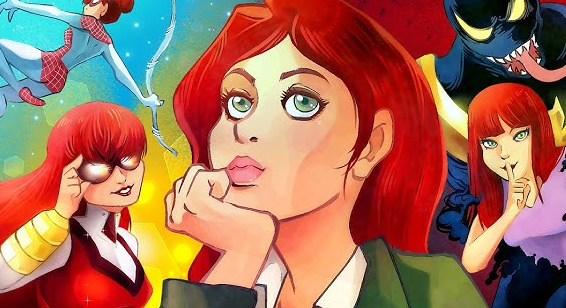
In the pantheon of comic book history, few non-superpowered characters command as much presence, charisma, and narrative importance as Mary Jane Watson. Often reduced to the “damsel in distress” trope in early cinema, the MJ of the Marvel Comics universe is a complex, resilient, and deeply influential figure who has shaped Spider-Man lore for over half a century. From her iconic debut to her recent evolution into a hero in her own right, MJ is much more than just a love interest; she is the emotional anchor of the Spider-Man mythos.
Whether you grew up with the Kirsten Dunst portrayal in the early 2000s, the “MJ” (Michelle Jones) played by Zendaya in the MCU, or the classic red-headed firebrand of the comics, there is a wealth of history behind the character. As of March 2026, her role in the comics and media continues to spark intense debate and admiration. Here are ten interesting facts that define the legendary Mary Jane Watson.
1. The Most Famous “No-Show” in Comic Book History
For the first few years of The Amazing Spider-Man, Mary Jane Watson was the ultimate “running gag.” Created by Stan Lee and Steve Ditko, she was mentioned constantly by Peter Parker’s Aunt May, who was desperate to set her nephew up with “that nice Watson girl next door.” Peter, assuming any girl his aunt liked must be “plain,” spent several issues actively dodging the meeting.
This suspense built for nearly two years of publication. When artist John Romita Sr. finally drew her full reveal in The Amazing Spider-Man #42 (1966), it became one of the most famous panels in history. Standing in the doorway with a radiant smile, she uttered the legendary line: “Face it, Tiger… you just hit the jackpot!” This wasn’t just a clever introduction; it was a paradigm shift. Unlike the shy, studious Peter, MJ was presented as a vibrant, confident “party girl” who immediately challenged Peter’s world. This “Face it Tiger” jackpot moment remains a cornerstone of Spider-Man trivia and established MJ as a force of nature from her very first second on the page.
2. She Knew Peter’s Secret Identity Long Before He Told Her
One of the most common tropes in superhero stories is the “secret identity struggle,” where the hero spends years hiding their double life from their partner. For a long time, readers assumed MJ was just another oblivious civilian. However, a massive retake on her character revealed that MJ was far more observant than anyone gave her credit for.
In a retrospective storyline, it was revealed that Mary Jane actually saw Peter crawling out of his bedroom window in his Spider-Man costume on the very night Uncle Ben was killed. She kept this secret for years, never letting on that she knew the truth. This adds incredible depth to their early relationship; while Peter was making excuses for his absences, MJ was silently carrying the weight of his secret, watching him risk his life daily. This revelation transformed her from a “party girl” into a deeply empathetic confidante, proving she was Peter’s intellectual and emotional equal in the Peter and MJ dynamic.
3. MJ Was Never Intended to be Peter’s Soulmate
It might shock modern fans, but the original plan for Spider-Man’s romantic life centered entirely around Gwen Stacy. Stan Lee and the editorial team viewed Gwen as the “perfect” girl for Peter—the science-loving, wholesome intellectual match. Mary Jane was originally intended to be a “distraction,” the fun-loving girl who provided a contrast to the serious relationship Peter had with Gwen.
However, a funny thing happened: the writers and readers found MJ significantly more interesting. Her chemistry with Peter was undeniable, and her “it” factor leaped off the page. When the decision was made to kill off Gwen Stacy in 1973—a pivotal moment in Spider-Man lore—it was MJ who stayed by Peter’s side to help him grieve. The final panel of Amazing Spider-Man #122, where MJ refuses to leave Peter’s apartment despite his grief-fueled lashing out, is often cited as the moment she truly became the female lead of the series. This organic growth from “supporting rival” to “soulmate” is a rare feat in comic book writing.
4. The Controversial Erasure of Her Marriage: “One More Day”
Perhaps the most discussed and debated event in MJ’s history is the 2007 storyline One More Day. After decades of being married (the wedding took place in 1987), Marvel’s editorial team, led by Joe Quesada, felt that a married Peter Parker was “too old” and less relatable to younger readers. To “reset” the status quo, Peter and MJ made a literal deal with the devil, Mephisto.
In exchange for saving Aunt May’s life, Mephisto erased Peter and MJ’s marriage from history. The world forgot they were ever married, and the timeline was rewritten so they had simply been a couple that eventually broke up. This remains one of the most polarizing moments in Marvel Comics history. Fans felt it undermined years of character development. Even as of 2026, the fallout of this “deal” continues to influence Spider-Man stories, with fans constantly looking for signs that the marriage might one day be restored in the main continuity.
5. She Has Been a Superhero Known as “Jackpot”
While MJ is traditionally a civilian, the modern era of comics has seen her step into the superhero spotlight. In the current 2024-2026 comic runs, Mary Jane has taken on the mantle of Jackpot. Using a special device that grants her randomized superpowers based on “slot machine” mechanics, she now fights alongside the web-slinger.
This isn’t her first brush with powers, though. In the “Renew Your Vows” alternate universe, she uses a suit that taps into Peter’s spider-powers, fighting crime as Spinneret. These iterations of the character allow writers to explore the Peter and MJ relationship as a partnership of equals on the battlefield. It transitions her from the role of the person waiting at home to a hero who understands the physical toll of the “great responsibility” Peter carries. For fans of the Spider-Man franchise, seeing MJ hold her own against villains like the Vulture or Shocker is a satisfying evolution of her protective nature.
6. Her Tragic Backstory Explains Her “Party Girl” Persona
In her early appearances, MJ was often criticized by other characters (and some readers) for being “shallow” or “flighty.” It wasn’t until the mid-80s that writer Roger Stern delved into her home life, revealing a heartbreaking childhood. Mary Jane grew up in a broken home with an abusive, failed-writer father and a mother who struggled to keep the family together.
MJ’s constant smiling and “party girl” attitude was actually a defense mechanism—a “mask” she wore to hide her pain and domestic trauma. This mirrored Peter’s literal mask. While Peter hid his vulnerability behind a costume, MJ hid hers behind glamour and jokes. This shared trauma is what truly binds them; they are both people who use humor and performance to cope with a world that has been incredibly cruel to them. Understanding this context makes her one of the most grounded and human characters in the Spider-Man universe.
7. She Once Shared a Body with “Red Sonja”
Comic books can get incredibly weird, and Mary Jane is no exception. In a 2007 crossover event, MJ was possessed by the spirit of the legendary barbarian warrior Red Sonja. Through a mystical artifact at a museum, the red-headed Watson was transformed into a sword-wielding, chainmail-bikini-clad warrior to fight off an ancient evil in New York City.
While this was a temporary transformation, it became a cult-favorite moment for fans, showcasing that MJ’s fiery personality translates well to a “warrior queen” archetype. It also highlighted a fun meta-commentary: both MJ and Red Sonja are iconic for their vibrant red hair and fierce independence. This crossover remains a fun “what if” style fact that highlights the versatility of MJ as a character beyond the world of high fashion and acting.
8. Her Cinematic Evolution: From Kirsten Dunst to Zendaya
Mary Jane’s portrayal in film has mirrored the changing landscape of how women are written in Hollywood. In the Sam Raimi Spider-Man trilogy (2002–2007), Kirsten Dunst played a version of MJ that was heavily influenced by the “damsel” tropes of the time, often finding herself kidnapped by the Green Goblin or Doctor Octopus. Despite this, Dunst captured the character’s longing for stardom and her complex romantic feelings.
In the MCU, the character was “reimagined” as Michelle Jones-Watson, played by Zendaya. This version is more cynical, observant, and intellectual—a “modernized” MJ who feels more like a contemporary teenager. While some purists initially bristled at the changes, Zendaya’s MJ became a fan favorite for her dry wit and her active role in Peter’s missions. Both portrayals have contributed to her status as an evergreen Spider-Man icon, proving that the core of the character—her ability to see through Peter’s walls—is what matters most, regardless of the specific personality “flavor.”
9. She Was a Successful Actress and Model
Unlike many supporting characters who revolve entirely around the lead, MJ has always had her own career and ambitions. Throughout the comics, she has been a successful supermodel and a working actress on soap operas (specifically “Secret Hospital”). There were times in the 90s when MJ was actually the primary breadwinner of the household, earning significantly more money than Peter did with his freelance photography.
This career choice wasn’t just fluff; it provided a unique dynamic where Peter was the “celebrity” in secret, while MJ was the celebrity in public. It often led to interesting stories where Peter had to navigate his wife’s fame, including dealing with obsessed fans and the paparazzi. Her career success emphasized her independence; she wasn’t with Peter because she needed him for stability, but because she genuinely loved him.
10. The Legacy of Mayday Parker and the “Spider-Girl” Future
In many “alternate future” timelines, Peter and MJ’s legacy is carried on by their children. The most famous is May “Mayday” Parker, better known as Spider-Girl. In the MC2 universe, MJ is a supportive mother to a teenage superhero, guiding her daughter through the same perils she watched Peter face for years.
The existence of Mayday Parker (and more recently, Annie May Parker in the Renew Your Vows series) represents the “happy ending” that many fans want for the couple. In these stories, Mary Jane is the matriarch of a superhero family, proving that her strength isn’t just in her resilience, but in her ability to nurture the next generation of heroes. For many, a Spider-Man story doesn’t feel “complete” unless MJ is there at the end of the day, helping Peter take off the mask and reminding him of the man beneath the suit.
Further Reading
- Spider-Man: Blue by Jeph Loeb and Tim Sale — A beautiful, melancholic look at Peter’s early love life and how MJ helped him heal.
- The Amazing Mary Jane by Leah Williams — A fun solo series focusing on MJ’s acting career and her own adventures in Hollywood.
- Spider-Man: Renew Your Vows by Dan Slott — An alternate universe story where Peter and MJ are married with a super-powered daughter.
- Parallel Lives by Gerry Conway — A graphic novel that runs the life stories of Peter and MJ side-by-side, showing how they were destined to meet.




Leave a Reply