
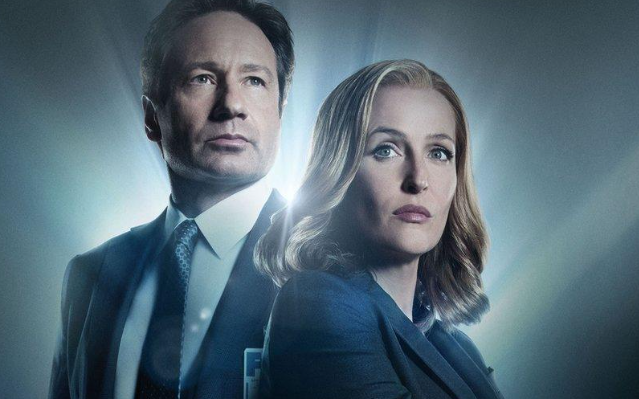
For decades, a single haunting whistle has been enough to send chills down the spines of millions. When The X-Files first flickered onto television screens, it didn’t just debut a show; it birthed a cultural phenomenon that redefined the boundaries of science fiction, horror, and procedural drama. At its heart, the series is a masterclass in chemistry—the friction between Special Agent Fox Mulder, the obsessive “believer,” and Special Agent Dana Scully, the clinical “skeptic.” Together, they navigated a world of government cover-ups, extraterrestrial abductions, and urban legends that felt uncomfortably close to home.
But the legacy of The X-Files extends far beyond its spooky “Monster of the Week” episodes or its dense, sprawling alien mythology. It was a pioneer of the “prestige” television era, proving that a weekly series could have the cinematic quality of a blockbuster film. It challenged the status quo of how stories were told on the small screen, blending cynical noir aesthetics with a deeply emotional core. To understand the series is to understand the modern zeitgeist of distrust, curiosity, and the eternal search for meaning in a vast, indifferent universe.
Whether you are a seasoned “X-Phile” who can recite every line of the “I Want to Believe” poster or a newcomer just starting to explore the dark corners of the FBI’s basement, the history behind the camera is just as mysterious as the cases on screen. Below, we uncover the hidden truths and surprising facts that define the legacy of The X-Files.
1. The “Scully Effect”: Inspiring a Generation of Scientists
One of the most profound legacies of the series is a real-world sociological phenomenon known as the “Scully Effect.” Before the introduction of Dana Scully, female characters in science fiction were often relegated to secondary roles or “damsels in distress.” Scully, however, was a medical doctor, a forensic pathologist, and a staunch rationalist who used science as her primary weapon against the unknown. Her character broke the mold of how women in STEM (Science, Technology, Engineering, and Mathematics) were portrayed on television.
Studies conducted by various institutes have shown a direct correlation between the show’s popularity and an increase in women pursuing careers in science and medicine. For many viewers, seeing a woman who was respected for her intellect and who stood her ground against government conspiracies was a transformative experience. Scully wasn’t just Mulder’s partner; she was the intellectual anchor of the show. This cultural impact is so significant that it is often cited by real-world scientists as their primary inspiration for entering the field, proving that the truth isn’t just “out there”—it’s in the lab.
2. The Cigarette Smoking Man Was Originally an Extra
It is impossible to imagine the series without its primary antagonist, the shadowy, chain-smoking figure known as the Cigarette Smoking Man (CSM). Representing the ultimate “Man Behind the Curtain,” he was the architect of the show’s grand conspiracy. However, in the original pilot script, the character didn’t even have a single line of dialogue. Actor William B. Davis was originally hired as a background extra to simply stand in the shadows and look menacing.
The producers were so struck by Davis’s natural screen presence and his ability to convey cold, calculating power without saying a word that they decided to bring him back. Over time, his role expanded from a silent observer to the central villain of the entire series. Interestingly, William B. Davis was actually a drama coach and a former non-smoker who had to use herbal cigarettes for the role. His transformation from a nameless background player to one of the most iconic villains in television history is a testament to the show’s ability to find lightning in a bottle.
3. The Iconic Theme Song Was a Happy Accident
The X-Files theme song is arguably the most recognizable piece of music in television history, but its creation was anything but intentional. Composer Mark Snow was struggling to find the right sound for the opening credits. He wanted something that captured the show’s blend of mystery, dread, and wonder, but nothing seemed to fit. One day, while working in his studio, Snow accidentally leaned his elbow on his keyboard, triggering a specific echo function on a preset sound.
The resulting “delay” effect created the haunting, repetitive whistling sound that defines the track. Snow realized he had stumbled upon something special and built the rest of the melody around that accidental echo. The whistling itself was inspired by a piece of music called “How Soon is Now?” by The Smiths, but Snow’s unique execution turned it into something entirely original. The theme proved that sometimes the most effective way to capture the “paranormal” is to embrace the unexpected accidents of the creative process.
4. The “Gilly Board”: Navigating the Height Difference
In the world of the FBI, Mulder and Scully were equals, but on the set, there was a significant physical discrepancy. David Duchovny stands at approximately 6 feet tall, while Gillian Anderson is around 5 feet 3 inches. This nearly nine-inch height difference made it difficult for the cinematographers to frame the two actors in the same close-up shot without one of them looking disproportionately small.
To solve this, the crew utilized a simple but effective tool: a small wooden platform that came to be known affectionately as the “Gilly Board.” Whenever the two agents were standing still for a conversation, Anderson would step onto the board to bring her eye line closer to Duchovny’s. This allowed the camera to capture their intense, face-to-face chemistry without awkward angles. While the “Gilly Board” was a staple of the set for years, Anderson often joked about the absurdity of having to step on and off a box every time the director yelled “Action.”
5. Innovation in Storytelling: The “Mytharc” vs. “Monster of the Week”
Before The X-Files, most television dramas were strictly episodic, meaning each episode was a self-contained story that didn’t require the viewer to have seen previous installments. The series revolutionized this by introducing the “Mytharc”—a complex, season-spanning narrative about alien colonization and government betrayal. This serialized storytelling paved the way for modern “binge-able” shows like Lost or Stranger Things.
However, the creators were careful to balance this dense mythology with “Monster of the Week” episodes. These standalone stories allowed the writers to experiment with different genres, ranging from psychological horror to dark comedy and even “found footage” styles. This dual-structure approach kept the show fresh and accessible. It ensured that while hardcore fans could obsess over the grand conspiracy, casual viewers could still tune in for a terrifying story about a fluke-worm man or a cursed ventriloquist dummy. This structural innovation is now a standard blueprint for modern genre television.
6. Real-World Inspiration: The Files Are Rooted in History
While the show deals with the supernatural, many of its most famous episodes were inspired by real-world events and government programs. Creator Chris Carter was fascinated by the 1940s and 50s era of UFO sightings and the actual “Project Blue Book”—the United States Air Force’s systematic study of unidentified flying objects. The series frequently drew from declassified documents and historical anomalies to ground its fiction in a sense of “could-be” reality.
For example, the character of Fox Mulder was partially inspired by the real-life quest of individuals who dedicated their lives to uncovering the “truth” behind the Roswell incident. Even the show’s most disturbing episodes often had a grain of truth; the controversial episode “Home” was inspired by an anecdote from Charlie Chaplin’s autobiography regarding a family he encountered while traveling. By weaving real history, forensic science, and folklore together, the show created a world that felt tangibly authentic, making the “impossible” elements feel that much more terrifying.
7. The Casting of Mulder: David Duchovny Almost Passed
It is hard to imagine anyone else possessing the dry wit and soulful intensity of Fox Mulder, but David Duchovny wasn’t initially convinced that the show would be a success. At the time, Duchovny was primarily a film actor and was hesitant to commit to a television series, which was then seen as a step down in prestige. He reportedly thought the pilot script about “little green men” was a bit silly and didn’t expect the show to last more than a single season.
On the other side of the casting couch, Chris Carter had to fight for Gillian Anderson. The network executives were initially looking for a more traditional “bombshell” type to play Scully—someone with a “glamourous” look. Carter insisted on Anderson, arguing that her intelligence and grounded energy were essential for the character’s credibility. The chemistry between the two was apparent from their first screen test, and it eventually became the engine that drove the show for eleven seasons. Duchovny’s skepticism ironically mirrored the character he would eventually define.
8. The Controversy of “Home”: The Episode Too Scary for TV
The episode “Home,” which aired during the fourth season, holds the distinction of being the first episode in network history to receive a “Viewer Discretion” warning for its graphic content. The story followed a family of inbred outcasts in a small town and featured themes of hereditary mutation and infanticide. It was so unsettling and visually grim that the network initially banned it from ever being repeated on air.
For years, “Home” existed in a sort of legendary status among fans, as it was rarely seen outside of home video releases. The episode pushed the boundaries of what was acceptable for broadcast television, moving into the realm of “folk horror.” Despite the controversy, it is now widely considered one of the greatest episodes of the series, praised for its atmosphere and its commentary on the dark side of the “American Dream.” It proved that The X-Files wasn’t just a sci-fi show; it was a psychological thriller that wasn’t afraid to go to the darkest places imaginable.
9. Atmospheric Transition: Vancouver vs. Los Angeles
For its first five seasons, the series was filmed in Vancouver, British Columbia. The Pacific Northwest’s near-constant rain, fog, and dense forests became a character in their own right, providing the “moody” and “grey” aesthetic that fans associated with the show’s most mysterious cases. The natural environment was perfect for stories about hidden forest creatures and clandestine military bases tucked away in the mountains.
However, after five years, the production moved to Los Angeles at the request of David Duchovny, who wanted to be closer to his family. This shift caused a noticeable change in the show’s visual tone. The misty, damp atmosphere was replaced by the bright, sunny, and often desert-like landscapes of Southern California. While the production team worked hard to maintain the show’s dark edge, many fans feel that the “Vancouver Era” represents the quintessential X-Files look. The contrast between these two locations highlights how much the physical environment of a production can influence the storytelling and mood of a series.
10. The Flukeman: A Writer Behind the Mask
The “Flukeman,” a grotesque, man-sized parasite that lived in the sewers, is one of the show’s most enduring “Monster of the Week” creatures. What many fans don’t know is that the man inside the heavy, sweat-inducing rubber suit was actually Darin Morgan. Darin was the brother of executive producer Glen Morgan and would go on to become one of the show’s most celebrated and Emmy-winning writers.
Darin Morgan’s contribution to the show was massive; he wrote some of the most surreal and comedic episodes, such as “Clyde Bruckman’s Final Repose.” However, before he was recognized for his brilliant scripts, he spent days covered in slime and prosthetic appliances for the role of the Flukeman. He has famously described the experience as miserable, as the suit was so restrictive that he had to be fed through a straw and couldn’t go to the bathroom for hours at a time. The fact that one of the show’s most intelligent creative minds was also its most disgusting monster is a perfect metaphor for the series’ range.
Further Reading
- Trust No One: The Official Third Season Guide by Brian Lowry
- The Real Science Behind the X-Files by Anne Simon
- The Complete X-Files: Behind the Series, the Myths, and the Movies by Matt Hurwitz and Chris Knowles
- I Want to Believe: The Official Guide to the X-Files by Andy Meisler




Leave a Reply