
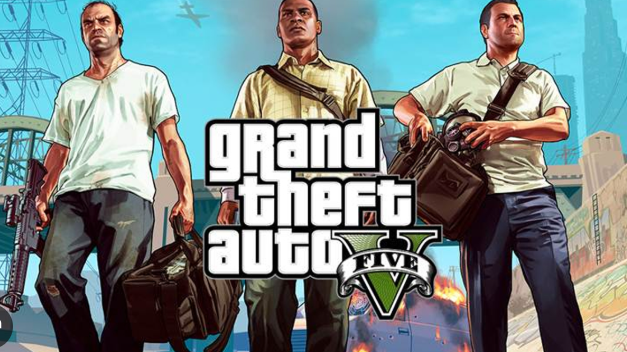
In the history of digital entertainment, few titles have achieved the status of a true cultural monolith. Grand Theft Auto V (GTA V) is not merely a video game; it is a sprawling, satirical mirror held up to modern society. Set in the fictionalized state of San Andreas, the game offers an unparalleled open-world experience that blends high-octane action with a biting critique of the “American Dream.” From the sun-soaked streets of Los Santos to the rugged wilderness of Blaine County, the world of GTA V is a masterclass in environmental storytelling and technical ambition.
Since its inception, the game has transcended the traditional boundaries of its medium, becoming one of the most successful entertainment products in history. It represents the pinnacle of the “sandbox” genre, where players are given the keys to a living, breathing city and told to find their own way. Whether you are navigating the complex lives of its three protagonists or carving out a criminal empire in its persistent online world, GTA V offers a depth of detail that remains the gold standard for game design. This guide explores the foundational elements that make this title an evergreen masterpiece.
1. The Revolutionary Triple-Protagonist Narrative System
The most significant departure from previous entries in the series is the introduction of three distinct protagonists: Michael De Santa, Franklin Clinton, and Trevor Philips. This wasn’t just a gimmick; it was a fundamental shift in how open-world stories are told. Instead of following a single hero from rags to riches, players navigate a complex web of intersecting lives. Each character represents a different facet of the criminal underworld: Michael is the retired “pro” living a hollow suburban life, Franklin is the young “hustler” looking for a way out, and Trevor is the “wildcard” fueled by pure, unadulterated chaos.
This system allows for a cinematic “character switch” mechanic that operates both during missions and in free-roam play. When switching between them, the camera pans out to a satellite view of the city and zooms back down into the life of another character, often catching them in the middle of a mundane or bizarre activity. This breathes life into the world, suggesting that these characters exist and act even when the player is not controlling them. It also solves a common open-world pacing problem; if you tire of the city, you can switch to Trevor in the desert for a completely different tone and gameplay style.
2. The Satirical Blueprint of Los Santos and San Andreas
The setting of Grand Theft Auto V is a sprawling recreation of Southern California, centered on the city of Los Santos (a stand-in for Los Angeles). Rockstar Games created more than just a map; they created a biting caricature of modern life. The world is filled with parodies of famous landmarks, social media platforms, and high-end fashion brands. Every billboard, radio advertisement, and NPC conversation is designed to poke fun at celebrity worship, consumerism, and political polarization.
The level of detail in San Andreas is staggering. The map is divided into distinct ecosystems, from the glitzy hills of Vinewood to the smog-filled industrial docks and the vast, dusty expanse of the Grand Senora Desert. The environmental storytelling is so dense that a player can spend hours simply observing the world. You might see a hiker being chased by a mountain lion in the hills or witness a police chase unfold spontaneously on the freeway. This commitment to “verisimilitude”—the appearance of being true or real—is what keeps the world of GTA V feeling fresh years after its initial release.
3. The High-Stakes Complexity of the Heist Mechanic
Central to the gameplay of GTA V are the Heists. These are multi-stage missions that require meticulous planning, setup, and execution. Rather than just driving to a location and shooting everything in sight, players must make strategic choices that affect the outcome and the “take” of the robbery. You start by choosing your approach—usually a choice between “Smart” (stealth and subterfuge) or “Loud” (brute force and heavy weaponry).
Once the approach is chosen, the player must complete setup tasks, such as stealing getaway vehicles, acquiring disguises, or hacking security systems. A crucial part of this process is hiring a crew. You can choose NPCs with high skill levels who demand a larger cut of the loot, or cheaper, less experienced henchmen who might fumble under pressure. During the heist itself, the character-switching mechanic is used to manage different roles simultaneously—one character might be sniping from a roof while another cracks the vault and the third prepares the escape vehicle. This creates a sense of tension and agency that remains the highlight of the single-player experience.
4. The Physics and Technical Wizardry of the RAGE Engine
Underpinning the chaos of San Andreas is the Rockstar Advanced Game Engine (RAGE). This engine handles everything from the way light reflects off a rain-slicked road to the complex physics of a high-speed car crash. One of the most impressive components is the “Euphoria” physics system, which governs character animations. Unlike traditional games where characters use pre-set “death animations,” GTA V characters react dynamically to their environment. If a character is clipped by a moving car, they will stumble, reach out to steady themselves, or tumble realistically based on the momentum.
The vehicle physics are also a major point of praise. Each car, motorcycle, and aircraft has a distinct weight and handling profile. The damage modeling is equally detailed; tires can be popped, engines can stall, and bodywork can be crumpled and torn apart in realistic ways. The engine also manages a complex weather system and a full day-night cycle, both of which affect gameplay. For example, driving on a wet road significantly reduces traction, and shadows move across the landscape in real-time as the sun sets, creating an ever-changing visual landscape.
5. GTA Online: An Evolving Persistent World
While the single-player story is a complete experience, GTA Online transformed the game into a persistent, “live-service” ecosystem. In this mode, players create their own custom avatars and enter Los Santos as fresh-faced criminals looking to make a name for themselves. What began as a simple multiplayer deathmatch mode evolved into a massive social sandbox where players can own businesses, run nightclubs, manage underground bunkers, and lead their own criminal organizations.
The longevity of GTA Online is sustained by a constant stream of content updates that introduce new vehicles, weapons, and cooperative missions known as “Online Heists.” These missions are designed for four players and require high levels of communication and coordination. The economy of the online world is a central gameplay pillar; players earn “GTA$” to buy luxury penthouses, customized supercars, and even orbital cannons. This online component has created a dedicated community that keeps the game world active and constantly evolving, making it a social hub as much as a competitive arena.
6. The Sonic Identity: Curated Radio and Ambient Score
Sound design is a vital, yet often overlooked, part of what makes GTA V so immersive. The game features an extensive list of radio stations hosted by real-world celebrities and musicians. Each station is dedicated to a specific genre—ranging from classic rock and West Coast hip-hop to underground techno and talk radio. These stations are more than just background music; they provide the cultural soundtrack to Los Santos, with DJs commenting on the player’s recent criminal exploits in news bulletins.
Beyond the radio, GTA V features the series’ first-ever original ambient score. Composed by a team of legendary musicians, the score is “reactive,” meaning it changes dynamically based on the player’s actions. If you are calmly driving through the desert, the music is sparse and atmospheric. If you suddenly engage in a high-speed chase with the police, the percussion ramps up and the tempo increases to match the intensity of the scene. This seamless transition between licensed music and original score creates a cinematic atmosphere that persists throughout the entire experience.
7. The Depth of the Mount Chiliad Mystery
One of the most enduring elements of GTA V is its obsession with secrets and Easter eggs. The most famous of these is the “Mount Chiliad Mystery.” At the summit of the game’s highest peak, players can find a cryptic mural depicting a mountain, an eye, a UFO, and what appears to be a jetpack. This sparked one of the most dedicated “myth-hunting” communities in gaming history. Players have spent years deciphering map coordinates, weather triggers, and hidden messages scattered throughout the game.
The mystery goes deep into themes of alien visitations, government conspiracies, and secret cults like the “Epsilon Program.” While some parts of the mystery have been “solved”—such as the appearance of a UFO at the mountain’s peak during a thunderstorm—other elements remain shrouded in ambiguity. This layers the game with a sense of wonder and curiosity. It encourages players to look closer at the world, turning even the most remote corners of the map into potential sites of a grand, hidden narrative.
8. First-Person Perspective and Immersion
In an update that redefined the feel of the game, Rockstar introduced a fully realized “First-Person Mode.” This wasn’t just a simple camera shift; it required the developers to re-animate the entire game. In first-person, you can see the detailed interiors of every vehicle, from the digital dashboard of a supercar to the grimy upholstery of a junker. Every weapon has its own iron sights and reload animations, and the player can see their own hands interacting with objects in the world.
This perspective shifts the tone of the game from a cinematic action movie to an immersive simulation. Driving a motorcycle at 120 mph between lanes of traffic feels significantly more intense when you are looking through the character’s eyes. It also highlights the incredible level of detail in the world—you can read the labels on food products in convenience stores or see the individual threads on your character’s clothing. This mode offered veterans a reason to experience the entire story again from a completely new vantage point.
9. The Social Commentary of “The American Dream”
At its heart, GTA V is a tragicomedy about the failure of modern success. Each protagonist is a victim of their own desires. Michael has the “perfect” life—a mansion, a family, and wealth—yet he is miserable and stuck in therapy. Franklin has the drive and talent to succeed but finds that the “legitimate” world of car repossession and finance is just as corrupt as the streets. Trevor, meanwhile, is the honest monster; he has no illusions about his nature and serves as a mirror to the hypocrisy of the “civilized” world around him.
The game’s narrative frequently critiques the way the media and the government exploit individuals. It lampoons everything from the tech industry (the “Lifeinvader” company) to the obsession with reality television. By placing the player in the shoes of criminals, the game forces a confrontation with the idea that in a society where “winning” is the only goal, the only logical path is crime. This depth of theme is what separates the Grand Theft Auto series from other open-world games; it has something to say about the world we live in.
10. A Financial and Cultural Legacy
The final thing to understand about Grand Theft Auto V is the sheer scale of its success. It is one of the most expensive pieces of media ever produced, with a budget that rivaled the biggest Hollywood blockbusters. However, it recouped that cost almost instantly, breaking multiple world records for sales. It became the fastest entertainment property to reach $1 billion in revenue, a feat it achieved within three days of its release.
Its legacy is not just measured in dollars, but in its influence on the industry. It proved that a single-player narrative could coexist with a massive, evolving multiplayer component. It set a new bar for what players expect from an open-world environment, particularly in terms of density and interactivity. Even after several console generations, the game remains a consistent top-seller, proving that Los Santos is a place players never truly want to leave. It is a benchmark of quality and a testament to the power of a singular artistic vision executed on a grand scale.
Further Reading
- Jacked: The Outlaw Story of Grand Theft Auto by David Kushner
- The Creative Gene by Hideo Kojima (For insights on world-building and game design)
- Grand Theft Auto V: The Official Strategy Guide by BradyGames
- The Game Design Reader: A Rules of Play Anthology by Katie Salen and Eric Zimmerman




Leave a Reply