
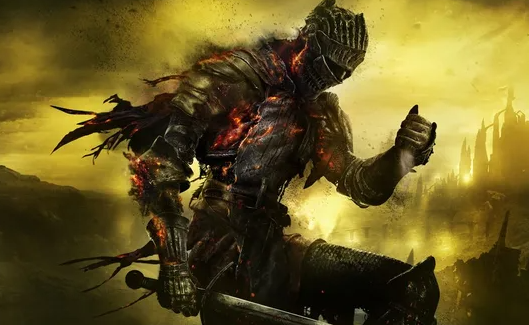
In the flickering light of a dying flame, a silent warrior rises from the stone floor of a crumbling asylum. There is no fanfare, no grand prophecy whispered by a celestial choir, and certainly no hand-holding. There is only the weight of a rusted sword and the oppressive silence of a world that has forgotten the sun. This is the starting line of the Dark Souls franchise—a series that didn’t just change the landscape of action role-playing games; it scorched the earth and built a new, unforgiving kingdom upon the ashes.
To the uninitiated, Dark Souls is often reduced to a single, daunting adjective: “hard.” But to describe this franchise solely by its difficulty is like describing the ocean solely by its saltiness. It misses the depth, the currents, and the haunting beauty beneath the surface. Developed by FromSoftware, the series is a masterclass in atmospheric storytelling, intricate level design, and a philosophy of “tough love” that respects the player’s intelligence and perseverance. Whether you are a “hollow” veteran or a fresh traveler standing at the gates of Lordran, understanding the soul of this series is essential. This guide peels back the layers of shadow to reveal the ten essential truths of the most influential franchise of its generation.
1. The Visionary Architect: Hidetaka Miyazaki
The DNA of the franchise is inextricably linked to the personal philosophy of its creator, Hidetaka Miyazaki. Interestingly, Miyazaki’s approach to storytelling was born from a childhood spent reading Western fantasy novels he couldn’t fully understand. Because his English was limited, he had to fill in the narrative gaps with his own imagination, creating a fragmented, mysterious experience. He brought this exact “filling in the blanks” philosophy to the game’s design.
Miyazaki doesn’t believe in “lore dumps” or long-winded cutscenes. Instead, the history of the world is hidden in item descriptions, environmental details, and the cryptic dialogue of half-mad NPCs. This forces the player to become a digital archaeologist. You aren’t just playing a game; you are piecing together a shattered mirror. This creative direction transformed the franchise from a standard dark fantasy into a deeply personal, interpretive experience. It treats the player as a collaborator in the narrative, making the discovery of a secret just as rewarding as defeating a boss.
2. The Philosophy of “Prepared to Die”
The marketing for the series famously utilized the tagline “Prepare to Die,” but this was always a bit of a misnomer. The goal isn’t to make you die; the goal is to teach you through failure. In many modern games, death is a punishment or a reset. In Dark Souls, death is a mechanic. It is the game’s way of saying, “You were rushing,” or “You weren’t watching your back.” Every time you fall, you are left with a choice: succumb to frustration and go “Hollow,” or learn the pattern and try again.
This creates a unique psychological loop. The difficulty is not “artificial”—bosses don’t just have high health bars; they have complex, readable movesets. The game is remarkably fair; it follows a set of strict internal rules, and once the player masters those rules, the perceived difficulty evaporates. The triumph felt after overcoming a boss that has killed you a dozen times is a high that few other mediums can provide. It’s a lesson in resilience that resonates far beyond the screen, suggesting that the only true failure is giving up.
3. Environmental Storytelling and Silent Histories
In the world of Dark Souls, every statue, every pile of bones, and every architectural choice tells a story. The game utilizes “environmental storytelling” to a degree rarely seen in the industry. For instance, finding a powerful ring on a corpse in a hidden corner isn’t just a loot drop; it’s a clue. Who was this person? Why were they here? The placement of enemies and items is meticulously planned to suggest a history of war, betrayal, and decay that preceded the player’s arrival.
This creates a world that feels “lived in,” even if everyone living in it is currently undead. You might find a knight’s armor in a swamp and realize, based on the location, that this was a character mentioned in a legend three hours ago. This subtle narrative delivery rewards the observant player. It creates a sense of profound loneliness and mystery, as if you are walking through a tomb that still echoes with the ghosts of the past. The world doesn’t care if you understand its history, which, ironically, makes the player even more desperate to uncover it.
4. The Logic of the Bonfire: A Mental Sanctuary
The bonfire is the most iconic symbol of the franchise, serving as a checkpoint, a leveling station, and a rare moment of peace. However, resting at a bonfire comes with a catch: it respawns almost every enemy in the area. This creates a brilliant “risk versus reward” tension. Do you push forward with half a health bar and hope there’s a shortcut ahead, or do you retreat to the safety of the flame and face the gauntlet of enemies all over again?
Bonfires serve as the “heartbeat” of the game’s pacing. They provide a psychological anchor in a world designed to keep you off-balance. Finding a new bonfire after an arduous stretch of gameplay provides a physical sense of relief—a literal “sigh of breath” for the player. They represent the flickering hope in a world of encroaching darkness. The placement of these fires is a masterclass in level design, often situated just at the point where the player is about to snap, offering a reprieve that feels earned rather than given.
5. The Methodical Dance of Stamina Management
Combat in this franchise is not about how fast you can mash buttons; it is about how well you can manage your resources. At the center of this is the Stamina Bar. Every swing of your sword, every block with your shield, and every desperate roll to avoid an attack consumes a portion of this green bar. If you empty it, you are left defenseless and staggered. This turns every encounter—even with a lowly hollow—into a tactical puzzle.
The combat is often described as a “dance.” You must learn the rhythm of your opponent, baiting out their attacks, managing your distance, and striking only when you have a clear window. This methodical approach makes the combat feel “heavy” and deliberate. You aren’t a superhero; you are a vulnerable human (or undead) in heavy armor. This groundedness adds to the tension. A single mistake can be fatal, but a perfectly timed “parry and riposte” feels like a surgical strike. It’s a system that values patience over reflexes, making it accessible to players who might not have the twitch-skills of a competitive shooter fan but possess the discipline of a strategist.
6. Asynchronous Multiplayer: Phantoms and Notes
The franchise revolutionized online play by introducing “asynchronous” elements. While you can play the entire game solo, you are never truly alone. You can see the “ghosts” of other players running alongside you, catching glimpses of their final moments before they died. Most famously, players can leave glowing orange messages on the ground to warn others of traps, suggest hidden paths, or—in true internet fashion—trick them into jumping off a cliff.
This creates a unique sense of community. You are all struggling through the same nightmare, separated by time and space but connected by your shared hardship. The “Invasion” mechanic also adds a layer of unpredictable tension, allowing other players to enter your world as hostile “Red Phantoms” to hunt you down. Conversely, you can summon “Sunbro” allies to help you with a difficult boss. This “touch-and-go” multiplayer doesn’t break the immersion of the lonely atmosphere; instead, it reinforces the theme of a crumbling world where transient souls occasionally cross paths before fading away.
7. The Metaphysical Cycle of Fire and Dark
The lore of the franchise is built on a grand, philosophical cycle. The world oscillates between the “Age of Fire” (an age of gods, light, and civilization) and the “Age of Dark” (the age of men, shadow, and the unknown). The protagonists are usually tasked with “linking the fire” to extend the current age, but the games constantly question if this is actually a good thing. Is it better to cling to a dying, corrupted light, or to let the fire fade and embrace the natural progression of the dark?
This existential conflict mirrors real-world themes of entropy and the fear of change. The “Darksign” that marks the undead is a symbol of this stagnation—people who cannot die and cannot truly live, stuck in a loop of suffering. The games rarely offer a “happy” ending; instead, they offer choices between different shades of gray. This thematic depth is why the series has spawned thousands of hours of video essays and deep-dives. It’s a story about the end of the world that feels incredibly relevant to the human condition, exploring how we find meaning when the gods have abandoned us.
8. Interconnected World Design: The Map as a Puzzle
The level design of the first game in the series is often cited as the pinnacle of 3D map architecture. The world is not a series of disconnected levels, but a vertically integrated, interconnected hive. You might spend two hours descending into a dark, poisonous swamp, only to find an elevator that brings you back up to the very first area you visited. This “Aha!” moment—realizing how the entire world fits together—is one of the most satisfying experiences in gaming.
This design serves both a practical and emotional purpose. Practically, it makes the world feel massive yet navigable without the need for a traditional “map” screen. Emotionally, it reinforces the sense of place. You aren’t just traveling through “levels”; you are traversing a physical landscape. The lack of a “fast travel” option in the early portions of the games forces you to learn the geography, making the world feel intimate and dangerous. Every shortcut found is a victory, a literal bridge between your past struggles and your future goals.
9. The Birth of the “Soulslike” Genre
The impact of this franchise on the industry is so profound that it birthed its own sub-genre: the “Soulslike.” From indie gems to massive AAA productions, the fingerprints of Dark Souls are everywhere. Features like “corpse-running” (returning to the spot where you died to reclaim your experience points), stamina-based combat, and cryptic storytelling have become staples of modern game design.
This legacy proves that there was a massive, underserved audience of players who were tired of being coddled. The franchise proved that “difficulty” wasn’t a barrier to entry, but a selling point. It challenged the industry’s trend toward cinematic “movie-games” and brought the focus back to mechanical mastery and discovery. To play a Soulslike today is to participate in a conversation that started in 2011—a conversation about what it means to be “challenged” and the respect a developer should show to its audience.
10. Fashion Souls and Community Culture
Finally, it is impossible to talk about the franchise without mentioning its vibrant, often hilarious community culture. Because the game is so bleak, the community has responded with a unique brand of “gallows humor.” This is best exemplified by “Fashion Souls”—the practice of choosing armor based on how cool it looks rather than its defensive stats. In a world where you’re going to die anyway, you might as well look good doing it.
The community has also developed its own unwritten “etiquette,” particularly in player-versus-player (PvP) combat, such as bowing before a duel. Memes like “Praise the Sun” and “Git Gud” have become shorthand for the franchise’s ethos of optimism and self-improvement. This culture has kept the games alive long after their release. The “Jolly Cooperation” fostered by the community acts as the ultimate counter-balance to the game’s inherent cruelty. It reminds us that even in the deepest, darkest dungeon, there’s usually a friendly phantom waiting to help us carry the torch.
Further Reading
- The Hero with a Thousand Faces by Joseph Campbell – To understand the mythological roots of the “Chosen Undead” and the journey of the hero.
- Berserk (Manga Series) by Kentaro Miura – The primary aesthetic and thematic inspiration for the entire Dark Souls franchise.
- You Died: The Dark Souls Companion by Keza MacDonald and Jason Killingsworth – A deep dive into the development and cultural impact of the series.
- The Book of Five Rings by Miyamoto Musashi – A classic text on strategy and mindset that mirrors the discipline required for Souls combat.




Leave a Reply