
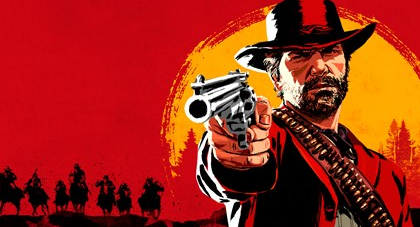
The sun dips below the horizon, casting long, jagged shadows across the sagebrush and red rock of the American West. Somewhere in the distance, a coyote howls, answered only by the rhythmic thud of hooves on sun-baked earth. For millions of players, this isn’t just a setting—it’s a home. The Red Dead Redemption franchise stands as a monolith in the world of interactive entertainment, transcending the label of “video game” to become a definitive piece of modern Western fiction. Developed by the visionaries at Rockstar Games, this saga doesn’t just ask you to play as a cowboy; it demands you inhabit the skin of an outlaw at the dawn of a civilization that no longer wants you.
While many open-world games focus on pure power fantasies, Red Dead Redemption is a somber, beautiful, and often violent meditation on the “death of the frontier.” It is a series where the clatter of a high-speed train is the death knell for the lone rider. Whether you are galloping through the snowy peaks of the Grizzlies or navigating the swampy bayous of Lemoyne, the franchise offers an unparalleled level of detail and emotional resonance. This guide explores the ten essential pillars of the Red Dead lore and design that have cemented its status as a timeless classic.
1. The Arcade Roots of a Cinematic Legend
Before the franchise became a sweeping epic of betrayal and loss, it had much humbler beginnings. While the “Redemption” storyline is what most fans recognize, the series actually began with a title called Red Dead Revolver. Originally a project by a different developer before being acquired and reimagined, Revolver was a stylish, arcade-inspired shooter that paid homage to “Spaghetti Westerns.” It featured exaggerated characters and level-based gameplay that felt more like a Saturday morning cartoon than a gritty historical drama.
However, these roots are vital because they established the “vibe” of the world. Even in the modern, ultra-realistic sequels, you can find the DNA of those early days—the iconic “Dead Eye” targeting system, the focus on legendary gunslingers, and the sense of mythic frontier justice. The transition from the arcade-style shooting of the early days to the deep, character-driven narratives of the later installments represents one of the most significant evolutions in gaming history. It shows a series that grew up alongside its audience, moving from the surface-level tropes of the West to the complex, painful realities of the people who lived there.
2. The Death of the American Frontier
The most important theme to understand about the Red Dead Redemption franchise is that it is not set during the “Golden Age” of the Wild West. Instead, it takes place during its agonizingly slow funeral. The stories are specifically positioned at the turn of the century, a time when the “Wild” West was being tamed by the iron grip of the federal government, the expansion of the railroad, and the invention of the automobile. The protagonists aren’t just outlaws; they are dinosaurs watching the asteroid hit the Earth in slow motion.
This atmospheric choice colors every interaction in the game. You aren’t just fighting rival gangs; you are fighting the march of time. The sense of melancholy is pervasive. As you ride through a town, you might see telephone lines being strung up or an early motorcar sputtering down a dirt road. These aren’t just background details; they are symbols of the encroaching “civilized” world that views men like John Marston and Arthur Morgan as relics to be eradicated. This thematic core elevates the game from a standard action-adventure into a tragic historical epic about the loss of freedom and the high price of progress.
3. The Narrative Weight of Redemption
The title of the series isn’t just a catchy name; “Redemption” is the mechanical and narrative heartbeat of the experience. The franchise explores the idea of whether a “bad man” can ever truly do a “good thing.” Both John Marston and Arthur Morgan begin their journeys as violent criminals who have spent decades robbing, killing, and causing chaos. The games don’t shy away from their sins; instead, they force the player to reckon with them.
The journey toward redemption is never easy or clean. It usually involves a series of impossible choices and self-sacrifices. The brilliance of the writing lies in its refusal to offer an easy out. Redemption in this world often comes at the cost of one’s own life, suggesting that while the soul can be saved, the debt to society must still be paid in full. This heavy philosophical undertone is rare in the medium, making the climax of these stories feel earned and deeply moving. It transforms the player’s actions from simple button presses into moral decisions that carry the weight of a man’s entire legacy.
4. Unparalleled Open-World Realism
Rockstar Games redefined what “detail” means in an open-world setting with this franchise. The world of Red Dead Redemption is a living, breathing ecosystem where every element reacts to the player and the environment. This isn’t just about high-resolution textures; it’s about the simulation of life. Horses aren’t just “vehicles”; they are companions with their own personalities, stamina, and needs. If you don’t feed them or brush them, their performance suffers. If you ride them into a swamp, they might panic at the sight of an alligator.
This realism extends to the smallest details: mud dries on your clothes, snow deforms under your boots, and your character’s hair and beard grow in real-time. Even the firearms require maintenance; a dirty gun will jam or lose accuracy, forcing you to sit by a campfire and oil your repeater. For some, this “slow gaming” approach might be jarring, but for those who lean into it, it creates a sense of immersion that is unmatched. You don’t just “play” the game; you exist within its physics and its logic, making every successful hunt or survived gunfight feel like a genuine accomplishment.
5. The Tragic Hero: John Marston
John Marston is the face of the franchise, a man whose rugged, scarred visage has become iconic. John is the quintessential “reluctant hero.” He is a former outlaw who is blackmailed by the government into hunting down his old brothers-in-arms to save his wife and son. His story is a classic Western trope—the gunfighter trying to hang up his spurs—but it is executed with such grit and heart that it feels entirely fresh.
What makes John so compelling is his simple desire for a quiet life. He isn’t seeking glory or riches; he just wants to be a farmer and a father. However, his past is a ghost that refuses to be exorcised. His struggle represents the tragedy of the American dream for those who started on the wrong side of the law. He is a man caught between two worlds: the lawless gang that raised him and the cold, bureaucratic government that uses him. His journey is a masterclass in character development, showing a man who is illiterate and violent but possesses a moral code that puts the “civilized” villains to shame.
6. The Charisma and Chaos of Dutch van der Linde
Every great story needs a great antagonist, but Dutch van der Linde is far more than a simple villain. He is a philosopher-king, a charismatic cult leader, and a man whose ego is as large as the frontier itself. Dutch is the leader of the gang that both John and Arthur call family. He preaches a philosophy of “savage freedom,” arguing that the gang is a family of outcasts living outside the reach of a corrupt and soul-crushing society.
Watching Dutch’s descent is one of the most fascinating aspects of the saga. He begins as a man with a plan—a visionary who believes he can find a “paradise” for his people. But as the world closes in, his idealism curdles into paranoia and narcissism. He becomes a cautionary tale about the dangers of blind loyalty. Dutch isn’t just a man with a gun; he is a force of nature that pulls everyone around him into his chaotic wake. His relationship with his “sons,” John and Arthur, provides the emotional tension that fuels the entire franchise, making his eventual downfall feel like the end of an era.
7. Prequel Perfection: The Arthur Morgan Story
In an industry where sequels often struggle to live up to the original, the prequel chapter of the Red Dead saga achieved the impossible: it introduced a new protagonist, Arthur Morgan, who many fans came to love even more than John Marston. Arthur is the “heavy” of the Van der Linde gang—a blunt instrument who has spent his life doing Dutch’s dirty work without question. His story is one of slow, painful awakening.
Because the game is a prequel, players already know the ultimate fate of the gang, which lends Arthur’s journey a sense of tragic inevitability. We watch a man who thinks he is “no good” slowly discover his own humanity as his world crumbles. Arthur’s perspective provides a deeper look into the gang’s history and the specific events that led to the fractured world of the first game. His internal struggle—recorded in a beautifully illustrated journal—allows players to see the sensitive soul beneath the rugged exterior, making his personal arc one of the most celebrated narratives in all of gaming.
8. A Living, Breathing Ecosystem
The wilderness in this franchise is not just a backdrop for gunfights; it is a character in its own right. The games feature a complex animal hierarchy where predators hunt prey, and scavengers wait for the remains. There are hundreds of species of animals, birds, and fish, each with unique behaviors and habitats. Hunting is not a simple mini-game; it is a tactical challenge that requires tracking, wind-direction awareness, and the use of the correct caliber of ammunition to preserve the quality of the pelt.
This attention to nature reinforces the theme of the “Wild” West. The environment is beautiful but deadly. You might be distracted by a stunning sunset only to be ambushed by a cougar or caught in a sudden, violent thunderstorm that affects your visibility and movement. The weather system is dynamic and can change the entire feel of a region in seconds. This unpredictability makes the world feel “dangerous” in a way that few other games manage, ensuring that the player always respects the land they are traveling through.
9. The Honor System: Choosing Your Path
Throughout your travels, your actions are tracked by a sophisticated “Honor System.” This isn’t just a bar that goes up or down; it changes how the world perceives and interacts with you. If you play as a cold-blooded killer, NPCs will be terrified of you, store prices will rise, and the law will be more aggressive. If you play with high honor—helping strangers, sparing enemies, and being kind to animals—the world opens up. You’ll get discounts, unique dialogue, and even different cinematic flourishes.
Most importantly, the Honor System subtly affects the personality of the protagonist and the tone of the ending. While the major plot points remain the same, the flavor of the character’s final moments changes based on the soul you’ve built for them. It forces the player to ask themselves: “Who is Arthur Morgan (or John Marston) to me?” This agency makes the “Redemption” aspect of the title feel personal. You aren’t just watching a story; you are deciding the moral legacy of a man, making the player an active participant in his spiritual journey.
10. A Cultural Benchmark for the Western Genre
The Red Dead Redemption franchise did something that many thought was impossible: it made the Western cool again for a modern, global audience. Before these games, the Western was often seen as a “dead” genre, relegated to the nostalgia of older generations. By infusing the classic tropes of the frontier with modern storytelling techniques, complex characters, and adult themes, Rockstar Games revived interest in the period across all forms of media.
Its influence can be seen in the way modern films and television shows approach the “Oatmeal Western”—focusing on grit, moral ambiguity, and the deconstruction of the “heroic” cowboy. The series proved that the themes of the American West—freedom versus civilization, the weight of the past, and the search for identity—are universal and timeless. It stands as a cultural benchmark, showing that video games can be just as emotionally resonant and artistically significant as any Pulitzer-winning novel or Academy Award-winning film. The saga of the Van der Linde gang is no longer just a game; it is a permanent part of the Western canon.
Further Reading
- Blood Meridian by Cormac McCarthy – A brutal, poetic look at the violence of the American West that heavily influenced the tone of the franchise.
- Lonesome Dove by Larry McMurtry – The definitive Western epic about an arduous cattle drive and the bonds of friendship between aging Texas Rangers.
- Empire of the Summer Moon by S.C. Gwynne – A gripping historical account of the rise and fall of the Comanches, providing context for the real-world frontier.
- The Sisters Brothers by Patrick deWitt – A darkly comedic and modern take on the “outlaw on the road” trope.



Leave a Reply