
The World’s Mightiest Mortal: 10 Essential Facts About Shazam Every Fan Should Know
In a universe populated by alien sun-gods, billionaire vigilantes, and Amazonian warriors, Shazam occupies a unique and whimsical space. He is the ultimate wish-fulfillment character: a young boy who, by speaking a single magic word, transforms into an adult superhero with the powers of the gods. While he may look like a peer to the most powerful beings in the DC Universe, beneath the lightning bolt and the bulging muscles beats the heart of a child. This duality—the “Wisdom of Solomon” paired with the perspective of an adolescent—creates a narrative dynamic unlike any other in comic book history.
Understanding Shazam requires looking beyond the red suit and the white cape. He is a character built on the foundation of ancient mythology, the importance of family, and the purity of spirit required to wield absolute power without being corrupted by it. Whether you are a newcomer to the Rock of Eternity or a long-time follower of the “Big Red Cheese,” these ten essential pillars of his lore will provide a comprehensive understanding of the champion of magic.
1. The Acronym of Power: What “SHAZAM” Actually Means
The name “Shazam” is not just a moniker; it is an ancient magical mnemonic. When young Billy Batson speaks the word, he is granted the combined attributes of six legendary figures from various mythologies. The “S” stands for the Wisdom of Solomon, providing Billy with vast knowledge and clairvoyance. The “H” is for the Strength of Hercules, allowing him to trade blows with the likes of Superman. The “A” represents the Stamina of Atlas, granting him near-limitless endurance and self-sustenance.
The “Z” provides the Power of Zeus, which fuels the lightning that transforms him and allows him to manipulate magical energy. The second “A” is for the Courage of Achilles, making him invulnerable to fear and most physical harm. Finally, the “M” stands for the Speed of Mercury, allowing him to fly and move at hypersonic velocities. Understanding this acronym is essential because it highlights that Shazam’s powers are not biological or technological, but strictly divine. He is a conduit for these entities, and his effectiveness often depends on how well he can channel these specific, legendary traits in the heat of battle.
2. Billy Batson: The Heart of the Champion
At the core of the legend is Billy Batson, usually portrayed as an orphan with a surprisingly resilient spirit. Unlike many heroes driven by tragedy or a sense of dark vengeance, Billy was chosen by the Wizard because of his potential for goodness and his ability to remain “pure of heart” despite the hardships of his life. Billy’s youth is his most significant character trait; it provides him with a sense of optimism and wonder that more seasoned heroes often lose over time.
However, being a child in a god’s body comes with a steep learning curve. Billy often has to navigate complex moral dilemmas and adult responsibilities while still dealing with the insecurities of growing up. This creates a fascinating “fish out of water” scenario whenever Shazam interacts with the Justice League. He is the perspective of the “everyman”—or rather, the “every-kid”—in a world of giants. His humanity is what prevents the divine power from turning him into a cold, detached deity like some of his predecessors. To know Shazam is to know that the man is just a shell for the boy’s heroic soul.
3. The Wizard and the Rock of Eternity
Every champion needs a source, and for Billy, that source is the ancient Wizard (also named Shazam) who resides within the Rock of Eternity. The Rock is a mystical nexus point located at the very center of space and time, serving as the prison for various magical threats and the storehouse for all the world’s sorcery. The Wizard is the last surviving member of a Council of Wizards who once kept the forces of darkness at bay, and his decision to pass his mantle to Billy was a desperate act to ensure the world had a protector.
The Rock of Eternity is more than just a headquarters; it is a living part of the Shazam mythos. It houses the Library of Eternity and the magical fountain that allows Billy to observe events across the world. The relationship between the Wizard and Billy is often portrayed as a mentorship, though one fraught with the weight of ancient expectations. The Wizard represents the history and the heavy burden of magic, while Billy represents its future. The Rock serves as a constant reminder that being Shazam isn’t just about fighting crime; it’s about guarding the very barriers that keep reality from collapsing into magical chaos.
4. The Name Controversy: From Captain Marvel to Shazam
One of the most essential—and sometimes confusing—aspects of the character’s history is his name. For decades, the hero was known as Captain Marvel. He was originally published by Fawcett Comics and was at one point the most popular superhero in the world. However, due to various legal entanglements and trademark disputes involving other publishers, the character eventually found a home at DC Comics. Because a rival publisher had already trademarked the name “Captain Marvel” for their own character during a period when the original was out of print, DC had to market the books under the title Shazam!.
For a long time, the character was still called Captain Marvel within the stories, while the “Shazam” name was used on the covers. Eventually, DC made the decision to officially change the character’s in-universe name to Shazam to match the branding. This transition is important for fans to understand because it reflects the character’s complicated legacy. While “Captain Marvel” is his historical title, “Shazam” has become his modern identity, effectively merging the hero with the magic word that gives him life. It also adds a layer of narrative tension: if he introduces himself, he risks triggering a transformation!
5. The Shazam Family: Strength in Numbers
Billy Batson is rarely alone in his crusade. One of the most endearing parts of his lore is the “Shazam Family” (formerly known as the Marvel Family). Billy has the unique ability to share his power with others who are worthy. This traditionally includes his sister, Mary Bromfield (Mary Marvel), and his best friend, Freddy Freeman (Shazam Jr.). In many modern interpretations, this has expanded to include his other foster siblings, creating a diverse team of young heroes who all share the lightning.
The concept of the Shazam Family reinforces the theme that “family” isn’t just about blood, but about the bonds we choose to forge. When the siblings transform, they each often represent different facets of the power, or they share the pool of energy, which can sometimes make them individually weaker but collectively stronger. This family dynamic sets Shazam apart from the “loner” trope common in superhero comics. It provides Billy with a support system that keeps him grounded and reminds him that his greatest strength isn’t the lightning, but the people he loves.
6. Black Adam: The Corrupted Predecessor
Every great hero has a dark reflection, and for Shazam, that is Teth-Adam, better known as Black Adam. Thousands of years before Billy Batson was born, the Wizard chose Teth-Adam to be his champion in ancient Kahndaq. However, Adam was corrupted by the power and his own thirst for vengeance, leading him to use his gifts to rule as a tyrant. He was eventually banished, only to return in the modern era to reclaim what he believes is his rightful place as the world’s ruler.
Black Adam is an essential figure because he represents the “cautionary tale” of the Shazam mythos. He possesses the same powers as Billy (though derived from Egyptian deities like Shu, Heru, Amon, Zehuti, Aton, and Mehen) but lacks Billy’s humility and restraint. The rivalry between the two is not just a physical battle, but a philosophical one. Adam believes that power should be used to impose order through fear, while Billy believes it should be used to inspire hope. Their clashes are some of the most epic in DC history, often shaking the foundations of the earth itself.
7. The Seven Deadly Sins: The Foes in the Shadows
While Shazam faces many physical threats, his most persistent spiritual enemies are the Seven Deadly Sins of Man: Pride, Envy, Greed, Wrath, Sloth, Gluttony, and Lust. These are not just concepts, but actual sentient, demonic entities that were long ago imprisoned as stone statues within the Rock of Eternity. They are constantly looking for ways to escape and corrupt the hearts of humanity, often acting as the “whisperers” behind the actions of other villains.
The Sins represent the antithesis of the “pure of heart” requirement for the Wizard’s champion. They serve as a thematic reminder of why the power of Shazam is so dangerous if placed in the wrong hands. Many of Shazam’s adventures involve him preventing these entities from breaking free and plunging the world into moral decay. By including these personifications of human failure, the Shazam stories move from simple superhero action into the realm of a “morality play,” where the hero must overcome both the monsters outside and the temptations within.
8. Shazam vs. Superman: Magic vs. Might
In the hierarchy of DC power levels, Shazam is one of the few beings who can stand toe-to-toe with Superman. In fact, many fans and writers consider him to be Superman’s magical equal. This creates a fascinating dynamic between the two. While Superman is often vulnerable to magic because it bypasses his physical invulnerability, Shazam is magic. Their occasional skirmishes or team-ups are legendary, highlighting the difference between a hero powered by science (solar radiation) and one powered by sorcery.
Despite their power parity, the two usually share a deep mutual respect. Superman often looks at Shazam as a symbol of the purity the world needs, while Billy looks up to Superman as the ultimate role model. However, their differences are stark: Superman is an alien trying to be human, while Shazam is a human boy trying to handle being a god. This “Clash of the Titans” aspect is a staple of DC lore, serving to illustrate that even the Man of Steel has limits that only the World’s Mightiest Mortal can bridge.
9. The Wisdom of Solomon: A Mental Struggle
One of the most complex parts of Shazam’s power set is the Wisdom of Solomon. It is often described as a “voice” or an instinct that guides Billy, providing him with knowledge of languages, tactics, and even a degree of cosmic awareness. However, the wisdom is not an automatic “win button.” Billy still has the brain of a child, and there is often a conflict between what the Wisdom tells him and what his youthful emotions want to do.
This struggle makes Shazam a deeply relatable character. We all know what it’s like to know the “right” thing to do but feel tempted to do the “fun” or “easy” thing. The Wisdom of Solomon can be a burden; it forces Billy to see the world in shades of gray that most children aren’t equipped to handle. It also gives him a tactical advantage in battle, allowing him to outthink opponents who are technically more experienced. This mental aspect of his character is just as important as his physical strength, as it defines how he chooses to apply his vast powers.
10. The Symbolism of the Lightning Bolt
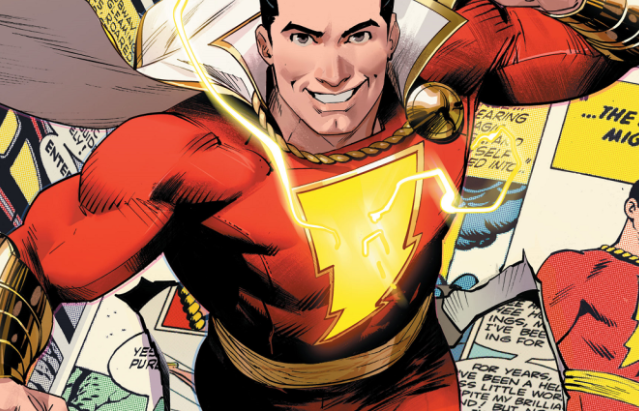
The lightning bolt on Shazam’s chest is one of the most iconic symbols in comic books, and it carries a heavy weight of symbolism. It represents the “spark” of transformation—the sudden, life-changing moment when one realizes their potential. In many ways, the lightning bolt is a symbol of hope. For a kid like Billy Batson, who has nothing, the lightning represents the fact that anyone, no matter how small, can change the world.
The bolt is also a literal weapon and a tool. Shazam can use it to strike enemies, charge machines, or even travel between dimensions. But more importantly, the lightning is the bridge between the mundane world and the magical world. Whenever Billy yells “SHAZAM!”, he is calling down the lightning to strike the earth, signaling that the champion has arrived. It is a visual and auditory declaration that magic is real, that justice is coming, and that even the darkest night can be illuminated by a single, powerful flash of light.
Further Reading
- Shazam!: Power of Hope by Paul Dini and Alex Ross
- The Power of Shazam! by Jerry Ordway
- Shazam! Vol. 1: From the Ashes by Geoff Johns and Gary Frank
- Shazam!: The Monster Society of Evil by Jeff Smith
- 10 Things You Should Know About Kang the Conqueror – Marvel Comics
- 10 Things You Should Know About The Sentry – Marvel Comics
- 10 Things You Should Know About Starlight From The Boys TV Show
- 10 Things You Should Know About Ghost Rider – Marvel Comics
- DC Comics: 10 Essential Things to Know About Shazam
- DC Comics: 10 Essential Things to Know About Sinestro
- DC Comics: 10 Essential Things to Know About The Reverse Flash
- DC Comics: 10 Essential Things to Know About Hal Jordan
- DC Comics: 10 Essential Things to Know About The Green Lanterns
- DC Comics: 10 Essential Things to Know About Mr Freeze



